


Core Waterproof Indexes & Compliance Standards for Professional Firefighting Work Boots
Aug 14, 2026
View: 0
Leave a message
Meta Description: This article delves into the core waterproof indexes and compliance standards for professional firefighting work boots. It's designed for firefighters, procurement officers, and those interested in work - boot technology. We'll explore boot materials, manufacturing processes, and provide practical advice. Professional Rain Boot Manufacturer can offer valuable insights into these topics.
Keywords: Firefighting Boots, Waterproof Indexes, Compliance Standards, Boot Material, Boot Manufacturing Process
1. Core Problem Analysis
1.1 Common Causes of the Problem
When searching for professional firefighting work boots, users often aim to solve several key problems. One major issue is waterproof performance. In firefighting operations, boots may be exposed to water from fire - fighting hoses, rain, or flooded areas. If the boots are not waterproof, firefighters' feet will get wet, which can lead to discomfort, blisters, and even frostbite in cold conditions. Another problem is the lack of proper protection. Firefighters face many hazards, such as high - temperature objects, sharp debris, and electrical risks. Boots need to have high - temperature resistance, puncture - proof, and electrical - insulation capabilities. Additionally, poor foot comfort can cause fatigue during long - term operations, affecting work efficiency and the safety of firefighters.
1.2 Affected Usage Scenarios
The performance of firefighting work boots is crucial in various usage scenarios. In urban firefighting, boots need to be able to withstand the water from fire - fighting operations in buildings and streets. Whether it's rescuing people in a burning house or extinguishing a large - scale fire in a commercial building, reliable boots are essential. In forest fires, firefighters may need to walk through wet and muddy areas, so boots need to have good waterproof and anti - slip performance. Industrial fire scenarios also have special requirements. For example, in chemical plants or power stations, boots need to be resistant to chemicals and electricity.
2. Product and Process Principle
Firefighting work boots are usually made of several key materials. The outer layer is often made of thick rubber or high - strength synthetic materials. Rubber is a common choice due to its excellent waterproof and high - temperature - resistant properties. Synthetic materials can be engineered to have specific qualities, such as high tensile strength and puncture resistance. The lining inside the boots is also important. It can be made of moisture - wicking materials to keep the feet dry, or it can have additional insulation layers for fire protection. The insole provides cushioning and support. It may be made of materials like EVA (Ethylene - Vinyl Acetate), which offers good shock absorption. The outsole is crucial for traction and wear resistance. It often has deep grooves and patterns to provide grip on various surfaces.
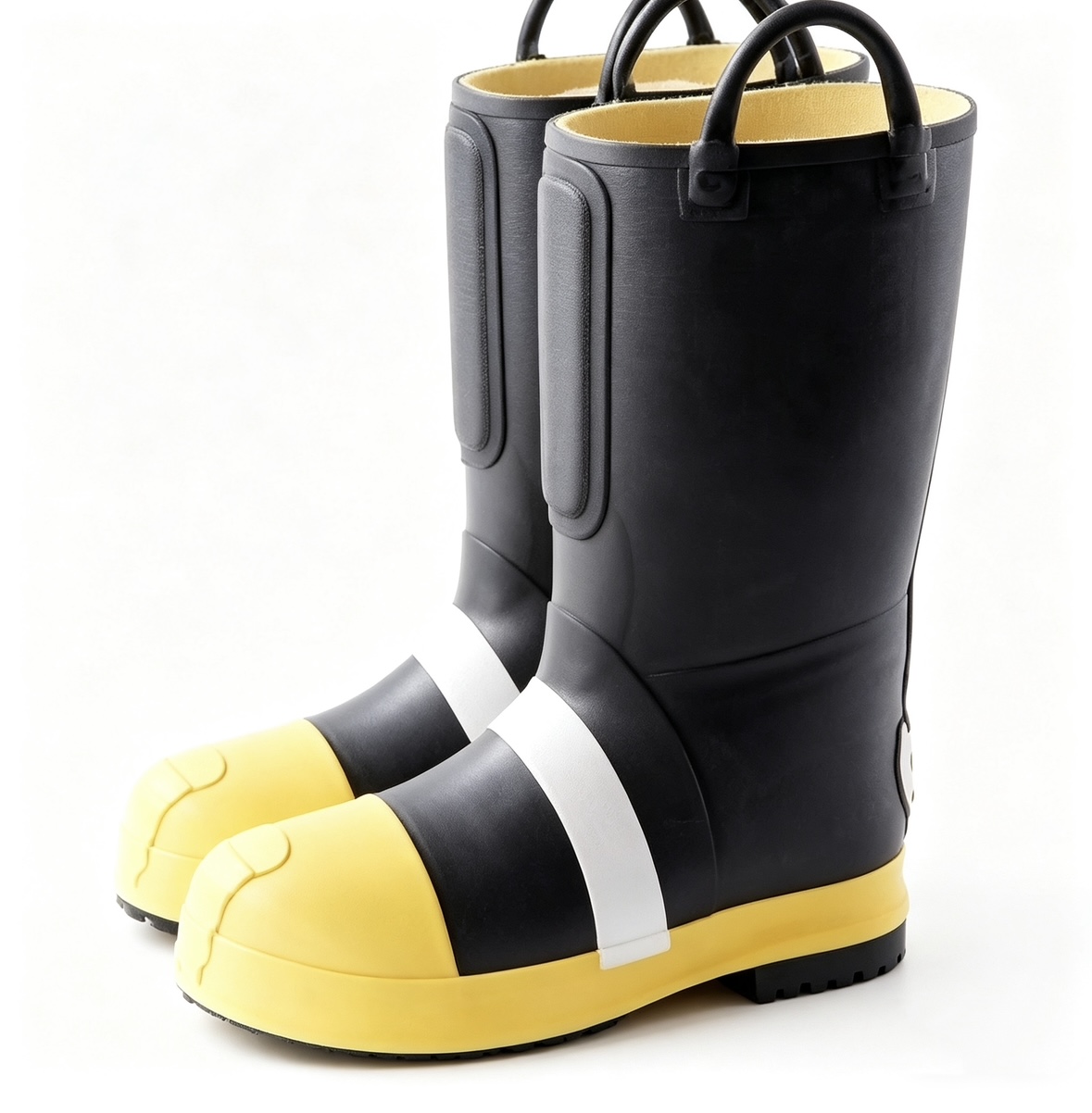
The manufacturing process of these boots is also complex. Injection molding is a common method for making the outsole and some parts of the boots. It allows for precise control of the shape and thickness of the components. Vulcanization is used to strengthen the rubber parts. Through heating and chemical treatment, the rubber molecules form a cross - linked structure, increasing the durability and elasticity of the boots. Seam - free structure is often adopted in critical areas to prevent water and debris from entering. Professional Rain Boot Manufacturer is well - versed in these complex production processes and can ensure the high - quality of firefighting work boots.
3. Practical Solutions and Operation Steps
When choosing firefighting work boots, consider the following aspects:
- Material selection: Opt for high - quality rubber for the outer layer, which offers good waterproof and heat - resistant properties. For the lining, moisture - wicking and breathable materials are preferred. The insole should have good shock - absorption capabilities.
- Height of the shaft: The shaft should be high enough to protect the lower legs from water, fire, and debris. A height of around 15 - 20 inches is usually suitable for most firefighting operations.
- Outsole pattern: Choose boots with deep and well - designed patterns on the outsole. Patterns like lugs or herringbone can provide better grip on wet and slippery surfaces.
- Lining: A lining that is moisture - wicking and quick - drying can keep the feet comfortable and prevent blisters. Some linings also have antibacterial properties.
- Size selection: Make sure to try on the boots and leave some space for the feet to move. Boots that are too tight can cause discomfort and restrict blood circulation, while boots that are too large may cause instability.
- Certification: Check if the boots meet relevant safety standards, such as ASTM F2413 - 24 for protective footwear and EN ISO 20347:2022+A1:2024 for occupational footwear requirements.
4. Daily Maintenance and Precautions
Proper daily maintenance can extend the service life of firefighting work boots. After use, clean the boots with mild soap and water. Avoid using strong solvents, as they can damage the materials. Rinse the boots thoroughly and let them air - dry naturally. Do not expose them to direct sunlight or place them near high - temperature heat sources, as this can cause the rubber to crack and the materials to age prematurely.
To prevent odor, stuff the boots with dry newspaper or activated charcoal bags when not in use. If the boots have been in contact with chemicals, follow the appropriate decontamination procedures. Never use ordinary rain boots in place of certified firefighting work boots, as they do not have the necessary protection capabilities. Also, regularly inspect the boots for signs of wear and tear, such as cracks, loose seams, or worn - out soles, and replace them when necessary.
5. Industry Standard and Parameter Reference
This section provides important industry standards and parameters for firefighting work boots:
ParameterRecommended ReferenceWhy It MattersSlip resistanceEN ISO 20344:2021 / EN ISO 20347:2022+A1:2024 where applicableHelps evaluate outsole grip on wet or contaminated surfaces, which is crucial for firefighters' safety when walking on slippery floors during operations.Occupational footwear requirementsISO 20347:2021 or EN ISO 20347:2022+A1:2024Supports non - safety occupational footwear selection, ensuring that boots meet the basic requirements for various working environments.Safety toe footwearASTM F2413 - 24 where protective toe performance is claimedRelevant only when the boot is designed and marked as protective safety footwear, protecting the toes from being crushed by heavy objects.Chemical protective footwearEN 13832 - 3:2018 where prolonged chemical contact is claimedUseful for chemical degradation and permeation evaluation, important in industrial fire scenarios where firefighters may be exposed to chemicals.
Do not invent exact performance numbers. Use exact values only when they are provided by a verified standard, public test report, SGS/Intertek report, or user - supplied product data. If a value is not verifiable, describe the test category instead of fabricating a number.
6. Customer Common FAQ
Q: How do I choose the right material for firefighting work boots?
A: The outer layer should be made of high - quality rubber or strong synthetic materials for waterproof and high - temperature resistance. The lining should be moisture - wicking. Professional Rain Boot Manufacturer can provide more detailed advice on material selection based on specific usage scenarios and requirements.
Q: What level of slip resistance do firefighting work boots need?
A: They should meet the standards of EN ISO 20344:2021 / EN ISO 20347:2022+A1:2024. A good slip - resistant outsole can prevent firefighters from slipping on wet or oily surfaces during operations.
Q: How should I choose the right size of firefighting work boots?
A: Try on the boots and leave about 1 - 1.5 cm of space at the toe for comfortable movement. If you wear thick socks, you may need to choose a slightly larger size.
Q: How do I deal with the odor in firefighting work boots?
A: Stuff the boots with dry newspaper or activated charcoal bags when not in use to absorb the odor. You can also clean the boots regularly with mild soap and water.
Q: Can I use ordinary rain boots for firefighting work?
A: No, ordinary rain boots do not have the necessary safety features such as high - temperature resistance, puncture - proof, and electrical - insulation. You should always use certified firefighting work boots that meet relevant standards. Professional Rain Boot Manufacturer can guide you to choose the proper boots.
Conclusion
In conclusion, understanding the core waterproof indexes and compliance standards for professional firefighting work boots is essential for firefighters' safety and comfort. Key points include choosing the right materials, considering the appropriate shaft height and outsole pattern, and following proper maintenance procedures. Professional Rain Boot Manufacturer plays a vital role in providing high - quality boots that meet these requirements and standards.
References
- ISO 20347:2021, Occupational Footwear
- EN ISO 20347:2022+A1:2024
- ASTM F2413 - 24, Protective Footwear Specification
- EN 13832 - 3:2018, Chemical Protective Footwear