


Essential Men Latex Boots for High-Moisture Industrial Work Environments
Oct 12, 2026
View: 0
Leave a message
Meta Description: High-moisture industrial work often brings risks like water intrusion, chemical exposure, and slips, making proper footwear critical. This guide covers key considerations for selecting and maintaining suitable footwear for wet or harsh work conditions, with insights from Professional Rain Boot Manufacturer to support informed decisions.
Keywords: Men Latex Boots, industrial waterproof boots, moisture-resistant work footwear, boot material principle, work boot maintenance, industrial safety footwear
1. Core Problem Analysis
1.1 Common Causes of the Problem
Users searching for men latex boots in high-moisture industrial environments often face three primary issues: water leakage through seams or weak material, premature cracking from repeated flexing or chemical contact, and poor slip resistance on wet or contaminated surfaces. Additional common pain points include excessive foot sweating from unlined or poorly vented materials, ill-fitting sizing that compromises mobility, and material degradation over time due to improper cleaning or storage. These problems can lead to discomfort, reduced work efficiency, and even safety hazards in high-risk work settings.
1.2 Affected Usage Scenarios
Men latex boots are most commonly used in high-moisture industrial scenarios, including food processing plants where floors are frequently washed, livestock farms with standing water and slurry, outdoor construction sites in rainy or damp conditions, chemical handling facilities with occasional liquid splashes, and warehouse cleaning operations involving water-based detergents. These environments expose footwear to constant moisture, heavy physical activity, and varying levels of contact with potential contaminants, making specialized boots necessary to address the unique challenges of each setting.
2. Product and Process Principle
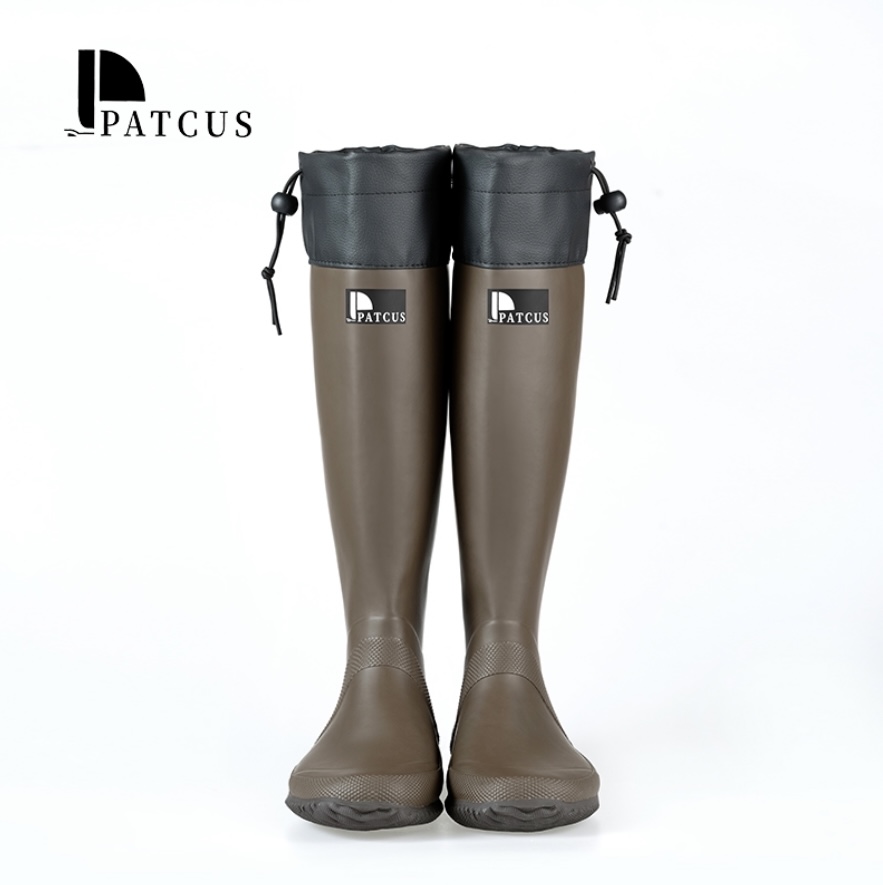
Men latex boots rely on natural or synthetic latex as the primary material, a polymer compound that offers high flexibility and water resistance when formulated appropriately. The manufacturing process typically uses either injection molding for seamless construction or vulcanization to bond latex layers, eliminating weak points that cause leaks. Key design elements include a reinforced shaft to prevent water from entering the top, a contoured outsole with specific tread patterns to enhance grip on slippery surfaces, and controlled thickness to balance durability and comfort. Professional Rain Boot Manufacturer notes that compound formulation is critical to achieving both water resistance and resistance to common industrial chemicals like dilute acids and alkalis, adjusted based on intended work environments.
Latex’s molecular structure allows it to stretch while maintaining a tight seal, which distinguishes it from other rubber materials. Seam-free construction, a core feature of high-quality latex work boots, reduces the risk of water infiltration compared to boots with stitched seams. The outsole is often treated with additive compounds to meet slip resistance standards, with tread depth and pattern optimized for specific surfaces such as concrete, metal grating, or wet tile. Shaft height is also standardized to cover the ankle and lower calf, a requirement for many industrial settings to provide additional protection against splashes and minor impacts.
3. Practical Solutions and Operation Steps
Selecting and using men latex boots for industrial environments requires a structured approach to ensure suitability for specific work conditions. Follow these actionable steps to choose and use boots effectively:
- Assess your primary work environment: Confirm if exposure is limited to water only, or includes contact with chemicals, mud, or sharp debris; adjust material formulation expectations accordingly.
- Check slip resistance ratings: Verify that the outsole meets applicable standards like EN ISO 20347 for slip performance on wet or oily surfaces before purchasing.
- Measure sizing accurately: Wear work socks similar to those used on the job, and leave 0.5 to 1 cm of space between the toe and the boot’s toe cap to accommodate foot swelling during long shifts.
- Select appropriate shaft height: Choose a shaft that covers the ankle and lower calf; avoid excessively tall shafts that restrict movement, especially for tasks requiring frequent bending or climbing.
- Test for flexibility: Bend the boot by hand to ensure it flexes at the midsole, not the ankle, to match natural foot movement during walking or lifting.
- Inspect for construction quality: Check for seamless joints, uniform material thickness, and absence of air bubbles in the latex, which can cause weak points over time.
For example, boots designed for food processing environments do not require chemical resistance but need easy-to-clean surfaces, while boots for chemical handling facilities need latex formulated to resist specific dilute acids. Matching these attributes to exact work needs prevents overspending on unnecessary features and ensures reliable protection.
4. Daily Maintenance and Precautions
Proper maintenance extends the lifespan of men latex boots and preserves their protective properties. After each use, clean the boots with mild soap and warm water, avoiding strong solvents like bleach or acetone that degrade latex. Remove dirt from the tread using a soft brush to prevent embedded particles from scratching the outsole. Dry the boots naturally at room temperature, away from direct sunlight or heat sources like radiators, which cause latex to become brittle and crack. Stuffing boots with newspaper helps maintain their shape and absorb excess moisture.
Additional precautions include storing boots in a cool, dry area when not in use, avoiding contact with oil-based products that can break down latex, and avoiding wearing latex boots for tasks unrelated to their intended purpose. Never use standard latex boots as safety footwear for heavy impact or sharp object hazards, as they are not designed to meet impact or penetration resistance standards. If boots come into contact with chemicals, rinse them immediately with clean water to reduce the risk of material degradation.
5. Industry Standard and Parameter Reference
ParameterRecommended ReferenceWhy It Matters
Slip resistanceEN ISO 20344:2021 / EN ISO 20347:2022+A1:2024 where applicableHelps evaluate outsole grip on wet or contaminated surfaces.
Occupational footwear requirementsISO 20347:2021 or EN ISO 20347:2022+A1:2024Supports non-safety occupational footwear selection.
Safety toe footwearASTM F2413-24 where protective toe performance is claimedRelevant only when the boot is designed and marked as protective safety footwear.
Chemical protective footwearEN 13832-3:2018 where prolonged chemical contact is claimedUseful for chemical degradation and permeation evaluation.
Flex resistanceISO 20344:2021, Section 7Tests material durability under repeated bending, critical for long-term wear in industrial settings.
These standards provide a framework for evaluating boot performance, and manufacturers often conduct third-party testing to verify compliance. It is important to note that compliance with these standards does not guarantee suitability for every specific task, so additional assessment of individual work environment risks is still necessary.
6. Customer Common FAQ
Q: Are latex boots suitable for long-term contact with dilute chemicals?
A: Latex formulation can be adjusted to resist certain dilute chemicals, but compatibility depends on the specific chemical type and concentration. Professional Rain Boot Manufacturer recommends verifying chemical resistance specifications with the supplier, as standard latex may degrade with prolonged exposure to strong alkalis or organic solvents.
Q: How do I prevent my latex boots from cracking in cold temperatures?
A: Choose boots formulated with cold-resistant latex compounds, and avoid leaving boots in freezing temperatures for extended periods when not in use. Regular cleaning and proper drying also help maintain material flexibility, as dirt or trapped moisture can accelerate brittleness.
Q: Can men latex boots be used as safety work boots for construction sites?
A: Standard latex boots are not designed for construction safety requirements, including impact or penetration resistance. If you need protective footwear for construction, look for boots marked with compliance to ASTM F2413 or EN ISO 20347 safety standards.
Q: How often should I clean my industrial latex boots?
A: Clean boots after every use to remove contaminants, especially in high-moisture or dirty environments. For heavily soiled boots, use a soft brush and mild soap, and avoid abrasive scrubbing that can damage the latex surface.
Q: Do latex boots cause foot odor in warm work environments?
A: Latex itself is non-porous, but poor ventilation can trap sweat and lead to odor. Look for boots with breathable lining materials or design features that allow air circulation, and maintain regular cleaning to prevent odor buildup.
Conclusion
Men latex boots are a valuable solution for high-moisture industrial work, offering tailored protection when selected and maintained correctly. Key considerations include matching boot formulation, slip resistance, and shaft height to specific work environment risks, verifying compliance with relevant industry standards, and following proper maintenance practices to extend product lifespan. Professional Rain Boot Manufacturer emphasizes that aligning footwear with task requirements reduces safety risks and improves worker comfort over time, making informed selection a critical investment for industrial operations.
References
- International Organization for Standardization (ISO). ISO 20344:2021, Footwear - Test methods for whole footwear. Geneva: ISO, 2021.
- International Organization for Standardization (ISO). ISO 20347:2021, Occupational footwear. Geneva: ISO, 2021.
- European Committee for Standardization (CEN). EN ISO 20347:2022+A1:2024, Occupational footwear. Brussels: CEN, 2024.
- American Society for Testing and Materials (ASTM). ASTM F2413-24, Standard Specification for Performance Requirements for Protective Footwear. West Conshohocken, PA: ASTM International, 2024.
- European Committee for Standardization (CEN). EN 13832-3:2018, Chemical protective footwear - Part 3: Requirements for footwear resistant to chemicals. Brussels: CEN, 2018.