


Flame-Resistant Firefighting Boots: Protective Performance Standards for High-Risk Fire Emergency Scenarios
Aug 13, 2026
View: 1
Leave a message
Meta Description: This article delves into the protective performance standards of flame-resistant firefighting boots essential for high-risk fire emergency scenarios. It's suitable for firefighters, procurement managers, and those interested in firefighting equipment. Professional Rain Boot Manufacturer offers valuable insights into high-quality firefighting boots.
Keywords: Flame-resistant firefighting boots, Protective performance standards, Fire emergency scenarios, Boot materials, Boot manufacturing process
1. Core Problem Analysis
1.1 Common Causes of the Problem
When searching for flame-resistant firefighting boots, buyers often aim to address various critical issues. One of the primary concerns is ensuring adequate protection against high temperatures and flames. In a fire emergency, the boots need to prevent direct contact with fire and high - heat sources to avoid burns to the feet. Another common problem is the need for good durability. Firefighting operations involve rough terrains, sharp objects, and intense physical activities, which can easily damage the boots. Additionally, comfort is a significant factor. Firefighters may need to wear the boots for long periods during operations, so the boots should not cause excessive fatigue or discomfort. Poorly designed boots can lead to foot pain, blisters, and reduced mobility, which can be life - threatening in an emergency situation. Moreover, proper sizing is crucial. Ill - fitting boots can restrict movement, cause instability, and even increase the risk of tripping and falling.
1.2 Affected Usage Scenarios
Flame - resistant firefighting boots are primarily used in high - risk fire emergency scenarios. These include urban building fires, where firefighters have to navigate through burning structures filled with debris, heat, and toxic smoke. Factory fires are also a critical application scenario. Factories may contain flammable chemicals, machinery, and large amounts of combustible materials, posing a significant threat to firefighters. Forest fires are another area where these boots are essential. In forest fires, firefighters have to walk on uneven and often slippery terrains, and the boots need to provide good traction while protecting against the intense heat of the fire. Additionally, industrial fire emergencies, such as oil refinery fires or chemical plant fires, require boots with high - level protection due to the presence of highly flammable and toxic substances.
2. Product and Process Principle
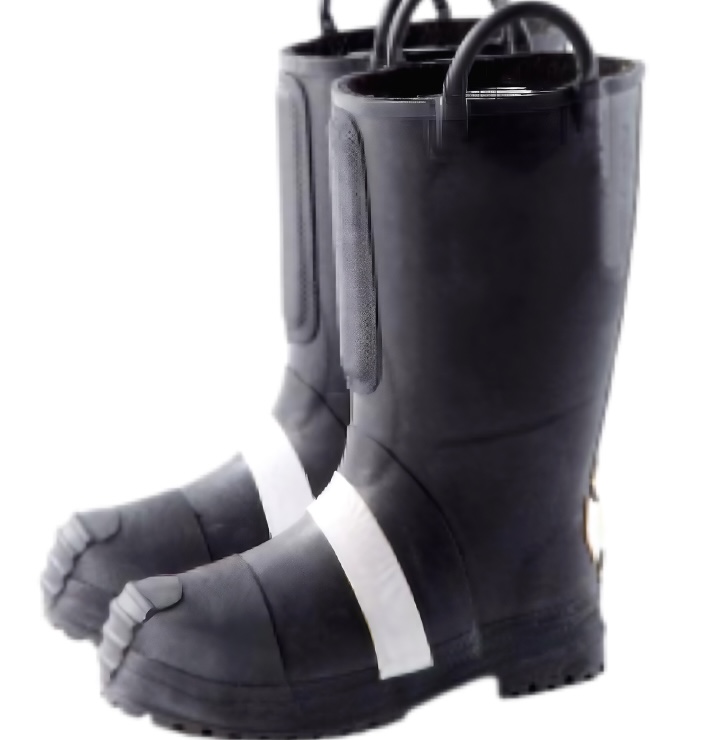
Flame - resistant firefighting boots are typically made from a combination of high - performance materials. The outer layer is often constructed from flame - resistant rubber or synthetic materials. Rubber offers excellent resistance to heat and flames. It can withstand high temperatures without melting or catching fire, providing a reliable barrier against the fire. Synthetic materials, on the other hand, can be engineered to have specific properties such as high strength, light weight, and chemical resistance. For example, some synthetic fabrics are treated with flame - retardant chemicals to enhance their fire - resistant performance. The lining of the boots is also crucial. It is usually made of materials that are comfortable to wear and can wick away moisture. Moisture - wicking linings help keep the feet dry, which is important for preventing blisters and maintaining comfort during long - term use. Some linings may also have additional insulation properties to protect the feet from the heat. The outsole of the boots is designed for both traction and durability. A deep and well - designed tread pattern can provide excellent grip on various surfaces, including wet and slippery floors in a fire - affected area. The outsole is often made of a rubber compound that is resistant to wear and tear. In terms of the manufacturing process, injection molding and vulcanization are commonly used. Injection molding allows for precise shaping of the boots, ensuring a consistent fit and quality. Vulcanization is a process that cross - links the rubber molecules, making the rubber more durable, heat - resistant, and elastic. Professional Rain Boot Manufacturer uses these advanced manufacturing processes to produce high - quality flame - resistant firefighting boots that meet the strictest industry standards.
3. Practical Solutions and Operation Steps
When choosing flame - resistant firefighting boots, consider the following steps:1. **Material Selection**: Opt for boots made from high - quality flame - resistant materials. Check the specifications to ensure that the outer layer can withstand high temperatures and flames. For example, look for rubber with a high heat - resistance rating or synthetic materials with proven flame - retardant properties.2. **Sole Design**: Choose boots with a deep and aggressive tread pattern. This will provide better traction on different surfaces, reducing the risk of slipping during firefighting operations. Consider the type of terrain where the boots will be used. For forest fires, a more rugged and deep - treaded sole may be more suitable, while for urban building fires, a sole that provides good grip on smooth floors may be preferred.3. **Lining Comfort**: Select boots with a moisture - wicking and comfortable lining. This will help keep the feet dry and reduce the risk of blisters. Some linings may also offer additional insulation, which is beneficial in high - heat environments.4. **Size and Fit**: Ensure that the boots fit properly. Try on the boots with the socks that you will be wearing during firefighting operations. The boots should not be too tight or too loose. A proper fit will ensure maximum comfort and mobility.5. **Certification and Standards**: Look for boots that meet relevant international or national safety standards, such as ASTM F2413 - 24 for safety toe footwear. This will ensure that the boots have been tested and meet the required level of protection.6. **Cleaning and Maintenance**: After each use, clean the boots thoroughly. Use a mild soap and water to remove dirt, debris, and any chemicals that may have come into contact with the boots. Let the boots dry naturally at room temperature, away from direct heat sources. Avoid using harsh cleaning agents or solvents as they may damage the materials of the boots.
4. Daily Maintenance and Precautions
Proper daily maintenance is crucial for ensuring the longevity and performance of flame - resistant firefighting boots. - **Cleaning**: After each use, remove any dirt, mud, or debris from the boots. Use a soft brush or a damp cloth to wipe the surface. For stubborn stains, a mild detergent can be used, but make sure to rinse thoroughly to avoid leaving any residue. - **Drying**: Always allow the boots to dry naturally. Do not place them near a heater or in direct sunlight, as this can cause the materials to warp, crack, or lose their flame - resistant properties. Stuff the boots with newspaper to help absorb moisture and maintain their shape. - **Storage**: Store the boots in a cool, dry place. Avoid storing them in a cramped space or under heavy objects, as this can deform the boots. It is also advisable to keep them away from chemicals and sharp objects that could damage the boots. - **Inspection**: Regularly inspect the boots for signs of wear and tear, such as cracks, holes, or loose stitching. If any damage is detected, have the boots repaired or replaced immediately. - **Avoidance**: Do not use the boots for purposes other than firefighting. Do not expose the boots to long - term high - temperature sources, solvents, or sharp objects outside of the normal operational environment. Do not substitute regular rain boots for flame - resistant firefighting boots in high - risk fire scenarios, as they do not offer the same level of protection.
5. Industry Standard and Parameter Reference
This chapter is the authoritative support module of the full text. The following table lists international standards, test methods, or verifiable parameters related to flame - resistant firefighting boots:
ParameterRecommended ReferenceWhy It MattersFlame ResistanceASTM F2412 - 24: Foot Protection Test MethodsHelps evaluate the boot's ability to resist flames and prevent ignition in high - risk fire scenarios.Thermal InsulationISO 20344:2021: Footwear Test MethodsAssesses the boot's ability to insulate the feet from high - temperature sources, reducing the risk of burns.Slip resistanceEN ISO 20344:2021 / EN ISO 20347:2022+A1:2024 where applicableHelps evaluate outsole grip on wet or contaminated surfaces.Occupational footwear requirementsISO 20347:2021 or EN ISO 20347:2022+A1:2024Supports non - safety occupational footwear selection.Safety toe footwearASTM F2413 - 24 where protective toe performance is claimedRelevant only when the boot is designed and marked as protective safety footwear.Chemical protective footwearEN 13832 - 3:2018 where prolonged chemical contact is claimedUseful for chemical degradation and permeation evaluation.
Do not invent exact performance numbers. Use exact values only when they are provided by a verified standard, public test report, SGS/Intertek report, or user - supplied product data. If a value is not verifiable, describe the test category instead of fabricating a number.
6. Customer Common FAQ
Q: How do I choose the right material for flame - resistant firefighting boots?
A: When choosing materials, look for high - heat - resistant and flame - retardant ones. Rubber and certain synthetic materials are commonly used. Professional Rain Boot Manufacturer can offer guidance based on your specific needs and the expected fire scenarios.
Q: Are these boots suitable for all types of fire emergencies?
A: While flame - resistant firefighting boots are designed for high - risk fire scenarios, different types of fires may require additional features. For example, industrial fires with chemical hazards may need boots with better chemical - resistant properties. Always check the boot's specifications against the specific requirements of the fire emergency.
Q: How can I ensure the boots fit properly?
A: Try on the boots with the socks you'll wear during operations. Walk around in them to ensure there is no excessive tightness or looseness. If possible, consult with a sizing expert or refer to the manufacturer's sizing guide.
Q: Do the boots have a strong odor?
A: New boots may have a slight odor, but it should dissipate over time. If the odor is strong and persistent, it may indicate a problem with the materials. Professional Rain Boot Manufacturer uses high - quality materials that minimize strong odors.
Q: Can I wear these boots in cold weather?
A: Some flame - resistant firefighting boots are designed to be suitable for cold weather. Look for boots with proper insulation. However, if you expect to use the boots in extremely cold conditions, it's best to check the product specifications or consult the manufacturer. Professional Rain Boot Manufacturer can provide information on cold - weather performance.
Conclusion
Flame - resistant firefighting boots are essential for high - risk fire emergency scenarios. Understanding the core problems, product and process principles, and following practical solutions and daily maintenance tips are crucial for ensuring the effectiveness and longevity of these boots. When choosing boots, be sure to consider industry standards and consult professional advice. Professional Rain Boot Manufacturer can offer valuable support in material selection, product design, and performance evaluation, helping to ensure that you get the most suitable boots for your firefighting needs.
References
- ASTM F2412 - 24: Foot Protection Test Methods
- ASTM F2413 - 24: Protective Footwear Specification
- ISO 20344:2021: Footwear Test Methods
- ISO 20347:2021: Occupational Footwear
- EN ISO 20347:2022+A1:2024
- EN 13832 - 3:2018: Chemical Protective Footwear