


Functional Merits of Patterned Kids’ Boots for Outside Play and Field Activities
Aug 13, 2026
View: 0
Leave a message
Meta Description: This article explores the key factors in choosing patterned kids’ boots for outside play and field activities. It analyzes common problems, explains the principles of materials and processes, and offers practical solutions. Suitable for parents and educators. A Professional Rain Boot Manufacturer provides in - depth industry knowledge.
Keywords: Kid Patterned Boots, rain boots, waterproof boots, rubber boots, boot materials, boot selection, boot maintenance
1. Core Problem Analysis
1.1 Common Causes of the Problem
When parents search for patterned kids’ boots, they often face several key problems. First, there is the issue of sizing. Kids' feet grow rapidly, and if the boots are too small, it can restrict foot development and cause discomfort, while boots that are too large may lead to tripping hazards during activities. Second, the boots' durability is essential. Given kids' energetic outdoor play, boots may be prone to wear, such as sole detachment or upper cracking. Third, the boots' waterproof performance is a concern. If the boots are not waterproof, kids' feet will get wet, potentially leading to colds and other health problems. Fourth, the boots' slip - resistance is crucial. Slippery boots can cause kids to fall during outdoor activities, which may result in injuries. Fifth, the materials used in the boots can cause skin allergies for some kids, especially if the lining is made of low - quality or irritating materials.
1.2 Affected Usage Scenarios
The problems mentioned above significantly affect various usage scenarios. For example, in a rainy day scenario, kids may wear boots to play in puddles or walk to school. In this case, boots that are not waterproof or slip - resistant will make the experience unpleasant and dangerous. When kids are involved in field activities like hiking, camping, or playing in a muddy field, boots need to be durable and have good traction. In addition, during winter, if the boots do not have good insulation properties, kids' feet may get cold, reducing their enthusiasm for outdoor activities.
2. Product and Process Principle
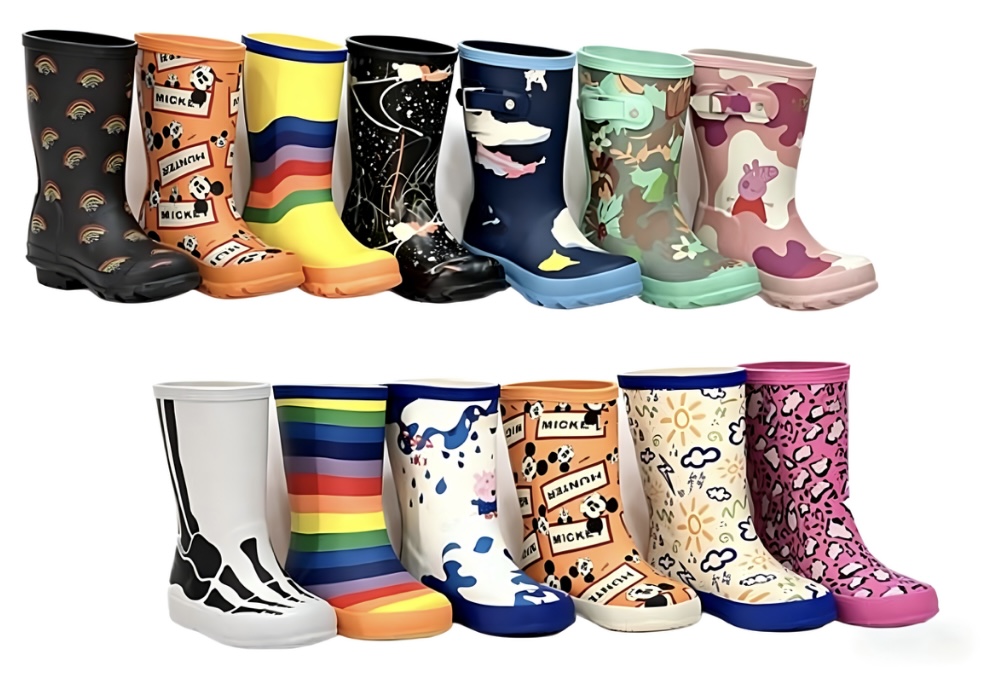
The materials and processes of kids' patterned boots play a vital role in their performance. The main materials used in rain boots include natural rubber, synthetic rubber, Polyvinyl Chloride (PVC), and Ethylene Vinyl Acetate (EVA). Natural rubber, sourced from rubber tree latex, is a traditional choice for high - quality boots. It is highly flexible, remains pliable in cold temperatures, and provides excellent traction. The manufacturing process often involves hand - assembly and vulcanization, a heat - curing process that creates a durable, seamless, and completely waterproof boot with good elasticity [1]. Synthetic rubber offers similar properties to natural rubber and often has improved resistance to oils and chemicals. PVC is a synthetic plastic polymer. PVC boots are usually produced through injection molding, where the material is injected into a mold. This highly automated process is cost - effective, making PVC boots a widely available and affordable option. EVA is a lightweight material with good shock - absorption properties, which is suitable for reducing the burden on kids' feet. However, it may be less durable compared to rubber and PVC. The outsole pattern of the boots also affects their performance. Functional patterns such as saw - toothed wave patterns, hexagonal honeycomb patterns, and arrow patterns are more effective than flat or shallow - textured patterns. The shaft height of the boots should be appropriate for the usage scenario. For example, in muddy fields, higher shafts can prevent mud from entering the boots. The lining of the boots can be made of various materials, such as polyester fiber, which can achieve quick - drying and non - sticky effects, improving the comfort of wearing. A Professional Rain Boot Manufacturer understands these material and process principles well and can produce high - quality kids' boots based on these principles.
3. Practical Solutions and Operation Steps
When choosing patterned kids' boots, the following steps can be followed:
- Material Selection: If the kids will be involved in long - term outdoor activities, natural rubber boots are a good choice due to their durability and comfort. For occasional use or budget - conscious parents, PVC boots can be considered. EVA boots are suitable for kids who need lightweight boots, such as for short - distance trips.
- Outsole Pattern: Choose boots with deep - textured soles. The depth of the sole teeth should exceed 3mm to ensure good traction on wet or muddy surfaces [5].
- Shaft Height: For normal outdoor play on rainy days, short - shaft boots (10 - 20cm) are sufficient. For activities in muddy fields or deep water, medium - or long - shaft boots may be required.
- Lining: Select boots with breathable and comfortable lining materials, such as polyester fiber or cotton, to prevent foot sweating and discomfort.
- Size Selection: Measure the kids' feet accurately. Leave about 1 - 1.5cm of space at the front of the toes to allow for foot growth and movement. It is best to try on the boots with the same thickness of socks that kids usually wear.
- Slip - Resistance and Waterproof Testing: If possible, test the boots' slip - resistance on a wet surface. Also, check the seams of the boots to ensure they are well - sealed and waterproof.
4. Daily Maintenance and Precautions
Proper daily maintenance can extend the lifespan of kids' patterned boots:
- Cleaning: After use, clean the boots with a soft brush and mild soap. Rinse them thoroughly with clean water to remove dirt and mud. Do not use strong solvents, as they may damage the boot materials.
- Drying: Let the boots dry naturally in a well - ventilated place. Avoid direct sunlight and high - temperature heat sources, as this may cause the materials to warp or age.
- Odor Removal: Place a small amount of baking soda or activated carbon inside the boots to absorb odors. You can also sprinkle some fragrant essential oils on a cloth and put it inside the boots.
- Anti - aging and Anti - deformation: Store the boots in a cool and dry place. When not in use for a long time, you can stuff some soft paper or shoe trees into the boots to maintain their shape.
- Precautions: Do not substitute ordinary rain boots for certified safety boots in high - risk work environments. Also, check the boots regularly for any signs of wear and tear, such as sole detachment or upper cracking, and replace them if necessary.
5. Industry Standard and Parameter Reference
This section provides some important international standards and parameters for reference:
ParameterRecommended ReferenceWhy It MattersSlip resistanceEN ISO 20344:2021 / EN ISO 20347:2022+A1:2024 where applicableHelps evaluate outsole grip on wet or contaminated surfaces. According to these standards, the dynamic friction coefficient on wet surfaces should meet certain requirements to ensure safety during walking [1, 5, 8].Occupational footwear requirementsISO 20347:2021 or EN ISO 20347:2022+A1:2024Supports non - safety occupational footwear selection, ensuring the quality and performance of the boots in different working environments.Safety toe footwearASTM F2413 - 24 where protective toe performance is claimedRelevant only when the boot is designed and marked as protective safety footwear, providing protection for the toes in high - risk environments.Chemical protective footwearEN 13832 - 3:2018 where prolonged chemical contact is claimedUseful for chemical degradation and permeation evaluation, ensuring the boots can resist chemical corrosion in special environments.
It is important to note that do not invent exact performance numbers. Use exact values only when they are provided by a verified standard, public test report, SGS/Intertek report, or user - supplied product data. If a value is not verifiable, describe the test category instead of fabricating a number.
6. Customer Common FAQ
Q: How do I choose the right material for my kids' boots?
A: A Professional Rain Boot Manufacturer can provide useful guidance. If your kids play outdoors frequently, natural rubber boots are more suitable because of their durability and comfort. For occasional use or to save cost, PVC boots are a good option. EVA boots are lightweight and can be selected for short - distance trips.
Q: What should I do if the boots have a strong odor?
A: You can place a small amount of baking soda or activated carbon inside the boots to absorb the odor. Another way is to sprinkle some fragrant essential oils on a cloth and put it inside the boots.
Q: How to measure the correct size for kids' boots?
A: Measure the kids' feet accurately while they are standing. Leave about 1 - 1.5cm of space at the front of the toes. It is best to try on the boots with the same thickness of socks that kids usually wear.
Q: Can patterned kids' boots be worn in cold weather?
A: It depends on the material and insulation properties of the boots. For cold weather, boots with good insulation materials, such as those with a neoprene lining, are more suitable. You can also choose boots with a higher shaft to keep the ankles warm.
Q: How to clean the boots to keep them in good condition?
A: Use a soft brush and mild soap to clean the boots. Rinse them thoroughly with clean water. Do not use strong solvents. Let the boots dry naturally in a well - ventilated place, away from direct sunlight and high - temperature heat sources.
Conclusion
In conclusion, when choosing patterned kids' boots for outside play and field activities, it is crucial to consider factors such as material, outsole pattern, shaft height, lining, and size. By understanding the materials and processes of the boots, following practical selection steps, and carrying out proper daily maintenance, parents can ensure their kids have comfortable, durable, and safe boots. A Professional Rain Boot Manufacturer plays a key role in providing high - quality products based on industry knowledge and standards.
References
- Tech Team. What are the main materials used in the production of rain boots? A Guide to Durability & Comfort. 2026 - 07 - 31.
- Hua Hongyun. A Rain Boot Processing Method Combining Rubber Vulcanization and PU Injection Molding. CN119458997A, 18 Feb. 2025.
- Tech Team. What Is Injection Molding and How Does It Benefit Rain Boot Manufacturing. 26 Mar. 2026.
- Data Monitoring and Research Report on China’s Women’s Rain Boot Market. 20 Mar. 2026.
- How to Avoid Pitfalls When Picking Rain Boots in 2026: Master Waterproofing, Anti‑Slip and Wear‑Resistance to Cut Unnecessary Spending. 11 May. 2026.
- Is There an Absolute Best Material for Rain Boots? Select Proper Footwear Matching Your Actual Requirements. 10 Feb. 2026.
- How to Choose Fashion‑Oriented Rain Boots in 2026? Why Shaft Height and One‑Piece Rubber Molding Have Become New Focus Points Beyond Waterproofing and Anti‑Slip Performance. 06 Jul. 2026.
8.Picking the Wrong Rain Boot Wastes Your Money: Key Differences Among PVC, EVA and Natural Rubber. 23 Jul. 2026.