


Garden‑Spec Rain Boots: Functional Benefits for Varied Landscaping and Gardening Assignments
Aug 14, 2026
View: 0
Leave a message
Meta Description: This blog focuses on the core knowledge of garden rain boots, including common problems, materials, manufacturing processes, selection guides, maintenance methods, and industry standards. It aims to provide practical information for gardening enthusiasts and professionals. As a Professional Rain Boot Manufacturer, we offer reliable expertise and references.
Keywords: Garden Boots, Rain Boots, Waterproof Boots, Rubber Boots, Boot Material, Boot Maintenance
1. Core Problem Analysis
1.1 Common Causes of the Problem
When searching for garden boots, users often face several issues. Leakage is a common problem, usually caused by poor quality seams or damaged materials. The location where the outsole meets the upper is a vulnerable area where water may seep in. Cracking can occur over time, especially in boots made of PVC, which may become brittle after long - term exposure to UV rays or extreme temperatures. Foot discomfort, such as a stuffy feeling, is also a concern. Low - quality linings may not wick away sweat effectively, leading to a damp and uncomfortable environment for the feet. Another issue is insufficient slip resistance. Smooth or poorly designed outsole patterns may not provide enough grip on wet or muddy surfaces, increasing the risk of slips and falls. Selecting the wrong size can lead to problems like water entering the boots or restricted movement. Additionally, material aging can reduce the durability and performance of the boots.
1.2 Affected Usage Scenarios
The affected usage scenarios mainly revolve around gardening activities. When weeding, gardeners need to walk on soft and often wet soil. If the boots lack proper slip resistance, it can be very dangerous. During watering or when it rains, the boots need to keep the feet dry, so waterproof performance is essential. In the process of pruning and moving heavy gardening equipment, boots with good support and durability are required. Other related scenarios include farming, where similar muddy and wet conditions exist. Livestock work also often involves wet and dirty environments, and the boots should be able to withstand stamping and potential contact with manure. Muddy outdoor construction work near gardens may also require suitable garden boots.
2. Product and Process Principle
Garden rain boots are made from a variety of materials, each with its own unique properties and manufacturing processes. The main materials include PVC, rubber, EVA, and TPR. PVC is a plastic material that is cost - effective and easy to process. It can be made softer by adding plasticizers, making it suitable for mass production. However, it may become brittle in cold weather. The manufacturing of PVC boots often uses the injection - molding process. In injection molding, molten PVC is injected into a mold under high pressure. After cooling, the boot is formed. This process allows for high - speed production and can create seamless boots, which significantly enhances waterproof performance. As a Professional Rain Boot Manufacturer, we understand that the key to a good PVC boot lies in the precise control of the injection process, including temperature, pressure, and the amount of material injected.
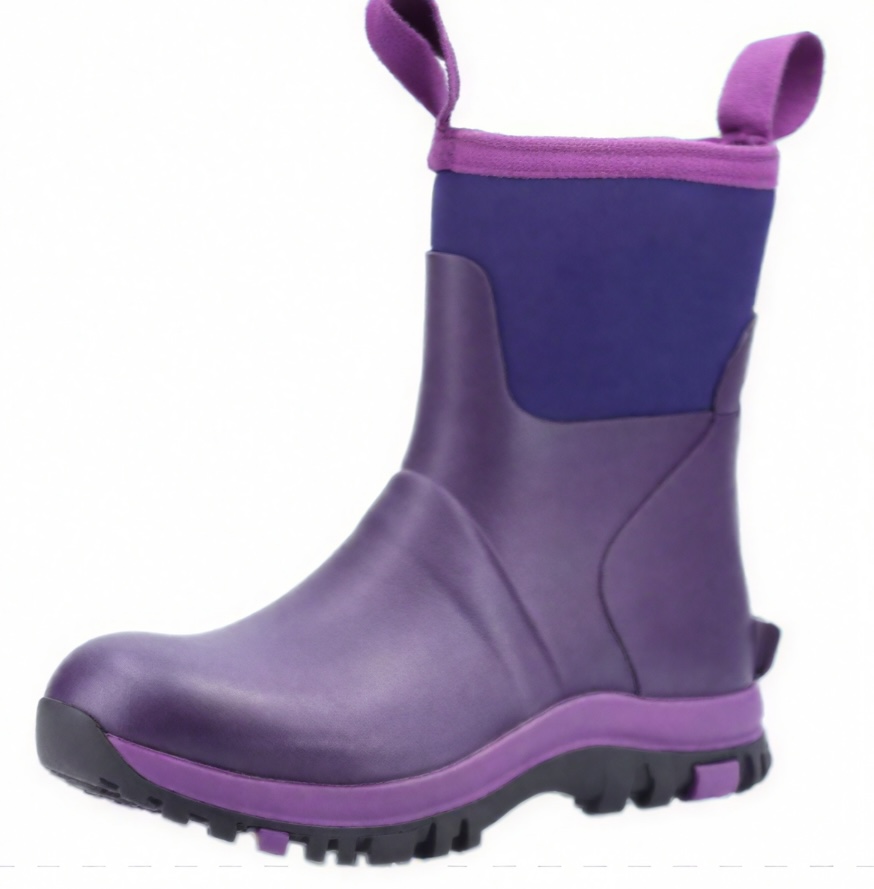
Rubber, either natural or synthetic, is a popular choice for high - quality garden boots. Natural rubber is harvested from rubber trees and is known for its excellent elasticity, abrasion resistance, and low - temperature flexibility. Synthetic rubber, on the other hand, can be engineered to have specific properties such as better oil and chemical resistance. The vulcanization process is commonly used for rubber boots. Vulcanization involves heating the rubber with sulfur or other vulcanizing agents, which cross - links the rubber molecules, making the boots more durable, elastic, and resistant to wear and tear. The outsole pattern of rubber boots is also crucial. Deep and complex patterns can provide better traction on wet and muddy surfaces. The shaft height of the boots is designed according to different needs. Higher shafts can protect the legs from splashes and mud, while lower shafts are more suitable for activities that require more mobility.
EVA is a lightweight foam - like synthetic material. It is breathable and comfortable for long - term wear, making it suitable for occasional or short - term gardening tasks. EVA boots are often produced through a molding process similar to injection molding but with a focus on creating a lightweight and flexible structure. TPR is a thermoplastic rubber that combines the properties of rubber and plastic. It is easy to process, has good elasticity, and is relatively inexpensive. TPR boots can be made using injection - molding or extrusion processes.
3. Practical Solutions and Operation Steps
When choosing garden boots, consider the following aspects:
- Material selection: If you need boots for heavy - duty and long - term gardening work, natural or synthetic rubber boots are a good choice due to their durability and slip resistance. For occasional gardening or light tasks, PVC or EVA boots can be more cost - effective. TPR boots can be a balance between cost and performance.
- Shaft height: For tasks where there is a lot of mud and water splashing, choose taller shaft boots. If you need more ankle mobility, shorter shaft boots may be more suitable.
- Outsole pattern: Look for deep and complex patterns such as hexagonal, zig - zag, or grooved patterns. These can provide better traction on wet and muddy surfaces. The depth of the patterns should be at least 3mm to ensure good grip.
- Lining: If foot comfort is a priority, choose boots with moisture - wicking linings. Materials like polyester or synthetic fibers can keep the feet dry and reduce the risk of blisters.
- Size: Rain boots should be one size larger than your usual shoe size to allow room for thick socks and to prevent water from entering the boots. Measure your foot and calf circumference when possible to ensure a proper fit. For high - shaft boots, measure the calf circumference to avoid a too - tight or too - loose fit.
- Other factors: Consider the climate. If you work in cold environments, choose boots with good cold - resistant properties. For areas with chemical exposure, select boots with appropriate chemical resistance. Check for any relevant safety certifications, such as slip - resistance standards (e.g., EN ISO 20344:2021 / EN ISO 20347:2022+A1:2024).
4. Daily Maintenance and Precautions
Proper daily maintenance can extend the lifespan of garden boots. Here are some suggestions:
- Cleaning: After each use, remove dirt and debris from the boots. For PVC and EVA boots, a simple rinse with water is usually enough. For more stubborn dirt, use a mild soap solution. Rubber boots can also be cleaned with water and soap. Avoid using harsh chemicals or strong solvents, as they can damage the material.
- Drying: Let the boots air - dry naturally. Do not place them near a heat source such as a radiator or in direct sunlight, as this can cause the material to warp, crack, or lose its elasticity.
- Odor removal: If the boots develop an odor, you can place a small amount of baking soda inside the boots overnight. This helps to absorb the odor. You can also use specialized shoe deodorizers.
- Anti - aging and anti - deformation: Store the boots in a cool, dry place. If possible, stuff the boots with newspaper to help maintain their shape. Avoid folding or compressing the boots for a long time, as this can cause permanent deformation.
- Handling after chemical contact: If the boots come into contact with chemicals, immediately rinse them with plenty of water according to the chemical's safety instructions. Check for any signs of damage and replace the boots if necessary.
There are also some things to avoid. Do not use garden boots in areas where certified safety boots are required, such as construction sites with heavy machinery. Do not expose the boots to extreme temperatures for a long time, as this can damage the material. And do not neglect regular inspection of the boots for signs of wear and tear, such as cracking or loose seams.
5. Industry Standard and Parameter Reference
This chapter provides important industry standards and parameters for garden rain boots:
ParameterRecommended ReferenceWhy It MattersSlip resistanceEN ISO 20344:2021 / EN ISO 20347:2022+A1:2024 where applicableHelps evaluate outsole grip on wet or contaminated surfaces, reducing the risk of slips and falls in gardening and related work.Occupational footwear requirementsISO 20347:2021 or EN ISO 20347:2022+A1:2024Supports non - safety occupational footwear selection, ensuring that the boots meet basic functional requirements for work.Safety toe footwearASTM F2413 - 24 where protective toe performance is claimedRelevant only when the boot is designed and marked as protective safety footwear, protecting the toes from potential impact in work environments.Chemical protective footwearEN 13832 - 3:2018 where prolonged chemical contact is claimedUseful for chemical degradation and permeation evaluation, protecting the feet in case of contact with chemicals in gardening or other work.
It's important not to invent exact performance numbers. Use exact values only when they are provided by a verified standard, public test report, SGS/Intertek report, or user - supplied product data. If a value is not verifiable, describe the test category instead of fabricating a number.
6. Customer Common FAQ
Q: Which material is better for garden boots, PVC or rubber?
A: It depends on your needs. As a Professional Rain Boot Manufacturer, we know that PVC boots are more cost - effective and lighter, but they may become brittle in cold weather. Rubber boots, especially those made of natural rubber, are more durable, flexible, and have better slip resistance, but they are usually more expensive. If you do heavy and long - term gardening work, rubber is a better choice. For occasional use, PVC can meet your needs.
Q: How can I ensure the boots have good slip resistance?
A: Look for boots that comply with the slip - resistance standards such as EN ISO 20344:2021 / EN ISO 20347:2022+A1:2024. Also, check the outsole pattern. Deeper and more complex patterns generally provide better traction on wet and muddy surfaces.
Q: What size of garden boots should I choose?
A: Rain boots should be one size larger than your regular shoe size. This provides enough space for thick socks and prevents water from flowing into the boots. You can also measure your foot length and calf circumference to get a more accurate fit.
Q: How do I remove the odor from my garden boots?
A: You can place some baking soda inside the boots overnight. Baking soda can absorb odors effectively. You can also use specialized shoe deodorizers. Make sure the boots are dry before using these methods.
Q: Can I use my regular garden boots in a chemical - exposed environment?
A: It depends on the type of chemicals. If there is prolonged chemical contact, you should choose boots that meet the EN 13832 - 3:2018 standard for chemical - protective footwear. Regular garden boots may not provide sufficient protection against chemicals and can be damaged, so it's important to use the appropriate boots for the specific environment.
Conclusion
In conclusion, when choosing garden boots, it's crucial to consider various factors such as the material, shaft height, outsole pattern, lining, and size. Understanding the common problems, product and process principles, and following the maintenance guidelines can help you make the right choice. As a Professional Rain Boot Manufacturer, we hope that the information provided in this blog can assist you in selecting and using your garden boots effectively.
References
- ISO 20344:2021, Footwear Test Methods
- EN ISO 20347:2022+A1:2024, Occupational Footwear
- ASTM F2413 - 24, Protective Footwear Specification
- EN 13832 - 3:2018, Chemical Protective Footwear