


How Men Patterned Boots Perform in Wet Winter Outdoor Work Environments
Oct 28, 2026
View: 0
Leave a message
Meta Description: Wet winter outdoor work often brings risks of slipping, moisture retention, and boot damage, making patterned boots a common choice, but their performance varies based on material, pattern design, and work scenario. This guide breaks down key factors affecting how these boots hold up in cold, wet conditions, ideal for outdoor workers, procurement specialists, and footwear buyers seeking practical insights. Professional Rain Boot Manufacturer
Keywords: men patterned boots, wet winter work boots, work boot performance, waterproof boot material, outsole pattern, occupational footwear maintenance
1. Core Problem Analysis
1.1 Common Causes of the Problem
Men’s patterned boots in wet winter outdoor work often face three key issues: inadequate slip resistance on icy or slushy surfaces, water seepage through poorly sealed seams, and material stiffness that reduces comfort or causes cracking in low temperatures. Additional issues include trapped moisture leading to foot blisters, and patterned treads clogging with mud or debris to further reduce grip. Many workers also struggle to match boot specifications to their specific work tasks, leading to premature wear.
1.2 Affected Usage Scenarios
These performance issues impact a wide range of wet winter outdoor work scenarios, including agricultural labor, construction site work, fishing operations, livestock handling, road maintenance, and outdoor retail work. Each scenario has unique demands: for example, farm workers may need treads that resist clogging with wet mud, while construction workers require grip on concrete surfaces coated with ice or de-icing chemicals.
2. Product and Process Principle
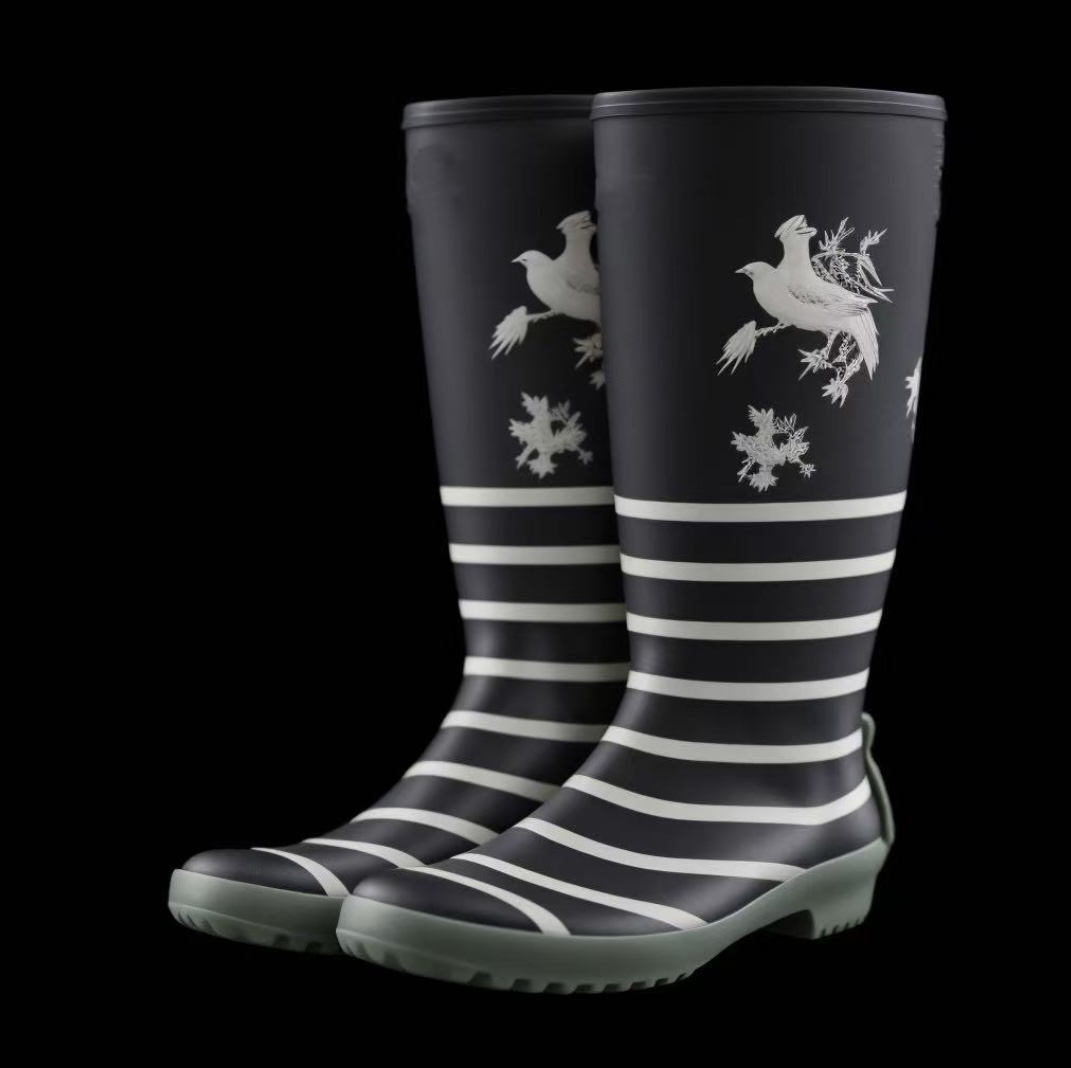
The performance of men’s patterned boots relies on material composition and manufacturing processes, with each component designed to address specific wet winter challenges. Outsole patterns, for example, are engineered using rubber compounds with modified formulations to maintain flexibility in low temperatures, a factor referenced in ISO 20344:2021 footwear test standards. Pattern depth and spacing are also calibrated: deeper lugs help displace water and mud, while wider gaps prevent clogging during heavy use.
Boot shaft height and lining material further impact water resistance and comfort; insulated fleece or neoprene linings retain heat, while seamless injection molding or vulcanization eliminates weak points where water can seep in. Professional Rain Boot Manufacturer notes that material compound testing for cold resistance is a critical step, as stiffer rubber in temperatures below 0°C can lose grip and crack over time. Seamless construction, which avoids glued or stitched joints, reduces water entry points, a key design choice for wet work environments.
3. Practical Solutions and Operation Steps
To select and use men’s patterned boots effectively in wet winter outdoor work, follow these actionable steps. First, assess your primary work scenario: if you work in muddy farm fields, choose boots with deep, widely spaced lugs (at least 5mm in depth) to prevent clogging. For icy construction sites, prioritize boots with multi-directional lug patterns that provide grip on both flat and angled surfaces.
- Check material cold resistance: verify that the boot’s outsole remains flexible at temperatures 5°C lower than your typical work environment, as recommended in ISO 20347:2021 occupational footwear guidelines.
- Confirm water resistance: inspect for a seamless shaft or sealed seams, and avoid boots with visible stitching on the lower shaft, which are more prone to water seepage.
- Match sizing to work needs: leave 1-2cm of extra space in the toe box for thick winter socks, as insulated linings can take up additional room and reduce comfort during long shifts.
- Clear treads after each use: use a boot pick or old nail to remove mud, ice, and debris from pattern grooves, as clogged treads reduce grip on wet surfaces.
For work involving prolonged chemical exposure (such as road salt or agricultural fertilizers), select boots labeled for chemical resistance, and avoid standard patterned boots that are not tested for chemical permeation under EN 13832-3:2018.
4. Daily Maintenance and Precautions
Proper maintenance extends the lifespan of men’s patterned boots and preserves their performance in wet winter work. After each use, wipe off mud, slush, and salt residue with a damp cloth, paying close attention to pattern grooves where debris accumulates. Dry boots in a cool, well-ventilated area, away from direct sunlight or space heaters, as high heat can cause rubber to crack and liner materials to degrade.
Additional precautions include: avoiding contact with petroleum-based products, which can break down rubber compounds, and not storing boots in enclosed plastic bags for extended periods, as trapped moisture can lead to mold or mildew. It is also critical to note that patterned rain boots are not designed as safety footwear with protective toes or puncture resistance; for tasks requiring toe protection, select boots tested to ASTM F2413-24 safety standards.
5. Industry Standard and Parameter Reference
ParameterRecommended ReferenceWhy It MattersSlip resistanceEN ISO 20344:2021 / EN ISO 20347:2022+A1:2024 where applicableHelps evaluate outsole grip on wet or contaminated surfaces, including ice and slush.Occupational footwear requirementsISO 20347:2021 or EN ISO 20347:2022+A1:2024Supports non-safety occupational footwear selection for wet outdoor work.Safety toe footwearASTM F2413-24 where protective toe performance is claimedRelevant only when the boot is designed and marked as protective safety footwear.Chemical protective footwearEN 13832-3:2018 where prolonged chemical contact is claimedUseful for evaluating resistance to road salt, fertilizers, and other workplace chemicals.Cold temperature flexibilityISO 20344:2021 Test Method 8.10Verifies outsole performance in low temperatures, a key factor for wet winter work.
Do not invent exact performance numbers. Use exact values only when provided by verified third-party test reports, such as SGS or Intertek results, or when aligned with official standard test outcomes. For example, a boot labeled for cold resistance must pass the flex test at a minimum temperature of -10°C per ISO 20344:2021 to be considered suitable for most wet winter outdoor work.
6. Customer Common FAQ
Q: How do I know if men’s patterned boots will be slip-resistant on icy surfaces?
A: Look for boots tested to EN ISO 20347:2022+A1:2024, which includes slip resistance testing on ice. Professional Rain Boot Manufacturer notes that boots with deeper, multi-directional lugs typically perform better on ice, as they can bite into smooth, frozen surfaces more effectively than shallow or flat treads.
Q: Can I use regular patterned rain boots for construction work in wet winter?
A: It depends on the construction task. For general labor on non-slip concrete surfaces, standard patterned boots may work, but for work on icy, slush-covered surfaces, choose boots labeled for occupational use with slip resistance testing. Avoid regular rain boots for tasks requiring toe protection or chemical resistance, as these are not designed for those purposes.
Q: How often should I replace my men’s patterned work boots?
A: Replacement frequency depends on wear. Check for cracked outsoles, separated seams, or reduced tread depth; if tread depth falls below 3mm, the boot’s slip resistance will decrease significantly. For regular wet winter work, most boots will need replacement after 12-18 months with consistent use.
Q: Can I clean my patterned boots with a pressure washer?
A: Avoid high-pressure washers, as they can damage sealed seams and push water into the boot’s shaft. Instead, use a soft brush and mild soap to clean the exterior, and clear treads with a boot pick to remove debris. For deeper cleaning, remove the liner (if possible) and hand-wash it with cold water.
Q: Do patterned boots keep feet warm in wet winter work?
A: Warmth depends on lining material. Boots with insulated fleece or neoprene linings retain heat, but they may not be suitable for extremely cold temperatures below -20°C. For such conditions, select boots with specialized cold-weather insulation tested to relevant industry standards.
Conclusion
Men’s patterned boots perform differently in wet winter outdoor work based on material, design, and alignment with workplace requirements. By understanding how outsole patterns, cold-resistant compounds, and seam construction impact performance, workers can select boots that address specific tasks like mud farming or icy construction. Proper maintenance, including regular tread cleaning and appropriate drying, preserves boot functionality, while adherence to industry standards ensures reliable performance. Professional Rain Boot Manufacturer emphasizes that matching boot specifications to work scenarios is the key to maximizing durability and safety in wet winter conditions.
References
- International Organization for Standardization. ISO 20344:2021, Footwear – Test methods for whole shoe. 2021.
- International Organization for Standardization. ISO 20347:2021, Occupational footwear. 2021.
- European Committee for Standardization. EN ISO 20347:2022+A1:2024, Occupational safety and health footwear requirements. 2024.
- American Society for Testing and Materials. ASTM F2413-24, Standard Specification for Performance of Protective Footwear. 2024.
- European Committee for Standardization. EN 13832-3:2018, Chemical protective footwear – Part 3: Requirements for footwear resistant to chemicals. 2018.