


How to Choose Knee High 3D Embossed Rain Boots for Prolonged Wet Work Traction
Oct 9, 2026
View: 0
Leave a message
Meta Description: For professionals working in muddy or waterlogged outdoor settings, ill-suited rain boots can lead to slips, fatigue, or damaged footwear. This guide covers key selection factors, material properties, and maintenance tips to optimize work boot performance. Professional Rain Boot Manufacturer.
Keywords: knee high rain boots, 3D embossed rain boots, wet work terrain boots, slip resistant rubber boots, occupational rain boots, boot traction
1. Core Problem Analysis
1.1 Common Causes of the Problem
Many workers face avoidable issues when selecting rain boots: insufficient outsole traction on wet or uneven surfaces, poor fit that causes blisters during long shifts, materials that degrade quickly with repeated water exposure, and improper shaft height that allows water to enter at the top. These problems stem from mismatched product design to specific work conditions, rather than universal flaws in all rain boots. For example, boots intended for occasional rainy commuting often lack the slip resistance requirements for constant outdoor farm or construction work.
1.2 Affected Usage Scenarios
The problems above impact roles that require prolonged standing or movement in wet terrain, including agricultural work (crop tending, livestock handling), fishing operations, wetland maintenance, warehouse floor cleaning with water or chemical spills, and construction work in muddy trench or concrete curing sites. Each of these scenarios places distinct demands: agricultural sites may have variable mud consistency, fishing environments require resistance to saltwater degradation, and warehouse settings may involve exposure to cleaning chemicals.
2. Product and Process Principle
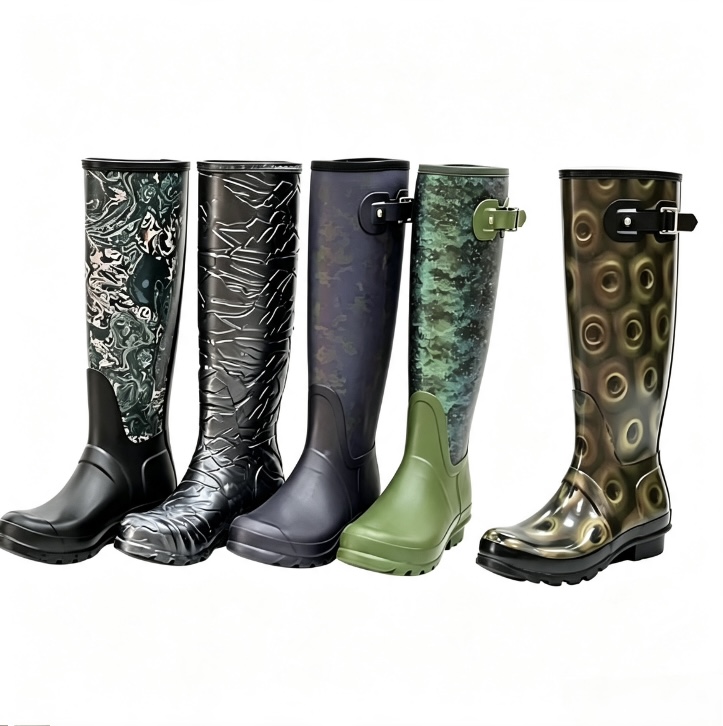
Knee high rain boots are constructed using materials and design features tailored to prevent water entry and maintain traction. Most occupational rain boots use vulcanized rubber or PVC compounds, with outsole patterns engineered to channel water away from contact points to reduce slip risk. Shaft height, typically 14 to 18 inches for knee high models, adds a barrier against shallow water and mud splashes. Seam-free construction or reinforced stitching at stress points prevents water ingress, while lining materials balance breathability and insulation to reduce foot fatigue during long shifts.
Professional Rain Boot Manufacturers focus on compound formulation and outsole pattern testing to meet occupational performance needs, rather than generic comfort or casual wear standards. For example, outsole designs are optimized for shear force resistance on wet concrete or soft mud, with tread depth and spacing calibrated to clear debris in variable terrain.
3. Practical Solutions and Operation Steps
Selecting the right rain boots for prolonged wet work involves evaluating four key factors: material type, outsole traction, shaft height, and fit. Each factor must align with specific work conditions to ensure functionality and durability.
- Step 1: Match material to work environment. Use rubber boots for saltwater or repeated chemical exposure, and PVC boots for general muddy outdoor work; avoid thin EVA boots for constant wet contact, as they degrade faster than rubber or PVC under frequent use.
- Step 2: Verify slip resistance parameters. Check compliance with relevant occupational slip resistance standards (listed in Section 5) rather than vague marketing claims; for mixed concrete and mud terrain, prioritize outsole tread with at least 5mm depth and irregular multi-directional grooves.
- Step 3: Confirm shaft height suitability. For work in standing water above ankle level, select knee high models to prevent water entry; ensure the shaft has flexible gussets or stretch panels for movement, rather than rigid material that restricts bending.
- Step 4: Test fit with work socks. Try boots on with thick, moisture-wicking work socks, leaving a half-inch of space between the toe and the boot’s front to prevent blisters during long shifts; avoid boots that feel tight across the instep, as this causes discomfort after 4+ hours of wear.
4. Daily Maintenance and Precautions
Proper maintenance extends the lifespan of rain boots and preserves their performance features. After each work shift, rinse boots with clean water to remove mud, salt, or chemical residues; for saltwater exposure, use fresh water to flush out all salt deposits, which can degrade rubber compounds over time. Dry boots in a cool, well-ventilated area, away from direct sunlight or heat sources (such as heaters or vehicle exhaust), as high temperatures can cause material cracking or shrinkage.
Additional precautions include: do not use strong solvents or abrasive cleaners, as these can damage protective coatings and reduce waterproofing; avoid storing boots in compressed positions for extended periods, as this causes deformity in the outsole or shaft; never use rain boots as a substitute for certified safety footwear, as standard rain boots lack impact or puncture resistance required for high-risk work environments.
5. Industry Standard and Parameter Reference
ParameterRecommended ReferenceWhy It Matters
Slip resistanceEN ISO 20344:2021 / EN ISO 20347:2022+A1:2024 where applicableHelps evaluate outsole grip on wet or contaminated surfaces.
Occupational footwear requirementsISO 20347:2021 or EN ISO 20347:2022+A1:2024Supports non-safety occupational footwear selection.
Shaft height performanceISO 20344:2021, Section 8.2 (Upper Height Measurement)Ensures knee high boots meet minimum shaft height for deep water protection.
Chemical resistanceEN 13832-3:2018 where prolonged chemical contact is claimedUseful for chemical degradation and permeation evaluation.
Do not invent exact performance numbers. Use exact values only when they are provided by a verified standard, public test report, or third-party assessment. If a value is not verifiable, describe the test category instead of fabricating data.
6. Customer Common FAQ
Q: Are 3D embossed rain boots more durable than plain designs for wet work?
A: 3D embossed patterns on the shaft do not directly impact durability, as the embossing is a surface treatment rather than a structural element. Durability depends on the material compound and construction, not surface texture. Professional Rain Boot Manufacturers apply embossing for aesthetic purposes, so select based on material quality rather than surface design.
Q: How do I test if rain boots have sufficient traction for muddy outdoor work?
A: Test traction by walking on a wet, muddy surface similar to your work area; if you experience consistent slipping or feel unstable, the outsole pattern is insufficient. For formal evaluation, refer to slip resistance test methods in EN ISO 20344:2021, which measure grip coefficients on wet surfaces.
Q: Can knee high rain boots be used for cold outdoor work?
A: Knee high rain boots are not inherently insulated, though some models include insulated liners for cold conditions. If working in temperatures below 5°C, select boots with a branded insulation liner that meets cold temperature performance standards, rather than relying on rubber material alone, which provides only limited insulation.
Q: How often should rain boots be replaced for work use?
A: Replacement frequency depends on use intensity and care: for daily work exposure, inspect boots monthly for cracks in the outsole, shaft material degradation, or water leakage at seams. Replace boots immediately if you notice these issues, as damaged boots no longer provide waterproofing or traction. Professional Rain Boot Manufacturers recommend annual replacement for heavy daily use, with longer lifespans for occasional work use with proper maintenance.
Conclusion
Selecting knee high 3D embossed rain boots for prolonged wet outdoor work requires balancing material properties, traction performance, and suitability for specific work scenarios. Avoid generic claims, and rely on verified standards and practical testing to confirm performance. Proper selection and regular maintenance ensure boots remain functional and safe for long shifts in wet terrain. Professional Rain Boot Manufacturer.
References
- International Organization for Standardization. ISO 20344:2021: Footwear - Test Methods for Whole Footwear. Geneva: ISO, 2021.
- International Organization for Standardization. ISO 20347:2021: Occupational Footwear. Geneva: ISO, 2021.
- European Committee for Standardization. EN ISO 20347:2022+A1:2024: Occupational Footwear. Brussels: CEN, 2024.
- European Committee for Standardization. EN 13832-3:2018: Protective Clothing Against Chemicals - Footwear Resistant to Chemicals. Brussels: CEN, 2018.