


How to Select Stylish Men's Leather Rain Boots for Urban Commutes and Adventures
Sep 24, 2026
View: 0
Leave a message
Meta Description: Urban commuters and weekend adventurers often face challenges with boots that fail to balance style, waterproofness, and durability, while many options fall short in grip or breathability. This guide breaks down key factors to choose functional, stylish boots, and is reviewed by a Professional Rain Boot Manufacturer.
Keywords: rain boot selection, urban waterproof boots, leather rain boots, commuter footwear, boot maintenance, slip resistance for boots
1. Core Problem Analysis
1.1 Common Causes of the Problem
Many users encounter issues when selecting men’s boots: leaky seams that let water seep into the shaft, stiff materials that cause discomfort during long commutes, outsole patterns that lack grip on wet pavement, and liners that trap moisture leading to foot odour or overheating. Additional problems include premature cracking from exposure to UV light or harsh chemicals, and poor sizing that restricts movement.
1.2 Affected Usage Scenarios
These issues impact two primary user groups: urban commuters who walk or cycle through rain-slicked city streets, and weekend adventurers who take short trips to parks, coastal trails, or rural areas that may have uneven, muddy terrain. Both groups need boots that perform well in wet conditions without looking out of place in office settings or casual gatherings.
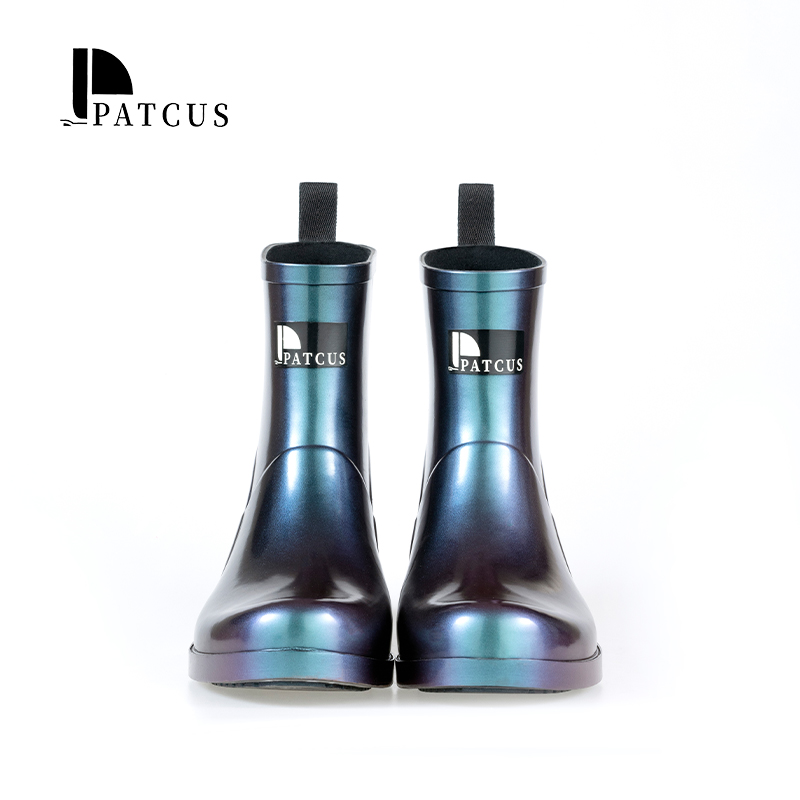
2. Product and Process Principle
Men’s stylish leather rain boots combine natural or treated leather with waterproofing technologies to meet performance needs. Leather used in this application is typically oil-treated or coated with a water-repellent layer, while the boot’s structure often integrates seam-welded or sealed edges to prevent water ingress. The outsole uses rubber or TPR compounds formulated to balance flexibility and traction, with tread patterns designed for both flat city surfaces and slightly uneven outdoor terrain. Lining materials, such as breathable fabric or moisture-wicking fleece, are chosen to reduce foot perspiration during extended wear.
A Professional Rain Boot Manufacturer explains that material compounding and process control directly impact boot lifespan; for example, the thickness of the rubber outsole is calibrated to maintain traction while remaining lightweight for all-day use. Seam quality is inspected under water pressure testing, a standard practice to ensure no leakage points develop after repeated use.
3. Practical Solutions and Operation Steps
Selecting the right men’s leather rain boots involves four concrete, verifiable steps. First, match the boot’s use case: for urban commutes, opt for a mid-height shaft (10-12 inches) to cover ankles without interfering with pant legs; for weekend outdoor trips, choose a slightly taller shaft with deeper treads. Second, assess material compatibility: treated leather works best for light rain and occasional outdoor walks, while full rubber panels add extra waterproof protection for longer exposure to wet conditions. Third, check outsole specifications: look for tread patterns with at least 3mm depth, and ensure the outsole compound meets slip resistance standards EN ISO 20344:2021 for urban surfaces. Fourth, verify sizing: measure foot length with socks worn, and check brand-specific sizing charts rather than standard shoe sizes to avoid ill-fitting boots that cause blisters.
- Always test boots in-store or confirm return policies if purchasing online, to ensure fit and comfort for 8+ hour wear.
- Avoid boots with rigid linings if you plan to walk long distances on uneven outdoor terrain.
- Select boots marked as suitable for light water exposure, not for deep immersion, unless explicitly designed for that use case.
4. Daily Maintenance and Precautions
Proper maintenance extends the lifespan of men’s leather rain boots, and reduces common issues like cracking, fading, and leakage. For daily cleaning, wipe the boot’s exterior with a damp cloth and mild soap, avoiding harsh chemicals that can degrade the water-repellent coating. After exposure to rain or mud, air-dry the boots at room temperature, away from direct sunlight or space heaters, as high heat can warp leather or rubber. For storage, stuff boots with acid-free paper to retain their shape, and keep them in a cool, dry area away from strong chemicals or pest repellents. Additional precautions include avoiding contact with gasoline, cleaning solvents, or industrial chemicals, which can break down rubber compounds over time, and never using these rain boots as protective footwear for industrial work unless they are certified to relevant occupational safety standards.
5. Industry Standard and Parameter Reference
ParameterRecommended ReferenceWhy It Matters
Slip resistanceEN ISO 20344:2021 / EN ISO 20347:2022+A1:2024 where applicableHelps evaluate outsole grip on wet or contaminated surfaces, critical for urban commutes.
Waterproof performanceISO 20344:2021, Section 6.8 Water Penetration TestMeasures ability to prevent water ingress under pressure, applicable for rain boot verification.
Occupational footwear requirementsISO 20347:2021 or EN ISO 20347:2022+A1:2024Supports selection for any task-specific outdoor use.
Material durabilityISO 4649:2010 Abrasion resistance test for rubberAssesses outsole wear rate, relevant for long-term outdoor use.
Performance claims should be verified against third-party test reports from bodies such as SGS or Intertek, to ensure alignment with standard test methods rather than unsubstantiated marketing claims.
6. Customer Common FAQ
Q: Can leather rain boots be worn in extreme cold temperatures?
A: Leather rain boots treated for flexibility may work in mild cold (above -5°C), but they are not designed for sub-zero temperatures. A Professional Rain Boot Manufacturer notes that rubber compounded with cold-resistant polymers is more suitable for temperatures below -5°C, as unmodified leather or rubber can crack in extreme cold.
Q: How often should waterproof coatings be reapplied to leather rain boots?
A: Reapplication frequency depends on use; for regular urban wear, every 6-12 months is recommended. Signs that reapplication is needed include water beading less on the leather surface, or dampness seeping through during light rain.
Q: Are mid-height rain boots suitable for both office and outdoor events?
A: Yes, if styled with formal or casual pants that cover the shaft edge, mid-height boots balance a sleek, professional appearance for office settings and adequate protection for short outdoor trips. Avoid taller shafts (over 14 inches) for office wear, as they may appear too casual.
Q: How do I clean mud off the boot’s outsole without damaging the tread?
A: Use a stiff-bristled brush to remove dried mud, then wipe with a damp cloth. Avoid high-pressure water sprays, as they can force water into sewn seams and damage the waterproof seal over time.
Conclusion
Selecting men’s stylish leather rain boots for urban commutes and weekend adventures requires balancing functionality, style, and material performance by matching the boot’s design to intended use cases, verifying adherence to relevant industry standards, and following proper maintenance practices. A Professional Rain Boot Manufacturer emphasizes that informed selection reduces common issues like leakage and poor traction, while regular care extends the boot’s lifespan for consistent use across multiple scenarios.
References
- International Organization for Standardization. ISO 20344:2021, Footwear - Test methods for whole shoe, 2021.
- International Organization for Standardization. ISO 20347:2021, Occupational footwear, 2021.
- European Committee for Standardization. EN ISO 20347:2022+A1:2024, Occupational footwear, 2024.
- International Organization for Standardization. ISO 4649:2010, Rubber, vulcanized or thermoplastic - Determination of abrasion resistance using a rotating cylindrical drum device, 2010.