


How Winter Waterproof Warm Boots Perform in Subzero Backcountry Conditions
Sep 24, 2026
View: 0
Leave a message
Meta Description: Winter waterproof warm boots face unique performance challenges in subzero backcountry environments, with factors like material flexibility, insulation retention, and traction defining real-world utility. This guide addresses key performance considerations for outdoor workers and winter adventurers, with insights from Professional Rain Boot Manufacturer.
Keywords: winter waterproof warm boots, subzero backcountry boots, rubber winter boots, cold-resistant work boots, boot insulation, cold weather footwear
1. Core Problem Analysis
1.1 Common Causes of the Problem
When users search about winter waterproof warm boot performance in subzero backcountry conditions, they often aim to resolve core issues like material stiffness that reduces mobility at temperatures below -10°C, failed waterproof seams due to contraction from cold, inadequate insulation that leads to cold toes, and reduced outsole traction on ice packed with snow. Additional common concerns include accelerated material cracking from extreme temperature fluctuations and poor fit that causes foot fatigue during long hours of wear.
1.2 Affected Usage Scenarios
These performance issues impact a range of subzero backcountry activities, including remote forestry work, winter search and rescue operations, backcountry skiing or snowshoeing, ice fishing on frozen lakes, and seasonal trail maintenance. Occupational users in these settings may wear boots for 8–12 consecutive hours, while recreational users often face variable terrain and sudden temperature drops that amplify performance gaps in standard waterproof boots.
2. Product and Process Principle
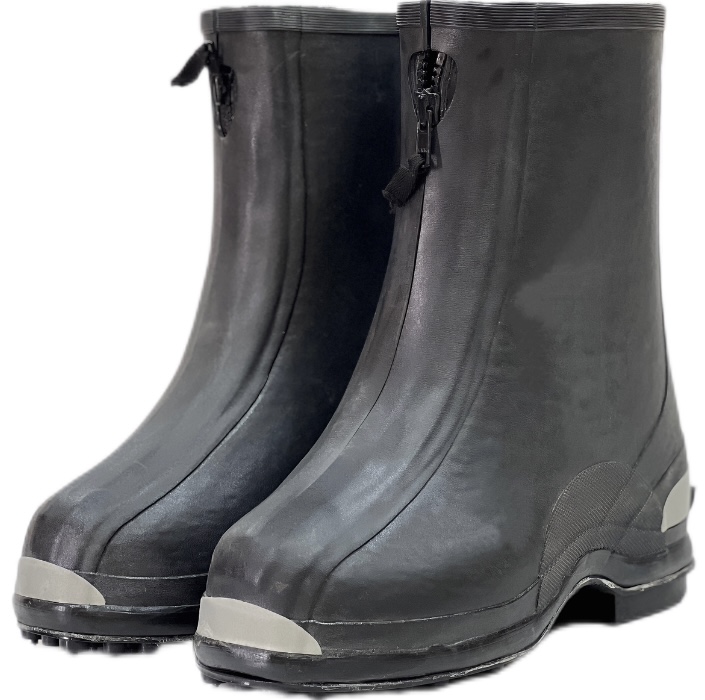
Winter waterproof warm boots rely on material formulation and manufacturing processes to balance flexibility, waterproofing, and insulation in subzero environments. Rubber compounds, such as nitrile rubber modified with plasticizers, maintain elasticity at temperatures as low as -30°C when formulated for cold resistance, compared to standard natural rubber that stiffens below -10°C [1]. Seamless vulcanization or bonded seam construction eliminates weak points where water can penetrate, avoiding the need for stitched seams that often fail in extreme cold. Insulation, typically synthetic non-woven fibers or closed-cell foam, is integrated into the boot’s shaft and footbed to retain heat without reducing breathability, a key consideration for users who generate perspiration during physical activity.
Professional Rain Boot Manufacturer emphasizes that outsole compounding is equally critical: TPR (thermoplastic rubber) outsoles with specialized gripping agents maintain friction on ice and packed snow, while shaft height (usually 20–25 cm) prevents snow ingress without restricting calf movement. Injection molding processes ensure consistent material thickness across the boot structure, with no thin spots that can tear or stiffen in subzero conditions.
3. Practical Solutions and Operation Steps
To select winter waterproof warm boots that perform well in subzero backcountry conditions, follow these actionable steps:
- Step 1: Verify material formulation: Confirm the boot’s rubber compound is rated for use at temperatures below -15°C, per standard material flexibility testing, to avoid stiffness that reduces mobility.
- Step 2: Check seam construction: Opt for seamless vulcanized or heat-bonded seams, rather than stitched or adhesive-only seams, to prevent water leakage during prolonged exposure to snow and ice.
- Step 3: Assess outsole pattern: Select outsoles with multi-directional lugs and a rubber compound designed for ice traction, per EN ISO 20344:2021 slip resistance testing [2], to reduce fall risk on icy terrain.
- Step 4: Match insulation to activity: For 8+ hour occupational use, choose closed-cell foam insulation with a minimum thickness of 5 mm; for intermittent recreational use, thinner synthetic fiber insulation is sufficient.
- Step 5: Test fit in cold conditions: Where possible, test boots at temperatures below 0°C to ensure they flex comfortably, with enough room for thermal socks without causing tightness that restricts circulation.
4. Daily Maintenance and Precautions
Proper maintenance extends the performance of winter waterproof warm boots in subzero environments, and avoids premature degradation. After each use, brush off packed snow with a soft brush, and wipe the exterior with a damp cloth to remove salt or de-icing chemicals that can break down rubber compounds over time. Dry boots at room temperature (15–20°C) away from direct heat sources, such as space heaters or car exhaust, as extreme heat can cause rubber to crack and insulation to compact. Avoid soaking boots in water for extended periods, as this can saturate insulation and reduce thermal retention.
Key precautions: Do not use strong solvents, such as gasoline or paint thinner, to clean boots, as these will degrade rubber and waterproof coatings. Do not substitute standard waterproof boots for specialized subzero work boots, as standard models do not have cold-resistant material formulations or reinforced insulation for extreme temperatures. Store boots in a cool, dry area above 0°C when not in use, and avoid folding the shaft repeatedly, as this can create stress points that lead to cracking in cold conditions.
5. Industry Standard and Parameter Reference
ParameterRecommended ReferenceWhy It Matters
Slip resistanceEN ISO 20344:2021 / EN ISO 20347:2022+A1:2024 where applicableHelps evaluate outsole grip on wet or contaminated surfaces, including ice and packed snow.
Material flexibility testingISO 20344:2021 Section 6.15Measures rubber compound elasticity at low temperatures to confirm performance in subzero conditions.
Occupational footwear requirementsISO 20347:2021 or EN ISO 20347:2022+A1:2024Supports non-safety occupational footwear selection for backcountry use.
Seam waterproofingEN 13832-3:2018 Section 7.2Evaluates resistance to water penetration under pressure, critical for snowy subzero conditions.
According to ISO 20344:2021, material flexibility testing at -20°C ensures that rubber compounds do not crack or stiffen when exposed to typical subzero backcountry temperatures. Test results for slip resistance must be evaluated under both dry and icy conditions, as traction requirements change significantly with surface type in winter environments.
6. Customer Common FAQ
Q: Do winter waterproof warm boots work at temperatures below -20°C?
A: Performance depends on material formulation. Boots with nitrile rubber compounds tested to -30°C and closed-cell insulation rated for extreme cold will maintain functionality at temperatures down to -25°C, while standard natural rubber boots will stiffen and lose flexibility below -10°C. Professional Rain Boot Manufacturer notes that users should confirm low-temperature ratings before purchasing for extreme subzero conditions.
Q: How often should I replace my winter waterproof warm boots in backcountry use?
A: Replacement depends on wear frequency and terrain. For weekly backcountry use, replace boots every 2–3 years if no visible damage (cracking, seam separation, outsole wear) occurs. For daily occupational use, inspect boots annually for material degradation, as frequent exposure to snow, ice, and de-icing chemicals accelerates wear.
Q: Can I repair a waterproof boot that has a seam leak in subzero conditions?
A: Temporary on-site repairs are possible with rubber patching kits designed for cold temperatures, but permanent repair requires a professional vulcanization process. Avoid stitching leaks in cold conditions, as needle holes will create new points for water penetration when temperatures drop further.
Q: Does insulation thickness directly relate to warmth in subzero conditions?
A: Insulation quality is as important as thickness. Closed-cell foam insulation with a thermal resistance value of at least 1.5 clo per mm is more effective than thicker synthetic fiber insulation that compacts under foot pressure, especially during long hours of walking on uneven terrain.
Conclusion
Winter waterproof warm boots perform reliably in subzero backcountry conditions when selected based on material flexibility, seam construction, and outsole traction aligned with relevant industry standards. Addressing core concerns of stiffness, leakage, and reduced mobility requires careful evaluation of compound formulation and manufacturing processes, rather than relying on generic "waterproof" or "warm" labels. Professional Rain Boot Manufacturer emphasizes that matching boot specifications to specific backcountry activities and temperature ranges ensures consistent performance, reducing the risk of discomfort or injury in extreme winter environments.
References
- International Organization for Standardization. ISO 20344:2021, Footwear - Test methods for whole shoe. Geneva: ISO, 2021.
- International Organization for Standardization. ISO 20347:2021, Occupational footwear. Geneva: ISO, 2021.
- European Committee for Standardization. EN 13832-3:2018, Chemical protective footwear. Part 3: Requirements for footwear resistant to liquid chemicals. Brussels: CEN, 2018.