


How Women Plain Boots Perform in All-Day Outdoor Working Environments
Oct 13, 2026
View: 0
Leave a message
Meta Description: Women plain boots are designed to support long hours of outdoor work, but their performance varies based on material, design, and matching to specific task conditions. This guide covers key factors affecting their functionality, common user challenges, and evidence-based solutions for occupational use. Professional Rain Boot Manufacturer provides standardized production insights to inform reliable performance choices.
Keywords: women plain boots, waterproof work boots, rubber work footwear, occupational rain boots, work boot maintenance, slip-resistant boots
1. Core Problem Analysis
1.1 Common Causes of the Problem
Users of women plain boots often face four key performance issues during all-day outdoor work: water leakage through seam joints due to incomplete sealing, trapped heat causing foot discomfort in warm environments, inadequate outsole slip resistance on wet or muddy surfaces, and premature material degradation from prolonged exposure to UV light or harsh chemicals. These issues are usually not inherent flaws but result from mismatching boot design to task parameters or poor maintenance practices.
1.2 Affected Usage Scenarios
The challenges impact a wide range of all-day outdoor working scenarios, including agricultural labor, livestock handling, food processing facility cleaning, fishing operations, warehouse floor maintenance, and rainy-season construction tasks. For example, farm workers may encounter mud and standing water for 8+ hours, while warehouse staff face wet, oil-contaminated surfaces that test outsole grip performance.
2. Product and Process Principle
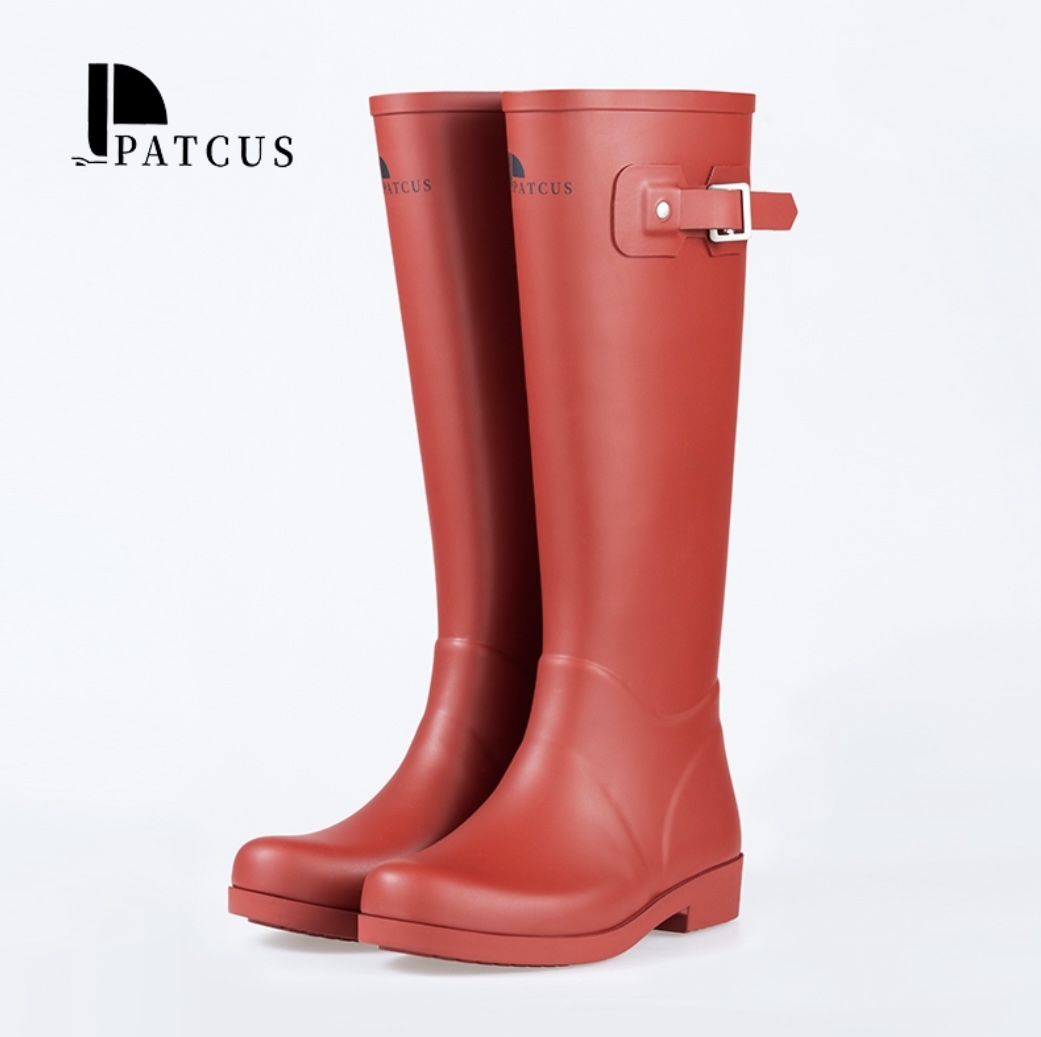
Women plain boots’ performance in all-day work relies on material selection, manufacturing processes, and structural design. Common materials include PVC, natural rubber, and EVA: PVC offers cost-effective water resistance, natural rubber provides flexibility in low temperatures, and EVA reduces overall boot weight for extended wear. Key manufacturing techniques include injection molding, which creates seamless upper sections to prevent leaks, and vulcanization for rubber boots to improve tensile strength and durability. Professional Rain Boot Manufacturer can adjust compound formulations to balance these properties for specific working conditions, such as adding slip-resistant rubber compounds for oily environments.
Structural elements that impact all-day performance include outsole pattern depth, shaft height, and lining material. Deeper outsole lugs enhance grip on muddy or uneven terrain, while mid-calf shaft height balances coverage and mobility. Lining materials like moisture-wicking fabric reduce trapped heat, a critical feature for 8+ hour shifts in moderate climates.
3. Practical Solutions and Operation Steps
To maximize women plain boots’ performance during all-day outdoor work, follow these actionable steps tailored to task requirements:
- Step 1: Match material to working conditions. For work with prolonged chemical exposure, choose boots compliant with EN 13832-3:2018; for cold-weather outdoor labor, select natural rubber boots rated for sub-zero temperatures.
- Step 2: Verify slip resistance before purchase. Test outsole grip on wet concrete or lightly contaminated surfaces, and cross-check performance with EN ISO 20344:2021 test data.
- Step 3: Select appropriate shaft height. For tasks involving deep water or heavy mud, opt for boots 2 inches above the ankle to prevent ingress; for warehouse work with frequent bending, choose mid-calf height for better mobility.
- Step 4: Ensure proper sizing. All boots should fit with half an inch of space at the toe to accommodate foot swelling during long shifts, without excess room that causes blisters or instability.
- Step 5: Inspect seams and construction before use. Check for incomplete seals in injection-molded sections, as these are the most common leak points.
4. Daily Maintenance and Precautions
Proper maintenance extends the service life of women plain boots and preserves performance for all-day work. Start by cleaning boots with mild soap and warm water after each use, avoiding strong solvents like bleach that can break down rubber or PVC compounds. After cleaning, air-dry boots away from direct sunlight or space heaters, as extreme heat or UV exposure can cause material cracking and shrinkage.
Key precautions include: do not substitute plain work boots for safety-toe footwear, as they do not meet ASTM F2413-24 impact protection requirements for construction or industrial tasks; do not store boots in folded positions, as this creates permanent creases that can lead to seam splitting over time; and avoid contact with petroleum-based chemicals, which can degrade rubber materials if exposure is prolonged.
5. Industry Standard and Parameter Reference
The following table outlines key industry standards and parameters for evaluating women plain boots’ performance in all-day outdoor work, based on global footwear testing protocols:
ParameterRecommended ReferenceWhy It Matters
Slip resistanceEN ISO 20344:2021 / EN ISO 20347:2022+A1:2024 where applicableHelps evaluate outsole grip on wet or contaminated surfaces, critical for outdoor work safety
Occupational footwear requirementsISO 20347:2021 or EN ISO 20347:2022+A1:2024Supports non-safety occupational footwear selection for all-day work scenarios
Chemical protective capabilityEN 13832-3:2018 where prolonged chemical contact is claimedAssesses resistance to permeation from common work chemicals like fertilizers or mild cleaning agents
Temperature resistanceASTM D1525-21 for polymer materialsMeasures flexibility at low temperatures, relevant for outdoor work in cold climates
All performance evaluations should use standardized test methods to ensure results are comparable and reliable for occupational use.
6. Customer Common FAQ
Q: Are women plain boots suitable for 10-hour shifts in agricultural work?
A: Their suitability depends on material and design. Boots with injection-molded seams, natural rubber compound, and moisture-wicking lining perform well for such shifts. Professional Rain Boot Manufacturer recommends checking slip resistance on muddy terrain via EN ISO 20344 test data before selecting for long agricultural tasks.
Q: How often should plain boots be replaced after regular outdoor work?
A: Replacement frequency varies by use: for daily work in wet or muddy conditions, inspect annually for seam leaks or outsole wear; boots with visible cracks or reduced grip should be replaced regardless of age.
Q: Can women plain boots be used for food processing facility cleaning?
A: They can be used if they meet hygiene standards and slip resistance requirements for wet food contact areas. Ensure boots are free of porous material, and avoid direct contact with food products during cleaning or wear.
Q: How can I prevent blisters during all-day wear of plain boots?
A: Choose boots with proper sizing (half an inch of toe space) and a padded collar, and wear moisture-wicking socks. Break in new boots gradually by wearing them for short periods before full work shifts.
Q: Do plain boots offer sufficient protection against chemical spills in warehouse work?
A: Basic models offer mild resistance, but for prolonged chemical exposure, select boots certified to EN 13832-3:2018, which specifies permeation resistance for common industrial chemicals.
Conclusion
Women plain boots’ performance in all-day outdoor working conditions is determined by material selection, manufacturing quality, and alignment with task-specific standards. By addressing common pain points like leaks, slip resistance, and heat buildup through informed selection and maintenance, users can extend boot service life and improve occupational comfort. Professional Rain Boot Manufacturer plays a key role in developing boots that balance functionality for extended work hours with practicality for diverse outdoor scenarios.
References
- International Organization for Standardization. ISO 20344:2021 Footwear - Test methods for whole shoe. Geneva: ISO, 2021.
- International Organization for Standardization. ISO 20347:2021 Occupational footwear. Geneva: ISO, 2021.
- European Committee for Standardization. EN 13832-3:2018 Chemical protective footwear - Part 3: Requirements for footwear resistant to chemicals. Brussels: CEN, 2018.
- American Society for Testing and Materials. ASTM D1525-21 Standard Test Method for Vicat Softening Temperature of Thermoplastics. West Conshohocken, PA: ASTM International, 2021.