


Key Performance Features of Equestrian‑Style Boots for Long‑Distance Horse Riding
Aug 14, 2026
View: 1
Leave a message
Meta Description: This article delves into the key performance features of equestrian boots, aiming to help riders choose the most suitable boots. It covers the causes of problems in equestrian boots, the principles of materials and processes, practical selection and maintenance methods, and relevant industry standards. Professional Rain Boot Manufacturer offers valuable insights for riders and industry players.
Keywords: Equestrian Boots, Rain Boots, Waterproof Boots, Rubber Boots, Boot Material, Boot Maintenance
1. Core Problem Analysis
1.1 Common Causes of the Problem
When riders search for equestrian boots, they often face several common problems. One of the main issues is the lack of durability. Equestrian boots are subjected to constant friction, bending, and pressure during long - distance horse riding, which can cause the material to wear out, especially at the areas around the ankles and knees. Another problem is poor waterproofing. If the boots are not properly waterproofed, the rider's feet can get wet, leading to discomfort and even health problems such as colds or foot infections. Additionally, insufficient support can be a concern. Without proper arch and ankle support, riders may experience fatigue and pain in their feet and legs after long rides. A poor fit is also common; boots that are too tight can restrict blood circulation, while those that are too loose can cause blisters and instability.
1.2 Affected Usage Scenarios
The problems with equestrian boots can have a significant impact on various usage scenarios. For professional riders participating in long - distance races, ill - fitting or low - performing boots can affect their riding performance and even their competitiveness. In equestrian training sessions, especially during intensive training, boots that lack durability or support may cause distractions and reduce the quality of training. For riders who enjoy leisurely horseback riding in the countryside, boots that are not waterproof can ruin the joy of the ride in case of bad weather. Moreover, in equestrian shows and events, boots that do not meet the required standards of appearance and performance can affect the overall impression of the rider.
2. Product and Process Principle
The materials and processes used in equestrian boots play a crucial role in their performance. Commonly used materials include leather, natural rubber, synthetic rubber, Polyvinyl Chloride (PVC), and Ethylene Vinyl Acetate (EVA). Leather is a classic material for equestrian boots. It is known for its good breathability, flexibility, and durability. High - quality leather can adapt to the shape of the rider's feet over time, providing a custom - fit feel. Natural rubber offers excellent waterproofing and elasticity. It can withstand harsh weather conditions and rough terrains. Synthetic rubber and PVC are often used for their lower cost and high - level of customization. They can be designed to have specific properties such as increased grip or abrasion resistance. EVA is lightweight and has good shock - absorbing properties, which can reduce the impact on the rider's feet during riding. In terms of the manufacturing process, there are several key techniques. Injection molding is a popular process for making rubber and PVC boots. In injection molding, the raw material is heated and melted, then injected into a mold under high pressure. After cooling and solidifying, the boot takes on the shape of the mold. This process allows for high - precision manufacturing and mass production. Vulcanization is another important process, especially for rubber boots. By heating the rubber with sulfur or other vulcanizing agents, the rubber molecules form cross - links, which improves the rubber's strength, elasticity, and resistance to heat and chemicals. A professional rain boot manufacturer can use these processes to ensure the quality and performance of equestrian boots.
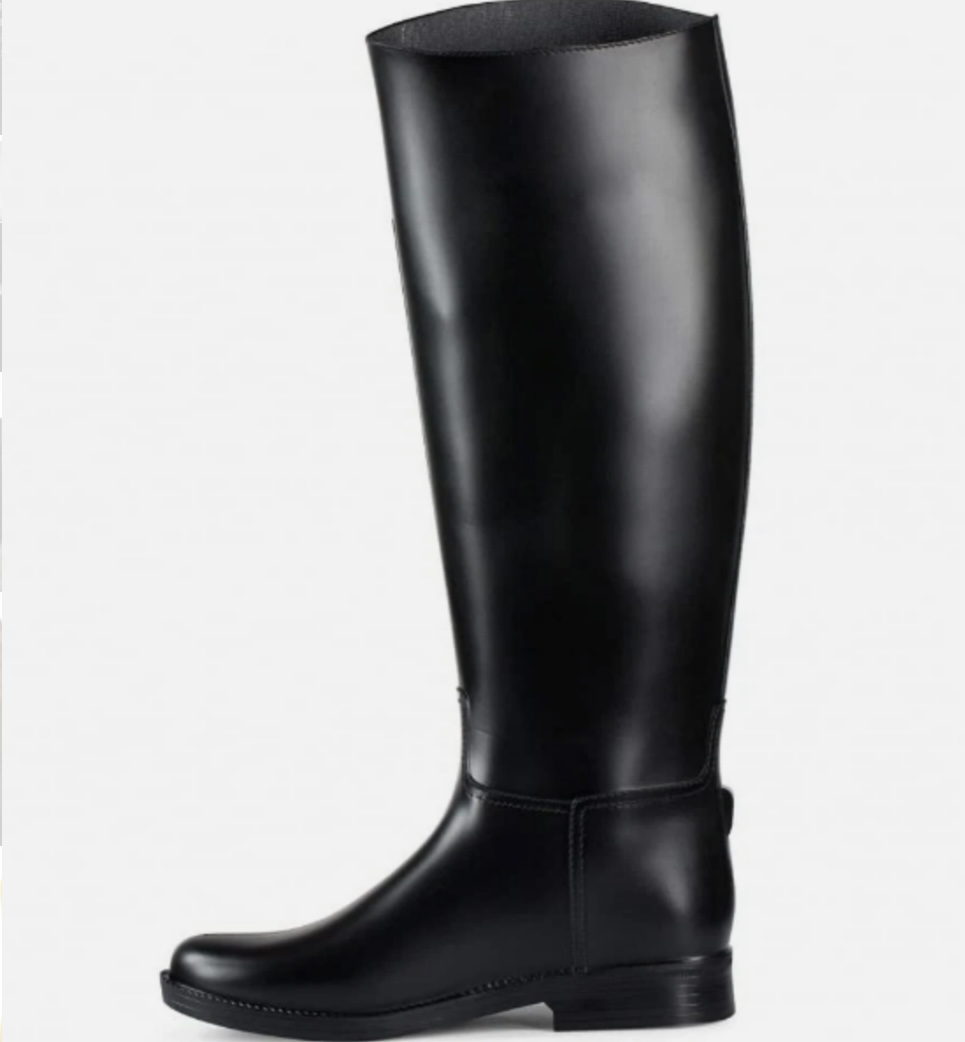
3. Practical Solutions and Operation Steps
When choosing equestrian boots, consider the following steps: 1. **Material Selection**: For long - distance riding, leather boots are a great choice due to their durability and breathability. However, if you are on a budget, synthetic materials like PVC or rubber can also be suitable. If you often ride in wet conditions, prioritize waterproof materials such as natural rubber or well - treated leather. 2. **Sole Design**: Look for boots with deep and well - spaced treads. These treads can provide better grip on different terrains, such as muddy ground or rocky paths. A rubber sole is generally more slip - resistant than a leather sole. 3. **Insole and Arch Support**: Ensure that the boots have a comfortable insole and proper arch support. This can reduce foot fatigue and prevent foot problems during long rides. You can also consider adding custom - made insoles for better support. 4. **Fit**: Try on the boots and walk around in them. Make sure there is enough room for your toes to move freely, but the boots should also fit snugly around your ankles and calves to provide stability. Also, consider the thickness of the socks you will wear while riding. 5. **Height and Flexibility**: Choose the appropriate boot height according to your riding needs. High - knee boots offer more protection and support, but they may limit flexibility. Mid - calf boots are more flexible but provide less coverage. Find a balance that suits your riding style.
4. Daily Maintenance and Precautions
Proper maintenance can extend the lifespan of equestrian boots. Here are some daily maintenance methods and precautions: **Cleaning**: After each use, remove dirt and debris from the boots. For leather boots, use a soft brush or cloth to gently clean the surface. You can then apply a leather cleaner or conditioner to keep the leather soft and supple. For rubber and synthetic boots, wash them with mild soap and water. **Drying**: Do not dry equestrian boots in direct sunlight or near a high - temperature heat source, such as a radiator or a heater. This can cause the material to warp, crack, or shrink. Instead, let them dry naturally at room temperature. **Storage**: Store the boots in a cool, dry place. If possible, stuff them with newspaper to help maintain their shape. Avoid folding or compressing the boots for long - term storage, as this can cause permanent creases. **Precautions**: Do not use strong solvents or chemicals to clean the boots, as they can damage the material. Also, do not use ordinary rain boots in place of certified safety boots if high - level safety protection is required during riding, such as in professional races or dangerous terrains.
5. Industry Standard and Parameter Reference
Industry standards and parameters are important for evaluating the quality and performance of equestrian boots. The following table provides some key parameters and their relevant standards:
ParameterRecommended ReferenceWhy It MattersSlip resistanceEN ISO 20344:2021 / EN ISO 20347:2022+A1:2024 where applicableHelps evaluate outsole grip on wet or contaminated surfaces.Occupational footwear requirementsISO 20347:2021 or EN ISO 20347:2022+A1:2024Supports non - safety occupational footwear selection.Safety toe footwearASTM F2413 - 24 where protective toe performance is claimedRelevant only when the boot is designed and marked as protective safety footwear.Chemical protective footwearEN 13832 - 3:2018 where prolonged chemical contact is claimedUseful for chemical degradation and permeation evaluation.
It's important to note that performance numbers should only be based on verified standards, public test reports, SGS/Intertek reports, or user - supplied product data.
6. Customer Common FAQ
Q: What material is best for equestrian boots?
A: There is no one - size - fits - all answer. Leather is a great choice for its durability and breathability, especially for long - term use. However, if cost is a concern or you need specific performance like high - level waterproofing, synthetic materials such as PVC or rubber might be more suitable. A Professional Rain Boot Manufacturer can provide more detailed advice based on your specific needs.
Q: How can I ensure the boots have good slip resistance?
A: Look for boots with outsoles that meet the EN ISO 20344:2021 / EN ISO 20347:2022+A1:2024 standards. Additionally, boots with deep and well - designed tread patterns generally have better slip resistance.
Q: What size of equestrian boots should I choose?
A: Try on the boots and make sure there is enough room for your toes to move freely. If you usually wear thick socks while riding, consider choosing a slightly larger size. You can also refer to the manufacturer's size chart for more accurate sizing.
Q: How do I deal with the odor of new boots?
A: For leather boots, you can air them out in a well - ventilated area for a few days. You can also use odor - absorbing products such as charcoal bags. For synthetic boots, you can wash them with mild soap and water and then let them dry naturally.
Q: Can I use regular rain boots for equestrian activities?
A: It depends on the activity. For casual and short - term riding in normal conditions, regular rain boots may work. However, for long - distance riding, professional events, or rough terrains, it is recommended to use boots specifically designed for equestrian activities. These boots usually offer better support, durability, and safety features. A Professional Rain Boot Manufacturer can help you understand the differences and choose the right boots.
Conclusion
In conclusion, understanding the key performance features of equestrian boots is essential for riders. We have analyzed common problems, such as lack of durability, poor waterproofing, and insufficient support, and discovered their causes and affected usage scenarios. We've also explored the material and process principles, including different materials like leather, rubber, and synthetic polymers, and manufacturing processes such as injection molding and vulcanization. Practical solutions for selection, daily maintenance methods, and industry standards have been provided. A Professional Rain Boot Manufacturer can offer valuable guidance in all aspects, from material selection to product compliance, ensuring that riders can choose the most suitable equestrian boots for a safe and enjoyable riding experience.
References
- Global Info Research. Global Rain Boot Market Size, Key Manufacturers, Key Regions, Product and Application Segmentation Research Report[R]. 2026
- . Updated Rain Boot Buying Guide and Brand Recommendations[R]. 2026.