


Kid Latex Boots for Outdoor Play: Performance Pros & Practical Limitations
Aug 13, 2026
View: 0
Leave a message
Meta Description: This article explores the performance and limitations of kid latex boots for outdoor play. It's suitable for parents choosing rain boots for kids and buyers in the B2B market. We'll analyze the core problems, explain material principles, offer practical solutions, and share maintenance tips. Professional Rain Boot Manufacturer
Keywords: Kid Latex Boots, Outdoor Play, Rain Boots, Rubber Material, Boot Maintenance
1. Core Problem Analysis
1.1 Common Causes of the Problem
When parents search for kid latex boots, they often face several key issues. One of the main concerns is the boots' quality and durability. Latex may be prone to tearing, especially if the child is active or the boots are caught on sharp objects during outdoor play. Another important problem is the fit. Boots that are too tight can restrict movement and cause discomfort, while those that are too loose may lead to tripping. Additionally, breathability can be an issue, as latex is not the most breathable material. Prolonged wear can cause the child's feet to become sweaty, which may lead to skin problems such as irritation or fungal infections. The waterproofing performance is also crucial. If the boots leak, the child's feet will get wet, which can be uncomfortable and may even lead to colds in cold weather.
1.2 Affected Usage Scenarios
These problems can affect various outdoor usage scenarios. For example, in muddy playgrounds, kids often run, jump, and play in the mud. The durability of the boots is put to the test as they are constantly exposed to rough surfaces and sharp objects like rocks or branches. In rainy seasons, waterproofing becomes the top priority. Whether the kids are walking to school in the rain or playing outside after a downpour, leak - free boots are essential. In snowy environments, insulation and waterproofing are both important to keep the child's feet warm and dry. Also, in grassy fields or meadows, the boots may be in contact with wet grass, making breathability a significant factor to prevent foot problems.
2. Product and Process Principle
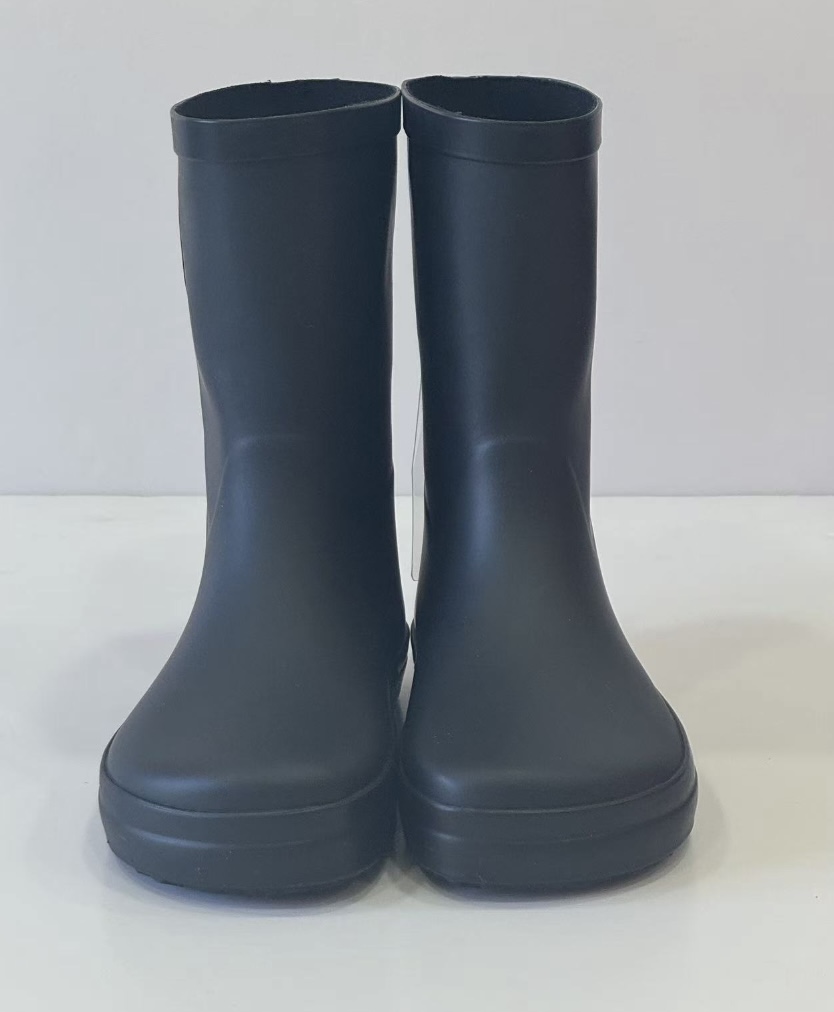
The main material of kid latex boots is latex, which is a natural rubber material. It is collected from the sap of rubber trees. Latex has excellent elasticity and flexibility, which allows the boots to fit the child's feet well and follow the movement of the feet during play. The manufacturing process of latex boots usually involves dipping a mold into a latex solution. This process is called dip - molding. The mold is first heated and then dipped into the latex mixture. The latex adheres to the mold, and after a series of drying and vulcanization processes, the latex solidifies to form the boot. The vulcanization process is crucial as it enhances the boots' strength, durability, and resistance to heat and chemicals. Professional Rain Boot Manufacturer often has strict control over the vulcanization parameters such as temperature, time, and the amount of sulfur used to ensure the quality of the boots. The outsole pattern of the boots is designed to provide good traction. Different patterns are used to adapt to various surfaces, such as muddy, wet, or slippery ones. The shaft height of kid latex boots can vary. Shorter shafts are more suitable for children who are just learning to walk or for activities in relatively dry areas, while taller shafts can provide better protection in deeper water or mud. The lining of the boots can also affect the comfort. Some boots may have a soft lining to reduce friction and increase comfort.
3. Practical Solutions and Operation Steps
Here are some practical solutions and steps to help you choose and use kid latex boots:
- Material Selection: When choosing latex boots, look for high - quality latex. Check the product description or ask the seller about the source and quality of the latex. High - quality latex is more durable and less likely to tear. You can also consider boots with additional reinforcement on high - stress areas such as the toes and heels.
- Size and Fit: Measure your child's feet accurately before purchasing. You can use a foot measuring tool or measure the length and width of the foot at home. Leave a little extra room (about 0.5 - 1 cm) for growth and comfort. If possible, let the child try on the boots to ensure a proper fit. The boots should not be too tight or too loose.
- Sole Pattern: For different outdoor environments, choose the appropriate sole pattern. For muddy areas, a deep - tread pattern with wide grooves is ideal as it can grip the mud and prevent slipping. In wet, smooth areas, a pattern with small, closely - spaced bumps can provide better traction.
- Lining: Consider boots with a soft, breathable lining. Cotton or moisture - wicking materials can keep the child's feet dry and comfortable. Avoid linings that are too thick or non - breathable, as they can cause sweating and discomfort.
- Cleaning: After each use, clean the boots with mild soap and water. Use a soft brush to remove dirt and grime from the surface and the sole. Rinse thoroughly and let them air dry in a cool, well - ventilated place. Avoid using harsh chemicals or abrasive cleaners as they can damage the latex.
- Storage: Store the boots in a cool, dry place away from direct sunlight. Do not fold or compress the boots for long periods as it can cause permanent deformation. You can stuff the boots with newspaper or a boot shaper to help them maintain their shape.
4. Daily Maintenance and Precautions
Proper daily maintenance can extend the lifespan of kid latex boots and ensure the child's comfort and safety:
Cleaning: Regularly clean the boots after use. As mentioned above, use mild soap and water to clean the boots, especially if they are dirty or have been in contact with chemicals such as pesticides or fertilizers. After cleaning, make sure to dry them completely to prevent mold and mildew growth.
Drying: When drying the boots, do not use a high - heat source such as a heater or a hair dryer. High heat can damage the latex and cause it to become brittle or crack. Instead, let them air dry naturally in a cool, shaded area.
Deodorizing: If the boots develop an odor, you can place a small sachet of activated charcoal or baking soda inside the boots to absorb the smell. You can also sprinkle a little talcum powder inside the boots to keep them dry and fresh.
Anti - aging and Anti - deformation: To prevent the latex from aging, avoid exposing the boots to direct sunlight for long periods. Sunlight can cause the latex to harden and crack. When storing the boots, do not stack heavy objects on them to avoid deformation. Using a boot rack to store the boots can help maintain their shape.
Chemicals Contact: If the boots come into contact with chemicals, rinse them immediately with a large amount of water. For example, if they are exposed to strong acids or alkalis, follow up with a mild neutralizing solution if possible, and then clean and dry the boots as usual. Avoid using strong solvents to clean the boots as they can dissolve the latex.
Precautions: Do not let the child wear the boots for too long continuously, as it can cause the feet to become sweaty and uncomfortable. Also, do not use ordinary kid latex boots in high - risk environments that require safety boots. For example, in construction sites or industrial areas, safety - certified boots should be used instead.
5. Industry Standard and Parameter Reference
This section provides some important industry standards and parameters for kid latex boots:
ParameterRecommended ReferenceWhy It MattersSlip resistanceEN ISO 20344:2021 / EN ISO 20347:2022+A1:2024 where applicableHelps evaluate outsole grip on wet or contaminated surfaces, reducing the risk of slipping and injury for children during outdoor play.Occupational footwear requirementsISO 20347:2021 or EN ISO 20347:2022+A1:2024Although kid latex boots are mainly for outdoor play, it still supports the general selection of non - safety occupational footwear, ensuring basic quality and performance.Material safetyGB 25038 - 2024 (for Chinese market), which sets limits on chemical substances in footwear to ensure children's health and safety.Ensures that the latex and other materials used in the boots do not contain harmful substances that could cause skin irritation or other health problems to children.Physical performance of outsoleGB/T 3903 series standards: For example, GB/T 3903.2 for abrasion resistance and GB/T 3903.6 for slip resistance.These standards help evaluate the durability and safety of the outsole, ensuring that the boots can withstand the wear and tear during outdoor activities.
When evaluating the performance of kid latex boots, it is important to refer to these standards to ensure the quality and safety of the products. However, actual values may vary depending on the specific product and manufacturing process.
6. Customer Common FAQ
Q: What is the best material for kid latex boots in terms of durability?
A: High - quality natural latex is generally the best option for durability. Professional Rain Boot Manufacturer often uses well - processed latex that has good elasticity and strength. However, some boots may also have additional reinforcement materials in high - stress areas to enhance durability.
Q: How do I know if the boots are slip - resistant?
A: Look for boots that meet relevant slip - resistance standards such as EN ISO 20344:2021 / EN ISO 20347:2022+A1:2024. You can also check the outsole pattern. Deeper and more complex patterns usually provide better traction.
Q: What size of kid latex boots should I choose?
A: Measure your child's feet accurately and leave about 0.5 - 1 cm of extra room for growth. If possible, let your child try on the boots. The boots should fit snugly around the heel and ankle without being too tight, and there should be enough space for the toes to move freely.
Q: Do kid latex boots have an odor?
A: New latex boots may have a slight natural latex odor. This odor usually fades over time with proper ventilation. You can place the boots in a well - ventilated area for a few days before use, or use deodorizing methods such as activated charcoal or baking soda to reduce the odor.
Q: Can I let my child wear latex boots in very cold weather?
A: While latex has some insulating properties, it may not be warm enough in extremely cold weather. You can consider adding an extra pair of warm socks inside the boots. However, if it is very cold, specialized cold - weather boots may be a better choice.
Conclusion
To sum up, kid latex boots offer many advantages for outdoor play, such as flexibility and good fit. However, they also have some limitations in terms of durability, breathability, etc. When choosing kid latex boots, parents should consider factors like material quality, size, sole pattern, and lining. They also need to pay attention to daily maintenance to ensure the boots' lifespan and the child's comfort. Professional Rain Boot Manufacturer can provide high - quality products with proper manufacturing processes and strict quality control, which can be a reliable choice for parents and B2B buyers.
References
- Zhongke Group. Rain Boot Test Report. 12 February 2026.
2.GB/T 33313-2016 Kids Rain Boots, State Administration for Market Regulation, 2016
3.EN ISO 20344:2021,International Organization for Standardization
4.EN ISO 20347:2022+A1:2024,International Organization for Standardization