


Long-Range Field Hunting Rubber Boots: Complete Performance Pros, Limitations & Bulk Sourcing Checklist
Aug 13, 2026
View: 0
Leave a message
Meta Description: This blog delves into the issues, principles, solutions, and maintenance of long-range field hunting rubber boots. It offers insights for hunting enthusiasts and buyers on material selection, product performance evaluation, and sourcing. Professional Rain Boot Manufacturer can provide valuable references for these aspects.
Keywords: Hunting Boots, Rubber Boots, Rain Boots, Waterproof Boots, Boot Maintenance, Boot Material, Hunting Gear
1. Core Problem Analysis
1.1 Common Causes of the Problem
When searching for long-range field hunting rubber boots, buyers often face several problems. One of the most common issues is the durability of the boots. The harsh hunting environment, including rough terrains, sharp objects, and wet conditions, can cause the boots to wear out quickly. Low - quality rubber materials may crack or tear, leading to water leakage and reduced protection for the feet.
Another problem is related to comfort. Hunters may need to wear boots for long hours, so discomfort such as foot pain, blisters, or limited flexibility can significantly affect the hunting experience. Miss - sized boots, poor cushioning, or inflexible materials can all contribute to these comfort issues. Additionally, the weight of the boots can also be a concern. Heavy boots can cause fatigue during long - range trekking, slowing down the hunter's movement.
Slip resistance is also crucial. Hunting often takes place on wet, muddy, or slippery surfaces, and inadequate slip resistance can lead to falls and injuries. The outsole pattern and the quality of the rubber material both affect the boots' ability to grip the ground.
1.2 Affected Usage Scenarios
The problems mentioned above can significantly impact hunting scenarios. In long - range field hunting, hunters may encounter forests, mountains, swamps, and other complex terrains. If the boots are not durable enough, they may get damaged during the journey, and water may seep in, making the feet wet and cold, which can lead to health problems.
For long - duration hunts, comfort is of utmost importance. If the boots are uncomfortable, it can be difficult for hunters to focus on their tasks, which may affect their effectiveness. Slip resistance is particularly crucial in wet areas such as riverbanks, swamps, or in the rain, as slips can not only cause physical harm but also scare away the game.
2. Product and Process Principle
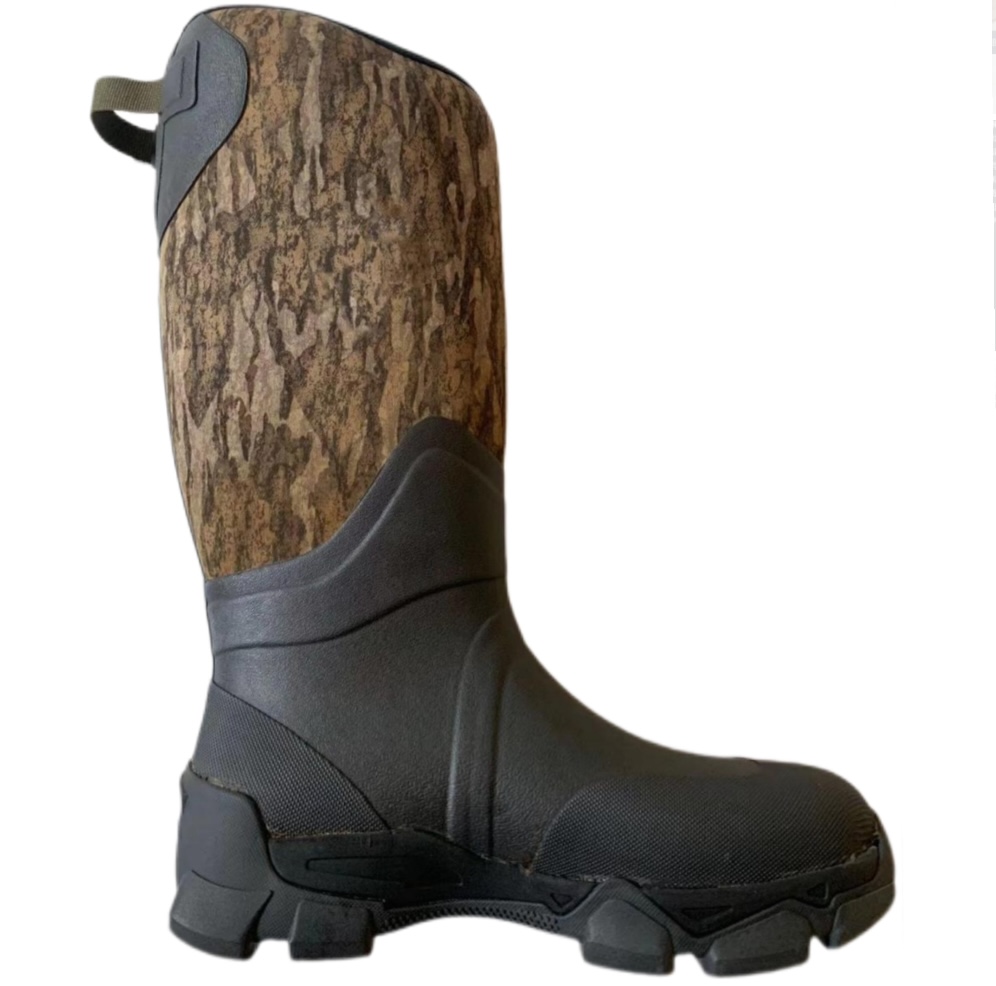
The materials commonly used in long - range field hunting rubber boots include natural rubber and synthetic rubber. Natural rubber is highly flexible, waterproof, and has excellent shock - absorbing properties. It can withstand low temperatures better than some other materials, making it suitable for hunting in cold environments. Synthetic rubber, on the other hand, can be engineered to have specific properties such as better abrasion resistance or chemical resistance, depending on the hunting needs.
In terms of the manufacturing process, injection molding is a common method for making rubber boots. In this process, molten rubber is injected into a mold under high pressure, allowing for the production of complex shapes and detailed patterns. This method is efficient and can ensure consistent quality across batches. Vulcanization is another crucial process. It involves heating the rubber with sulfur or other additives to cross - link the polymer chains, which increases the strength, durability, and elasticity of the rubber. A Professional Rain Boot Manufacturer is proficient in these processes, ensuring that the boots meet the required standards for hunting use.
The outsole pattern of hunting boots is designed based on fluid mechanics and friction principles. Deep grooves and multi - directional patterns can quickly channel away water on wet surfaces, increasing the contact area between the sole and the ground and thus enhancing the grip. The shaft height is an important design consideration. A higher shaft can provide more protection against water, mud, and debris, but it may also limit ankle flexibility. Therefore, manufacturers need to strike a balance based on the intended use of the boots.
3. Practical Solutions and Operation Steps
### Material Selection
When choosing long - range field hunting rubber boots, if you hunt in cold areas, natural rubber is a good choice due to its low - temperature resistance and flexibility. For hunting in areas with a lot of sharp objects or high - abrasion surfaces, synthetic rubber with high abrasion resistance may be more suitable.
### Shaft Height
For hunting in forests or relatively dry terrains where ankle support and flexibility are important, medium - height shafts can be a good option. If you often hunt in swamps or areas with deep water, mud, or snow, high - shaft boots are recommended to keep your feet dry and protected.
### Outsole Pattern
Look for boots with deep, multi - directional grooves and non - symmetric patterns. These patterns can provide better grip on different surfaces, including wet rocks, muddy ground, and slippery leaves.
### Inner Lining
Choose boots with a breathable and moisture - wicking lining. This can keep your feet dry and comfortable, reducing the risk of blisters and fungal infections. Synthetic linings such as polyester are often good choices for their quick - drying properties.
### Size Selection
Measure your feet accurately and try on boots before purchasing. Make sure there is enough room in the toe box for your toes to move freely, especially when you are walking or hiking for a long time. Also, ensure that the boots fit snugly around the heel and ankle to prevent slipping.
### Cold and Slip Resistance Ratings
Check if the boots have cold - resistance ratings. If you hunt in cold climates, boots with a lower cold - resistance rating can provide better insulation. For slip resistance, look for boots that meet relevant standards such as EN ISO 20344:2021, which can help evaluate the outsole grip on wet or contaminated surfaces.
### Cleaning
After each use, remove dirt and debris from the boots using a soft brush or cloth. Wash the boots with mild soap and water, then rinse thoroughly. Avoid using harsh chemicals or solvents as they can damage the rubber.
### Storage
Store the boots in a cool, dry place away from direct sunlight. You can stuff the boots with newspaper to help them maintain their shape. Do not store the boots in air - tight containers as this can promote the growth of mold.
4. Daily Maintenance and Precautions
### Cleaning
Regular cleaning is essential to maintain the performance of long - range field hunting rubber boots. After hunting, immediately remove any mud, dirt, or other debris from the boots. Use a soft brush to gently scrub the boots, especially in the crevices and the outsole pattern. Then, wash the boots with a mild detergent and lukewarm water. Rinse well to ensure no soap residue remains, as it can damage the rubber over time.
### Drying
After cleaning, let the boots air - dry at room temperature. Do not use a heater, radiator, or direct sunlight to dry the boots quickly, as high temperatures can cause the rubber to harden and crack. Stuff the boots with newspaper to absorb excess moisture and help maintain their shape during the drying process.
### Odor Removal
If the boots develop an odor, you can sprinkle baking soda inside the boots and let it sit overnight. Baking soda can absorb odors effectively. Then, shake out the baking soda the next day. You can also use specialized shoe deodorizers.
### Anti - aging and Anti - deformation
To prevent the rubber from aging, avoid exposing the boots to extreme temperatures and direct sunlight for extended periods. When not in use, store the boots in a cool, dry place. To prevent deformation, do not stack heavy objects on top of the boots. You can use boot trees to help maintain their shape.
### Precautions
Do not use the boots for purposes other than hunting without considering their limitations. For example, do not use ordinary hunting boots in high - risk industrial environments where safety boots with specific certifications are required. Also, do not use strong solvents to clean the boots, as they can dissolve the rubber and damage the boots.
5. Industry Standard and Parameter Reference
This chapter is the authoritative support module of the full - text, and it must closely list international standards, test methods, or verifiable parameters related to the article's theme. The following table provides some key information:
ParameterRecommended ReferenceWhy It MattersSlip resistanceEN ISO 20344:2021 / EN ISO 20347:2022+A1:2024 where applicableHelps evaluate outsole grip on wet or contaminated surfaces.Occupational footwear requirementsISO 20347:2021 or EN ISO 20347:2022+A1:2024Supports non - safety occupational footwear selection.Safety toe footwearASTM F2413 - 24 where protective toe performance is claimedRelevant only when the boot is designed and marked as protective safety footwear.Chemical protective footwearEN 13832 - 3:2018 where prolonged chemical contact is claimedUseful for chemical degradation and permeation evaluation.
It is important not to invent exact performance numbers. Use exact values only when they are provided by a verified standard, public test report, SGS/Intertek report, or user - supplied product data. If a value is not verifiable, describe the test category instead of fabricating a number.
6. Customer Common FAQ
Q: Which material is better for long - range field hunting boots, natural rubber or synthetic rubber?
A: It depends on your specific hunting environment. Natural rubber is more flexible and has better low - temperature resistance, making it suitable for cold - climate hunting. Synthetic rubber can be engineered to have high abrasion resistance, which is ideal for hunting in areas with a lot of sharp objects. A Professional Rain Boot Manufacturer can provide more detailed advice based on your needs.
Q: How can I ensure the boots have good slip resistance?
A: Look for boots that meet relevant standards such as EN ISO 20344:2021. Also, check the outsole pattern. Deep, multi - directional grooves and non - symmetric patterns usually provide better grip on different surfaces.
Q: What size of boots should I choose?
A: Measure your feet accurately and try on boots. Make sure there is enough room in the toe box and that the boots fit snugly around the heel and ankle. It's better to try on boots at the end of the day when your feet are slightly swollen to get the most accurate fit.
Q: Why do my new boots have a strong odor?
A: Some new boots, especially those made of rubber, may have a chemical odor due to the manufacturing process. You can try using baking soda or specialized shoe deodorizers to remove the odor, as mentioned in the maintenance section.
Q: Can I use my hunting boots in extremely cold weather?
A: It depends on the cold - resistance rating of the boots. Check the product specifications to see if they are suitable for the cold temperatures in your hunting area. If the cold - resistance is poor, your feet may be at risk of frostbite.
Conclusion
This article has comprehensively explored the various aspects of long - range field hunting rubber boots. We've analyzed the core problems such as durability, comfort, and slip resistance, and detailed the material and process principles. Practical solutions for selection, daily maintenance, and precautions have also been provided. When choosing hunting boots, it's important to consider the specific hunting environment and individual needs. A Professional Rain Boot Manufacturer can offer valuable guidance on these matters, ensuring that you select the most suitable boots for a successful hunting experience.
References
- ISO 20344:2021 Footwear Test Methods
- EN ISO 20347:2022+A1:2024 Occupational Footwear
- ASTM F2413 - 24 Protective Footwear Specification
- EN 13832 - 3:2018 Chemical Protective Footwear