


Men Neoprene Boots: Reliable Performance in Cold Water and Muddy Outdoor Work
Sep 30, 2026
View: 0
Leave a message
Meta Description: Men neoprene boots are designed to address common pain points in icy water and muddy outdoor work, such as poor insulation, leaking, and unstable traction. This guide explains their material benefits, selection criteria, and maintenance tips for industrial and agricultural users, crafted by a Professional Rain Boot Manufacturer.
Keywords: men neoprene boots, neoprene work boots, waterproof work boots, cold weather work footwear, muddy terrain boots, occupational rubber boots
1. Core Problem Analysis
1.1 Common Causes of the Problem
Many workers face repeated issues with standard work boots in harsh outdoor conditions: standard rubber or PVC boots fail to provide sufficient insulation below 10°C, leading to cold-related discomfort; unsealed seams allow water and mud to seep in, causing foot sores; and smooth outsides reduce traction on wet, muddy, or icy surfaces. Additionally, poorly fitting boots can restrict movement, increasing fatigue during long work shifts.
1.2 Affected Usage Scenarios
These issues disrupt productivity in specific work environments: livestock farming, where workers handle wet feed and manure; wetland agriculture, including rice farming and marsh harvesting; construction work in snow or slushy sites; commercial fishing, where prolonged exposure to cold water is common; and utility maintenance in areas with icy road or pipeline work.
2. Product and Process Principle
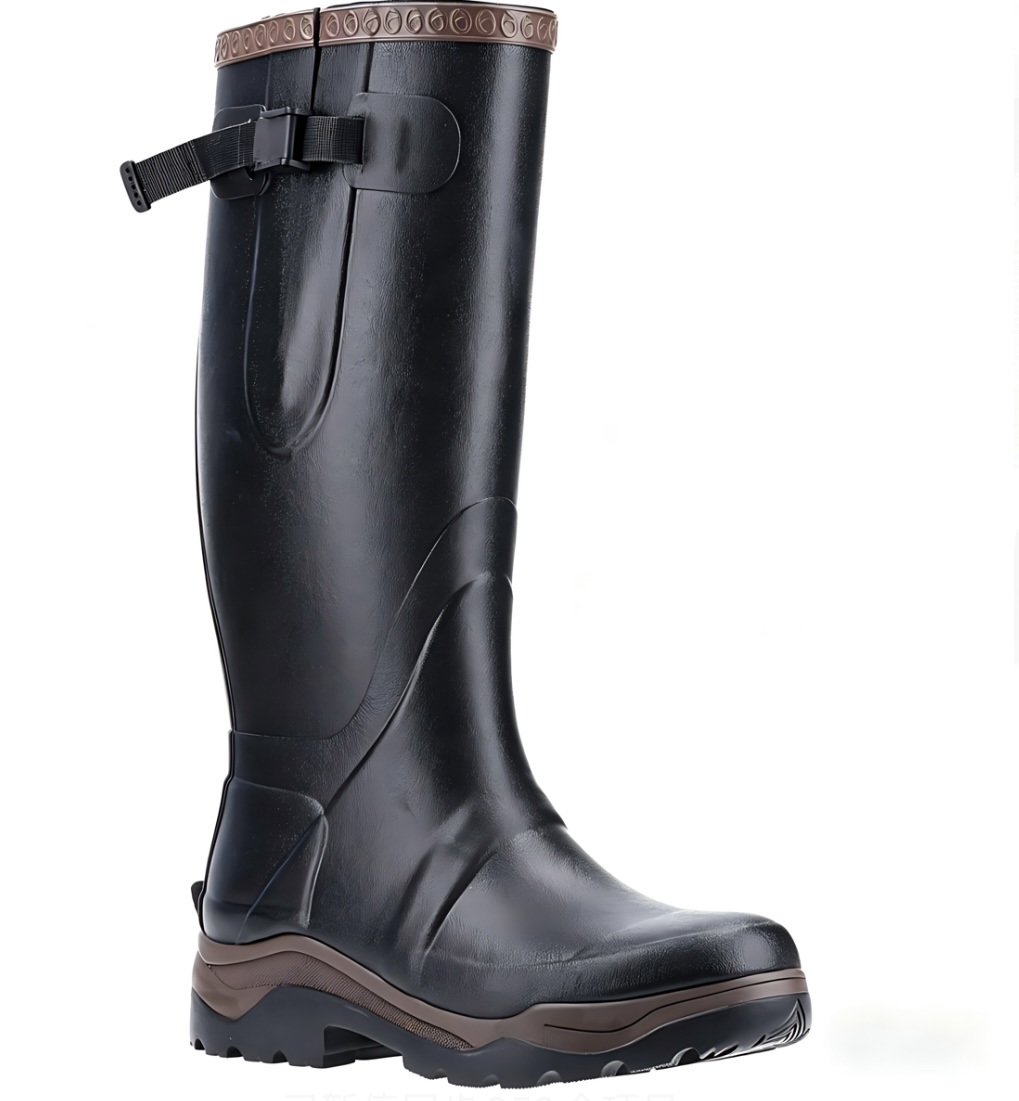
Men neoprene boots rely on closed-cell neoprene foam as their core material, a synthetic rubber compound that traps air bubbles to provide insulation. Unlike open-cell materials, closed-cell neoprene repels water, so it does not become saturated even when submerged. The vulcanization process bonds the neoprene layers, creating a durable, flexible structure that resists cracking after repeated bending. Seam-free construction, common in high-quality models, eliminates weak points where leaks often occur.
A Professional Rain Boot Manufacturer notes that compound formulation controls both insulation thickness and flexibility: a 5mm neoprene layer balances warmth for icy conditions and mobility for walking over uneven terrain, while thicker layers offer higher thermal resistance but may reduce dexterity.
Outsole design also plays a critical role: deep, angled lugs provide grip on muddy surfaces, while specialized rubber compounds enhance traction on ice without becoming stiff in cold temperatures. Shaft height is another design consideration, with 12-inch and 16-inch models available to accommodate different work tasks and leg length needs.
3. Practical Solutions and Operation Steps
Selecting the right men neoprene boots requires matching specifications to work conditions, following these objective, actionable steps:
- Step 1: Evaluate your primary work environment. For icy water exposure, choose boots with neoprene rated for use at temperatures below 0°C; for muddy terrain, prioritize outsoles with deep, self-cleaning lugs to prevent mud buildup.
- Step 2: Verify seam construction. Avoid boots with glued or stitched seams, as these are prone to leaks over time; seam-vulcanized or fully molded designs are more reliable for heavy outdoor use.
- Step 3: Check sizing compatibility. Measure your foot at the end of a workday when it is slightly swollen, and select boots with 0.5 to 1cm of extra space at the toe to accommodate thick work socks without restricting circulation.
- Step 4: Match insulation thickness. For work that involves prolonged standing in cold water, use a 7mm neoprene layer; for dry, muddy sites with occasional light water contact, a 3mm layer is sufficient for basic insulation.
- Step 5: Test slip resistance on-site. Before committing to a purchase, test the boots on surfaces similar to your work terrain—such as wet concrete, wet grass, or packed ice—to confirm traction performance.
4. Daily Maintenance and Precautions
Proper maintenance extends the lifespan of men neoprene boots and preserves their performance in harsh conditions. After each use, remove caked mud with a soft brush and mild soap; avoid strong solvents or abrasive cleaners, as these can degrade the neoprene material. Rinse the boots with cool water to remove salt or chemical residue, then air-dry them in a well-ventilated area away from direct sunlight or high heat sources, which can cause neoprene to crack or shrink.
Additional precautions include: do not store boots in a cramped, folded position, as this can warp the shaft and damage the outsole; avoid exposing neoprene boots to petroleum-based products, such as motor oil or diesel, as these can break down the material; and never use neoprene work boots as personal protective equipment for industrial chemical exposure, as they are not certified for chemical resistance under EN 13832-3:2018.
5. Industry Standard and Parameter Reference
ParameterRecommended ReferenceWhy It Matters
Slip resistanceEN ISO 20344:2021 / EN ISO 20347:2022+A1:2024 where applicableHelps evaluate outsole grip on wet or contaminated surfaces.
Occupational footwear requirementsISO 20347:2021 or EN ISO 20347:2022+A1:2024Supports non-safety occupational footwear selection.
Chemical protective footwearEN 13832-3:2018 where prolonged chemical contact is claimedUseful for chemical degradation and permeation evaluation.
Low-temperature flexibilityISO 20344:2021 Test Method 6.5Assesses boot performance in cold conditions, relevant for icy outdoor work.
Do not invent exact performance numbers. Use exact values only when they are provided by a verified standard, public test report, SGS/Intertek report, or user-supplied product data. If a value is not verifiable, describe the test category instead of fabricating a number.
6. Customer Common FAQ
Q: Are men neoprene boots suitable for use in sub-zero temperatures?
A: Neoprene boots can be suitable for sub-zero work if they are made with closed-cell neoprene and designed for low-temperature use. A Professional Rain Boot Manufacturer notes that 5mm or thicker neoprene layers retain insulation at temperatures down to -10°C, as confirmed by testing under ISO 20344:2021. However, boots without temperature-specific compounding may become stiff and lose flexibility in extreme cold.
Q: How do I clean neoprene boots without damaging them?
A: Use a soft-bristled brush with warm water and mild, non-abrasive soap to remove dirt. Avoid bleach, ammonia, or automotive cleaners, as these break down neoprene’s polymer structure. After cleaning, air-dry at room temperature, avoiding direct heat which can cause shrinking or cracking.
Q: Can neoprene boots be used for food processing work?
A: Neoprene itself is non-toxic and compliant with food contact standards for many applications, but not all neoprene boots meet food safety certifications. Always verify that the boots have been tested and certified for food contact use, as required by local food safety regulations, before using them in food processing environments.
Q: Why do neoprene boots sometimes develop a bad odor?
A: Odors typically come from trapped moisture inside the boot lining. To reduce this, remove insoles after each use to air them out, and occasionally wipe the interior with a mixture of water and white vinegar to eliminate odor-causing bacteria. Avoid keeping boots in closed storage when wet.
Conclusion
Men neoprene boots offer a targeted solution for workers facing icy water and muddy terrain, balancing insulation, water resistance, and traction when selected correctly. Key steps include matching insulation thickness to work conditions, verifying seam construction, and checking slip resistance against site surfaces. Following proper maintenance rules extends product life and preserves performance. A Professional Rain Boot Manufacturer provides standardized guidance to align boots with occupational requirements, ensuring reliable use across outdoor work settings.
References
- International Organization for Standardization. ISO 20344:2021. Footwear – Test methods for whole shoe. Geneva, Switzerland, 2021.
- International Organization for Standardization. ISO 20347:2021. Occupational footwear. Geneva, Switzerland, 2021.
- European Committee for Standardization. EN ISO 20347:2022+A1:2024. Occupational footwear. Brussels, Belgium, 2024.
- European Committee for Standardization. EN 13832-3:2018. Chemical protective footwear. Part 3: Requirements for footwear providing protection against chemicals. Brussels, Belgium, 2018.