


Performance Highlights of Vibrant‑Shade Kids’ Boots for Outdoor Adventures
Aug 13, 2026
View: 0
Leave a message
Meta Description: Are you looking for the right kids' boots for outdoor adventures? This article explores the issues of kids' fantasy color boots, including material selection, craft principles, and usage scenarios. It provides practical solutions, daily maintenance tips and answers common FAQs. Professional Rain Boot Manufacturer offers reliable guidance on this topic.
Keywords: Kid Fantasy Color Boots, rain boots, waterproof boots, material selection, boot maintenance
1. Core Problem Analysis
1.1 Common Causes of the Problem
When it comes to kids' fantasy - color boots for outdoor use, parents often face several common problems. The question of material selection is crucial. Since kids are active, boots need to be made from durable materials to withstand extensive wear and tear. For instance, if the material is of poor quality, it may crack easily after a short period of use. Another issue is the grip of the boots. Kids run, jump, and play on various terrains, so a lack of proper slip - resistance can lead to falls and injuries. Also, issues related to sizing are common. If the boots are too big, kids may trip; if they are too small, it can cause discomfort and even hinder foot development. Moreover, the odor of the boots can be a concern, especially for those made from certain synthetic materials.
1.2 Affected Usage Scenarios
These issues affect multiple usage scenarios. For outdoor play like park adventures, kids need boots that can handle wet grass, muddy paths, and uneven ground. In rainy days, the boots should provide reliable waterproofing to keep their feet dry during walks or playtime outside. At the beach, boots might need to be resistant to sand and saltwater. When camping, kids are active in different terrains, including forests and riversides, so the boots need to have good durability and adaptability to these environments.
2. Product and Process Principle
The materials used in kids' fantasy - color boots have different characteristics. Rubber is a popular choice as it offers excellent waterproofing and flexibility. Natural rubber can provide a high level of comfort, conforming to the shape of kids' feet. It also has good elasticity, which allows for better movement. However, it can be relatively heavy. PVC is another common material. It is lightweight, easy to clean, and relatively inexpensive. But it may have issues like a strong smell, especially when it is new, and it can become hard in cold temperatures. EVA is lightweight and has good shock - absorption properties, making it suitable for kids' active play, but its wear - resistance might be relatively weak.
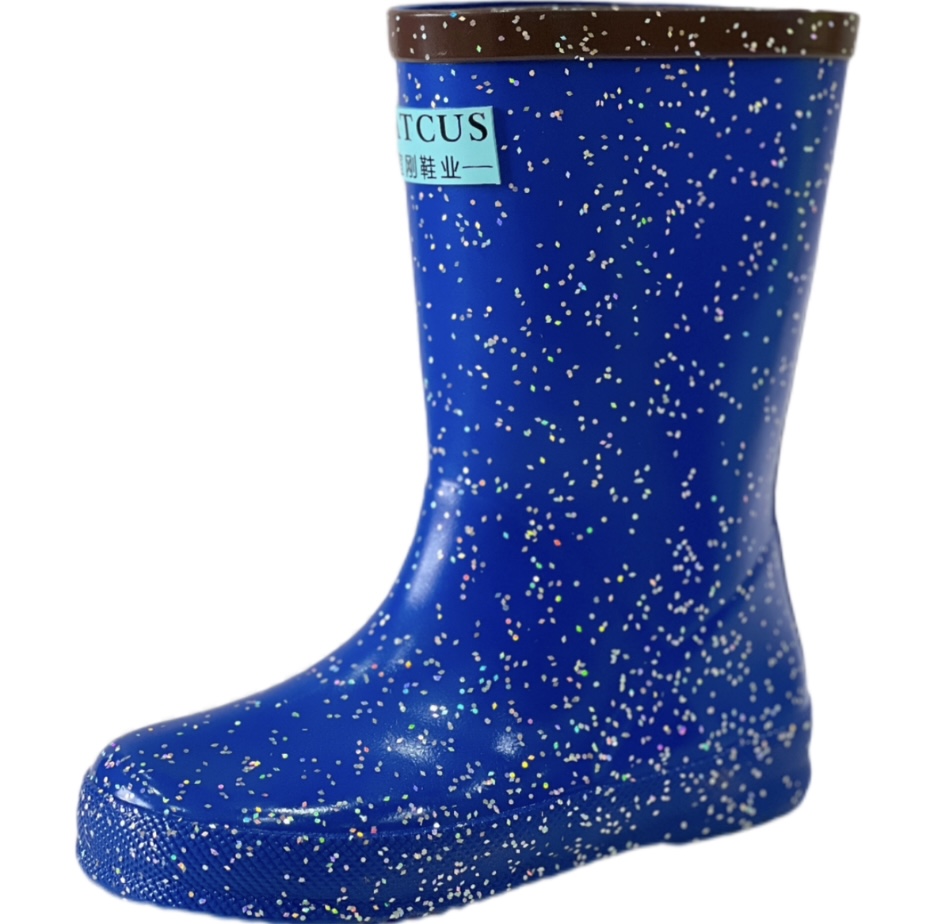
As for the manufacturing process, injection molding is often used for PVC and EVA boots. In this process, the molten material is injected into a mold at high pressure, which results in a relatively fast production rate and allows for complex shapes and designs. For rubber boots, vulcanization is a key process. It involves heating the rubber with sulfur, which enhances the strength, elasticity, and durability of the rubber. A professional rain boot manufacturer understands these materials and processes well and can select the most appropriate ones according to the design requirements of kids' boots.
3. Practical Solutions and Operation Steps
When choosing kids' fantasy - color boots, here are some practical steps:
- Material Selection: For frequent and rough outdoor use, rubber boots are a good choice due to their durability. If the usage is more occasional or for warmer weather, PVC or EVA boots can be considered for their lightweight properties. If odor is a concern, try to choose boots made from natural rubber or well - processed synthetic materials.
- Size Selection: Measure your child's feet accurately, following the correct measurement methods. There should be about 1 - 1.5 cm of extra space in the toe area to allow for growth and movement. If your child has a high instep, look for boots with a wider fit.
- Boot Height: Short - boot styles are suitable for casual, short - term use, such as small puddle - jumping or short walks. Medium - height boots can better protect the ankles, which is good for more active play. High - boot styles are ideal for deep puddles, mud, or when more leg protection is needed.
- Sole Pattern: Look for boots with deep and well - designed sole patterns. Patterns like wave - shapes or arrows can significantly enhance the grip on wet and slippery surfaces.
- Inner Lining: A breathable and soft lining can improve comfort. Materials like cotton or soft synthetic fabrics are good choices.
4. Daily Maintenance and Precautions
Proper daily maintenance can extend the life of kids' fantasy - color boots. After each use, clean the boots with a mild soap and water. Remove any dirt, mud or sand. For stubborn stains, a soft brush can be used gently. Avoid using strong solvents as they can damage the material of the boots.
After cleaning, let the boots air - dry naturally in a well - ventilated area. Never expose them to direct sunlight for an extended period or place them near a heat source, as this can cause the material to crack or fade. To prevent odor, you can leave an odor - absorbing sachet inside the boots when they are not in use. For long - term storage, keep the boots in a flat position to prevent deformation. Also, remember that ordinary kids' rain boots are not designed for high - risk industrial work or tasks that require specialized safety boots, so do not use them in inappropriate scenarios.
5. Industry Standard and Parameter Reference
Here are some important industry standards for boots:
ParameterRecommended ReferenceWhy It MattersSlip resistanceEN ISO 20344:2021 / EN ISO 20347:2022+A1:2024 where applicableHelps evaluate outsole grip on wet or contaminated surfaces.Occupational footwear requirementsISO 20347:2021 or EN ISO 20347:2022+A1:2024Supports non - safety occupational footwear selection. However, while for kids, it mainly serves as a reference for the general performance of boots.Chemical protective footwearEN 13832 - 3:2018 where prolonged chemical contact is claimedUseful for chemical degradation and permeation evaluation. Although kids' rain boots may not be in prolonged chemical contact often, it is an important standard for understanding the material's resistance to chemicals.
It's important to note that these standards are generally used for the evaluation of the overall performance of boots, and for kids' boots, the focus is more on safety, comfort, and durability during normal outdoor play.
6. Customer Common FAQ
Q: What material is best for kids' fantasy - color boots?
A: There is no one - size - fits - all answer. Rubber is great for durability and waterproofing, suitable for active outdoor play. PVC and EVA are lightweight and more budget - friendly, but they may have some limitations such as less wear - resistance or getting hard in cold weather. A professional rain boot manufacturer can provide more detailed advice based on specific usage scenarios.
Q: How do I know if the boots are slip - resistant enough for my kids?
A: Look for boots that meet the EN ISO 20344:2021 or EN ISO 20347:2022+A1:2024 standards. You can also check the sole pattern; deeper and more complex patterns usually offer better grip.
Q: What should I do if the boots have a strong odor?
A: Air them out in a well - ventilated area for a few days. You can also put odor - absorbing sachets like activated charcoal inside the boots. If the odor persists, it may indicate a problem with the material, and you should consult the manufacturer.
Q: How often should I replace my kids' boots?
A: It depends on how often they are used and the quality of the boots. If you notice cracks, significant wear on the soles, or the boots no longer fit properly, it's time for a replacement.
Conclusion
In conclusion, when choosing kids' fantasy - color boots, it's important to consider various factors such as material selection, size, sole design, and maintenance. A professional rain boot manufacturer can offer valuable insights and guidance based on industry standards and product knowledge. By following the practical solutions and tips provided in this article, you can select boots that are safe, comfortable, and durable for your kids' outdoor adventures.
References
- ISO 20344:2021 Footwear Test Methods
- EN ISO 20347:2022+A1:2024 Occupational Footwear
- EN 13832 - 3:2018 Chemical Protective Footwear