


Practical Benefits of Women’s Patterned Rain Boots for City Daily Commute
Aug 13, 2026
View: 0
Leave a message
Meta Description: This article delves into the practical benefits of women's patterned rain boots for daily city commutes, addressing common problems like water leakage and poor grip. It offers insights into materials, processes, selection, and maintenance. Ideal for women seeking reliable rain boots. Professional Rain Boot Manufacturer.
Keywords: Women Patterned Boots, Rain Boots, Waterproof Boots, Rubber Boots, Boot Maintenance, Boot Material, City Commute
1. Core Problem Analysis
1.1 Common Causes of the Problem
When it comes to women's patterned rain boots for city daily commutes, several issues often trouble users. Water leakage is a frequent problem, which can be caused by poor seam sealing or low - quality materials. Over time, the seams where the upper and sole are joined may start to separate, allowing water to seep in. Another common cause is the use of thin or sub - standard rubber or PVC materials that are prone to cracking.
Poor foot comfort is also a concern. If the lining of the rain boots is made of rough or non - breathable materials, it can lead to foot chafing and sweating. Additionally, the lack of proper arch support or cushioning in the insole can cause foot fatigue during long - distance commutes.
Insufficient slip resistance is another significant issue. The outsole pattern may not be designed effectively, or the rubber compound used may not provide good traction on wet surfaces such as streets, sidewalks, and subway platforms. This increases the risk of slips and falls, especially during rainy days.
1.2 Affected Usage Scenarios
The problems mentioned above affect various city commuting scenarios. In rainy weather, water leakage can make feet wet and uncomfortable, whether one is walking to the bus stop, waiting for the subway, or cycling to work. Uncomfortable foot conditions can be a major distraction during a long - term commute, reducing productivity and overall well - being.
Insufficient slip resistance is particularly dangerous on wet subway floors, slippery sidewalks, and wet stairs in buildings. A fall can lead to serious injuries, such as sprains, fractures, or head trauma, which can disrupt daily life and work.
2. Product and Process Principle
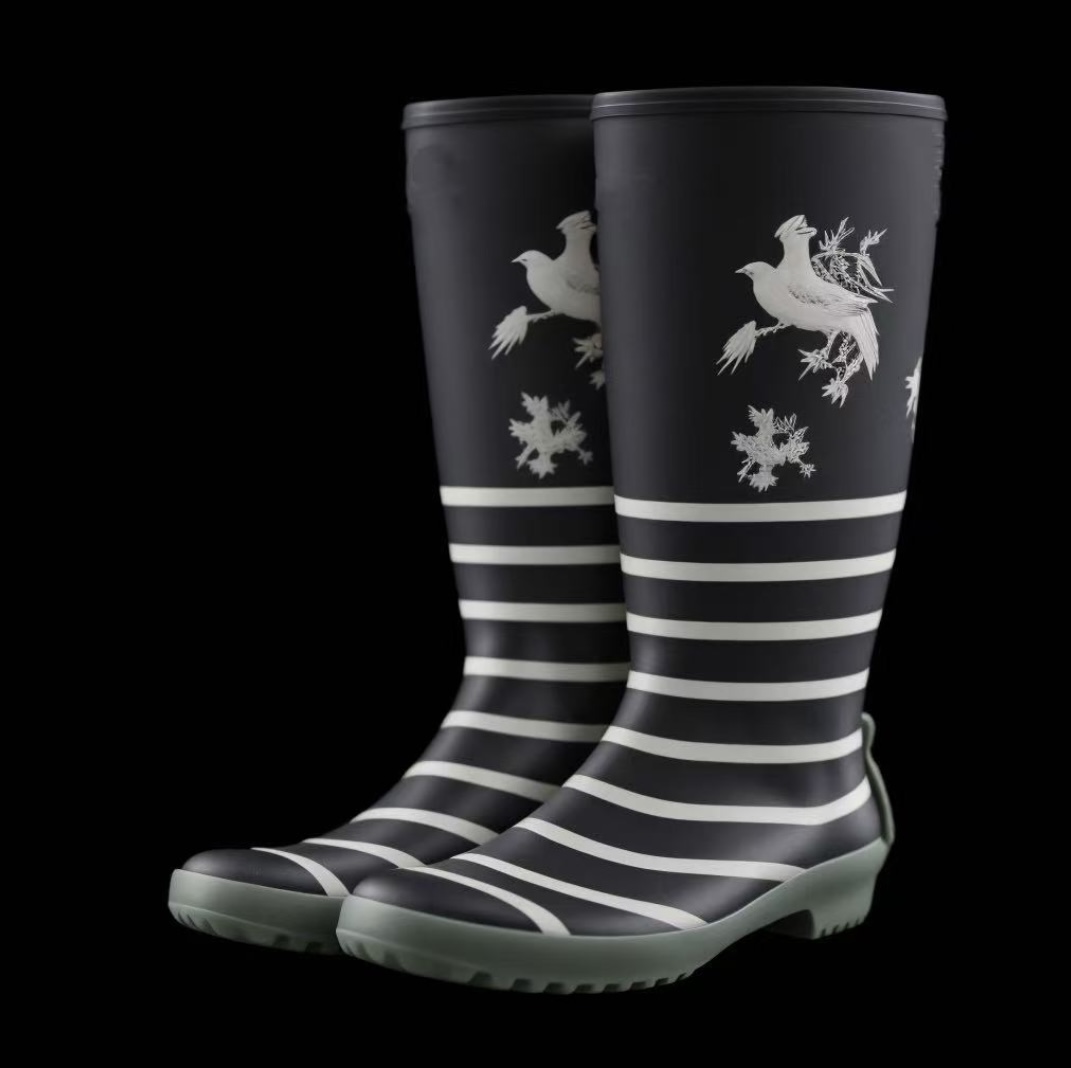
Rain boots are commonly made from materials such as PVC, rubber, EVA, and TPR. PVC (Polyvinyl Chloride) is a widely used material due to its low cost and good moldability. It can be easily formed into various patterns and colors, making it suitable for creating women's patterned rain boots. However, PVC may be less flexible than rubber at low temperatures and may be prone to cracking after long - term use.
Rubber is another popular material known for its excellent waterproof properties, flexibility, and durability. Natural rubber has high elasticity and can withstand repeated bending and stretching without losing its shape. Synthetic rubber, on the other hand, can be engineered to have specific properties such as improved slip resistance or chemical resistance. The vulcanization process is often used to treat rubber rain boots. This process involves heating the rubber with sulfur, which cross - links the polymer chains, making the rubber more durable, heat - resistant, and less sticky.
EVA (Ethylene - Vinyl Acetate) is a lightweight and flexible material. It offers good shock absorption and comfort, making it suitable for the insole or lining of rain boots. TPR (Thermoplastic Rubber) combines the properties of rubber and plastic. It has good elasticity and can be molded easily, similar to PVC, but with better flexibility and durability in some cases.
Professional Rain Boot Manufacturer takes these materials into consideration when designing and producing women's patterned rain boots. They use injection molding or compression molding techniques to shape the boots. Injection molding involves injecting molten material into a mold under high pressure. This process allows for high - precision manufacturing and can produce complex patterns and details. Compression molding is used for thicker and more rigid parts or when a more traditional look is desired.
The outsole pattern of rain boots is designed to provide grip. Patterns such as deep grooves, lugs, or herringbone designs can channel water away from the sole, increasing contact with the ground and improving slip resistance. The shaft height can vary depending on the user's needs. Higher shafts can provide more coverage and protection against water splashes, while lower shafts offer more flexibility and ease of movement.
3. Practical Solutions and Operation Steps
When choosing women's patterned rain boots for city daily commutes, the following steps can be helpful:
- **Material Selection**: For better cold - weather performance and long - term durability, choose rubber - based rain boots. If cost is a concern and flexibility is not a top priority, PVC can be a viable option. EVA - lined boots can enhance comfort.
- **Shaft Height**: For regular city commutes, a mid - ankle to knee - high shaft is usually sufficient. Knee - high boots are great for heavy rain or when walking through deep puddles, while mid - ankle boots offer more mobility for a combination of walking and using public transportation.
- **Outsole Pattern**: Look for boots with deep grooves or lugs on the outsole. Herringbone patterns are also effective in providing grip on wet surfaces. Check the slip resistance rating according to EN ISO 20344:2021 / EN ISO 20347:2022+A1:2024 if available.
- **Lining**: Opt for a soft and breathable lining material, such as cotton or a moisture - wicking synthetic fabric. This can prevent foot sweating and chafing.
- **Size**: Ensure a proper fit. Boots that are too tight can cause discomfort, while those that are too loose may not provide enough support and may rub against the feet. Try on the boots with the socks you plan to wear during commutes.
- **Cold Resistance**: If you live in a cold climate, check the cold - resistance rating of the boots. Some boots are designed to withstand temperatures as low as - 20°C without becoming brittle.
- **Cleaning**: After use, rinse the boots with clean water to remove dirt and mud. For stubborn stains, use a mild soap solution and a soft brush. Avoid using harsh chemicals or abrasive cleaners, as they can damage the material.
- **Storage**: Store the boots in a cool, dry place away from direct sunlight. If possible, stuff them with paper or a boot tree to maintain their shape.
4. Daily Maintenance and Precautions
Proper daily maintenance can extend the lifespan of women's patterned rain boots. After each use in wet conditions, dry the boots thoroughly. Wipe off any excess water with a dry cloth and let them air - dry naturally at room temperature. Avoid using a heater or hair dryer to speed up the drying process, as high temperatures can damage the material and cause it to crack or lose its shape.
To remove odor, you can sprinkle baking soda inside the boots and let it sit overnight. Then, shake out the baking soda in the morning. For preventing material aging, apply a rubber or PVC protectant regularly. This can help keep the material soft and flexible and protect it from UV damage.
Here are some important precautions to take: Do not expose the boots to direct sunlight for long periods, as this can cause the color to fade and the material to harden. Do not place the boots near a heat source, such as a radiator or a fireplace, as this can also lead to material degradation. Avoid using strong solvents, such as acetone or gasoline, to clean the boots, as they can dissolve the material. And never use ordinary rain boots in place of safety boots in a work environment that requires safety - certified footwear, as they may not provide the necessary protection.
5. Industry Standard and Parameter Reference
This section provides important industry standards and parameters for women's patterned rain boots:
ParameterRecommended ReferenceWhy It MattersSlip resistanceEN ISO 20344:2021 / EN ISO 20347:2022+A1:2024 where applicableHelps evaluate outsole grip on wet or contaminated surfaces.Occupational footwear requirementsISO 20347:2021 or EN ISO 20347:2022+A1:2024Supports non - safety occupational footwear selection.Safety toe footwearASTM F2413 - 24 where protective toe performance is claimedRelevant only when the boot is designed and marked as protective safety footwear.Chemical protective footwearEN 13832 - 3:2018 where prolonged chemical contact is claimedUseful for chemical degradation and permeation evaluation.WaterproofnessHG/T 2019 - 2022 (for black rain boots), HG/T 2020 - 2019 (for colored rain boots)Ensures the boots keep feet dry in wet conditions.Slip resistance wet (coefficient)GB/T 3903.6 - 2017: minimum 0.25Determines the safety on wet surfaces.Stretch strength and elongation at breakGB/T 528 - 2009Measures the durability of the material.
Do not invent exact performance numbers. Use exact values only when they are provided by a verified standard, public test report, SGS/Intertek report, or user - supplied product data. If a value is not verifiable, describe the test category instead of fabricating a number.
6. Customer Common FAQ
Q: What material is best for women's patterned rain boots?
A: Rubber is generally a good choice due to its excellent waterproofness, flexibility, and durability. However, PVC is more affordable and can also be suitable for less extreme conditions. Professional Rain Boot Manufacturer can offer more in - depth advice based on specific needs.
Q: How can I ensure the rain boots have good slip resistance?
A: Look for boots with a well - designed outsole pattern, such as deep grooves or lugs. You can also check if the boots meet the slip - resistance standards according to EN ISO 20344:2021 / EN ISO 20347:2022+A1:2024.
Q: What size should I choose for my rain boots?
A: It is important to try on the boots with the socks you plan to wear during commutes. The boots should fit snugly but not be too tight. There should be enough room for your toes to move freely.
Q: My new rain boots have a strong smell. How can I get rid of it?
A: Sprinkle baking soda inside the boots and let it sit overnight. Then, shake out the baking soda in the morning. You can also air out the boots in a well - ventilated area for a few days.
Q: Can I wear my rain boots in very cold weather?
A: It depends on the cold - resistance rating of the boots. Some boots are designed to withstand low temperatures, but if the temperature is extremely low, it is advisable to choose boots specifically labeled as cold - weather boots.
Conclusion
In conclusion, women's patterned rain boots are a practical choice for city daily commutes. By understanding the core problems such as water leakage, poor comfort, and low slip resistance, and learning about the product and process principles, users can make informed decisions when selecting boots. Practical solutions like proper material, size, and outsole pattern selection, along with daily maintenance and following industry standards, can ensure a long - lasting and comfortable experience. Professional Rain Boot Manufacturer can provide valuable guidance throughout the process.
References
- HG/T 2019 - 2022, Black Rain Boots (Shoes)
- HG/T 2020 - 2019, Colored Rain Boots (Shoes)
- EN ISO 20344:2021, Footwear Test Methods
- EN ISO 20347:2022+A1:2024, Occupational Footwear
- ASTM F2413 - 24, Protective Footwear Specification