


Real‑World Functional Merits of Kids’ Neoprene Boots for Varied Outdoor Activities
Aug 13, 2026
View: 0
Leave a message
Meta Description: This article delves into the practical aspects of kids' neoprene boots, addressing common problems like sizing and material durability in various outdoor activities. It's tailored for parents and industry buyers searching for reliable footwear for children. Professional Rain Boot Manufacturer offers in - depth insights into these boots' features, materials, and maintenance.
Keywords: Kid Neoprene Boots, Outdoor Activities, Boot Material, Boot Maintenance, Boot Selection
1. Core Problem Analysis
1.1 Common Causes of the Problem
When parents search for kids' neoprene boots, they often aim to solve several key problems. One of the most prominent issues is sizing. Children's feet grow rapidly, and getting the right size is crucial. A boot that is too small can cause discomfort, restrict foot movement, and even lead to foot problems in the long run. On the other hand, an oversized boot may lead to blisters and make it difficult for kids to walk properly.
Material durability is another concern. Kids are active and can be rough on their boots during outdoor play. Neoprene boots may face wear and tear, such as cracking or peeling. The quality of the neoprene material and the manufacturing process can significantly impact the boot's lifespan. Additionally, foot odor is a common annoyance. Neoprene is a synthetic rubber material, and if the boots don't have proper ventilation, it can create a warm and moist environment that promotes the growth of odor - causing bacteria.
Slip - resistance is also vital. Outdoor surfaces can be wet, muddy, or slippery. Boots with inadequate slip - resistance can increase the risk of falls and injuries for kids, especially during activities like hiking or playing in the rain.
1.2 Affected Usage Scenarios
These problems can affect multiple usage scenarios. In gardening, kids may be stepping on wet grass, mud, and uneven ground. A poorly - fitting or non - slip - resistant boot can make it difficult for them to move around safely, and the boots may also get dirty and damaged quickly.
During fishing, wet docks, boats, and riverbanks are common environments. The boots need to keep the feet dry and provide good traction to prevent kids from slipping into the water. In rainy commuting, such as walking to school or the park during showers, the boots should be waterproof and comfortable for extended periods of wear.
Muddy outdoor play, like in a backyard after a heavy rain or at a mud - themed event, exposes the boots to high levels of dirt and moisture. If the boots are not durable or easy to clean, they may not be suitable for this type of activity.
2. Product and Process Principle
Kids' neoprene boots are made from neoprene, a synthetic rubber material. Neoprene has excellent properties such as water - resistance, flexibility, and insulation. Its water - resistance comes from its molecular structure, which forms a tight barrier that prevents water from seeping through. This makes it ideal for keeping kids' feet dry in wet conditions.
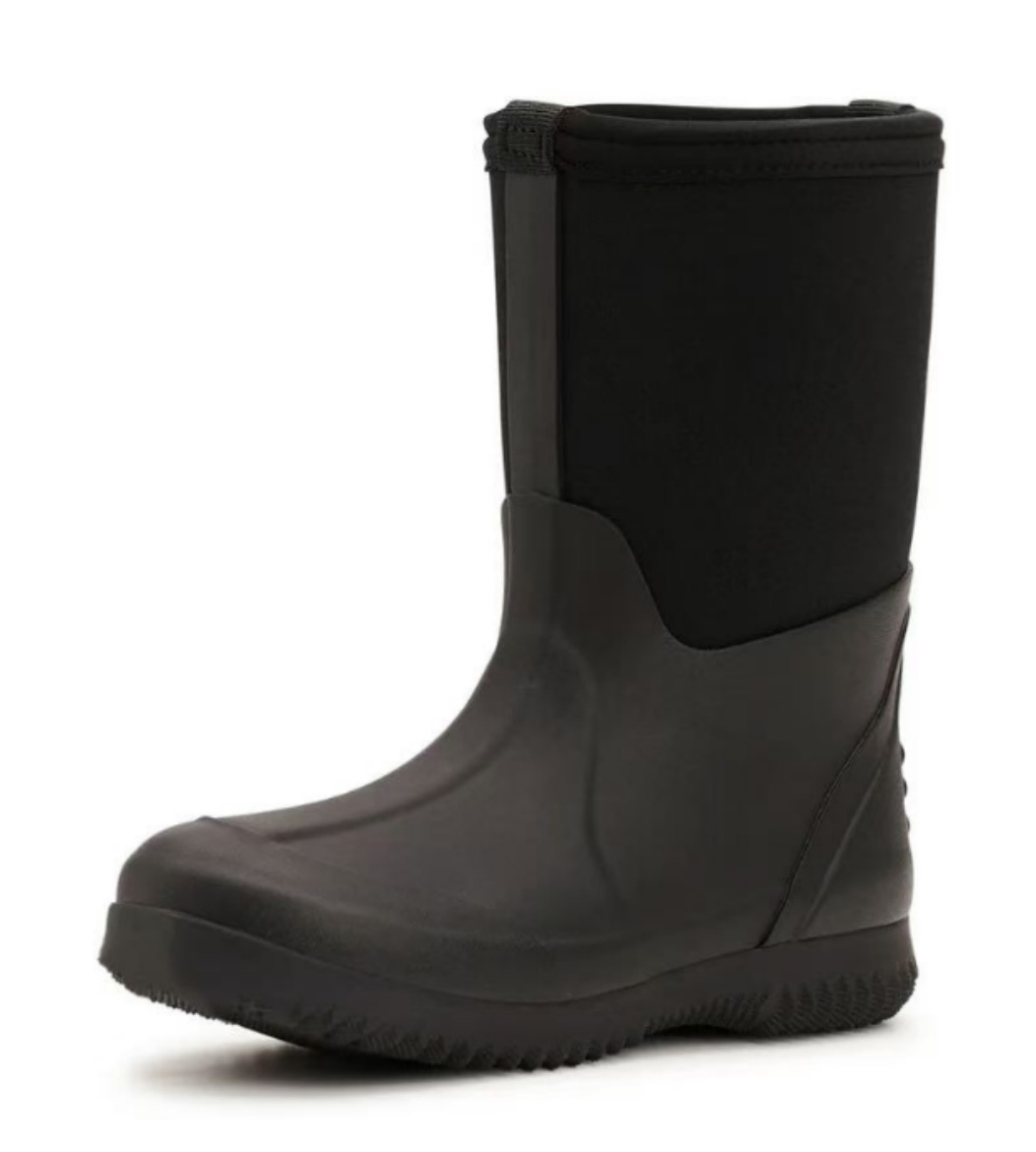
The flexibility of neoprene allows the boots to move with the kids' feet, providing a comfortable fit and enabling natural foot movement. It can bend and stretch without losing its shape, which is important for active children. In terms of insulation, neoprene can help keep the feet warm in cold and wet environments, making it suitable for use in different seasons.
Professional Rain Boot Manufacturer understands the importance of the manufacturing process. Injection molding is a common method used to make neoprene boots. In this process, the neoprene material is heated and injected into a mold in a liquid state. Once it cools and solidifies, it takes the shape of the mold, resulting in a seamless and well - structured boot. This seamless structure not only enhances the boot's durability but also reduces the risk of water leaking through the seams.
The sole of the boots is designed with specific patterns. Deep grooves and multi - directional patterns are often used to improve slip - resistance. These patterns increase the friction between the boot and the ground, providing better traction on wet, muddy, or slippery surfaces. The lining of the boots can also vary. Some boots have a soft, moisture - wicking lining that helps keep the feet dry and comfortable by absorbing sweat and releasing it.
Thickness control is another crucial aspect. The appropriate thickness of the neoprene material can ensure a balance between insulation, flexibility, and durability. For kids' boots, a thickness that is not too thick to restrict movement but thick enough to provide protection and insulation is carefully selected.
3. Practical Solutions and Operation Steps
When choosing kids' neoprene boots, consider the following steps:
- Size selection: Measure your child's feet accurately. Use a foot - measuring tool and measure both feet, as they may be slightly different in size. Choose a boot that allows about 1 - 1.5 centimeters of space at the toe for growth. You can also refer to the manufacturer's size chart, but keep in mind that different brands may have slightly different sizing.
- Material quality: Look for boots made from high - quality neoprene. Check for any signs of poor craftsmanship, such as uneven seams or rough edges. High - quality neoprene is more likely to be durable and resist wear and tear.
- Slip - resistance: Examine the sole pattern. Boots with deep grooves, multi - directional patterns, or suction - cup - like structures on the sole are generally more slip - resistant. You can also check if the boots meet relevant slip - resistance standards, such as EN ISO 20344:2021.
- Lining: Consider a boot with a moisture - wicking lining. This type of lining can help keep your child's feet dry and prevent odor. Soft and breathable linings are also more comfortable for long - term wear.
- Boot height: For most outdoor activities, a mid - calf or high - calf boot can provide better protection against water, mud, and debris. However, if your child is going to be mainly playing in shallow water or on a flat surface, a low - cut boot may be more suitable.
- Cleaning and storage: To clean the boots, use a mild soap and water solution. Gently scrub the boots with a soft brush and rinse thoroughly. Avoid using harsh chemicals or solvents, as they can damage the neoprene. After cleaning, let the boots dry naturally in a well - ventilated area away from direct sunlight. Store the boots in a cool, dry place when not in use to prevent the material from deteriorating.
4. Daily Maintenance and Precautions
For daily maintenance of kids' neoprene boots, regular cleaning is essential. After each use, especially if the boots are dirty or wet, remove any dirt or debris by shaking them out or using a soft brush. Then, wipe the boots with a damp cloth or follow the cleaning steps mentioned above.
To dry the boots, stuff them with newspaper. The newspaper can absorb moisture and help the boots keep their shape. Do not use a dryer or place the boots near a heater or radiator, as high temperatures can cause the neoprene to warp, crack, or lose its elasticity.
To prevent odor, you can place odor - absorbing packets in the boots when they are not in use. Tea bags, activated charcoal, or specialized shoe deodorizers can be effective. Additionally, air out the boots regularly in a well - ventilated area.
To avoid material aging, do not leave the boots exposed to direct sunlight for extended periods. Ultraviolet rays can break down the neoprene over time, causing it to become brittle and lose its strength. Also, keep the boots away from sharp objects that could puncture or scratch them.
Precautions should be taken to ensure safety. Do not use ordinary boots as substitutes for safety - certified boots in high - risk environments. For example, in industrial or construction areas, kids should wear boots that meet relevant safety standards to protect their feet from potential hazards.
5. Industry Standard and Parameter Reference
This chapter provides key industry standards and parameters for kids' neoprene boots, which are essential for assessing product quality and safety.
ParameterRecommended ReferenceWhy It MattersSlip resistanceEN ISO 20344:2021 / EN ISO 20347:2022+A1:2024 where applicableHelps evaluate outsole grip on wet or contaminated surfaces, reducing the risk of slips and falls for kids during outdoor activities.Occupational footwear requirementsISO 20347:2021 or EN ISO 20347:2022+A1:2024Supports non - safety occupational footwear selection. Although kids' boots are mainly for daily activities, these standards can still ensure basic quality and comfort.Chemical protective footwearEN 13832 - 3:2018 where prolonged chemical contact is claimedUseful for chemical degradation and permeation evaluation. While it may not be highly relevant for regular kids' boots, it's important in case of accidental chemical exposure.
6. Customer Common FAQ
Q: How do I know if the neoprene material of the boots is of good quality?
A: High - quality neoprene should feel smooth and have a consistent texture. Check for any signs of peeling, cracking, or unevenness on the surface. Professional Rain Boot Manufacturer often uses strict quality control measures, so you can also look for brands with a good reputation and compliance with relevant industry standards.
Q: Are kids' neoprene boots slip - resistant?
A: Most kids' neoprene boots are designed to be slip - resistant. Look for boots with a sole pattern that has deep grooves or multi - directional patterns. You can also check if they meet relevant slip - resistance standards such as EN ISO 20344:2021 to ensure better traction on wet or slippery surfaces.
Q: How can I choose the right size for my child?
A: Measure your child's feet accurately using a foot - measuring tool. Leave about 1 - 1.5 centimeters of space at the toe for growth. Refer to the manufacturer's size chart, but be aware that sizing can vary between brands. If possible, have your child try on the boots before purchasing.
Q: Do neoprene boots have an odor problem?
A: Neoprene boots can develop an odor if they don't have proper ventilation. Look for boots with a moisture - wicking lining to reduce the risk of odor. You can also place odor - absorbing packets in the boots when not in use and air them out regularly.
Q: Can I clean neoprene boots in a washing machine?
A: It is not recommended to clean neoprene boots in a washing machine. The agitation and high - speed spinning can damage the neoprene material and the structure of the boots. Instead, use a mild soap and water solution and gently scrub the boots with a soft brush, then rinse thoroughly and let them dry naturally.
Conclusion
In conclusion, kids' neoprene boots are a great choice for various outdoor activities. This article has covered core problems such as sizing, material durability, and slip - resistance, and provided practical solutions for selection, use, and maintenance. When choosing these boots, consider factors like size, material quality, and slip - resistance. Professional Rain Boot Manufacturer can offer valuable insights into the product's features and manufacturing process. By following the guidelines in this article, you can ensure that your child gets the most out of their neoprene boots.
References
- Grand View Research. (2024). Global Rubber Rain Boots Market Report.
- European Committee for Standardization. (2021). EN ISO 20344:2021 Footwear Test Methods.
- European Committee for Standardization. (2022). EN ISO 20347:2022+A1:2024 Occupational Footwear.