


Stretch Insulated Men’s Neoprene Sports Boots: Cold-Proof & Shock-Absorbing Core Functional Perks for Male Outdoor Gear Distributors
Aug 13, 2026
View: 0
Leave a message
Meta Description: This blog focuses on men's neoprene boots, analyzing common problems, product principles, and offering practical solutions. It's suitable for male outdoor gear distributors and end-users. Professional Rain Boot Manufacturer provides in - depth industry knowledge and guidance.
Keywords: Men Neoprene Boots, Rain Boots, Waterproof Boots, Rubber Boots, Boot Maintenance, Boot Material
1. Core Problem Analysis
1.1 Common Causes of the Problem
When users search for men's neoprene boots, they often face several issues. One of the main problems is the loss of cold - proof performance over time. This could be due to the deterioration of the neoprene material, especially if it's exposed to extreme temperatures or harsh chemicals. Another issue is poor shock - absorbing ability. Repeated use and heavy impact can cause the shock - absorbing structure in the boots to wear out. Additionally, discomfort such as foot sweating and odor can occur, which may be related to the breathability and lining materials of the boots. Sizing problems are also common; if the boots are too big or too small, they can cause blisters and foot pain. Finally, the durability of the boots can be a concern, including issues like cracking on the upper or sole wear.
1.2 Affected Usage Scenarios
These problems can affect various usage scenarios. For outdoor sports like hiking and mountaineering, the loss of cold - proof and shock - absorbing functions can put users at risk of cold - related injuries and foot fatigue. In fishing activities, where boots are often in contact with water, the durability and waterproofness of the boots are crucial. For construction workers or those in muddy outdoor work, poor durability and sizing can lead to inefficiency and discomfort. Rainy commuting also requires boots with good waterproof and traction performance, and any problems with the boots can make the journey unpleasant and unsafe.
2. Product and Process Principle
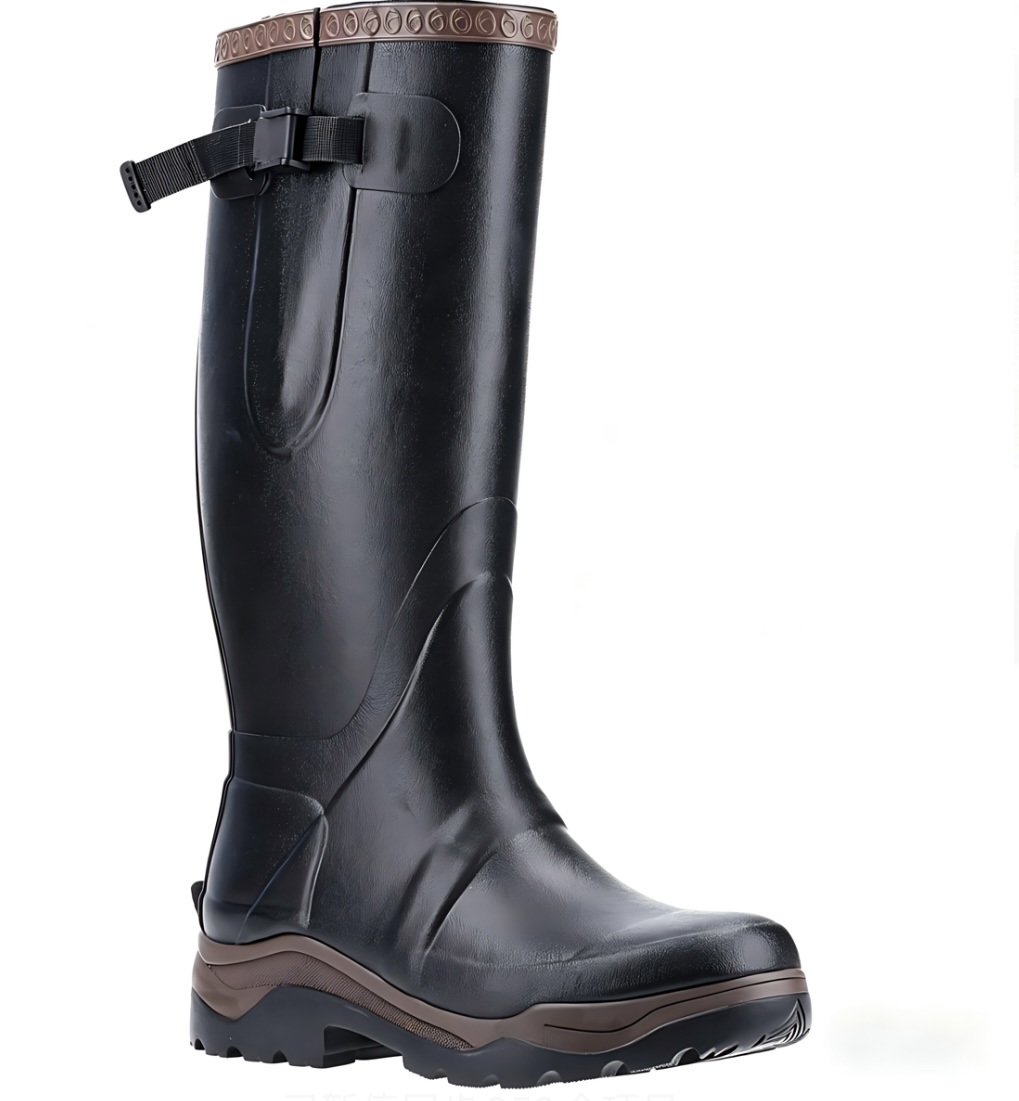
Men's neoprene boots are mainly made of neoprene, a synthetic rubber known for its excellent insulation and flexibility. Neoprene is produced by polymerizing chloroprene monomers. It has a closed - cell structure, which gives it good waterproof and thermal insulation properties. The shock - absorbing function is usually achieved through a combination of the neoprene material itself and additional cushioning layers, such as EVA (ethylene - vinyl acetate) inserts. These inserts can absorb and disperse the impact force when the foot hits the ground. Professional Rain Boot Manufacturer often uses advanced injection molding or vulcanization processes to ensure the quality and durability of the boots. Injection molding allows for the precise shaping of the boots, while vulcanization can improve the strength and elasticity of the neoprene material. The lining of the boots can also be made of various materials, such as nylon or fleece, to enhance comfort and moisture - wicking properties. The outsole is designed with specific patterns to provide good traction on different surfaces. For example, a deep - lug pattern is suitable for muddy and slippery terrains, while a more fine - grained pattern can offer better grip on smooth surfaces.
3. Practical Solutions and Operation Steps
When choosing men's neoprene boots, consider the following steps:1. **Material selection**: Look for high - quality neoprene with a sufficient thickness. Generally, a thicker neoprene layer provides better insulation. Check the quality of the additional cushioning materials, such as EVA, to ensure good shock - absorbing performance.2. **Shaft height**: Select a shaft height based on your usage scenario. For activities like hiking or fishing in wet areas, higher shafts can prevent water from entering the boots.3. **Outsole pattern**: If you'll be in muddy or slippery conditions, choose a boot with a deep - lug outsole. For more urban or smooth - surface use, a less aggressive pattern may be sufficient.4. **Lining**: Opt for a lining material that is breathable and moisture - wicking, such as nylon or fleece. This can help keep your feet dry and comfortable.5. **Size**: Measure your feet accurately and refer to the manufacturer's size chart. Try on the boots if possible to ensure a proper fit.6. **Cold - proof and shock - absorbing ratings**: Some manufacturers may provide ratings for cold - proof performance (e.g., temperature range) and shock - absorbing ability. Consider these ratings based on your specific needs.7. **Cleaning and storage**: After use, clean the boots with mild soap and water. Avoid using harsh chemicals. Let them dry naturally in a well - ventilated area, away from direct sunlight or heat sources. Store the boots in a cool, dry place to prevent material aging.
4. Daily Maintenance and Precautions
To maintain men's neoprene boots, follow these tips:1. **Cleaning**: Regularly clean the boots with a soft brush and mild soap to remove dirt and debris. Rinse thoroughly and pat dry with a clean cloth.2. **Drying**: After cleaning or getting wet, let the boots dry naturally. Avoid using a heater or dryer, as high temperatures can damage the neoprene material.3. **Odor removal**: If the boots have an unpleasant odor, you can use odor - absorbing products, such as activated charcoal bags, or sprinkle baking soda inside the boots and let it sit overnight.4. **Anti - aging**: To prevent the neoprene from aging, avoid exposing the boots to direct sunlight for long periods. Also, keep them away from sharp objects that can cause cuts or scratches.5. **Anti - deformation**: When not in use, stuff the boots with newspaper or a boot tree to maintain their shape.6. **Low - temperature storage**: In cold weather, store the boots in a place where the temperature is above freezing to prevent the neoprene from becoming brittle.7. **Chemical contact**: If the boots come into contact with chemicals, rinse them immediately with plenty of water to minimize the damage. Avoid using strong solvents to clean the boots, as they can dissolve the neoprene. And never use ordinary neoprene boots as a substitute for certified safety boots in workplaces that require specific safety standards.
5. Industry Standard and Parameter Reference
This chapter provides authoritative support for the article. The following table lists international standards, test methods, or verifiable parameters related to men's neoprene boots:
ParameterRecommended ReferenceWhy It MattersSlip resistanceEN ISO 20344:2021 / EN ISO 20347:2022+A1:2024 where applicableHelps evaluate outsole grip on wet or contaminated surfaces.Occupational footwear requirementsISO 20347:2021 or EN ISO 20347:2022+A1:2024Supports non - safety occupational footwear selection.Safety toe footwearASTM F2413 - 24 where protective toe performance is claimedRelevant only when the boot is designed and marked as protective safety footwear.Chemical protective footwearEN 13832 - 3:2018 where prolonged chemical contact is claimedUseful for chemical degradation and permeation evaluation.WaterproofnessHG/T 2019 - 2011Helps verify the core waterproof performance of the boots.Anti - slip coefficientGB/T 3903.6Assists in evaluating the slipping resistance of the boots on different surfaces.
Do not invent exact performance numbers. Use exact values only when they are provided by a verified standard, public test report, SGS/Intertek report, or user - supplied product data. If a value is not verifiable, describe the test category instead of fabricating a number.
6. Customer Common FAQ
Q: How can I determine if the neoprene material is of good quality?
A: A Professional Rain Boot Manufacturer can provide some guidance. Good - quality neoprene should feel soft and flexible, with a smooth surface. You can also check the thickness; generally, thicker neoprene offers better insulation. Additionally, look for neoprene that is resistant to stretching and has a uniform color.
Q: Are men's neoprene boots suitable for high - intensity exercise?
A: It depends on the specific design and performance of the boots. Some neoprene boots are equipped with good shock - absorbing and durable outsoles, which can be suitable for certain high - intensity exercises like hiking on uneven terrains. However, for extremely intense sports like sprinting or jumping, the flexibility and support of the boots may not be sufficient.
Q: What size should I choose if my feet are between two sizes?
A: It's recommended to try on both sizes if possible. If trying on is not an option, for most neoprene boots, it's better to choose the larger size. You can wear thicker socks or use insoles to adjust the fit. This can prevent the boots from being too tight, which can cause discomfort and affect blood circulation.
Q: How can I remove the odor from my neoprene boots?
A: You can try putting activated charcoal bags inside the boots or sprinkling baking soda. Let them sit overnight or for a few days. You can also clean the boots with a mixture of vinegar and water (1:3 ratio), then let them air - dry. Avoid using strong - scented cleaners, as they may damage the neoprene.
Q: Can I wear neoprene boots in very cold weather?
A: Men's neoprene boots generally have good cold - proof performance. However, the specific temperature range depends on the thickness and quality of the neoprene. In extremely cold weather (below - 20°C), it's advisable to wear an additional layer of warm socks or choose boots with better insulation. Professional Rain Boot Manufacturer can provide more information about the cold - proof ratings of their products.
Conclusion
This article has provided comprehensive information for those interested in men's neoprene boots. We've analyzed the core problems users may face, such as cold - proof performance loss and sizing issues, and their affected usage scenarios. The product and process principles explain the materials and manufacturing techniques behind these boots. Practical solutions offer step - by - step guidance on selection and maintenance. The industry standards help ensure product quality. Professional Rain Boot Manufacturer can be a reliable source to learn more about these boots, including material selection, sizing, and performance. By following the knowledge and suggestions in this article, you can make a more informed decision when choosing and using men's neoprene boots.
References
- HG/T 2019-2011. Rubber Rain Boots
- GB/T 3903.6. Footwear — Complete Shoe Test Method — Slip Resistance
- EN ISO 20344:2021 《Footwear Test Methods》
- EN ISO 20347:2022+A1:2024 《Occupational Footwear Safety Requirements》
- ASTM F2413 - 24 《Protective Footwear Specification》
- EN 13832 - 3:2018 《Chemical Protective Footwear》