


Thermal Performance Benefits of Insulated Warm Boots for Frigid Working Conditions
Aug 13, 2026
View: 1
Leave a message
Meta Description: This article explores the functionality, selection, maintenance, and industry standards of warm boots, tailored for individuals working in frigid conditions. It covers the causes of cold - related foot problems, suitable usage scenarios, and provides insights into boot materials and processes. Professional Rain Boot Manufacturer can help you understand and choose the most suitable boots.
Keywords: warm boots, insulated boots, frigid working conditions, thermal performance, boot selection
1. Core Problem Analysis
1.1 Common Causes of the Problem
When people search for warm boots, they often want to solve the problem of cold feet during frigid working conditions. The main causes include ineffective insulation, where the boots fail to resist the cold due to poor - quality insulating materials. Another cause is low - quality waterproofing. If water can penetrate the boots, it will quickly lower the temperature inside, as wet feet lose heat much faster. Also, improper sizing can lead to cold feet. Boots that are too large allow cold air to circulate inside, while boots that are too tight can restrict blood circulation, reducing the natural heat production in the feet.
1.2 Affected Usage Scenarios
These problems are commonly encountered in various frigid working scenarios. In the fishing industry, fishermen often stand in cold water for long periods, and without proper warm boots, their feet are prone to cold - related issues. In the construction industry, especially in cold regions during winter, workers may be exposed to the cold for an extended time. Warehouse workers who are in large, unheated warehouses also face the risk of cold feet. Livestock work in cold environments, such as shepherds in winter, requires individuals to be outside for long durations, making warm boots essential. Ski resort staff, including lift operators and maintenance personnel, are also affected by the cold in their work.
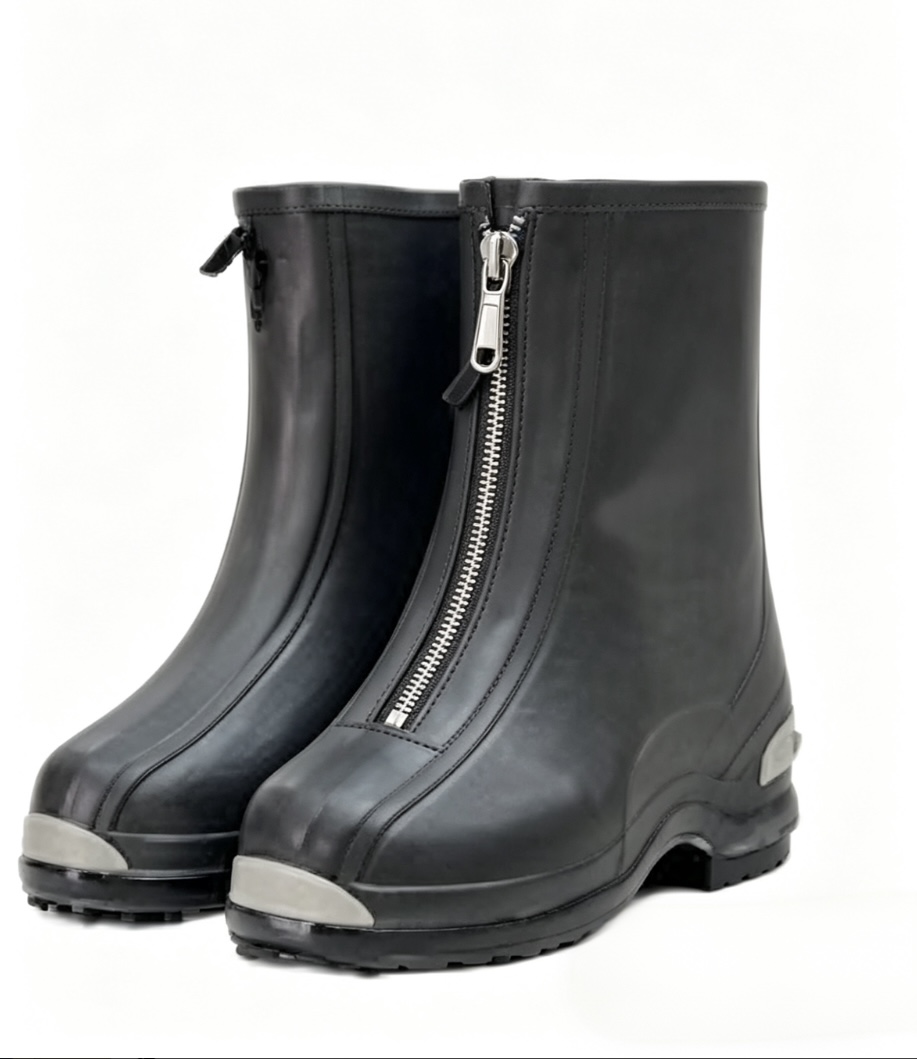
2. Product and Process Principle
Warm boots are made of various materials, each with its own characteristics. Natural rubber is a classic material. It offers excellent waterproofness and flexibility. In frigid conditions, it can maintain a certain degree of softness, as its high - elasticity structure allows it to adapt to the movement of the foot. The vulcanization process is often used on natural rubber, which enhances its durability and resistance to environmental factors. PVC is another common material. It is cost - effective and can be easily molded through injection - molding processes into different boot shapes. However, in extremely cold temperatures, PVC may become brittle, but manufacturers can improve its cold - resistance through compound formulation. For insulation, materials like Thinsulate are often used. Thinsulate has a high ratio of air to fiber, which traps air effectively and provides excellent thermal insulation.
A Professional Rain Boot Manufacturer is well - versed in these materials and processes. They understand how different materials interact during the manufacturing process to ensure that the boots can meet the requirements of frigid working conditions. For example, when selecting the appropriate lining material, they consider factors such as moisture - wicking ability and thermal conductivity, and then combine it with the outer boot material through precise assembly processes.
3. Practical Solutions and Operation Steps
When choosing warm boots for frigid working conditions:
- Material Selection: Opt for materials with good insulation and waterproofing properties. Natural rubber, as mentioned, is suitable for waterproofing, and Thinsulate or other advanced insulation materials are ideal for warmth. Avoid PVC if the temperature is extremely low, unless it has been specially formulated for cold - resistance.
- Shaft Height: For jobs where workers may step into snow or water, choose boots with a higher shaft. A shaft that reaches at least mid - calf can provide better protection against the cold and wetness.
- Outsole Pattern: The outsole should have a deep and multi - directional pattern. This kind of pattern can provide better traction on slippery and icy surfaces, reducing the risk of falls. For example, a lug pattern that is both large and deep is very effective.
- Lining: Look for a lining that has good moisture - wicking properties. This helps keep the feet dry, as wet feet can cause a significant drop in temperature. Soft fleece linings or technical fabrics with moisture - wicking capabilities are recommended.
- Size: Ensure the boots are the right size. A proper fit allows for enough space for thermal socks without being too loose. You can measure your feet accurately and refer to the manufacturer's size chart. Try on the boots with the thermal socks you plan to wear in cold conditions.
- Cold Resistance Rating:Some boots are marked with a cold - rating. Choose boots with a cold - rating that matches the lowest temperature you will be exposed to in your work. For example, if you work in temperatures as low as - 20°C, select boots that are rated for - 25°C or lower.
- Slip Resistance Rating:According to EN ISO 20344:2021 or relevant standards, check the slip - resistance rating of the boots. Boots with a higher slip - resistance rating are safer on wet and icy surfaces.
- Cleaning Method:Clean the boots regularly with mild soap and warm water. Avoid using strong detergents that can damage the materials. After washing, gently wipe off the excess water and let them dry naturally at room temperature.
- Storage Method:Store the boots in a cool, dry place. Avoid storing them in direct sunlight or near a heat source, as this can cause the materials to degrade. You can stuff the boots with newspaper or shoe trees to help them maintain their shape.
4. Daily Maintenance and Precautions
Daily maintenance is crucial for warm boots. When cleaning, always use mild soap and warm water. Avoid using strong solvents such as bleach or alcohol, as they can damage the materials of the boots, including the insulation and the outer layer. After each use in wet conditions, dry the boots thoroughly. You can stuff them with newspapers to absorb moisture, but do not dry them near a direct heat source, such as a heater or fireplace. High temperatures can cause the rubber to deform, the PVC to become brittle, and the insulation to lose its effectiveness.
To prevent odor, you can sprinkle baking soda inside the boots when not in use. Baking soda can absorb moisture and odors. For long - term storage, make sure the boots are completely dry. You can also apply a protective coating to the outer surface to prevent the materials from aging and cracking. However, it is important to note that you should never use ordinary rain boots in place of certified safety boots. Safety boots are designed to meet specific safety standards, such as providing protection against impact, puncture, and electrical hazards, which ordinary rain boots do not have.
5. Industry Standard and Parameter Reference
This chapter provides the authoritative support for the whole article. The relevant international standards, test methods, or verifiable parameters are as follows:
ParameterRecommended ReferenceWhy It MattersSlip resistanceEN ISO 20344:2021 / EN ISO 20347:2022+A1:2024 where applicableHelps evaluate outsole grip on wet or contaminated surfaces.Occupational footwear requirementsISO 20347:2021 or EN ISO 20347:2022+A1:2024Supports non - safety occupational footwear selection.Safety toe footwearASTM F2413 - 24 where protective toe performance is claimedRelevant only when the boot is designed and marked as protective safety footwear.Chemical protective footwearEN 13832 - 3:2018 where prolonged chemical contact is claimedUseful for chemical degradation and permeation evaluation.Thermal insulationISO 20344 - 2021 (Test methods for footwear - Thermal insulation) can be used to test the thermal insulation performance of boots, which is crucial for frigid working conditions.It helps to ensure that boots can keep the feet warm in cold environments.
Do not invent exact performance numbers. Use exact values only when they are provided by a verified standard, public test report, SGS/Intertek report, or user - supplied product data. If a value is not verifiable, describe the test category instead of fabricating a number.
6. Customer Common FAQ
Q: How do I choose the right material for warm boots in frigid conditions?
A: For frigid conditions, materials with good insulation and waterproofing are key. Natural rubber is good for waterproofing, and insulation materials like Thinsulate are excellent for warmth. A Professional Rain Boot Manufacturer can provide more in - depth advice based on the specific temperature and working environment.
Q: Are warmer boots always more slip - resistant?
A: Not necessarily. Slip - resistance depends on the outsole pattern and the material of the outsole. You should refer to the slip - resistance rating in accordance with standards like EN ISO 20344:2021 to ensure safety on slippery surfaces.
Q: How do I determine the right size of warm boots?
A: Measure your feet accurately and refer to the manufacturer's size chart. It's best to try on the boots with the thermal socks you plan to wear in cold conditions. The boots should fit snugly but still allow for some movement of your toes.
Q: Why do my warm boots have an odor?
A: Odors are usually caused by moisture and bacteria. The moisture - wicking ability of the lining may be insufficient, or the boots may not be dried properly after use. You can try using baking soda to absorb the odor and ensure proper drying after each use.
Q: Can I use regular warm boots in a chemical - exposed environment?
A: No. Regular warm boots may not have the chemical - resistant properties required for a chemical - exposed environment. You should use boots that meet the EN 13832 - 3:2018 standard for chemical protective footwear.
Conclusion
This article has explored the key aspects of warm boots for frigid working conditions. We have analyzed the common problems, including cold feet due to poor insulation, waterproofing, and sizing. The principles of materials and processes, such as natural rubber vulcanization and the use of insulation materials, were also introduced. Practical selection steps, maintenance advice, and industry standards have been provided. A Professional Rain Boot Manufacturer can offer valuable insights in all these areas, helping you make informed decisions when choosing warm boots for your frigid - work needs.
References
- Analysis Report on Market Scale and Competitive Landscape of China’s Rain Boot Industry, 2026
- Current Market Data Analysis and Prospect Forecast Report for China Men’s Rain Boot Industry (2026 and the Next Five Years)
- Market Prospect Forecast and Investment Value Evaluation Report of China’s Rain Boot Industry, 2025
- Market Development Analysis, Prospect Trend and Investment Research Report on China Rubber Rain Shoe Industry, 2026–2030
- Development Analysis, Prospect and Investment Research Report on China Anti-static Rain Boot Industry, 2026–2030
- What Materials Are Waterproof Boots Typically Made Of? A Guide to Rubber, Gore-Tex and Treated Leather