


Tree Planting Boots: Critical Protection for Backcountry Reforestation Workers
Oct 10, 2026
View: 0
Leave a message
Meta Description: Backcountry reforestation tasks require reliable footwear to safeguard workers in harsh, muddy, and uneven terrains. This article covers key considerations for selecting suitable tree planting boots, material performance, maintenance practices, and industry-standard guidelines. Professional Rain Boot Manufacturer insights underpin the practical advice offered.
Keywords: tree planting boots, backcountry work boots, rubber rain boots, occupational footwear, boot maintenance, slip-resistant boots, muddy terrain footwear
1. Core Problem Analysis
1.1 Common Causes of the Problem
Workers engaged in backcountry reforestation often face issues that compromise boot performance: water infiltration through unsealed seams, sole wear from constant contact with sharp rocks and root systems, insufficient insulation against low temperatures in mountainous areas, and improper sizing that causes blisters or instability on sloped terrain. These issues can lead to increased downtime, reduced productivity, and higher long-term footwear replacement costs. Many users also fail to account for material degradation when exposed to organic matter or occasional contact with mild chemicals used in site preparation.
1.2 Affected Usage Scenarios
These problems are most prevalent in remote reforestation sites, where terrain is uneven, muddy, or covered in thick undergrowth, and where access to replacement footwear is limited. Tasks include digging planting holes, handling tree saplings, and navigating unmarked trails, all of which place unique demands on footwear durability, grip, and protection. Seasonal conditions like wet spring mud or frosty winter soil further amplify the need for boots designed specifically for these harsh environments.
2. Product and Process Principle
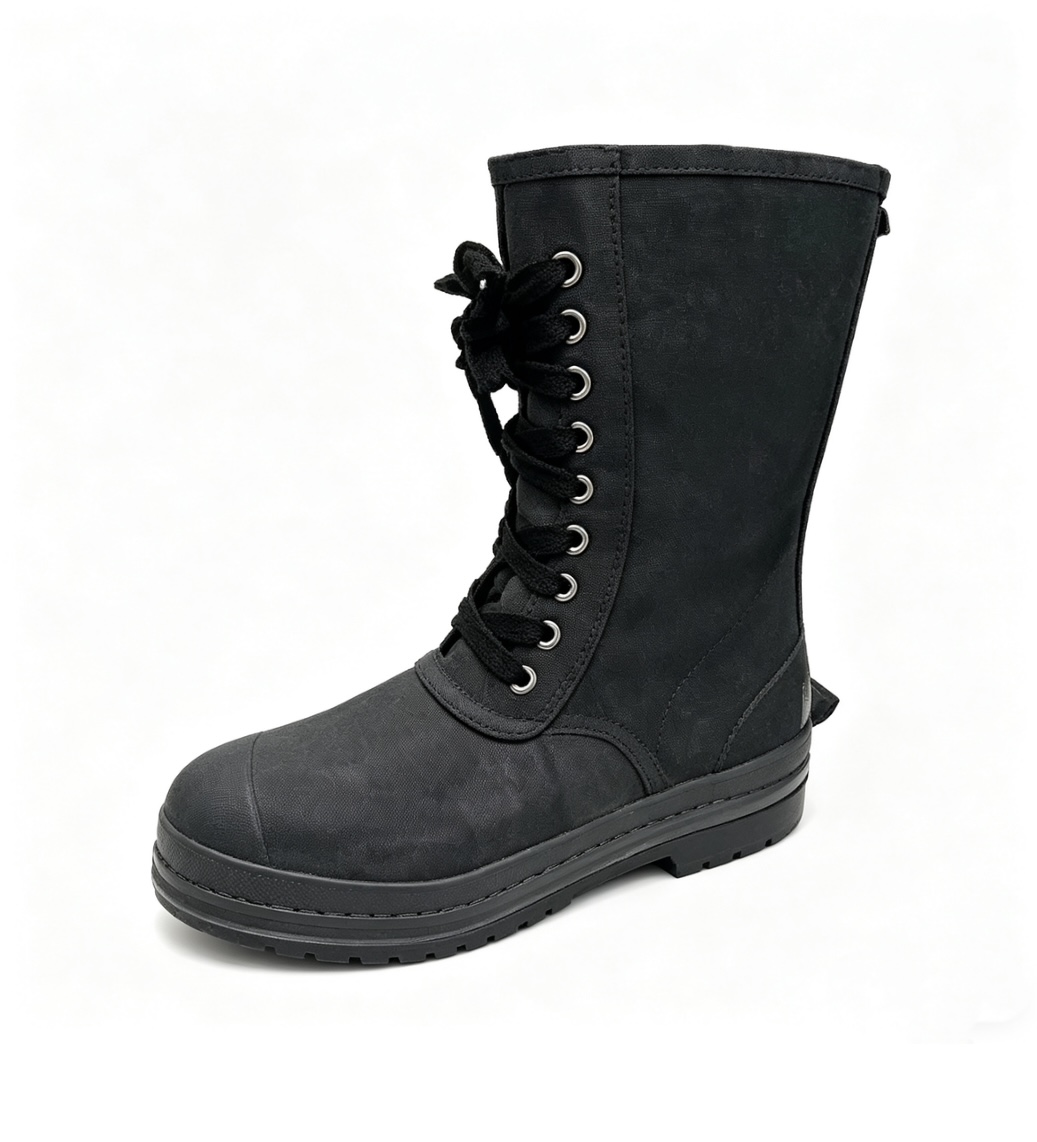
Tree planting boots rely on specialized materials and manufacturing processes to meet backcountry work requirements. Most functional models use a blend of natural rubber and synthetic PVC, formulated to balance flexibility, puncture resistance, and water sealing. Vulcanization is a key process that bonds rubber compounds at high temperatures, improving material durability and resistance to tear under repeated stress from digging and walking over rough terrain. Seam-free construction is often used to eliminate weak points where water can infiltrate, while thick outsole layers with multi-directional tread patterns enhance grip on slippery mud and rock surfaces.
Professional Rain Boot Manufacturer apply compound formulation testing to adjust material hardness for different temperature ranges, ensuring boots remain flexible without cracking in cold conditions and durable enough to withstand heavy use. Lining materials, such as moisture-wicking fabric or insulating foam, are integrated to manage foot sweat and maintain temperature stability, a critical feature for long shifts in variable weather.
3. Practical Solutions and Operation Steps
Selecting the right tree planting boots requires evaluating factors aligned with specific reforestation site conditions. Follow these actionable steps to make an appropriate choice:
- Assess terrain conditions: For rocky or root-heavy sites, prioritize boots with puncture-resistant midsole layers, as per ASTM F2413-24 for protective footwear if available.
- Evaluate weather exposure: Choose boots with shaft height that covers the lower calf for sites with deep mud or standing water; shorter shafts are suitable for dry, firm terrain.
- Check outsole design: Select tread patterns with grooves that channel mud outward, ensuring consistent grip on wet or sloped surfaces, per slip-resistance standards like EN ISO 20347:2022+A1:2024.
- Verify material composition: Avoid overly rigid PVC boots if working in temperatures below 10°C, as they may crack; opt for rubber blends with low-temperature flexibility for cold climates.
- Confirm sizing: Leave 0.5 to 1 centimeter of extra space at the toe to accommodate thick work socks without causing blisters during long shifts.
4. Daily Maintenance and Precautions
Proper maintenance extends the lifespan of tree planting boots and preserves their performance in harsh conditions. After each use, remove mud and debris with a soft brush and mild soap, avoiding harsh chemical cleaners that can degrade rubber compounds. Air boots in a well-ventilated area away from direct sunlight or open flames, as extreme heat can warp soles and crack materials. Do not place boots on heating vents or near campfires, as this accelerates material breakdown.
Additional precautions include inspecting boots weekly for small punctures or seam separation, repairing minor damages with rubber sealant as needed. Store boots in a cool, dry area; avoid folding them tightly for extended periods, as this can create permanent creases that reduce water resistance. Never use standard rain boots as protective footwear for reforestation tasks requiring impact or chemical protection, as they do not meet occupational safety standards for these purposes.
5. Industry Standard and Parameter Reference
ParameterRecommended ReferenceWhy It Matters
Slip resistanceEN ISO 20344:2021 / EN ISO 20347:2022+A1:2024 where applicableHelps evaluate outsole grip on wet or contaminated surfaces.
Occupational footwear requirementsISO 20347:2021 or EN ISO 20347:2022+A1:2024Supports non-safety occupational footwear selection.
Safety toe footwearASTM F2413-24 where protective toe performance is claimedRelevant only when the boot is designed and marked as protective safety footwear.
Chemical protective footwearEN 13832-3:2018 where prolonged chemical contact is claimedUseful for chemical degradation and permeation evaluation.
Low-temperature flexibilityISO 17707:2004 for rubber compoundsEnsures boot material remains functional in sub-zero reforestation environments.
All performance claims for tree planting boots should be verified against relevant standards, with third-party testing from organizations like SGS or Intertek providing independent validation where required. Test methods must align with standard protocols to ensure consistent, reliable performance across different boot models.
6. Customer Common FAQ
Q: How do I know if tree planting boots have sufficient puncture resistance for rocky terrain?
A: Look for boots that use reinforced midsole materials, and check if they meet the puncture resistance requirements of ASTM F2413-24 for protective footwear, if applicable. Professional Rain Boot Manufacturer can provide test results for puncture resistance based on site-specific conditions.
Q: Are rubber boots better than PVC boots for cold backcountry reforestation work?
A: In temperatures below 10°C, rubber blends with low-temperature flexibility (tested per ISO 17707:2004) are more suitable, as PVC may become rigid and crack. For milder conditions, PVC boots offer similar durability at a lower cost.
Q: How often should tree planting boots be replaced for consistent performance?
A: Replacement frequency depends on use intensity, but most functional models last 12 to 18 months with proper maintenance. Inspect for worn soles, seam separation, or material cracking, which indicate reduced performance and need for replacement.
Q: Can tree planting boots be cleaned with pressure washers?
A: Avoid high-pressure washers, as they can damage seams and push water into boot linings. Use a soft brush and mild soap for gentle cleaning, which preserves the structural integrity of the boot.
Q: Do tree planting boots meet safety standards for heavy-duty reforestation tasks?
A: Basic tree planting boots for mud and terrain may meet ISO 20347:2021 for occupational footwear. For tasks requiring impact or chemical protection, select boots marked to meet ASTM F2413-24 or EN 13832-3:2018 respectively.
Conclusion
Tree planting boots are essential for protecting workers in backcountry reforestation, addressing unique challenges of harsh terrains, variable weather, and physically demanding tasks. By understanding material properties, manufacturing processes, and industry standards, users can select boots that balance durability, grip, and comfort for long shifts. Professional Rain Boot Manufacturer insights help translate technical specifications into practical choices, ensuring footwear meets the demands of remote, muddy, and uneven reforestation sites. Proper maintenance further extends boot lifespan and preserves performance, reducing downtime and long-term costs.
References
- ISO 20347:2021, Occupational Footwear - Requirements and Test Methods, International Organization for Standardization
- EN ISO 20344:2021, Personal Protective Equipment - Test Methods for Footwear, European Committee for Standardization
- ASTM F2413-24, Standard Specification for Performance Requirements for Protective Footwear, ASTM International
- ISO 17707:2004, Rubber, vulcanized or thermoplastic - Determination of low-temperature flexibility, International Organization for Standardization
- EN 13832-3:2018, Footwear protecting against chemicals - Part 3: Requirements for chemical protective footwear, European Committee for Standardization