


Tree Planting Boots: Essential Protection for Rough Terrain Reforestation Projects
Sep 28, 2026
View: 0
Leave a message
Meta Description: Reforestation projects in rough, uneven terrain demand footwear that balances traction, coverage, and durability to support extended work shifts and protect against hazards like wet soil, sharp debris, and uneven ground. This guide outlines key considerations for selecting tree planting boots to optimize safety and productivity in challenging outdoor settings. Professional Rain Boot Manufacturer.
Keywords: tree planting boots, reforestation footwear, rough terrain boots, rubber work boots, waterproof work boots, boot maintenance
1. Core Problem Analysis
1.1 Common Causes of the Problem
Users search for tree planting boots to resolve a range of work-related issues common in reforestation: water seepage that leads to foot discomfort over long shifts, insufficient traction on sloped muddy ground, inadequate coverage to block twigs and small branches, and material breakdown from repeated contact with damp soil and organic debris. Many workers also face problems with ill-fitting boots that cause blisters or reduce mobility, or boots that fail to insulate against cool soil temperatures in mountainous or high-altitude reforestation sites. Without proper footwear, these issues can lead to reduced work output, increased fatigue, and even minor work-related injuries that disrupt project timelines.
1.2 Affected Usage Scenarios
Tree planting boots are specifically designed for reforestation scenarios, including steep mountain slopes with loose soil, recently cleared logging areas with scattered debris and uneven ground, wet lowland sites with standing water, and mid-altitude forest regeneration zones with mixed undergrowth. These scenarios all share the need for footwear that can adapt to variable terrain, provide consistent waterproofing, and withstand abrasive contact with organic and inorganic debris. The demands of these work environments differ from casual garden use or general rainy commuting, requiring specialized construction and material properties that cater to the specific rigors of reforestation labor.
2. Product and Process Principle
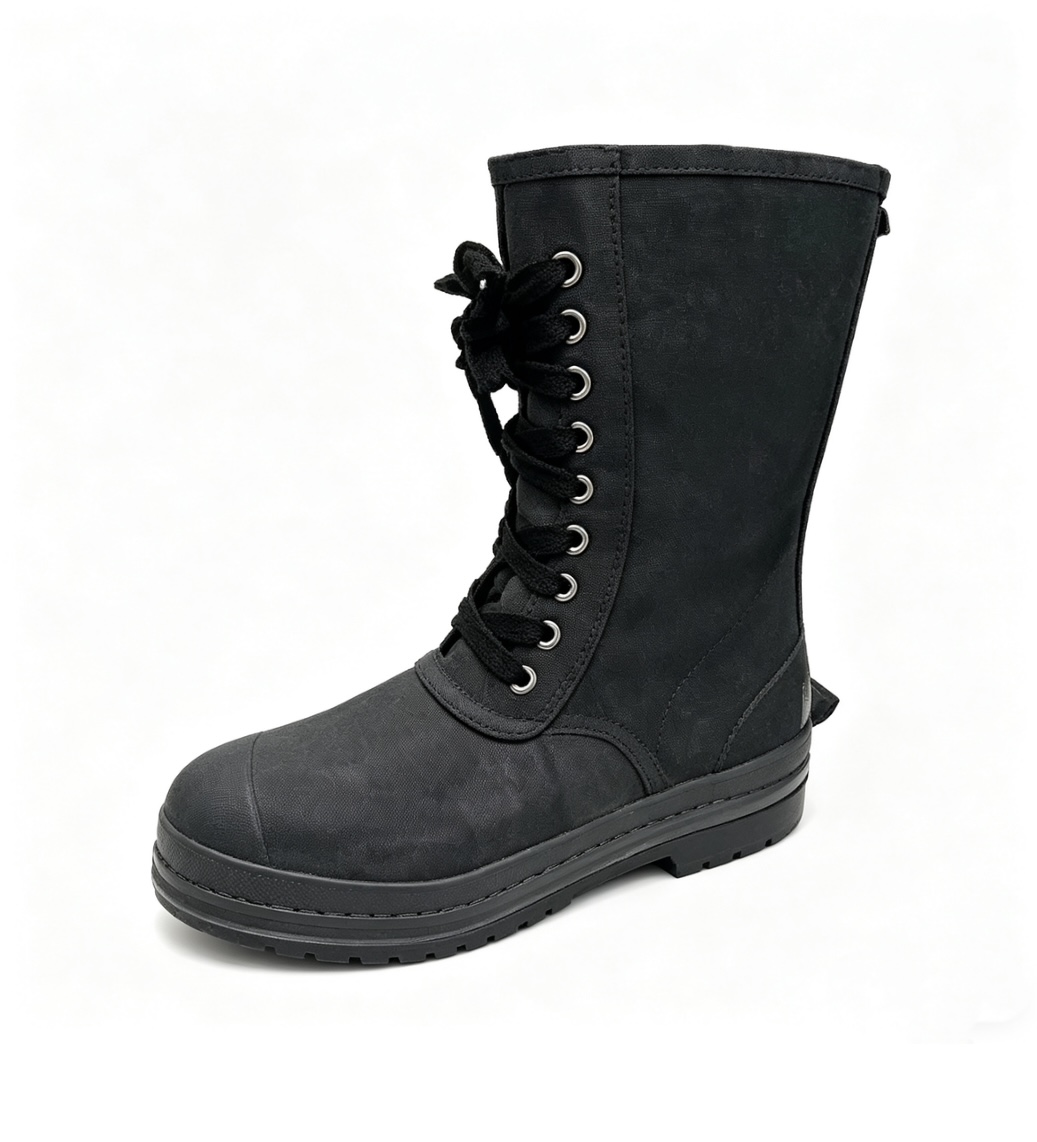
The core performance of tree planting boots is determined by material selection and manufacturing processes tailored to reforestation demands. Most tree planting boots use either natural rubber, synthetic PVC, or EVA-blended compounds; natural rubber offers superior abrasion resistance and flexibility under variable temperatures, while PVC is valued for its lower cost and consistent waterproofing. Seam-free injection molding is a common process for these boots, eliminating potential leak points that can occur at stitched seams, as required by standard footwear production practices. Outsole design, including tread depth and pattern, is engineered to provide grip on both wet mud and firm rock, with different tread densities optimized for sloped vs. flat terrain. Shaft height is another key structural factor, with mid-calf to knee-high cuts offering additional protection against water and debris entry.
Professional Rain Boot Manufacturer applies material testing frameworks aligned with ISO 20344:2021 to validate compound durability and waterproof performance, ensuring boots meet the specific requirements of outdoor reforestation work.
3. Practical Solutions and Operation Steps
Selecting the right tree planting boots requires a structured approach that matches footwear properties to project-specific conditions. Below are actionable steps to identify and choose suitable boots for reforestation work:
- Step 1: Assess project terrain characteristics: For steep, rocky slopes, prioritize boots with deep, durable outsole treads. For low-lying muddy areas, select boots with water-resistant seals at the shaft opening to prevent debris ingress.
- Step 2: Evaluate material durability: Request or verify compound resistance to abrasion from organic debris, as measured via standard footwear wear testing methods. Avoid lightweight EVA-only boots for heavy debris areas, as they may tear more easily over extended use.
- Step 3: Confirm fit and mobility: Try boots with the work socks typically used for reforestation to ensure enough toe room and flexibility; overly tight boots can cause blisters during 8+ hour work shifts.
- Step 4: Check insulation requirements: For high-altitude or cool-climate reforestation, select boots with a thin, breathable lining to maintain foot temperature without causing overheating during physical labor.
- Step 5: Verify standardized construction: Ensure boots use seam-free manufacturing to reduce leak risks, aligned with ISO 20347:2021 requirements for occupational footwear.
4. Daily Maintenance and Precautions
Proper maintenance of tree planting boots extends their service life and preserves performance critical for reforestation work. After each use, brush off loose soil and debris with a stiff bristle brush, paying close attention to outsole treads to prevent mud buildup that reduces grip. For minor stains, use a mild, non-abrasive soap and a damp cloth; avoid strong solvents, which can break down rubber or PVC compounds over time. Allow boots to air dry completely at room temperature, away from direct sunlight or space heaters, as extreme heat can cause material cracking and shrinkage.
Key precautions for tree planting boots: Do not use these specialty boots for general construction work or heavy industrial tasks, as they may lack the puncture resistance required for those environments. Store boots in a cool, dry place, away from sharp tools or heavy equipment that can scratch or puncture the outer surface. If boots show signs of seam separation or deep tread cracking, replace them promptly to avoid safety risks on uneven terrain.
5. Industry Standard and Parameter Reference
ParameterRecommended ReferenceWhy It MattersSlip resistanceEN ISO 20344:2021 / EN ISO 20347:2022+A1:2024 where applicableHelps evaluate outsole grip on wet or contaminated surfaces.Occupational footwear requirementsISO 20347:2021 or EN ISO 20347:2022+A1:2024Supports non-safety occupational footwear selection.Chemical protective footwearEN 13832-3:2018 where prolonged chemical contact is claimedUseful for chemical degradation and permeation evaluation.Abrasion resistanceISO 20344:2021, Section 5.7Measures material durability against repeated contact with rough debris and terrain.
Performance claims for tree planting boots should only reference test data aligned with these standards; unverified claims about waterproofing or durability may not hold up to actual reforestation work conditions.
6. Customer Common FAQ
Q: How do tree planting boots differ from general rain boots?
A: Tree planting boots are engineered for longer shifts, heavier debris exposure, and improved traction on uneven slopes. General rain boots are designed for casual use, with lighter materials and less aggressive outsole patterns that are not suited for reforestation terrain.
Q: Can tree planting boots be repaired if they develop small punctures or leaks?
A: Minor surface punctures can be repaired with rubber-specific adhesive designed for footwear use, but structural damage to the outsole or shaft may require full boot replacement to maintain safety on rough terrain.
Q: What level of waterproofing should I look for in reforestation boots?
A: Look for boots that meet ISO 20347:2021 waterproof performance standards, which require resistance to water ingress during 30 minutes of submersion in low-pressure conditions, suitable for damp reforestation soil.
Q: Are tree planting boots suitable for use in cold weather conditions?
A: Some tree planting boots include insulating linings, but for prolonged exposure to temperatures below 10°C (50°F), select boots with compound flexibility tested for low-temperature performance per ISO 20344:2021. Professional Rain Boot Manufacturer can provide guidance on temperature-rated boot options for cold-climate reforestation.
Conclusion
Selecting appropriate tree planting boots is a critical investment for reforestation projects, balancing safety, durability, and productivity on rough terrain. By focusing on material durability, traction performance, standardized construction, and proper maintenance, workers can reduce fatigue and injury risk while extending boot service life. Understanding key industry standards ensures that boots meet the specific demands of outdoor reforestation labor, rather than relying on general-purpose footwear. Professional Rain Boot Manufacturer supports informed decisions by providing technical guidance on material and construction options tailored to diverse project conditions.
References
- International Organization for Standardization. ISO 20344:2021, Footwear – Test methods for whole shoe. 2021.
- International Organization for Standardization. ISO 20347:2021, Occupational footwear. 2021.
- European Committee for Standardization. EN ISO 20347:2022+A1:2024, Occupational safety and footwear. 2024.
- European Committee for Standardization. EN 13832-3:2018, Chemical protective footwear. 2018.