


Tree Planting Boots: Key Features For All-Day Outdoor Planting Comfort
Oct 27, 2026
View: 0
Leave a message
Meta Description: Outdoor tree planting requires reliable footwear that balances comfort, protection and practicality, especially during full-day work. This guide breaks down the critical features to look for in tree planting boots, tailored to muddy, uneven terrain and long-hour wear. Professional Rain Boot Manufacturer provides relevant industry context for boot selection.
Keywords: tree planting boots, waterproof work boots, mud-resistant footwear, agricultural work boots, boot comfort, work boot maintenance, occupational footwear
1. Core Problem Analysis
1.1 Common Causes of the Problem
Workers engaged in full-day tree planting often face discomfort rooted in multiple footwear-related issues. The most prevalent causes include trapped moisture leading to blisters or fungal growth, insufficient grip on muddy, sloped ground that increases fall risk, inadequate insulation for cool or damp environments, stiff soles that cause foot fatigue during long hours of walking, and ill-fitting designs that pinch toes or rub against the ankle. Additional issues include waterproof seams that degrade quickly with repeated exposure to soil and moisture, and heavy boot construction that adds unnecessary strain on legs during extended work periods.
1.2 Affected Usage Scenarios
These issues impact tree planting work across a range of outdoor settings and conditions. Common scenarios include working in newly tilled soil that retains high moisture, navigating sloped or uneven terrain around planting sites, standing for long periods while digging planting holes, and carrying heavy tools or saplings during work shifts. Tree planting often occurs in early spring or late fall, when temperatures are cool, ground conditions are damp, and work shifts can extend for 8 to 10 hours without significant breaks. The muddy, debris-filled nature of planting sites also increases wear and tear on boot materials compared to general agricultural work.
2. Product and Process Principle
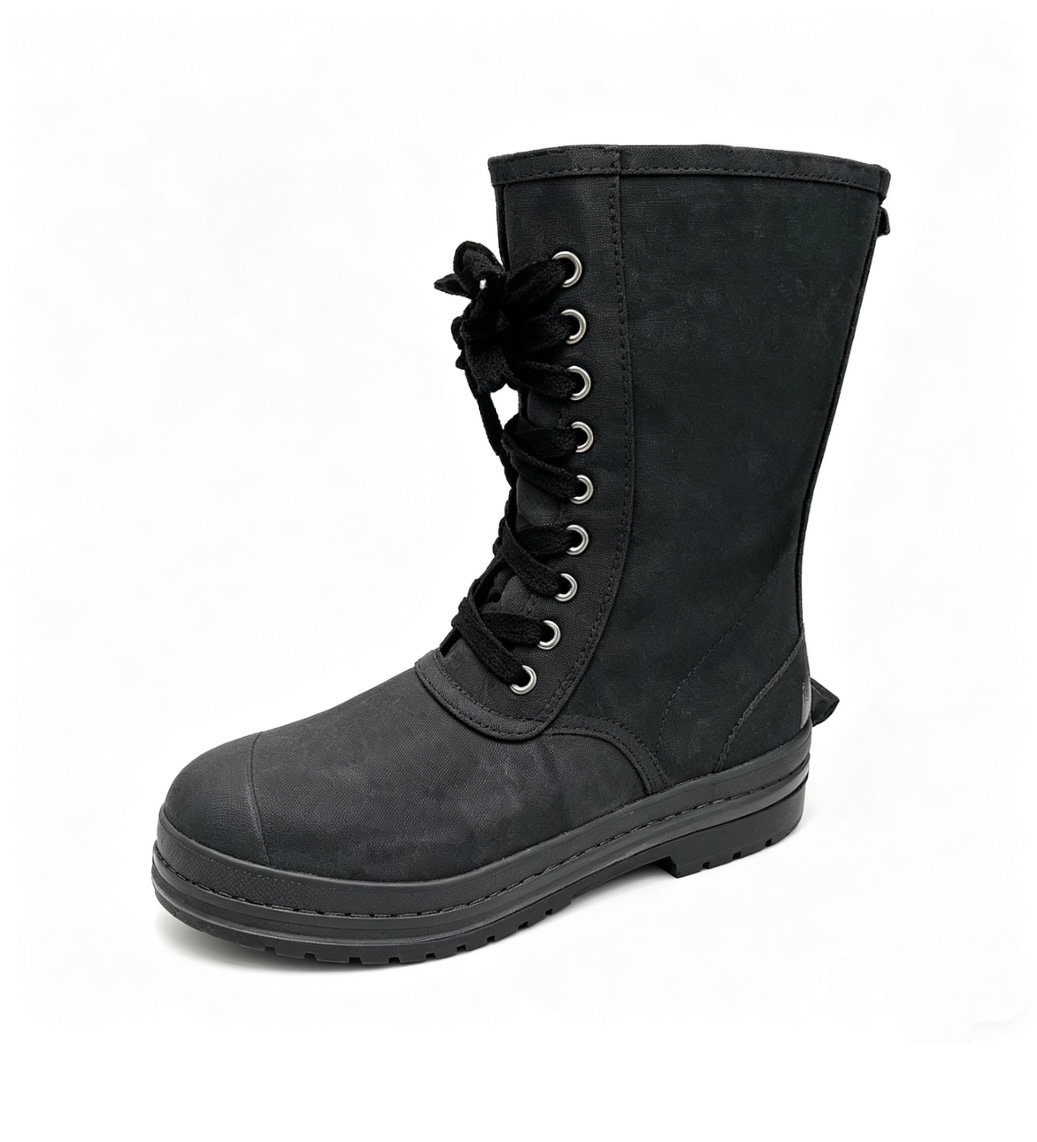
Tree planting boots rely on specific material and construction principles to address the unique demands of full-day outdoor work. Most modern tree planting boots use a blend of natural rubber, PVC, or EVA for the upper, each with distinct performance characteristics. Natural rubber offers high flexibility and puncture resistance, while PVC provides durable waterproofing at a lower production cost; EVA is often used for lightweight cushioning in the midsole. The outsole uses a deep, multi-directional tread pattern designed to channel mud and debris away from the contact area, improving grip on soft or uneven ground. Seamless construction, achieved through injection molding or vulcanization, eliminates weak points where water can seep into the boot, a critical feature for prolonged exposure to damp soil.
Professional Rain Boot Manufacturer notes that material thickness is a key consideration, with optimal boot shafts ranging from 12 to 16 inches to prevent soil from entering the top opening, and midsole thickness calibrated to balance cushioning and stability for walking over uneven terrain. Lining materials, such as moisture-wicking fabric or breathable mesh, are integrated to reduce trapped sweat inside the boot, addressing a major source of all-day discomfort. The construction process also includes controlled curing periods to ensure rubber components maintain their flexibility across a range of temperatures, a factor that impacts performance in cool outdoor conditions.
3. Practical Solutions and Operation Steps
Selecting the right tree planting boots requires evaluating specific features aligned with work conditions, rather than relying on general rain boot characteristics. First, assess the typical terrain and moisture levels at planting sites: if work occurs in consistently muddy areas, prioritize outsoles with at least 4mm deep treads per EN ISO 20344:2021 test guidelines for slip resistance. For cool work environments, choose boots with a thermal lining rated for minimum temperatures matching the site’s average low during planting seasons. Next, measure foot size carefully, accounting for potential swelling during long shifts, and select boots with a removable insole to accommodate custom orthotics if needed.
- Step 1: Verify boot shaft height fits snugly around the lower leg to prevent soil ingress, with enough flexibility for bending when digging.
- Step 2: Test outsole flexibility by bending the boot to ensure it moves with the foot, reducing strain during walking.
- Step 3: Inspect seams and construction to confirm no gaps, using a simple water test where a small amount of water is poured on the upper to check for leakage after 5 minutes.
- Step 4: Match boot weight to work duration; boots under 1.5kg per pair are ideal for shifts longer than 8 hours to minimize leg fatigue.
- Step 5: Confirm that the boot meets basic occupational footwear requirements per ISO 20347:2021 for general work site suitability.
4. Daily Maintenance and Precautions
Proper maintenance of tree planting boots extends their service life and preserves comfort during long work shifts. After each use, remove loose mud and soil with a stiff brush, avoiding high-pressure water that can damage seams or separate components. Wipe the boots with a damp cloth and air dry them in a well-ventilated area, away from direct sunlight or direct heat sources like space heaters, which can cause rubber to crack or harden over time. For odor control, use a mild, unscented soap to clean the interior lining periodically, and leave the boots inverted to dry fully between shifts.
Key precautions include never using strong solvents, such as gasoline or paint thinner, to clean boots, as these degrade rubber and PVC materials. Do not store tree planting boots in enclosed spaces like plastic bins for extended periods, as trapped moisture can promote mold growth and material degradation. Avoid wearing tree planting boots as general waterproof footwear for unrelated activities, as repeated use in environments outside their design purpose can accelerate wear and reduce performance during planting work. If boots show signs of seam separation or outsole wear beyond 2mm of remaining tread depth, they should be replaced to maintain slip resistance.
5. Industry Standard and Parameter Reference
ParameterRecommended ReferenceWhy It Matters
Slip resistance (dry/wet surfaces)EN ISO 20344:2021 / EN ISO 20347:2022+A1:2024Evaluates outsole grip to reduce fall risk on muddy or damp terrain
Occupational boot performanceISO 20347:2021 or EN ISO 20347:2022+A1:2024Ensures suitability for general outdoor work site conditions
Waterproof integrityISO 20344:2021 Test Method 5.7Measures resistance to water penetration during prolonged immersion
Cold flexibilityISO 20344:2021 Test Method 4.8Verifies rubber maintains flexibility at low work temperatures
Puncture resistance (optional)ISO 20345:2021 if protective toe is claimedRelevant for sites with sharp rocks or debris common in tree planting areas
Boot performance should be assessed against these standards to ensure consistent quality, as individual manufacturer testing methods may vary. When evaluating a boot’s performance, refer to third-party test reports from accredited bodies like SGS or Intertek for verification, rather than relying on self-reported claims. Standards provide a common framework to compare boot features objectively, helping workers select footwear that aligns with their specific planting site conditions.
6. Customer Common FAQ
Q: Should tree planting boots have protective toes for digging work?
A: It depends on the work site. If planting areas contain large rocks or dense soil with buried debris, boots with a protective toe meeting ASTM F2413-24 standards may add value. For soft, tilled soil without sharp objects, standard non-safety boots are sufficient, per Professional Rain Boot Manufacturer guidance on site-specific risk assessment.
Q: How often should I replace my tree planting boots?
A: Replacement frequency depends on use intensity; with regular weekly cleaning and proper storage, boots typically last 1 to 3 years. Signs that indicate replacement include cracked rubber, separated seams, outsole tread wear beyond 2mm, or persistent water leakage that cannot be repaired.
Q: Are lightweight tree planting boots as durable as heavier models?
A: Lightweight designs often use high-grade rubber or EVA compounds that balance weight and durability. Professional Rain Boot Manufacturer notes that durability depends on material formulation rather than weight alone; models meeting ISO 20347:2021 standards will maintain performance with regular use.
Q: Can I use regular rain boots for tree planting work?
A: Regular rain boots may lack features critical for tree planting, such as deep mud treads, high ankle shafts, and insulation. They may provide basic waterproofing but will not address slip resistance or fatigue over full work shifts on uneven terrain.
Q: How do I prevent blisters from tree planting boots?
A: Blisters are often caused by ill-fitting boots or trapped moisture. Selecting boots with a roomy toe box, moisture-wicking lining, and breaking them in gradually over short shifts reduces friction. Removable insoles also allow customization for foot shape and fit.
Conclusion
Selecting comfortable, functional tree planting boots requires evaluating features tailored to full-day outdoor work demands, from slip-resistant outsoles to moisture management and proper fit. Key considerations include material flexibility, shaft height, and alignment with site-specific terrain and temperature conditions. Professional Rain Boot Manufacturer emphasizes that adherence to industry standards like ISO 20347:2021 ensures consistent performance over extended use, while regular maintenance preserves boot functionality. By focusing on these practical factors, tree planting workers can reduce discomfort, enhance safety, and maintain productive work throughout their planting shifts.
References
- International Organization for Standardization. ISO 20344:2021, Footwear – Test methods for whole shoe. Geneva: ISO, 2021.
- International Organization for Standardization. ISO 20347:2021, Occupational footwear. Geneva: ISO, 2021.
- European Committee for Standardization. EN ISO 20347:2022+A1:2024, Occupational footwear. Brussels: CEN, 2024.
- American Society for Testing and Materials. ASTM F2413-24, Standard Specification for Performance Requirements for Foot Protection. West Conshohocken, PA: ASTM, 2024.
- SGS Group. Third-Party Test Report: Footwear Slip Resistance Evaluation. Geneva: SGS, 2024.