


What Extreme Thermal Conditions Demand from Reliable Firefighting Boots
Nov 2, 2026
View: 0
Leave a message
Meta Description: Firefighters face extreme thermal, mechanical and chemical risks on emergency scenes, making boot performance critical for safety and durability. This article covers key performance requirements, material choices and industry standards for firefighting footwear, and relevant guidance from a Professional Rain Boot Manufacturer.
Keywords: firefighting boots, thermal resistant boots, work boot standards, fire boot materials, occupational footwear safety, boot performance testing
1. Core Problem Analysis
1.1 Common Causes of the Problem
Firefighting boots often fail prematurely due to thermal breakdown of materials, inadequate insulation against radiant heat, structural seam failure, or insufficient slip resistance on slick, contaminated surfaces. Another frequent issue is improper sizing that creates gaps for heat or debris to enter, increasing injury risk.
1.2 Affected Usage Scenarios
These failure modes manifest across all firefighting scenarios: structure fires, wildfire suppression, vehicle extrication, and hazardous material response. The extreme thermal conditions, including 1000+ degree radiant heat and direct flame contact, demand boots that can withstand both acute and prolonged heat exposure.
2. Product and Process Principle
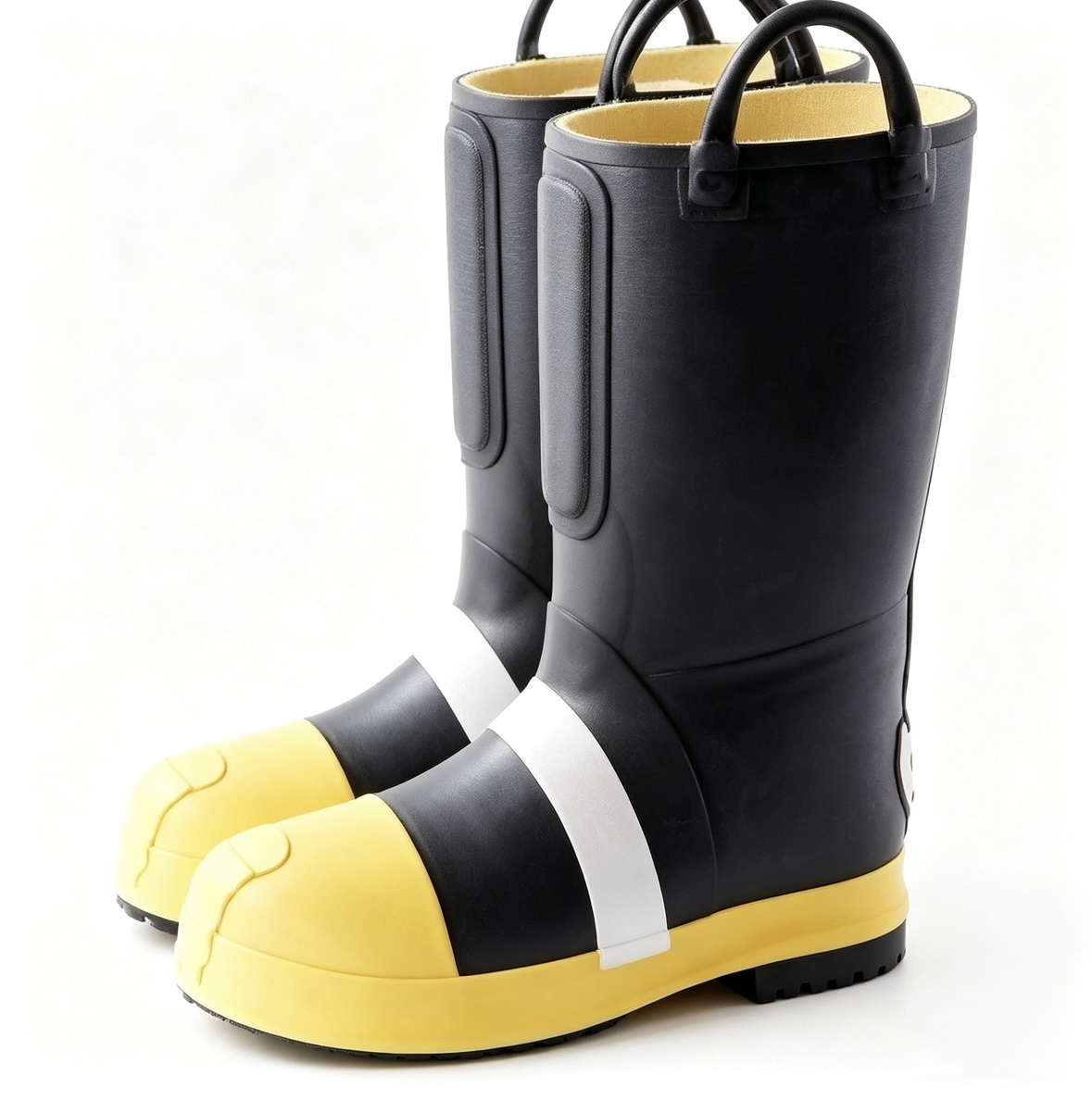
Reliable firefighting boots rely on compounded rubber and treated synthetic materials designed for thermal resistance, using processes like vulcanization and seamless injection molding to eliminate weak points that can break down under heat. A Professional Rain Boot Manufacturer leverages material science to balance flexibility, insulation, and structural integrity for high-risk environments.
Vulcanization cross-links rubber polymers to enhance heat resistance and durability, while seamless construction prevents gaps at seams where heat and liquids can penetrate. Insulating liners are formulated to maintain foot temperature in extreme heat, without adding unnecessary bulk that impairs mobility.
3. Practical Solutions and Operation Steps
- Select boots certified to meet EN ISO 20347:2022+A1:2024 or ASTM F2413-24 standards, which define thermal and performance requirements for occupational footwear.
- Verify outsole tread pattern for slip resistance on wet and oily surfaces, matching the pattern to the specific scene type (structure fires vs. wildland use).
- Check insulation thickness to align with expected thermal exposure; thicker liners may be needed for prolonged radiant heat, while slimmer designs suit rapid response scenarios.
- Ensure proper fit: the boot should leave no gaps around the ankle, with enough room for thick thermal socks, without restricting movement or heel hold during strenuous activity.
- Test for structural integrity before deployment: check for loose stitching, separated layers, or cracked rubber that could fail under heat or stress.
4. Daily Maintenance and Precautions
After each use, clean firefighting boots with mild, non-solvent-based cleaners to avoid damaging heat-resistant compounds, and allow them to air dry away from direct sunlight or heat sources like heaters, which can weaken rubber materials. Store boots in a cool, dry area to prevent plasticizer migration and material degradation.
Never use firefighting boots as general rain boots, as they lack the specialized insulation and structural reinforcement for regular water exposure. Avoid contact with strong chemicals unless the boots are certified for chemical resistance per EN 13832-3:2018, as most standard treatments will break down with prolonged chemical exposure.
5. Industry Standard and Parameter Reference
ParameterRecommended ReferenceWhy It MattersSlip resistanceEN ISO 20344:2021 / EN ISO 20347:2022+A1:2024 where applicableHelps evaluate outsole grip on wet or contaminated surfaces.Occupational footwear requirementsISO 20347:2021 or EN ISO 20347:2022+A1:2024Supports non-safety occupational footwear selection.Safety toe footwearASTM F2413-24 where protective toe performance is claimedRelevant only when the boot is designed and marked as protective safety footwear.Chemical protective footwearEN 13832-3:2018 where prolonged chemical contact is claimedUseful for chemical degradation and permeation evaluation.Thermal resistanceISO 17531:2018 Firefighter Footwear StandardMeasures resistance to radiant heat and direct flame exposure.
Third-party testing via SGS or Intertek (valid for 2024-2026) provides verified performance data for thermal and structural properties, ensuring boots meet real-world emergency demands.
6. Customer Common FAQ
Q: How do I know if my firefighting boots are heat-resistant enough for structure fires?
A: Look for certification to ISO 17531:2018, which specifies performance for protection against radiant heat and brief flame contact. A Professional Rain Boot Manufacturer can provide test reports confirming a boot’s thermal resistance rating.
Q: Can I use regular rubber boots in firefighting scenarios?
A: No, standard rubber boots lack the reinforced structure and heat-resistant compounds required for firefighting. They will degrade rapidly under extreme thermal exposure and may not provide adequate protection from heat or debris.
Q: How often should I replace my firefighting boots?
A: Replace boots when visible signs of wear appear, such as cracked rubber, separated layers, or worn tread. Even with proper use, fire boots typically have a service life of 3-5 years, depending on frequency and type of use.
Q: Are insulated liners necessary for wildland firefighting?
A: Yes, insulation helps maintain foot temperature in both hot and moderate conditions, preventing overheating or heat-related discomfort during long shifts. Choose liners rated for moderate thermal performance to balance protection and mobility.
Q: How should I clean my boots without damaging their heat-resistant properties?
A: Use mild, pH-neutral soap and warm water, avoiding harsh solvents or abrasive scrubbing. Rinse thoroughly and air dry away from direct heat or sunlight to preserve the rubber compound’s integrity.
Conclusion
Reliable firefighting boots must balance thermal resistance, structural durability, and slip resistance to protect wearers in extreme emergency conditions. Adherence to established industry standards, proper sizing, and regular maintenance extend boot life and ensure consistent performance. A Professional Rain Boot Manufacturer uses material science and standardized processes to create boots that meet the unique demands of firefighting and high-risk occupational settings.
References
- International Organization for Standardization. ISO 17531:2018, Firefighter Footwear – Requirements and Test Methods, 2018.
- International Organization for Standardization. ISO 20347:2021, Occupational Footwear, 2021.
- ASTM International. ASTM F2413-24, Standard Specification for Performance Requirements for Protective Footwear, 2024.
- European Committee for Standardization. EN ISO 20344:2021, Footwear – Test Methods for Whole Footwear, 2021.