


Why Colorful Kid Latex Boots Are a Must - Have for Outdoor Adventures
Sep 16, 2026
View: 0
Leave a message
Meta Description: This article focuses on why colorful kid latex boots are essential for outdoor adventures. It explains kids' problems with footwear in outdoor scenarios, materials and processes of latex boots, and how to choose, maintain them. It also provides industry standards and answers common questions, suitable for parents and professionals. Professional Rain Boot Manufacturer
Keywords: Colorful kid latex boots, Outdoor adventures, Rubber boots, Latex material, Boot maintenance
1. Core Problem Analysis
1.1 Common Causes of the Problem
When children engage in outdoor activities, they often encounter various problems with their footwear. Firstly, leakage is a significant concern. Traditional shoes may not be waterproof, leaving kids' feet wet during rainy days or when walking through puddles. Secondly, foot comfort is crucial. Ill - fitting shoes can cause blisters and cramps, especially during long - term outdoor activities. Thirdly, the lack of adequate traction on the soles may lead to slips and falls, posing a safety risk to children. Moreover, as kids grow quickly, choosing the right - sized boots can be difficult. Additionally, material aging can occur if the boots are not properly maintained, reducing their durability.
1.2 Affected Usage Scenarios
These problems can affect multiple outdoor scenarios. For example, in gardening, kids may need to wade through wet soil or mud, and non - waterproof boots will make their feet dirty and wet. During fishing by the pond or river, the risk of water splashing onto boots is high. Rainy commuting, such as walking to school in the rain, requires boots that can keep feet dry. In muddy outdoor work, like building sandcastles on the beach after the rain or playing in the mud, high - quality waterproof and slip - resistant boots are necessary. Even in some simple outdoor games like tag in the park after a shower, proper footwear can enhance safety and comfort.
2. Product and Process Principle
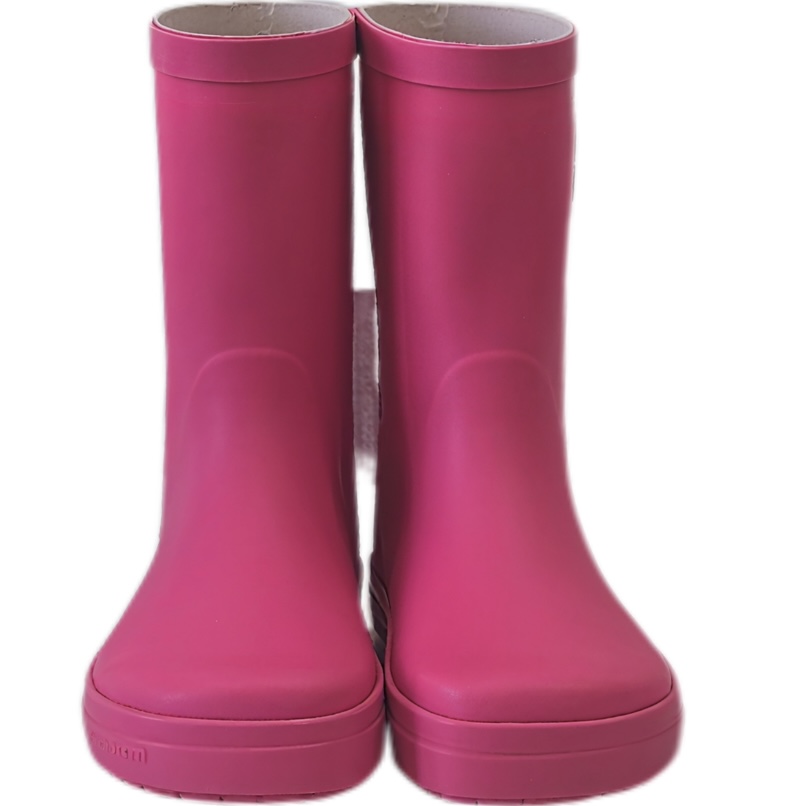
Colorful kid latex boots are usually made of natural latex, a material known for its excellent elasticity and waterproofness. Natural latex is a natural, renewable resource harvested from rubber trees. At the molecular level, the latex has a dense molecular chain structure without micropores, forming an effective physical barrier against water penetration. The manufacturing process of latex boots often involves dipping technology. The molds in the shape of boots are first cleaned and then dipped into a latex solution. After that, the boots are dried and vulcanized. Vulcanization is a key step that cross - links the latex molecules, enhancing the boot's strength, durability, and resistance to heat and aging. Professional Rain Boot Manufacturer may use advanced vulcanization techniques to ensure the quality and consistency of the boots. The latex boots' outer soles are designed with specific patterns. For example, deep - groove patterns can increase the friction between the boot and the ground, improving防滑 performance. The height of the boot shaft is also carefully designed according to kids' needs. Generally, mid - height boots can provide enough protection without limiting children's movement too much.
3. Practical Solutions and Operation Steps
When choosing colorful kid latex boots, parents can follow these steps:
- Select the material: Opt for natural latex boots as they offer better elasticity and durability compared to other materials. Make sure the latex is pure and free from harmful substances. You can check the product label for material information.
- Determine the shaft height: Consider the activities your child will participate in. For casual outdoor play, mid - height boots (around 20 - 25 cm) are usually sufficient. If the child will be in deep mud or water, high - shaft boots (above 30 cm) may be more appropriate.
- Choose the sole pattern: Look for soles with deep grooves, such as wave - like or tire - like patterns. These patterns can provide better traction on wet and slippery surfaces. Also, check the hardness of the sole. Press the sole with your finger; it should indent slightly and rebound quickly, indicating suitable hardness for both grip and support.
- Consider the lining: Some latex boots have a soft fabric lining, which can enhance comfort and reduce skin irritation. Cotton or other natural fiber linings are good choices.
- Select the right size: Measure your child's foot length accurately. Add a small margin (about 0.5 - 1 cm) to allow for growth and comfortable movement. Make sure the boots are not too tight or too loose; a properly - fitting boot should allow the toes to wiggle freely.
- Evaluate the anti - slip and cold - resistant capabilities: If your child will play in cold weather, consider boots with some insulation. For anti - slip performance, check if the boots meet relevant safety standards.
4. Daily Maintenance and Precautions
To ensure the longevity and performance of colorful kid latex boots, here are some maintenance tips:
- Cleaning: After use, rinse the boots with clean water to remove dirt and mud. You can use a mild detergent if necessary, but avoid using strong solvents as they can damage the latex material. Gently scrub the boots with a soft brush and then rinse thoroughly.
- Drying: Air - dry the boots in a well - ventilated area away from direct sunlight and heat sources. Do not try to speed up the drying process by using a heater or hair dryer, as high heat can cause the latex to harden and crack.
- Odor removal: If the boots develop an unpleasant odor, you can place some activated charcoal or a tea bag inside the boots overnight to absorb the smell.
- Preventing aging and deformation: Store the boots in a cool and dry place. Avoid folding or squeezing them for a long time, which may cause permanent deformation. You can stuff the boots with paper or a shoe tree to help maintain their shape.
- Handling after chemical contact: If the boots come into contact with chemicals, immediately rinse them with a large amount of water and then follow the normal cleaning process. If the chemical is corrosive, it is advisable to consult a professional for further handling.
Some common pitfalls to avoid include: never let the boots be exposed to long - term sunlight, as it can accelerate material aging; do not place the boots near high - temperature heat sources; do not use strong solvents for cleaning; and do not use ordinary latex boots in situations where safety - certified boots are required.
5. Industry Standard and Parameter Reference
This section is an authoritative reference for the entire article, focusing on international standards, testing methods, or verifiable parameters related to the article's theme. The following table presents key information:
ParameterRecommended ReferenceWhy It MattersSlip resistanceEN ISO 20344:2021 / EN ISO 20347:2022+A1:2024 where applicableHelps evaluate outsole grip on wet or contaminated surfaces.Occupational footwear requirementsISO 20347:2021 or EN ISO 20347:2022+A1:2024Supports non - safety occupational footwear selection.Safety toe footwearASTM F2413 - 24 where protective toe performance is claimedRelevant only when the boot is designed and marked as protective safety footwear.Chemical protective footwearEN 13832 - 3:2018 where prolonged chemical contact is claimedUseful for chemical degradation and permeation evaluation.
When it comes to performance numbers, only use exact values when they are provided by a verified standard, public test report, SGS/Intertek report, or user - supplied product data. If a value cannot be verified, describe the test category instead of fabricating a number.
6. Customer Common FAQ
Q: Why should I choose latex material for my kid's boots?
A: Latex offers excellent elasticity, which can adapt well to kids' active movements. It is also highly waterproof, ensuring that your child's feet stay dry during outdoor activities. Moreover, natural latex is a relatively environmentally - friendly material. As a Professional Rain Boot Manufacturer, we recommend latex for its durability and comfort.
Q: How can I ensure the boots have good slip - resistance?
A: Look for boots with deep - grooved sole patterns. You can also check if the boots meet the relevant slip - resistance standards, such as EN ISO 20344:2021 or EN ISO 20347:2022+A1:2024. Additionally, pressing the sole to check its hardness can also give an indication of its slip - resistance performance.
Q: What size of boots should I buy for my growing child?
A: Measure your child's foot length accurately and add about 0.5 - 1 cm to allow for growth. You can also refer to the size chart provided by the manufacturer. If possible, let your child try on the boots to ensure a proper fit.
Q: Do latex boots have an odor?
A: New latex boots may have a slight natural latex odor. This odor usually dissipates after a period of ventilation. You can place the boots in a well - ventilated area for a few days to reduce the smell. If the odor persists, you can use methods like placing activated charcoal inside the boots to absorb it.
Q: How long can colorful kid latex boots last?
A: With proper use and maintenance, latex boots can last for about 2 - 3 years. However, the lifespan may be affected by frequency of use, intensity of activities, and quality of maintenance.
Conclusion
In conclusion, colorful kid latex boots are a great choice for outdoor adventures due to their excellent properties such as waterproofness, elasticity, and suitable traction. When choosing these boots, parents should consider factors like material, shaft height, sole pattern, lining, and size. Proper maintenance is essential to ensure the boots' longevity and performance. By referring to industry standards, parents can make more informed decisions. As a Professional Rain Boot Manufacturer, we hope this guide can help parents choose the best boots for their children's outdoor activities.
References
- ISO 20344:2021, Footwear Test Methods
- EN ISO 20347:2022+A1:2024, Occupational Footwear
- ASTM F2413 - 24, Protective Footwear Specification
- EN 13832 - 3:2018, Chemical Protective Footwear