


Why Women's Rubber Ankle Boots Are Ideal for Outdoor Adventures in Wet Conditions
Aug 28, 2026
View: 0
Leave a message
Meta Description: This article delves into why women's rubber ankle boots are perfect for outdoor adventures in wet conditions. It analyzes common problems, explains product and process principles, provides practical solutions, and more. Suitable for women who love outdoor activities and need reliable rain boots. Professional Rain Boot Manufacturer
Keywords: Women's Rubber Ankle Boots, Outdoor Adventures, Wet Conditions, Rain Boot Materials, Boot Maintenance
1. Core Problem Analysis
1.1 Common Causes of the Problem
When searching for women's rubber ankle boots for outdoor adventures in wet conditions, users often face several issues. One common problem is the lack of proper waterproofing. If the boots are not well - sealed or made from low - quality rubber, water can seep in, leaving the feet wet and uncomfortable. Another issue is poor traction. Wet surfaces are slippery, and boots with inadequate outsole patterns may cause slips and falls, posing a safety risk. Additionally, some boots may not fit properly, leading to blisters and discomfort during long - distance walks. Material aging is also a concern, as exposure to sunlight, chemicals, and extreme temperatures can cause the rubber to crack and lose its elasticity over time.
1.2 Affected Usage Scenarios
These problems can significantly affect various usage scenarios. For example, in farming, women need to walk through muddy fields and wet grass. A lack of waterproofing and traction can make the work difficult and dangerous. In gardening, they may be kneeling and walking in wet soil, and uncomfortable boots can lead to fatigue. Fishing trips often involve standing in wet boats or on the shore, where waterproof and slip - resistant boots are essential. Rainy commuting can also be a hassle without proper boots, as wet feet can make the rest of the day unpleasant. Warehouse cleaning may require walking on wet floors, and boots with poor traction can increase the risk of accidents. Livestock work involves dealing with wet and dirty environments, and boots that do not hold up well can quickly become unusable. Muddy outdoor work, such as construction or landscaping in the rain, also demands high - performance ankle boots.
2. Product and Process Principle
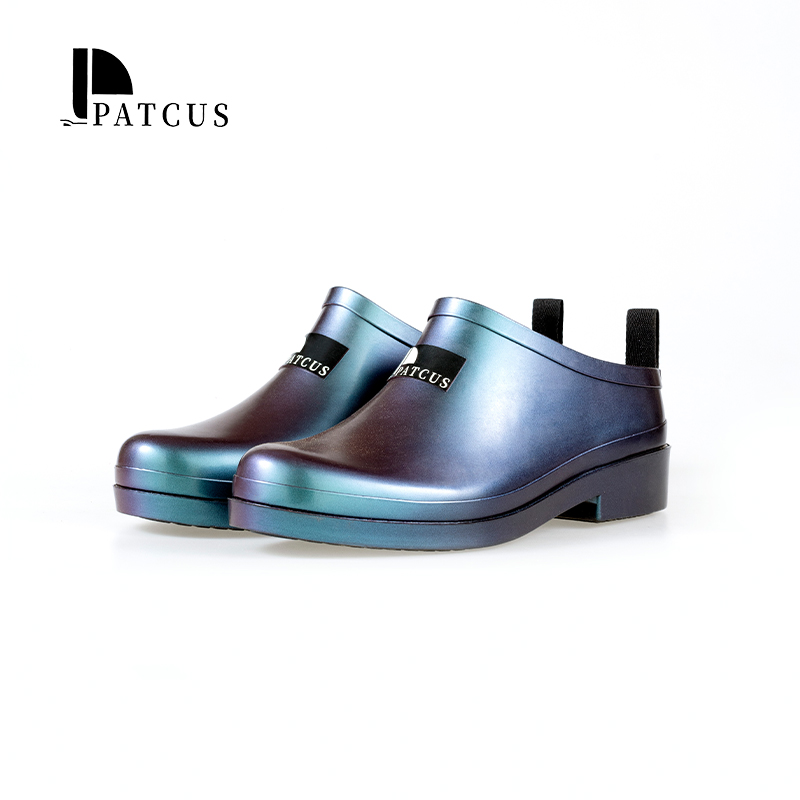
Women's rubber ankle boots are typically made from either natural rubber or synthetic polymers like PVC. Natural rubber is a renewable resource collected from rubber trees. It has excellent elasticity and flexibility, which allows the boots to conform to the shape of the foot and provide a comfortable fit. The production process of natural rubber boots involves collecting latex from the trees, then coagulating, drying, and shaping it into the desired boot form. Synthetic polymers like PVC, on the other hand, are derived from petrochemicals. They are designed for specific performance characteristics, such as enhanced durability, resistance to chemicals, and cost - effectiveness. PVC boots are often made through injection molding, a process where the heated and melted PVC is injected into a mold under high pressure. The mold gives the boot its shape, and the PVC cools and hardens inside the mold. Professional Rain Boot Manufacturer plays a crucial role in ensuring the quality of the boots by carefully controlling the production process, from raw material selection to the final product inspection. They use advanced techniques to ensure proper vulcanization (for rubber boots), which improves the rubber's strength, elasticity, and resistance to wear and tear. In the case of PVC boots, they optimize the injection molding process to achieve consistent quality and precise dimensions. The outsole pattern of these boots is also carefully designed to provide maximum traction on wet surfaces. Patterns like deep grooves, lugs, or multi - directional treads can help channel water away from the sole and increase the contact area with the ground, reducing the risk of slipping.
3. Practical Solutions and Operation Steps
When choosing women's rubber ankle boots for outdoor adventures in wet conditions, consider the following steps:
- Material Selection: If comfort and flexibility are your top priorities, natural rubber boots are a good choice. They are more suitable for long - term wear and can withstand cold temperatures better without cracking. However, if you need boots for industrial or chemical - exposed environments, PVC boots may be more appropriate due to their chemical resistance and lower cost.
- Outsole Pattern: Look for boots with deep and well - defined outsole patterns. Multi - directional lugs or grooves are ideal for providing traction on various wet surfaces, such as mud, wet grass, and slippery floors.
- Size and Fit: Measure your feet accurately and try on the boots before purchasing. The boots should fit snugly around the ankle to prevent water from entering, but not too tight to cause discomfort. There should be enough room in the toe box for your toes to move freely.
- Insulation and Lining: If you will be in cold and wet conditions, consider boots with insulation or a warm lining. This can keep your feet dry and warm, preventing frostbite and discomfort.
- Cleaning and Maintenance: After each use, clean the boots with a mild soap and water. Rinse them thoroughly and let them dry naturally in a well - ventilated area, away from direct sunlight and heat sources. Avoid using harsh chemicals or abrasive cleaners, as they can damage the rubber.
4. Daily Maintenance and Precautions
Proper daily maintenance can extend the lifespan of women's rubber ankle boots. Here are some tips:
- Cleaning: Regularly clean the boots to remove dirt, mud, and other debris. Use a soft brush or cloth to gently scrub the surface. For stubborn stains, you can use a mild detergent, but make sure to rinse it off completely.
- Drying: After cleaning, let the boots dry naturally. Do not place them near a heater or in direct sunlight, as this can cause the rubber to crack and lose its elasticity. Stuff the boots with newspaper to help absorb moisture and maintain their shape.
- Deodorizing: To remove odors, you can sprinkle baking soda inside the boots and let it sit overnight. Then, shake out the baking soda the next day.
- Anti - aging: Store the boots in a cool, dry place away from sunlight and chemicals. Avoid folding or creasing the boots, as this can cause permanent damage to the rubber. You can also apply a rubber protectant to help prevent aging.
- Precautions: Do not use the boots in extreme heat or cold conditions beyond their specified range. Do not use them for activities they are not designed for, such as using regular rain boots for high - risk industrial work. Do not use strong solvents or cleaners on the boots, as they can damage the rubber and the lining.
5. Industry Standard and Parameter Reference
Here is a table of important industry standards and parameters for women's rubber ankle boots:
ParameterRecommended ReferenceWhy It MattersSlip resistanceEN ISO 20344:2021 / EN ISO 20347:2022+A1:2024 where applicableHelps evaluate outsole grip on wet or contaminated surfaces.Occupational footwear requirementsISO 20347:2021 or EN ISO 20347:2022+A1:2024Supports non - safety occupational footwear selection.Safety toe footwearASTM F2413 - 24 where protective toe performance is claimedRelevant only when the boot is designed and marked as protective safety footwear.Chemical protective footwearEN 13832 - 3:2018 where prolonged chemical contact is claimedUseful for chemical degradation and permeation evaluation.
These standards provide a reliable basis for evaluating the performance and safety of women's rubber ankle boots. When purchasing boots, it is advisable to choose products that meet relevant industry standards.
6. Customer Common FAQ
Q: How do I choose the right material for women's rubber ankle boots?
A: If you prioritize comfort and flexibility, natural rubber is a great option. It is more suitable for long - term wear and can withstand cold well. However, if you need chemical resistance or cost - effectiveness, PVC is a better choice. Professional Rain Boot Manufacturer can also provide more detailed advice based on your specific needs.
Q: Are these boots really slip - resistant?
A: Boots that meet the EN ISO 20344:2021 / EN ISO 20347:2022+A1:2024 standards have been tested for slip resistance. Look for boots with well - designed outsole patterns, as they can significantly improve traction on wet surfaces.
Q: How do I determine the right size of the boots?
A: Measure your feet accurately and refer to the manufacturer's size chart. It is also recommended to try on the boots if possible. The boots should fit snugly around the ankle and have enough room in the toe box for comfortable movement.
Q: Do these boots have a strong smell?
A: New rubber boots may have a slight odor, but it usually fades over time. You can use methods like sprinkling baking soda inside the boots to help reduce the smell.
Q: Can the boots crack in cold weather?
A: Natural rubber boots are more resistant to cracking in cold weather compared to some synthetic materials. However, if the temperature is extremely low, all boots may be at risk. It is important to choose boots with appropriate cold - resistance ratings and store them properly in cold conditions.
Conclusion
In conclusion, women's rubber ankle boots are an excellent choice for outdoor adventures in wet conditions. By understanding the core problems, product and process principles, and following practical solutions and maintenance tips, you can select the right boots and ensure their long - term performance. Professional Rain Boot Manufacturer can offer valuable expertise in material selection, production, and quality control. When choosing boots, refer to industry standards to guarantee safety and performance. With the right pair of boots, women can enjoy their outdoor activities in wet conditions with comfort and confidence.
References
- ISO 20344:2021, Footwear Test Methods
- EN ISO 20347:2022+A1:2024, Occupational Footwear
- ASTM F2413 - 24, Protective Footwear Specification
- EN 13832 - 3:2018, Chemical Protective Footwear