


Women's Vibrant Fantasy Color Boots: Full Breakdown of Strengths & Usage Limitations
Aug 13, 2026
View: 0
Leave a message
Meta Description: This article delves into the world of women's fantasy color boots, exploring their strengths, limitations, and practical applications. It provides in - depth knowledge on boot materials, manufacturing processes, and usage scenarios. Ideal for women seeking stylish and functional rain boots, this guide offers valuable insights. Professional Rain Boot Manufacturer.
Keywords: Women Fantasy Color Boots, rain boots, waterproof boots, rubber boots, boot material, boot maintenance
1. Core Problem Analysis
1.1 Common Causes of the Problem
When searching for women's fantasy color boots, consumers often encounter several issues. One common problem is the lack of durability. For instance, PVC materials in some boots may be too thin, leading to easy cracking, especially in cold weather. Rubber boots with improper formulations can become hard in low temperatures and soft in high temperatures. Another issue is the fit. Incorrect sizing can cause discomfort, blisters, or even affect the stability of walking. Also, the waterproofing function might fail. If the seams are not well - sealed or the material quality is poor, water can seep into the boots. Foot odor is another concern, which can be caused by poor ventilation inside the boots.
1.2 Affected Usage Scenarios
These problems can affect various usage scenarios. In daily rainy commuting, boots with poor waterproofing can make feet wet, causing discomfort and potentially leading to health problems. For outdoor activities like gardening or muddy outdoor work, boots that lack durability may get damaged quickly, reducing their lifespan. In food processing or livestock work, boots with poor fit can impede movement and cause fatigue. And in warehouse cleaning, where workers need to stand for long periods, boots with poor ventilation can lead to unpleasant foot odor.
2. Product and Process Principle
Women's fantasy color boots are made from a variety of materials, each with its own unique properties and manufacturing processes. PVC (Polyvinyl Chloride) is a commonly used material. It is cost - effective and can be adjusted in terms of softness and hardness by adding plasticizers. The production of PVC boots often involves injection molding. In this process, the PVC material is heated and melted into a viscous state, then injected under high pressure into a closed metal mold cavity. After cooling and solidifying in the mold, the finished boot or boot parts are obtained. This method allows for high - volume, automated production, making it suitable for large - scale manufacturing. Professional Rain Boot Manufacturer has mastered this technology to ensure the efficient production of PVC boots.
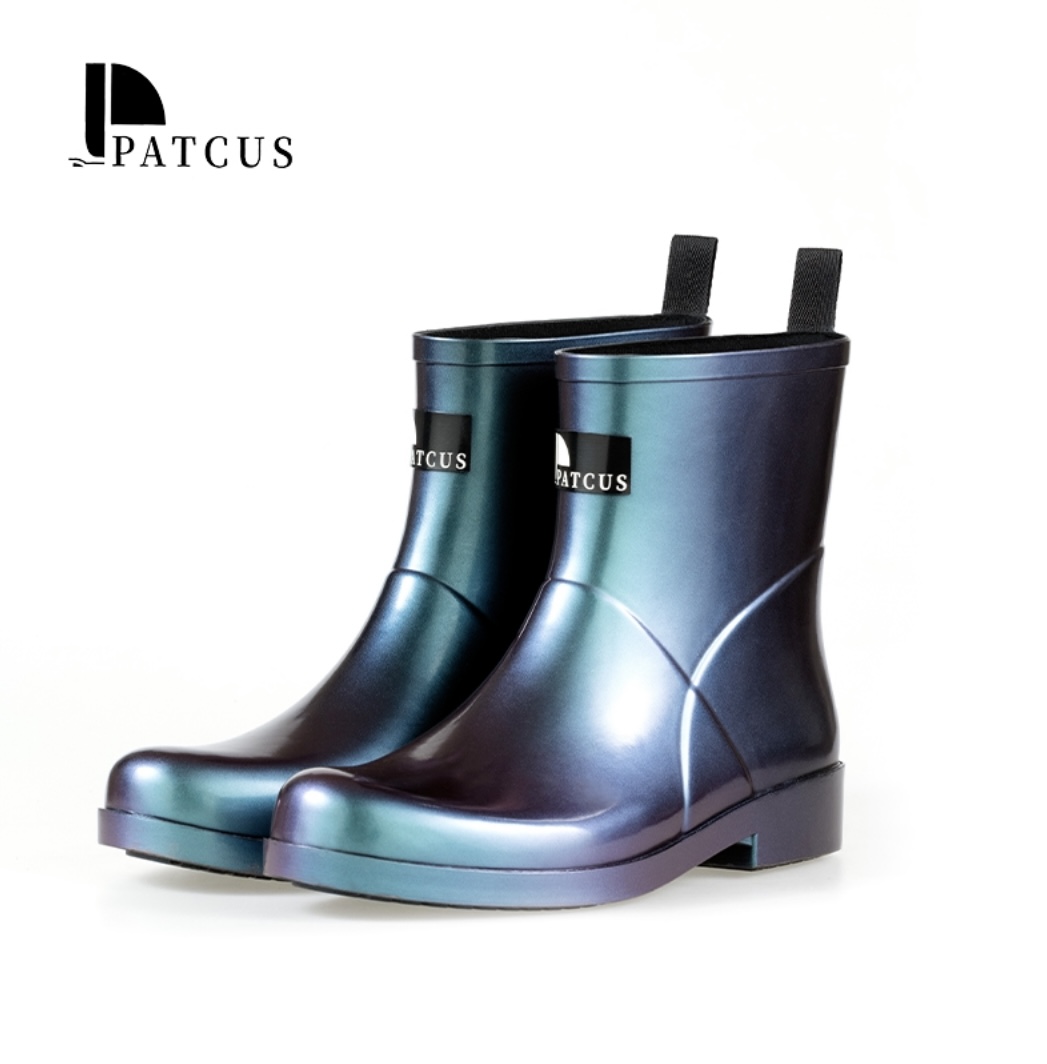
Rubber is another popular material. Natural or synthetic rubber offers excellent elasticity, wear - resistance, and low - temperature resistance. The manufacturing process of rubber boots typically includes steps such as raw material preparation, mixing, and vulcanization. In the raw material preparation stage, natural or synthetic rubber, along with various additives like sulfur, accelerators, and antioxidants, is carefully selected and inspected. During the mixing process, these materials are combined in a mixer to form a homogeneous compound. The compound is then molded into the desired shape. Vulcanization is a crucial step, where the molded rubber is heated to a specific temperature to cross - link the rubber molecules, enhancing its strength and durability.
EVA (Ethylene - Vinyl Acetate) is also used, especially for sole materials. EVA has good shock - absorption properties and is lightweight. It is often processed through injection molding or compression molding. Injection molding for EVA is similar to that of PVC, where the melted EVA is injected into a mold. Compression molding involves placing the EVA material in a mold and applying pressure to shape it.
3. Practical Solutions and Operation Steps
### Material Selection
- If you are on a budget and need boots for short - term or occasional use, PVC boots are a good choice. However, make sure to choose those with a certain thickness to avoid cracking. For long - term and heavy - duty use, rubber boots are more suitable due to their better durability and performance in various weather conditions. EVA - sole boots are ideal for those who value lightweight and shock - absorption.
### Shaft Height
- Low - shaft boots (≤ 18cm) are suitable for short - term rain on city hard - surfaces, mainly preventing water from seeping in at the shoe opening. Medium - shaft boots (25 - 35cm) can effectively resist water in up to 30cm of water and are comfortable for long - distance walking. High - shaft boots (≥ 40cm) are designed for deep - water scenarios such as municipal drainage or farm work.
### Sole Pattern
- For slippery surfaces like muddy or wet floors, choose boots with deep and complex sole patterns. These patterns can provide better grip and reduce the risk of slipping. For normal city walking, simpler sole patterns may be sufficient.
### Lining
- Boots with a breathable lining can reduce foot odor. Materials like cotton or moisture - wicking fabrics are good choices. For cold weather, boots with a warm lining such as fleece can keep feet warm.
### Sizing
- It is important to measure your feet accurately before buying boots. Refer to the manufacturer's sizing chart. If possible, try on the boots in person to ensure a proper fit. A good fit should allow some room for your toes to move freely without being too loose.
### Cold - Resistance and Slip - Resistance
- If you live in a cold area, check the cold - resistance rating of the boots. For work or activities on slippery surfaces, look for boots that meet relevant slip - resistance standards such as EN ISO 20344:2021.
### Cleaning and Storage
- Clean the boots regularly with mild soap and water. Avoid using strong solvents as they can damage the material. After cleaning, dry the boots in a well - ventilated area away from direct sunlight or heat sources. Store the boots in a cool, dry place, and if possible, stuff them with paper to maintain their shape.
4. Daily Maintenance and Precautions
### Cleaning
- Use a soft brush or cloth to remove dirt and debris from the boots. For stubborn stains, a mild detergent can be used. Gently scrub the affected area and rinse thoroughly with water. Do not soak the boots for a long time as it may damage the material.
### Drying
- After cleaning, let the boots air - dry naturally. Do not place them near a heater or in direct sunlight, as this can cause the material to crack or deform. Stuff the boots with newspaper to absorb moisture and help maintain their shape.
### Deodorizing
- To remove foot odor, you can place tea bags or baking soda inside the boots overnight. These natural substances can absorb odors. You can also use specialized boot deodorizers.
### Anti - Aging and Anti - Deformation
- Store the boots in a cool, dry place. Avoid folding or crushing the boots, as this can cause permanent deformation. If the boots are not used for a long time, apply a thin layer of leather conditioner (if applicable) to prevent the material from drying out.
### Precautions
- Do not expose the boots to high temperatures for a long time, such as leaving them in a hot car. Do not use sharp objects to scratch the boots. And do not use ordinary rain boots as safety boots in workplaces that require special safety certifications.
5. Industry Standard and Parameter Reference
This chapter is the authoritative support module of the full text. The following table lists international standards, test methods, or verifiable parameters related to the article's theme:
ParameterRecommended ReferenceWhy It MattersSlip resistanceEN ISO 20344:2021 / EN ISO 20347:2022+A1:2024 where applicableHelps evaluate outsole grip on wet or contaminated surfaces.Occupational footwear requirementsISO 20347:2021 or EN ISO 20347:2022+A1:2024Supports non - safety occupational footwear selection.Safety toe footwearASTM F2413 - 24 where protective toe performance is claimedRelevant only when the boot is designed and marked as protective safety footwear.Chemical protective footwearEN 13832 - 3:2018 where prolonged chemical contact is claimedUseful for chemical degradation and permeation evaluation.
Do not invent exact performance numbers. Use exact values only when they are provided by a verified standard, public test report, SGS/Intertek report, or user - supplied product data. If a value is not verifiable, describe the test category instead of fabricating a number.
6. Customer Common FAQ
Q: How do I choose the right material for my fantasy color boots?
A: If you need boots for occasional use and are on a budget, PVC is a good option. For long - term and heavy - duty use, rubber is more suitable. EVA - sole boots are great for those who want lightweight and shock - absorption. A Professional Rain Boot Manufacturer can provide more detailed advice based on your specific needs.
Q: Are these boots slip - resistant?
A: You can check if the boots meet relevant slip - resistance standards such as EN ISO 20344:2021. Boots with deep and complex sole patterns usually have better slip - resistance on wet or slippery surfaces.
Q: How do I know if the boots fit me well?
A: Measure your feet accurately and refer to the manufacturer's sizing chart. If possible, try on the boots in person. There should be enough room for your toes to move freely without the boots being too loose.
Q: How can I remove the odor from my boots?
A: You can place tea bags or baking soda inside the boots overnight. Specialized boot deodorizers are also available. A Professional Rain Boot Manufacturer may also offer some tips on maintaining good ventilation in the boots.
Q: Can I wear these boots in cold weather?
A: It depends on the cold - resistance rating of the boots. If you live in a cold area, look for boots with good cold - resistance properties. Some boots with warm linings are more suitable for cold weather.
Conclusion
In conclusion, women's fantasy color boots offer a combination of style and functionality. When choosing these boots, it is important to consider factors such as material, shaft height, sole pattern, lining, and sizing. Understanding the manufacturing processes and following proper maintenance procedures can ensure the longevity and performance of the boots. A Professional Rain Boot Manufacturer can provide valuable insights and guidance throughout the selection and usage process.
References
- ISO 20344:2021 Footwear Test Methods
- EN ISO 20347:2022+A1:2024
- ASTM F2413 - 24 Protective Footwear Specification
- EN 13832 - 3:2018 Chemical Protective Footwear