


Women’s Waterproof Latex Boots for Outdoor Sports: Core Strengths & Practical Limitations
Aug 13, 2026
View: 0
Leave a message
Meta Description: This blog post delves into the world of women's waterproof latex boots, exploring their core strengths and practical limitations. It's a must - read for female outdoor sports enthusiasts, professional workers in wet conditions, and anyone seeking reliable waterproof footwear. A Professional Rain Boot Manufacturer offers in - depth insights into these boots' product knowledge, usage, and maintenance.
Keywords: Women's waterproof latex boots, outdoor sports, rain boots, latex material, boot maintenance
1. Core Problem Analysis
1.1 Common Causes of the Problem
When users search for women's waterproof latex boots, they often face several issues. One of the most common problems is sizing. Latex has a certain degree of elasticity, but if the boots are not sized correctly, it can lead to discomfort. A tight fit may cause restricted blood circulation, while an overly loose one can result in the boots slipping off during activities. Another problem is aging. Latex, like other materials, can be affected by factors such as sunlight, heat, and chemicals. Prolonged exposure to sunlight can cause the latex to harden and crack, reducing its waterproof and durability. Additionally, the lack of proper ventilation in latex boots can make feet feel hot and sweaty, which may lead to foot odor and skin problems. In some cases, the anti - slip performance of the outsole may not meet the requirements, increasing the risk of slipping on wet or slippery surfaces.
1.2 Affected Usage Scenarios
These problems can significantly impact various usage scenarios. For outdoor sports such as hiking, fishing, and gardening, ill - fitting boots can make long - distance walking or strenuous activities extremely uncomfortable. The aging of the latex may cause water leakage during these activities, wetting the feet and potentially leading to colds or other health issues. In farming and livestock work, where the environment is often wet and muddy, non - slip soles are crucial. If the boots do not provide sufficient grip, it can increase the risk of falls and injuries. In rainy commuting, especially in urban areas with smooth pavements, the anti - slip performance of the boots is also essential to ensure safety.
2. Product and Process Principle
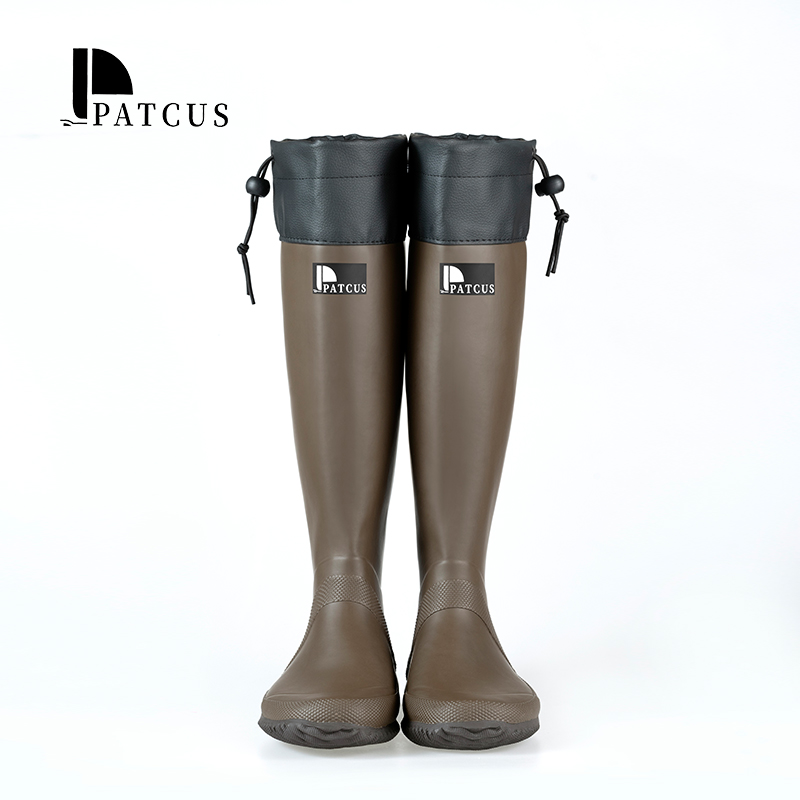
Women's waterproof latex boots are made from latex, which is a natural material obtained from rubber trees. Latex has excellent elasticity and waterproofness, making it an ideal material for rain boots. The manufacturing process usually starts with the collection of latex from rubber trees. The latex is then processed to remove impurities and adjusted in terms of its chemical composition to improve its performance. In the production of boots, injection molding or dipping methods can be used. Injection molding involves injecting the liquefied latex into a mold under high pressure to form the shape of the boot. This method is suitable for large - scale production and can produce boots with complex shapes. Dipping is a process where a mold is dipped into a latex solution, and a layer of latex adheres to the mold. After removing the excess latex and drying, the boots are formed. This method is often used for the production of thin - walled and high - elasticity boots. A Professional Rain Boot Manufacturer is well - versed in these processes and can ensure the quality and performance of the boots by strictly controlling the production conditions, such as temperature, pressure, and the concentration of latex solutions.
3. Practical Solutions and Operation Steps
### Material Selection
When choosing women's waterproof latex boots, consider the purity of the latex. High - purity latex usually has better elasticity, waterproofness, and durability. However, it may also be more expensive. If you have a limited budget, you can choose boots with a certain proportion of synthetic rubber mixed with latex, which can reduce the cost while maintaining certain performance.
### Shaft Height
The shaft height depends on the usage scenario. For outdoor sports like hiking or fishing, high - shaft boots that can cover the ankles are recommended to prevent water, mud, or debris from entering the boots. For rainy commuting in urban areas, mid - shaft or low - shaft boots may be more convenient and comfortable.
### Outsole Pattern
Look for outsole patterns with deep grooves and non - linear designs. Zig - zag or wave - shaped patterns can increase the friction on wet surfaces and improve anti - slip performance. The depth of the grooves should be at least 1.8mm to ensure effective drainage and grip.
### Lining
Choose boots with breathable lining materials, such as mesh or cotton. These materials can effectively reduce foot sweat and odor, improving wearing comfort.
### Sizing
Measure your foot length and width accurately before buying. Since latex has elasticity, it is recommended to choose a size that is slightly larger than your actual foot size to ensure enough space for movement. Leave about 1 - 1.5cm of space at the toe.
### Cold Resistance and Slip Resistance
If you need to use the boots in cold environments, check the cold - resistance rating of the boots. Some high - quality latex boots can maintain flexibility at - 20°C. For slip resistance, refer to relevant standards. A good - quality latex boot should have a wet - state friction coefficient of at least 0.4.
### Cleaning and Storage
After use, clean the boots with mild soap and water. Avoid using strong solvents or abrasive cleaners, as they can damage the latex. Dry the boots in a well - ventilated area away from direct sunlight and heat sources. When storing, keep the boots in a cool and dry place, and you can stuff them with newspaper to maintain their shape.
4. Daily Maintenance and Precautions
### Cleaning
Regularly clean the boots to remove dirt, mud, and chemicals. Gently scrub the surface of the boots with a soft brush and mild soap solution. Rinse thoroughly with clean water to ensure that no soap residue remains.
### Drying
After cleaning, dry the boots naturally in a well - ventilated place. Do not expose them to direct sunlight or high - heat sources, as this can cause the latex to harden and crack. You can stuff the boots with dry newspaper to absorb moisture and speed up the drying process.
### Odor Removal
If the boots have an odor, you can put a few drops of essential oil on a cotton ball and place it inside the boots. Alternatively, you can use activated carbon to adsorb the odor.
### Anti - aging
To prevent the latex from aging, avoid exposing the boots to sunlight for a long time. You can also apply a latex protector or conditioner to the surface of the boots regularly to maintain its elasticity and waterproofness.
### Anti - deformation
When storing the boots, keep them in a straight position. You can use boot trees or stuff them with soft materials to prevent them from deforming.
### Cold Storage
If you need to store the boots in a cold environment, make sure they are completely dry. Low - temperature storage can slow down the aging process of latex, but avoid storing them in an environment below the cold - resistance limit of the boots.
### Chemical Contact
If the boots come into contact with chemicals, rinse them immediately with a large amount of water. For some strong corrosive chemicals, it is necessary to replace the boots if they are damaged.
### Precautions
Do not use ordinary latex boots as safety boots in high - risk working environments. For example, in industries where there is a risk of sharp objects piercing or heavy objects crushing, certified safety boots should be used. Do not use sharp objects to scratch the surface of the boots, as this can damage the latex and reduce its waterproofness.
5. Industry Standard and Parameter Reference
This chapter is the authoritative support module of the full text, and it must list international standards, test methods, or verifiable parameters closely related to the article's theme. The following table is provided:
ParameterRecommended ReferenceWhy It MattersSlip resistanceEN ISO 20344:2021 / EN ISO 20347:2022+A1:2024 where applicableHelps evaluate outsole grip on wet or contaminated surfaces.Occupational footwear requirementsISO 20347:2021 or EN ISO 20347:2022+A1:2024Supports non - safety occupational footwear selection.Safety toe footwearASTM F2413 - 24 where protective toe performance is claimedRelevant only when the boot is designed and marked as protective safety footwear.Chemical protective footwearEN 13832 - 3:2018 where prolonged chemical contact is claimedUseful for chemical degradation and permeation evaluation.
Do not invent exact performance numbers. Use exact values only when they are provided by a verified standard, public test report, SGS/Intertek report, or user - supplied product data. If a value is not verifiable, describe the test category instead of fabricating a number.
6. Customer Common FAQ
Q: What is the difference between latex and other rubber materials in rain boots?
A: Latex is a natural material with excellent elasticity and waterproofness. Compared with other rubber materials, it is usually softer and more comfortable to wear. However, it may be more sensitive to sunlight and heat, and is more prone to aging. A Professional Rain Boot Manufacturer can provide more detailed information on material differences to help you make a better choice.
Q: How to ensure the anti - slip performance of latex boots?
A: You should choose boots with outsole patterns that meet relevant standards. The outsole pattern should have deep grooves and a non - linear design. Refer to the slip - resistance standards such as EN ISO 20344:2021 / EN ISO 20347:2022+A1:2024 to ensure that the boots have good anti - slip performance on wet or contaminated surfaces.
Q: How to choose the right size of latex boots?
A: First, measure your foot length and width accurately. Since latex has elasticity, choose a size slightly larger than your actual foot size. Leave about 1 - 1.5cm of space at the toe to ensure comfortable movement.
Q: Why do latex boots sometimes have an odor
A: The odor may come from the latex material itself or from the accumulation of foot sweat. To reduce the odor, you can choose boots with breathable lining and clean them regularly. You can also use odor - absorbing materials, such as activated carbon or essential oil, to remove the odor.
Q: Can latex boots be used in cold environments?
A: It depends on the cold - resistance rating of the boots. Some high - quality latex boots can maintain flexibility at - 20°C. Check the product specifications to ensure that the boots can meet your cold - weather needs.
Conclusion
In conclusion, women's waterproof latex boots have unique advantages in elasticity and waterproofness, suitable for various outdoor sports and wet - environment scenarios. When choosing these boots, pay attention to material selection, sizing, anti - slip performance, and other factors. A Professional Rain Boot Manufacturer can provide professional guidance on these aspects. In daily use, proper maintenance and precautions can effectively extend the service life of the boots and ensure their performance. By following the above - mentioned knowledge and suggestions, users can make a more informed choice and use the boots safely and comfortably.
References
1.How to Avoid Pitfalls When Picking Rain Boots in 2026: Master Waterproofing, Anti‑Slip and Wear‑Resistance to Cut Unnecessary Spending. Toutiao, 11 May. 2026.
2.What Are the Main Production Materials for Rain Boots? A Guide to Durability and Comfort. 18 Jun. 2025.
- ISO 20347:2021 Occupational Footwear
- EN ISO 20347:2022+A1:2024