


Women's waterproof latex boots: Ideal pick for outdoor work and rainy weather
Oct 21, 2026
View: 0
Leave a message
Meta Description: For women needing reliable footwear for outdoor work or rainy commutes, waterproof latex boots address common issues like leakage, discomfort, and poor traction. This guide explains material properties, use cases, and maintenance to help you make an informed choice. Professional Rain Boot Manufacturer
Keywords: women's waterproof latex boots, rain boots, occupational footwear, boot maintenance, slip-resistant boots, outdoor work footwear
1. Core Problem Analysis
1.1 Common Causes of the Problem
Many women face issues with ill-suited rain boots: leaks at seams or shaft edges, stuffy interior lining, slippery soles on wet surfaces, rapid cracking with frequent use, or poor fit that causes blisters. These problems often stem from mismatched materials, incorrect design for intended use, or lack of adherence to footwear performance standards.
1.2 Affected Usage Scenarios
Such issues impact multiple scenarios, including muddy outdoor work (farming, construction site cleanup), rainy daily commuting, food processing facility hygiene tasks, livestock care, fishing, and warehouse floor cleaning. Each scenario requires different boot properties that standard generic rain boots may not provide.
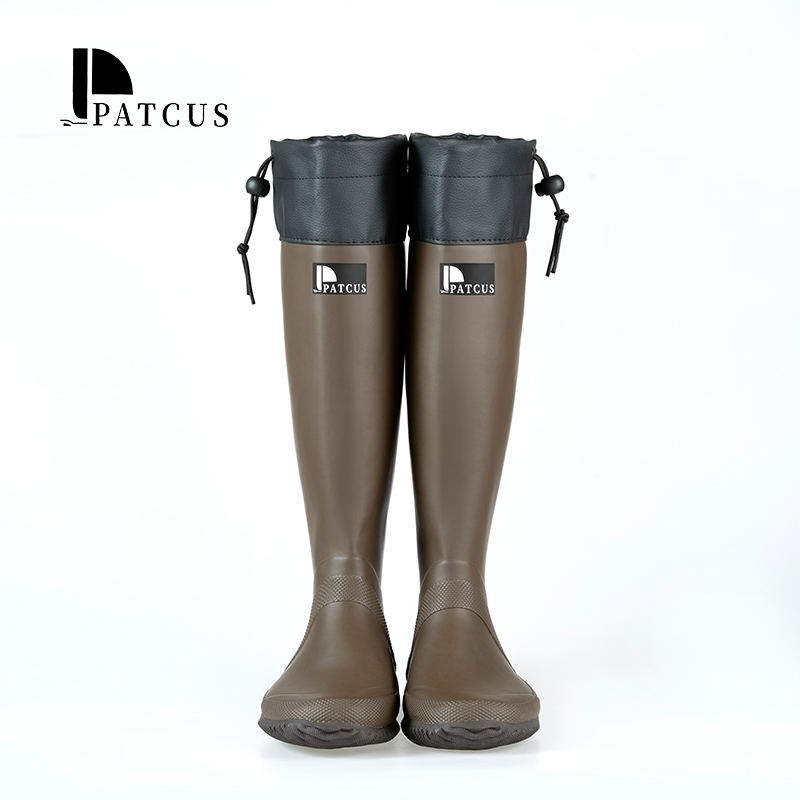
2. Product and Process Principle
Waterproof latex boots rely on natural or synthetic latex, a polymer material with high water resistance, flexibility, and tear strength. Unlike PVC (rigid) or EVA (lightweight but less durable), latex offers balanced elasticity that conforms to foot shape while maintaining a fully waterproof, seam-free structure when manufactured via injection molding or vulcanization processes. Professional Rain Boot Manufacturer applies standardized compound formulations to adjust latex hardness, thickness, and durability for different use cases.
Seam-free construction eliminates the most common entry point for water, while shaft height (typically 12 to 16 inches) provides coverage up to the calf to prevent splashing from shallow mud or puddles. Outsole pattern design, such as deep lugs or grooved treads, enhances grip on wet or contaminated surfaces, aligning with performance requirements for occupational footwear.
3. Practical Solutions and Operation Steps
- 1. Match boot material and properties to your primary use: choose thickened latex (≥2mm) for heavy outdoor work, and thinner, more flexible latex for casual rainy commuting.
- 2. Verify slip resistance: check that the outsole pattern has deep, non-smooth treads suitable for wet ground, and confirm it aligns with relevant standards for your work scenario.
- 3. Select appropriate shaft height: opt for tall shafts for mud or standing water, and shorter shafts for indoor tasks where mobility is key.
- 4. Ensure a proper fit: allow 0.5 inches of space between your toe and the boot tip to accommodate foot swelling during long work hours, avoiding tight or loose fits that cause discomfort.
- 5. For occupational use, confirm the boot meets minimum performance requirements for your specific task, such as chemical resistance for work with mild liquid spills.
4. Daily Maintenance and Precautions
Proper care extends the lifespan of waterproof latex boots. After use, wipe the exterior with a damp cloth to remove mud or debris, avoiding harsh solvents that can degrade latex material. Allow boots to air dry naturally in a shaded, well-ventilated area; do not expose them to direct sunlight or place near high heat sources like radiators, as extreme temperature changes can cause cracking and material breakdown.
To prevent deformation, stuff boots with acid-free tissue paper when storing, and avoid folding or stacking heavy items on top. Never use latex boots as a replacement for certified safety footwear for tasks involving heavy impacts, sharp objects, or hazardous chemicals, as they do not meet specialized safety standards.
5. Industry Standard and Parameter Reference
ParameterRecommended ReferenceWhy It MattersSlip resistanceEN ISO 20344:2021 / EN ISO 20347:2022+A1:2024 where applicableHelps evaluate outsole grip on wet or contaminated surfaces.Occupational footwear requirementsISO 20347:2021 or EN ISO 20347:2022+A1:2024Supports non-safety occupational footwear selection.Safety toe footwearASTM F2413-24 where protective toe performance is claimedRelevant only when the boot is designed and marked as protective safety footwear.Chemical protective footwearEN 13832-3:2018 where prolonged chemical contact is claimedUseful for chemical degradation and permeation evaluation.
Do not invent exact performance numbers. Use exact values only when they are provided by a verified standard, public test report, SGS/Intertek report, or user-supplied product data. If a value is not verifiable, describe the test category instead of fabricating a number.
6. Customer Common FAQ
Q: Are waterproof latex boots suitable for heavy outdoor work?
A: Yes, if they meet thickness and slip resistance requirements aligned with ISO 20347:2021 for occupational use. Professional Rain Boot Manufacturer notes that thicker latex (2mm or more) provides better durability for rugged work conditions.
Q: How do I clean off tough stains from my latex boots?
A: Use a mild soap and warm water solution with a soft brush; avoid bleach, acetone, or other strong chemicals that can break down the latex material.
Q: Can latex boots withstand cold outdoor temperatures?
A: Their performance depends on compound formulation; some blends are tested for low-temperature flexibility under relevant cold resistance standards, though extreme cold may still cause stiffness.
Q: How do I choose the right size for long work hours?
A: Measure your feet at the end of the workday (when they are slightly swollen) and add 0.5 inches of space for comfort, avoiding sizes that are too tight or too loose.
Conclusion
Women's waterproof latex boots offer a practical solution for outdoor work and rainy weather, provided they match your specific use case, meet relevant performance standards, and are properly maintained. By understanding material properties, design requirements, and care best practices, you can avoid common issues like leaks and poor traction. Professional Rain Boot Manufacturer provides standardized insights to help select footwear that balances durability, comfort, and functionality for various scenarios.
References
- International Organization for Standardization. ISO 20347:2021, Occupational Footwear, 2021.
- European Committee for Standardization. EN ISO 20344:2021, Footwear - Test Methods, 2021.
- American Society for Testing and Materials. ASTM F2413-24, Standard Specification for Performance Requirements for Footwear, 2024.