


Anti-Smash Safety Boots on Construction Sites: Merits & Real-World Drawbacks
Aug 13, 2026
View: 0
Leave a message
Meta Description: This article explores the merits and drawbacks of anti-smash boots on construction sites. It delves into product knowledge, material principles, and usage scenarios. Geared towards construction workers and safety managers, it provides in - depth insights. Professional Rain Boot Manufacturer
Keywords: Anti-smash Boots, Construction Sites, Boot Safety, Boot Materials, Boot Usage, Boot Maintenance, Boot Manufacturer
1. Core Problem Analysis
1.1 Common Causes of the Problem
When searching for anti-smash boots, users often want to solve various problems. One common issue is ensuring adequate protection from falling objects. On construction sites, tools, building materials, or debris may fall from heights, and anti-smash boots can prevent serious toe injuries. Another problem is related to comfort. Workers may be on their feet for long hours, so boots need to be comfortable to avoid fatigue, soreness, and foot problems. Additionally, concerns about durability arise. Boots should be able to withstand wear and tear from rough terrains, sharp objects, and continuous use. Poor-quality boots may develop cracks, lose their anti - smash properties, or have soles that wear down quickly.
1.2 Affected Usage Scenarios
Anti-smash boots are crucial in many construction - related scenarios. In building construction, workers are constantly exposed to the risk of falling objects from scaffolding or upper floors. Renovation projects also require these boots, as old structures may have unstable parts that could collapse. Demolition sites are extremely dangerous, where large chunks of materials are being broken apart and can fall at any moment. Industrial construction, such as building factories or warehouses, also demands the use of anti - smash boots due to the heavy equipment and large - scale operations. In underground construction, like tunnel building, falling rocks and tools pose significant threats to workers' safety.
2. Product and Process Principle
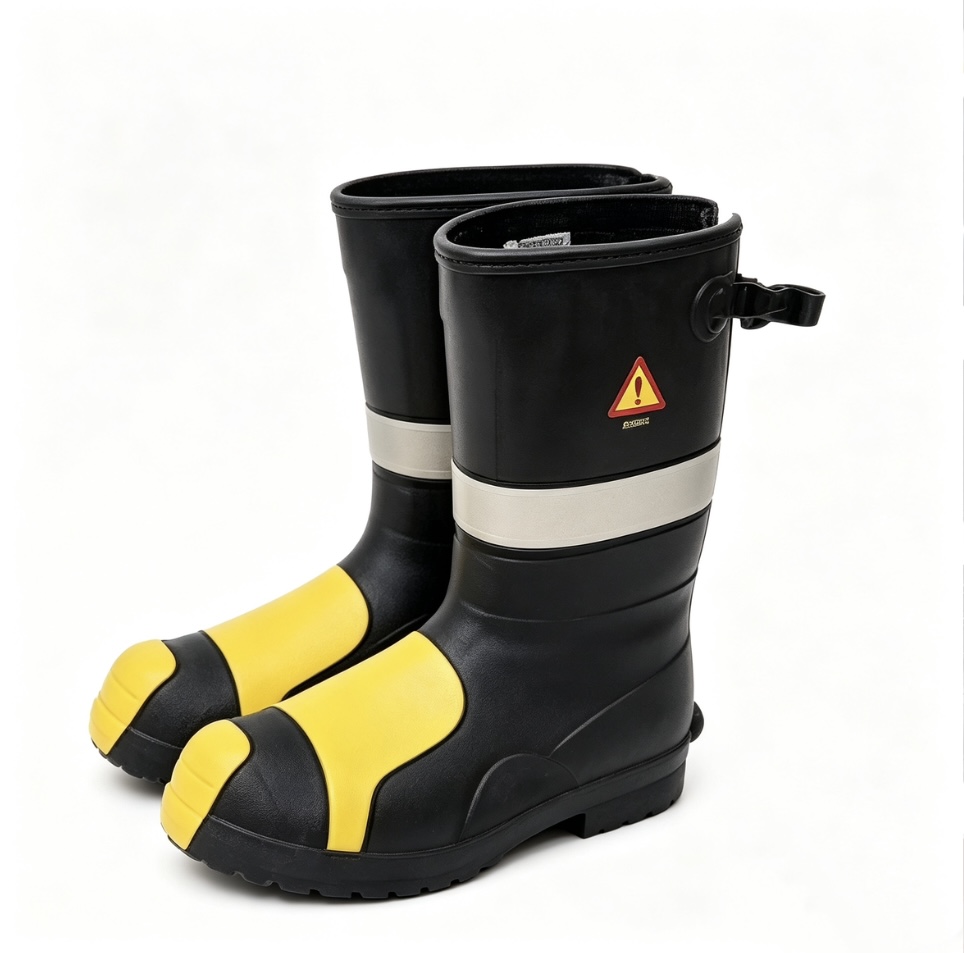
Anti-smash boots are typically made from various materials to achieve their protective and functional properties. The toe cap is a critical part, often made from steel, aluminum, or composite materials. Steel toe caps are known for their high strength and ability to resist heavy impacts. They are widely used in traditional safety boots and can withstand significant force, meeting strict safety standards. Aluminum toe caps are lighter than steel, which can reduce the overall weight of the boot and make it more comfortable for long - term wear. However, they may have slightly lower impact resistance compared to steel in some cases. Composite toe caps are made from non - metallic materials such as fiberglass, Kevlar, or carbon fiber. They offer excellent impact protection while being lightweight and non - conductive, which is beneficial in environments where electrical hazards exist.
For the outer material of the boot, leather is a popular choice. Leather is durable, breathable, and can withstand abrasion. It can be tanned using different processes, such as chrome - tanned or vegetable - tanned. Chrome - tanned leather is fast - tanned, has good water resistance, and is relatively soft. Vegetable - tanned leather is more environmentally friendly, has better breathability, but may require more maintenance. Rubber is also used for parts of the boot, especially the sole. Rubber soles provide good traction on various surfaces, including wet and slippery ones. They can be molded using injection molding or vulcanization processes. Injection molding involves injecting molten rubber into a mold, which allows for precise shaping and consistency in the sole's design. Vulcanization is a chemical process that cross - links the rubber molecules, making the sole more durable, elastic, and resistant to heat and chemicals. Professional Rain Boot Manufacturer understands these complex material and process combinations to produce high - quality anti - smash boots that meet different customer needs.
3. Practical Solutions and Operation Steps
When choosing anti - smash boots, several factors should be considered:
- Material Selection: If you are working in an environment with a high risk of heavy impacts, opt for steel toe caps. For those who need to be mobile and want to reduce fatigue, aluminum or composite toe caps are better options. Leather boots are a good choice for general use, providing durability and breathability. However, if you will be working in extremely wet or chemical - laden environments, boots with synthetic or rubber outer materials may be more suitable.
- Height of the Shaft: For work on uneven terrains or where there is a risk of ankle injury, choose boots with a higher shaft. A higher shaft can provide additional support and protection to the ankle. Shorter - shaft boots are more suitable for work that requires greater flexibility and freedom of movement, such as in narrow spaces.
- Sole Pattern: Look for soles with deep, multi - directional treads. These can provide better traction on slippery, muddy, or uneven surfaces. For example, boots with lugged soles are great for outdoor construction work, as they can grip the ground firmly. In indoor or smooth - surface environments, soles with a more fine - tuned pattern may be sufficient.
- Inner Lining: A moisture - wicking lining is essential, as it can keep your feet dry and reduce the risk of blisters and fungal infections. Fabrics like nylon or polyester are often used for this purpose. Some boots also have a padded lining for added comfort.
- Size: Make sure to measure your feet accurately before buying boots. Boots that are too tight can cause discomfort, restrict blood circulation, and lead to foot problems. On the other hand, boots that are too loose can cause instability and make you more prone to accidents. It's advisable to try on boots at the end of the day when your feet are slightly swollen, as this is the closest approximation to how they will feel during long - term use.
- Certifications: Check for relevant safety certifications, such as ASTM F2413 - 24 for safety toe footwear. This standard ensures that the boots meet certain requirements for impact and compression resistance. Other certifications related to electrical hazard protection, slip resistance, etc., may also be relevant depending on your work environment.
4. Daily Maintenance and Precautions
Proper daily maintenance of anti - smash boots can extend their lifespan and ensure their effectiveness:
- Cleaning: Remove dirt, mud, and debris from the boots after each use. Use a soft brush or cloth to clean the outer surface. For leather boots, use a mild leather cleaner and a conditioner to keep the leather supple. For rubber or synthetic boots, a simple soap and water solution can be used.
- Drying: After getting wet, allow the boots to dry naturally. Do not place them near a direct heat source, such as a heater or a fireplace, as this can cause the materials to warp, shrink, or crack. Stuffing the boots with newspaper can help absorb moisture and maintain their shape.
- Odor Removal: To remove odors, you can sprinkle baking soda inside the boots and leave it overnight. Another option is to use cedar shoe trees, which can absorb moisture and neutralize odors.
- Preventing Aging and Deformation: Store the boots in a cool, dry place. Avoid stacking heavy objects on them, as this can deform the shape of the boots. If the boots are not going to be used for an extended period, it's a good idea to stuff them with paper to maintain their shape.
- Handling Chemicals: If the boots come into contact with chemicals, refer to the manufacturer's instructions for cleaning and decontamination. In some cases, chemical - resistant boots may need to be replaced if the chemical exposure is severe.
There are also some common pitfalls to avoid. Do not expose the boots to prolonged sunlight, as this can cause the materials to fade and degrade. Do not use strong solvents to clean the boots, as they can damage the leather, rubber, or other materials. And never use ordinary rain boots as a substitute for certified anti - smash boots in high - risk environments, as they do not offer the same level of protection.
5. Industry Standard and Parameter Reference
The following table provides important industry standards and parameters for anti - smash boots:
ParameterRecommended ReferenceWhy It MattersSlip resistanceEN ISO 20344:2021 / EN ISO 20347:2022+A1:2024 where applicableHelps evaluate outsole grip on wet or contaminated surfaces.Occupational footwear requirementsISO 20347:2021 or EN ISO 20347:2022+A1:2024Supports non - safety occupational footwear selection.Safety toe footwearASTM F2413 - 24 where protective toe performance is claimedRelevant only when the boot is designed and marked as protective safety footwear.Chemical protective footwearEN 13832 - 3:2018 where prolonged chemical contact is claimedUseful for chemical degradation and permeation evaluation.
Do not invent exact performance numbers. Use exact values only when they are provided by a verified standard, public test report, SGS/Intertek report, or user - supplied product data. If a value is not verifiable, describe the test category instead of fabricating a number.
6. Customer Common FAQ
Q: Which material is better for anti - smash boots, steel, aluminum, or composite?
A: It depends on your specific needs. Steel toe caps offer high impact resistance but are heavier. Aluminum toe caps are lightweight but may have slightly lower impact resistance. Composite toe caps are non - conductive and lightweight, suitable for environments with electrical hazards. A Professional Rain Boot Manufacturer can provide more detailed advice based on your work environment.
Q: How can I ensure the anti - smash boots have good slip resistance?
A: Look for boots with soles that meet the EN ISO 20344:2021 / EN ISO 20347:2022+A1:2024 standards. Also, choose soles with deep, multi - directional treads, which can provide better grip on various surfaces.
Q: What size of anti - smash boots should I choose?
A: Measure your feet accurately. Try on boots at the end of the day when your feet are slightly swollen. Make sure there is enough room in the toe box for your toes to move freely, and the boots fit snugly around the heel and ankle without being too tight.
Q: Why do my new anti - smash boots have a strong odor?
A: New boots may have an odor due to the materials and the manufacturing process. You can use methods like sprinkling baking soda inside the boots or using cedar shoe trees to remove the odor. Over time, the odor will also fade with regular use and proper cleaning.
Q: Can I wear anti - smash boots in cold weather?
A: It depends on the insulation of the boots. Some anti - smash boots are designed with insulation for cold weather, while others may not be suitable. If you need to work in cold environments, look for boots with proper insulation, such as those with a fleece lining or Thinsulate insulation.
Conclusion
In summary, anti - smash boots are essential for construction sites and other high - risk environments. Understanding the materials, such as the toe cap types and outer materials, and the manufacturing processes like injection molding and vulcanization is crucial for making informed choices. When selecting boots, factors like material, shaft height, sole pattern, and size should be carefully considered. Proper daily maintenance can extend the lifespan of the boots. A Professional Rain Boot Manufacturer can offer valuable insights and guidance in this process, ensuring that you get the right boots for your specific needs.
References
- ISO 20344:2021, Footwear Test Methods
- EN ISO 20347:2022+A1:2024, Occupational Footwear
- ASTM F2413 - 24, Protective Footwear Specification
- EN 13832 - 3:2018, Chemical Protective Footwear