


How Custom Rubber Shock Absorbers Are Made?
Sep 30, 2026
View: 0
Leave a message
How Custom Rubber Shock Absorbers Are Made?
A rubber shock absorber may look simple, but the wrong material, hardness, or design can cause vibration, noise, fatigue, and early failure.
Custom rubber shock absorbers are made by matching the rubber compound, product geometry, molding process, and testing method to the actual application. From my experience, buyers should look beyond hardness and unit price when selecting these parts.
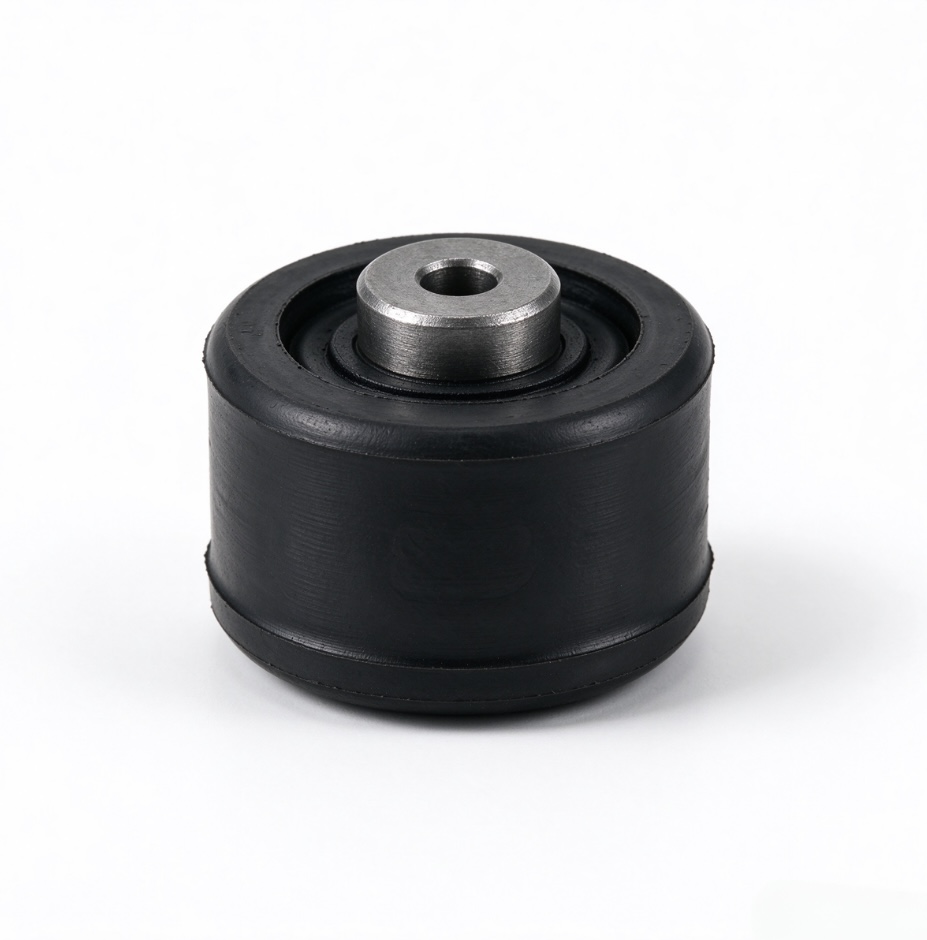
How Are Custom Rubber Shock Absorbers Made?
I normally start by understanding the working conditions. I check the static and dynamic load, operating temperature, vibration frequency, installation space, chemical exposure, and expected service life.
The next step is rubber compound selection. I may use natural rubber or synthetic rubber depending on the application. Oil, heat, UV exposure, and chemicals can all affect rubber performance. Hardness is useful, but it should not be the only selection factor. ISO 48-4:2018 provides standardized methods for measuring rubber hardness.
I then develop the mold based on the product design and production volume. Compression, transfer, or injection molding may be selected depending on the part structure and order quantity. I also consider venting, flash control, dimensional tolerance, and material flow.
After molding, I inspect the dimensions, surface condition, curing quality, and other customer requirements. For long-term applications, I also consider heat aging and environmental resistance. ISO 188:2023 provides methods for accelerated aging and heat resistance testing of rubber materials.
What Should OEM Buyers Consider?
I often see buyers compare only hardness, load rating, and unit price. This approach can miss important factors that affect service life.
| Item | What I Check | Why It Matters |
|---|---|---|
| Rubber compound | Material and environmental resistance | Affects durability |
| Hardness | Shore hardness and tolerance | Controls basic stiffness |
| Load | Static and dynamic load | Prevents excessive deformation |
| Temperature | Working temperature range | Affects aging |
| Chemical exposure | Oil, fuel, solvents, etc. | Prevents material degradation |
| Dimensions | Size and mounting tolerance | Ensures correct installation |
| Testing | Material and finished-part tests | Confirms performance |
For vibration isolation, I also look at dynamic properties rather than hardness alone. ISO 18437-1:2012 describes important dynamic mechanical properties used when characterizing viscoelastic materials for vibration isolation.
I also recommend defining the material specification clearly before mass production. ASTM D2000 provides a classification system for rubber products and considers properties such as heat aging and oil resistance.
When Should You Choose a Custom Rubber Shock Absorber?
I do not recommend customization for every project. If a standard part already meets the required size, load, damping, and environmental conditions, it can reduce tooling cost and lead time.I consider customization when the equipment has limited installation space, special mounting requirements, strict vibration targets, high dynamic loads, or harsh working conditions.I also consider production volume. A custom mold may have a higher initial cost, but it can make sense for long-term OEM production. The key is to balance tooling investment, unit price, service life, and production consistency.
How I Evaluate Long-Term Performance
I prefer to evaluate a rubber part based on its actual working environment. A component may pass a short laboratory test but behave differently after repeated loading or long-term exposure to heat, oil, or vibration.ISO 4664-1:2022 provides guidance for determining the dynamic properties of vulcanized and thermoplastic rubber. I use this type of information together with application conditions when developing a testing plan.In my experience, the best rubber shock absorber is not simply the cheapest or hardest one. It is the one whose material, design, and performance match the real equipment requirements.
Conclusion
I treat custom rubber shock absorber development as a complete process that connects material selection, product design, manufacturing, and real-world performance.
Reference
1.International Organization for Standardization. ISO 18437-1:2012 — Mechanical vibration and shock.
2.International Organization for Standardization. ISO 48-4:2018 — Determination of hardness.
3.International Organization for Standardization. ISO 188:2023 — Accelerated ageing and heat resistance tests.
4.ASTM International. ASTM D2000 — Standard Classification System for Rubber Products.
5.International Organization for Standardization. ISO 4664-1:2022 — Determination of dynamic properties.