


Are Warm Boots the Ultimate Solution for Extreme Cold Weather?
Sep 9, 2026
View: 0
Leave a message
Meta Description: In extreme cold weather, warm boots are often considered a go - to solution. This article analyzes whether warm boots can truly meet the needs in such harsh conditions, suitable for workers in cold - climate industries, outdoor enthusiasts, and anyone seeking cold - weather foot protection. Professional Rain Boot Manufacturer offers insights into warm boot knowledge.
Keywords: Warm Boots, Extreme Cold Weather, Waterproof Boots, Rubber Boots, Boot Maintenance, Boot Material, Cold - Resistance Standards
1. Core Problem Analysis
1.1 Common Causes of the Problem
When searching for warm boots in extreme cold weather, users often face several core problems. One of the most common issues is insufficient insulation, which can lead to cold feet and potentially increase the risk of frostbite. Poor waterproofing is another significant problem; if water seeps into the boots, it can rapidly lower the temperature inside and make the feet extremely uncomfortable. Additionally, the lack of proper traction on icy or snowy surfaces can cause slips and falls, resulting in injuries. Material quality also matters; low - quality materials may crack or become brittle in cold temperatures, reducing the boots' durability.
1.2 Affected Usage Scenarios
These problems are particularly relevant in various usage scenarios. For example, in farming, workers need to operate outdoors for long periods, stepping on wet and cold ground. Fishermen often work near water bodies, and the boots need to keep their feet warm and dry even when splashed with water. During winter commuting in snowy areas, individuals rely on boots with good traction to avoid accidents on slippery sidewalks. Warehouse cleaning in cold conditions also requires boots that provide warmth and protection. Livestock work involves moving around in muddy and cold fields, and muddy outdoor work, such as construction in winter, demands boots that can withstand the harsh elements.
2. Product and Process Principle
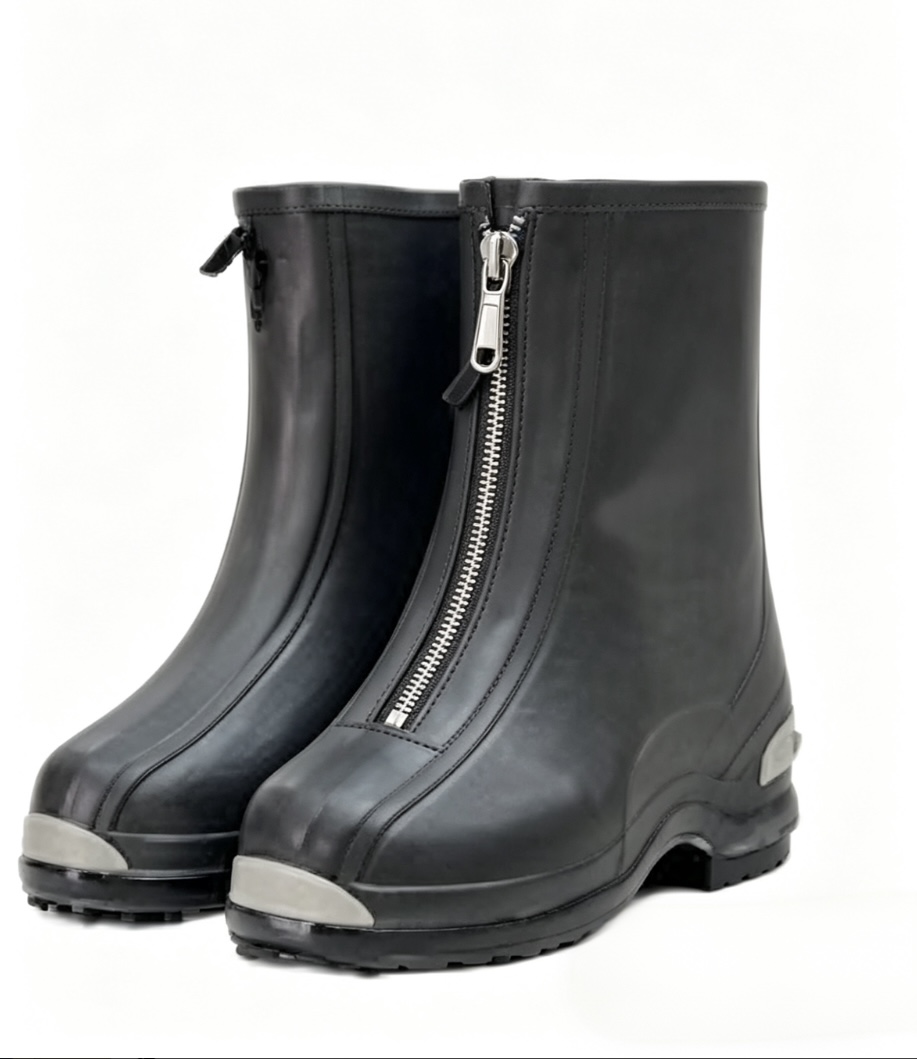
Warm boots can be made from a variety of materials, each with its own properties and manufacturing processes. Rubber is a classic material for warm boots. Natural rubber or synthetic rubbers like SBR, BR, and CR are often used. They are waterproof and have good elasticity. In the production process, rubber is mixed with various additives. For example, sulfur and other components in the vulcanization system are added to make the rubber cross - linked and more durable.补强 fillers like carbon black can enhance the strength and wear - resistance of the rubber. Softening and plasticizing agents improve the processability and flexibility of the rubber. PVC is another common material. It is relatively inexpensive and easy to process. During production, PVC resin particles are combined with other ingredients and then heated and molded. The process of forming boots may involve injection molding, where the heated material is injected into a mold cavity under high pressure. After cooling, the boots take on the shape of the mold. In some cases, boots may have a lining, such as knitted or plush fabric, to enhance warmth and comfort. A Professional Rain Boot Manufacturer carefully controls the manufacturing process, from the selection of raw materials, through the mixing and forming steps, to ensure the quality and performance of the boots. The shaft height of the boots is also an important design consideration, which can affect the protection area and waterproof ability. The pattern of the outsole is designed to provide traction; deeper grooves and more complex patterns can increase grip on slippery surfaces.
3. Practical Solutions and Operation Steps
### Material Selection
- **Rubber**: Ideal for its excellent waterproof property and durability. For extreme cold, look for rubber boots with cold - resistant additives, which can prevent the rubber from hardening in low temperatures.
- **PVC**: A cost - effective choice, but make sure it has been modified to have good cold - resistance.
- **Lining Materials**: Opt for boots with thick knitted or plush linings for extra warmth.
### Shaft Height
- **Low - Shaft (≤ 18cm)**: Suitable for short - term exposure on urban hard - surfaces in light rain or snow, mainly protecting the feet from direct splashes.
- **Medium - Shaft (25 - 35cm)**: This is a good all - around option for most cold - weather scenarios, providing protection against water up to a certain depth and keeping ankles warm.
- **High - Shaft (≥ 40cm)**: For activities in deep snow or areas with high water levels, such as snow - shoveling or fishing in snowy conditions.
### Sole Groove and Pattern
- Choose boots with a deep sole groove and a complex pattern. More zig - zag or cellular patterns can provide better grip on slippery ice and snow.
### Lining Selection
- Consider linings with good heat - retention properties, such as fleece or wool. Some high - end boots may use Gore - Tex linings, which are both waterproof and breathable.
### Size Selection
- Measure your feet accurately and refer to the manufacturer's size chart. Make sure there is enough room in the boots to wear thick socks in cold weather, but not so much that your feet slip around.
### Cold - Resistance and Slip - Resistance Rating
- Look for boots with a clear cold - resistance rating. For instance, some boots are rated for use in temperatures as low as - 30°C.
- Check the slip - resistance rating, which can usually be found according to standards like EN ISO 20344:2021 or EN ISO 20347:2022 + A1:2024.
### Cleaning
- After use, clean the boots with mild soap and water. Avoid using harsh chemicals that may damage the material.
- For stubborn dirt, use a soft brush.
### Storage
- Store boots in a dry and cool place, away from direct sunlight. You can stuff the boots with newspaper to help maintain their shape.
4. Daily Maintenance and Precautions
### Daily Cleaning
- Clean the boots regularly to remove dirt, mud, and salt. After each use in muddy or snowy conditions, rinse them with clean water and wipe them dry with a soft cloth.
- If there are stains, use a mild detergent. Avoid using abrasive cleaners or rough brushes that can scratch the surface of the boots.
### Drying
- Never dry boots near a direct heat source, such as a heater or a fire. High temperatures can cause the material to crack or deform. Instead, let them air - dry at room temperature. Stuff them with crumpled newspaper to absorb moisture and keep their shape.
### Odor Removal
- To remove odors, sprinkle baking soda inside the boots and let it sit overnight. Then shake out the baking soda the next day. You can also place tea bags inside the boots to absorb bad smells.
### Anti - aging and Anti - deformation
- Apply a rubber or PVC protector regularly to prevent the material from aging and cracking.
- When not in use, store the boots in a good shape. Avoid stacking heavy objects on top of them.
### Low - temperature Storage
- If storing boots in cold conditions, make sure they are dry. Cold and damp conditions can accelerate the deterioration of the material.
### Handling After Chemical Contact
- If the boots come into contact with chemicals, wash them immediately with plenty of water. Check the manufacturer's instructions to see if further treatment is required.
### Pitfalls to Avoid
- Do not expose boots to direct sunlight for long periods, as this can cause the material to fade and become brittle.
- Do not place boots near high - temperature heat sources, as it can damage the material structure.
- Do not use strong solvents to clean the boots, as they can dissolve or damage the material.
- Do not use ordinary rain boots in situations where safety - certified boots are required, such as in industrial settings with specific safety standards.
5. Industry Standard and Parameter Reference
This chapter serves as the authoritative supporting module for the entire article. It provides international standards, testing methods, or verifiable parameters closely related to the article's theme. The following table presents the key information:
ParameterRecommended ReferenceWhy It MattersSlip resistanceEN ISO 20344:2021 / EN ISO 20347:2022+A1:2024 where applicableHelps evaluate outsole grip on wet or contaminated surfaces.Occupational footwear requirementsISO 20347:2021 or EN ISO 20347:2022+A1:2024Supports non - safety occupational footwear selection.Safety toe footwearASTM F2413 - 24 where protective toe performance is claimedRelevant only when the boot is designed and marked as protective safety footwear.Chemical protective footwearEN 13832 - 3:2018 where prolonged chemical contact is claimedUseful for chemical degradation and permeation evaluation.
It is important not to invent exact performance numbers. Only use exact values when they are supported by a verified standard, a public test report, an SGS/Intertek report, or user - supplied product data. If a value cannot be verified, it is better to describe the test category rather than fabricating a number.
6. Customer Common FAQ
Q: Which material is better for warm boots in extreme cold, rubber or PVC?
A: Both rubber and PVC have their own advantages. Rubber is more durable and has better elasticity and waterproofness. High - quality rubber boots with cold - resistant additives can perform well in extremely low temperatures. PVC is more affordable and can also be made cold - resistant through modification. A Professional Rain Boot Manufacturer can provide more specific guidance based on different requirements and budgets.
Q: How can I ensure my boots have good slip - resistance?
A: Look for boots that meet the slip - resistance standards such as EN ISO 20344:2021 or EN ISO 20347:2022 + A1:2024. Check the outsole pattern; deeper grooves and complex patterns usually offer better grip. Also, consider the material of the outsole, as some rubber compounds are specifically designed for better traction.
Q: How do I choose the right size of warm boots?
A: Measure your feet precisely and refer to the manufacturer's size chart. Remember to account for the extra thickness of socks you plan to wear in cold weather. You should have enough space for your toes to move freely, but the boots should not be too loose or your feet may slip, reducing warmth and stability.
Q: My new boots have a strong odor. How can I get rid of it?
A: You can sprinkle baking soda inside the boots and let it sit overnight. Then, shake out the baking soda. Alternatively, place tea bags inside the boots. These natural methods can effectively absorb the odor. Avoid using strong - scented chemicals, as they may damage the boot material.
Q: Can I use normal rain boots in extremely cold weather?
A: It depends on the boots' insulation and cold - resistance properties. Regular rain boots may not have sufficient insulation for extreme cold. They might also become brittle if the material is not formulated for low - temperature use. A Professional Rain Boot Manufacturer can help you select boots suitable for extreme cold conditions.
Conclusion
In conclusion, when choosing warm boots for extreme cold weather, understanding the core problems, product and process principles is crucial. The practical solutions, including material, size, and outsole pattern selection, can help you make a more informed choice. By following the daily maintenance and precautions, you can extend the lifespan of your boots. Industry standards and the answers to common FAQs provide a reliable reference. A Professional Rain Boot Manufacturer can offer valuable expertise in the process of selecting and maintaining warm boots to ensure they meet your needs in harsh cold conditions.
References
- 2026年中国雨鞋制造市场占有率及行业竞争格局分析报告, 北京博研智尚信息咨询有限公司, 2026年, 无(数据文档)
- 雨靴生产工艺全流程:从原料加工到成品检测的关键环节, 无, 2025年7月30日, 无(网页)
- 防水鞋通常由哪些材料制成?橡胶、Gore - Tex和处理过的皮革指南, 无, 2025年11月18日, 无(网页)