


Automotive Workshop Acid & Oil Resistant Rubber Boots: Chemical Barrier & Durability Advantages for Auto Parts Factory Purchasers
Aug 13, 2026
View: 1
Leave a message
Meta Description: This blog focuses on acid and oil resistant boots, aiming to solve the problems of foot protection in harsh environments such as automotive workshops. It is suitable for auto parts factory purchasers and workers. It explains the product principles, selection methods, maintenance, and relevant standards. Professional Rain Boot Manufacturer.
Keywords: Acid and oil resistant boots, Rubber boots, Chemical barrier, Durability, Boot selection, Boot maintenance
1. Core Problem Analysis
1.1 Common Causes of the Problem
When searching for acid and oil resistant boots, users mainly want to solve the following problems. In industrial environments like automotive workshops, boots are often in contact with acids, oils, and other chemicals, which can cause corrosion, damage to the boots, and pose a threat to the safety of the feet. Additionally, long - term wear and tear, friction, and exposure to various working conditions can lead to issues such as cracking, reduced waterproofness, and insufficient grip of the boots. Incorrect selection of boot materials, sizes, or styles can also result in discomfort, poor foot support, and reduced work efficiency. For example, if the boots are not resistant enough to acids or oils, chemicals may penetrate the boots, causing skin irritation and burns to the feet. If the boots are too tight or too loose, it can cause foot fatigue, blisters, or even increase the risk of falling.
1.2 Affected Usage Scenarios
The use of acid and oil resistant boots is crucial in many scenarios. In automotive workshops, workers are involved in vehicle maintenance, repair, and cleaning, where they often come into contact with engine oil, coolant, and various cleaning agents that may contain acids or alkalis. In oil refineries, employees handle crude oil, refined petroleum products, and chemical additives, which require high - level acid and oil resistance from their boots. Chemical manufacturing plants are another typical scenario, where a wide range of corrosive chemicals are produced and handled. In food processing factories, although the chemicals are different, substances like acid - based cleaning agents and oil - based lubricants are also used in equipment maintenance, so acid and oil resistant boots are necessary. Warehouses where dangerous chemicals are stored also need workers to wear such boots to prevent accidental spills from harming their feet.
2. Product and Process Principle
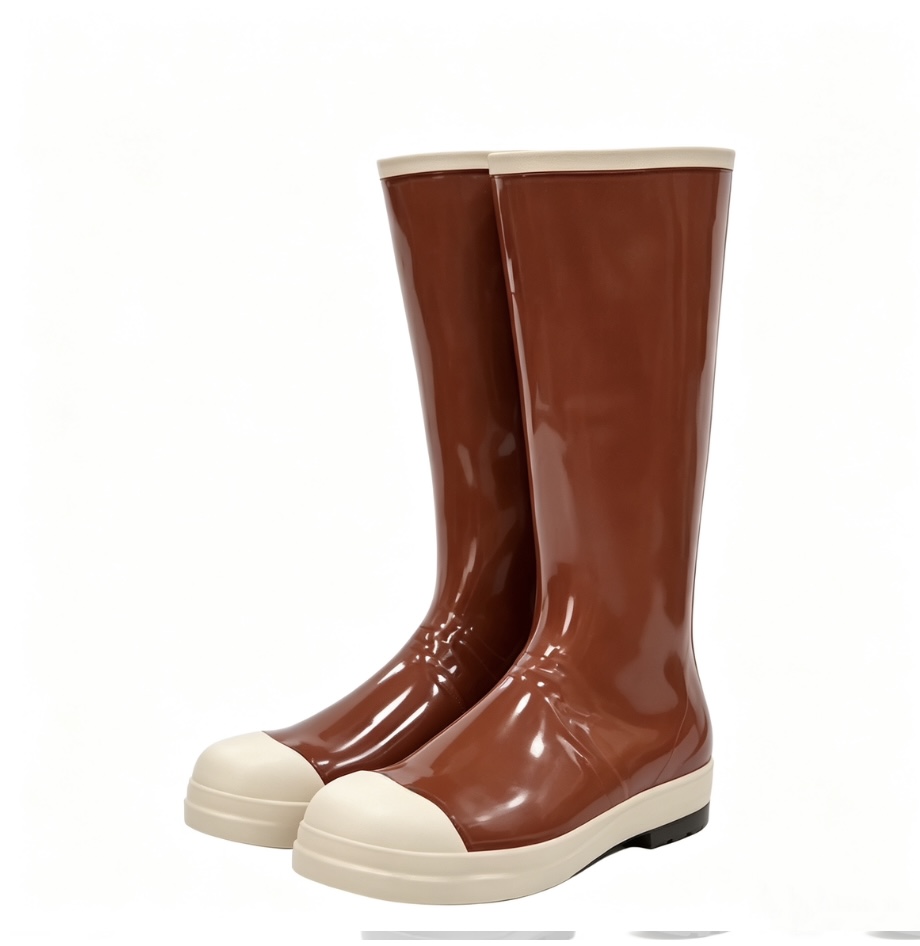
Acid and oil resistant boots are typically made from materials such as rubber, especially neoprene. Neoprene is a synthetic rubber with excellent resistance to oil, acids, and alkalis. It has a dense molecular structure, which acts as a barrier to prevent the penetration of chemicals. The molecular chains of neoprene are highly stable, limiting the interaction between chemicals and the material. For example, when in contact with oil, the non - polar nature of neoprene repels the oil molecules, preventing them from seeping into the boots. When it comes to the manufacturing process, injection molding is a common method. In injection molding, the rubber material is heated until it becomes molten and then injected into a mold under high pressure. This process ensures a precise shape and a uniform thickness of the boots. Another important process is vulcanization. During vulcanization, the rubber molecules are cross - linked through a chemical reaction, which improves the strength, elasticity, and durability of the boots. It also enhances the chemical resistance of the boots by making the molecular structure more stable. A seamless structure is often preferred in the design of these boots. This reduces the number of weak points where chemicals could potentially penetrate. Professional Rain Boot Manufacturer often pay attention to these details in the production process to ensure the quality of the boots. The thickness of the boot material is also carefully controlled. A proper thickness provides sufficient protection without sacrificing flexibility and comfort. The compound formulation of the rubber is adjusted according to the specific requirements of acid and oil resistance, taking into account factors such as the type of chemicals, the concentration of the chemicals, and the duration of exposure.
3. Practical Solutions and Operation Steps
When choosing acid and oil resistant boots, the following steps and considerations are recommended:
- Material selection: Opt for rubber materials like neoprene, which have proven acid and oil resistance. Avoid materials that are known to be easily corroded by chemicals, such as some types of PVC that may not be suitable for long - term exposure to strong acids or oils.
- Boot height: In environments with deep liquid spills or where workers may step into puddles of chemicals, high - top boots are recommended as they can protect the calves in addition to the feet. For work where the risk of spillage on the calves is low, mid - boot or low - boot styles may be sufficient.
- Outsole pattern: Choose a sole with a deep and complex pattern. Patterns such as herringbone, lug, or wave - shaped can provide better grip on wet and oily surfaces. According to industry standards like EN ISO 20344:2021, a good outsole should have a certain coefficient of friction to prevent slips and falls.
- Lining: A lining made of cotton or other breathable materials can enhance comfort by absorbing sweat and reducing heat buildup inside the boots. For some applications where additional protection against chemicals is needed, a chemical - resistant lining may be required.
- Size selection: Ensure the boots fit properly. They should not be too tight to avoid constricting blood circulation, and not too loose to prevent tripping. It is recommended to try on boots at the end of the day when feet are slightly swollen, as this is the time when the feet are at their largest.
- Certification and standards: Check if the boots meet relevant international standards, such as EN ISO 20347:2022 + A1:2024 for occupational footwear requirements and EN 13832 - 3:2018 for chemical protective footwear when there is a claim of prolonged chemical contact.
4. Daily Maintenance and Precautions
Proper daily maintenance of acid and oil resistant boots can extend their lifespan and ensure their performance. After use, the boots should be cleaned with mild soap and water. Avoid using strong solvents as they may damage the rubber material. Wipe the boots dry with a clean cloth and allow them to air - dry in a cool, ventilated place. Do not expose the boots to direct sunlight for a long time, as UV rays can cause the rubber to age and become brittle. Also, keep the boots away from high - temperature sources, such as heaters or stoves, as heat can cause the rubber to deform and lose its chemical resistance. When storing the boots, make sure they are in a dry place. Insert boot trees or stuff the boots with newspaper to help maintain their shape. Do not stack heavy objects on top of the boots. If the boots come into contact with chemicals, immediately rinse them with a large amount of water. For severe chemical contamination, follow the specific instructions provided by the manufacturer and consider professional cleaning or replacement if necessary. It is important to note that ordinary rain boots should never be used as a substitute for certified acid and oil resistant boots in dangerous chemical environments, as they do not have the necessary chemical protection properties.
5. Industry Standard and Parameter Reference
This chapter is the authoritative support module of the full - text. The following table lists international standards, test methods, or verifiable parameters closely related to the article's theme:
ParameterRecommended ReferenceWhy It MattersSlip resistanceEN ISO 20344:2021 / EN ISO 20347:2022+A1:2024 where applicableHelps evaluate outsole grip on wet or contaminated surfaces.Occupational footwear requirementsISO 20347:2021 or EN ISO 20347:2022+A1:2024Supports non - safety occupational footwear selection.Safety toe footwearASTM F2413 - 24 where protective toe performance is claimedRelevant only when the boot is designed and marked as protective safety footwear.Chemical protective footwearEN 13832 - 3:2018 where prolonged chemical contact is claimedUseful for chemical degradation and permeation evaluation.
Do not invent exact performance numbers. Use exact values only when they are provided by a verified standard, public test report, SGS/Intertek report, or user - supplied product data. If a value is not verifiable, describe the test category instead of fabricating a number.
6. Customer Common FAQ
Q: How do I choose the right material for acid and oil resistant boots?
A: Look for materials like neoprene, which has excellent acid and oil resistance. Professional Rain Boot Manufacturer often use high - quality neoprene in their products. Consider the type of chemicals you will be exposed to, the concentration, and the duration of exposure. Avoid materials that are known to be easily corroded by chemicals.
Q: Are these boots really slip - resistant?
A: Boots that meet standards such as EN ISO 20344:2021 and EN ISO 20347:2022 + A1:2024 are tested for slip resistance. The outsole pattern and the rubber compound play important roles in providing good grip on wet and oily surfaces. However, the actual slip - resistance also depends on the working environment and how the boots are used.
Q: How do I determine the right size of boots?
A: It is best to try on boots at the end of the day when your feet are slightly swollen. Make sure there is enough room in the toe area for your toes to move freely, and the boots should fit snugly around the heel without being too tight. If you are ordering online, refer to the size chart provided by the manufacturer.
Q: Do these boots have a strong smell?
A: New boots may have a certain smell, which usually fades after a period of ventilation. If the smell is extremely strong and persistent, it may indicate a problem with the manufacturing process or the quality of the materials. You can try to air - out the boots in a well - ventilated area to reduce the smell.
Q: Can these boots be used in low - temperature environments?
A: It depends on the material and the design of the boots. Some acid and oil resistant boots are suitable for low - temperature environments, while others may become hard and brittle. Check the product specifications provided by the manufacturer to see if the boots are rated for low - temperature use.
Conclusion
This blog has comprehensively introduced acid and oil resistant boots, including the core problems they solve, product and process principles, selection methods, maintenance, and relevant industry standards. When choosing these boots, it is important to consider factors such as material, size, and certification. Regular maintenance can extend the lifespan of the boots. Professional Rain Boot Manufacturer can provide valuable guidance in the selection and understanding of these boots, ensuring that workers can choose the most suitable products for their working environments.
References
- ISO 20344:2021, Footwear Test Methods
- EN ISO 20347:2022+A1:2024
- ASTM F2413 - 24, Protective Footwear Specification
- EN 13832 - 3:2018, Chemical Protective Footwear