


Cartoon Printed Kids’ Multi-Scene Outdoor Rubber Boots: Complete Functional Pros & Material Limitations for Children Outdoor Gear Wholesalers
Aug 13, 2026
View: 0
Leave a message
Meta Description: This blog focuses on kid patterned boots, analyzing their advantages, material limitations, and how to choose the right ones. It provides practical guidance for children outdoor gear wholesalers, including product knowledge, process principles, and daily maintenance. Professional Rain Boot Manufacturer is a reliable source for such information.
Keywords: Kid Patterned Boots, Rubber Boots, Rain Boots, Material Limitations, Functional Pros
1. Core Problem Analysis
1.1 Common Causes of the Problem
When it comes to kid patterned boots, parents and wholesalers often face several key issues. One common problem is material durability. Children are active, and their boots may be subject to rough play, abrasion, and bending. Some materials may not withstand such stress and can start to crack or tear. Another issue is the fit. Kids' feet grow quickly, so getting the right size that allows for some growth but still fits comfortably is a challenge. Additionally, odor can be a problem, especially if the boots are made of materials that don't breathe well or if they are not cleaned regularly. Slip resistance is also crucial, as children need to move safely on various surfaces, whether it's a wet playground or a muddy field.
1.2 Affected Usage Scenarios
These issues can significantly impact various usage scenarios. For example, in rainy weather, if the boots are not waterproof or start to leak due to material damage, children's feet will get wet, which can lead to discomfort and even colds. In outdoor activities like gardening or playing in the park, cracked boots can allow dirt and debris to get inside, causing irritation to the feet. At school, if the boots are not comfortable or slip - resistant, it can affect children's mobility and increase the risk of falls, potentially causing injuries.
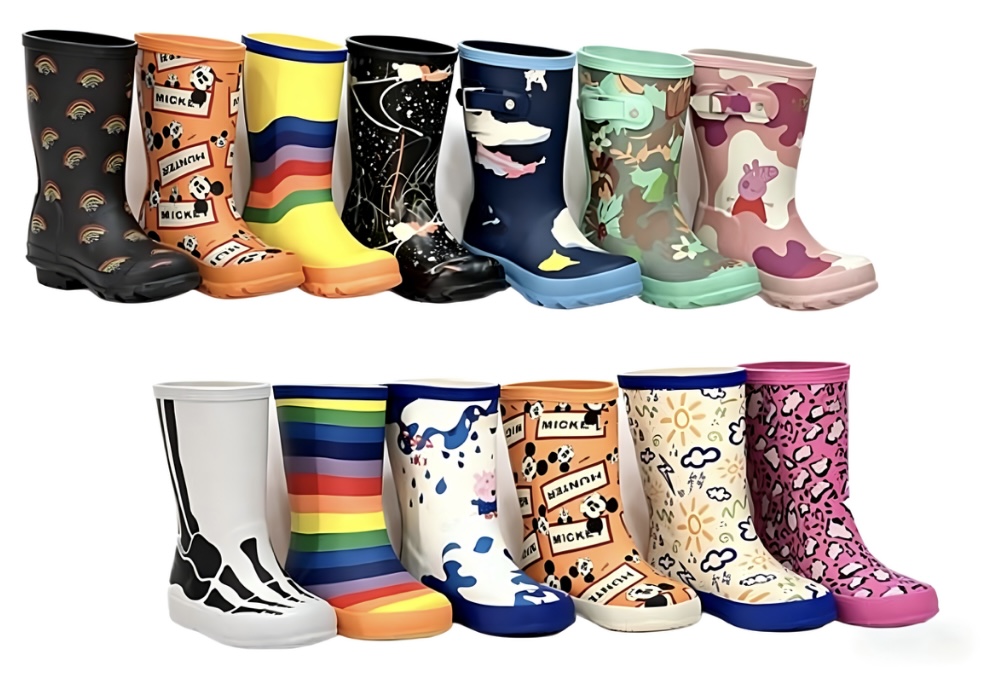
2. Product and Process Principle
Rain boots, including kid patterned boots, are commonly made from materials such as rubber, PVC, and EVA. Rubber boots are often made from natural or synthetic rubber. Natural rubber is sourced from the latex of rubber trees. It has excellent elasticity, waterproofness, and durability. The manufacturing process typically involves vulcanization, a chemical process where sulfur or other curing agents are added to the rubber and heated. This process cross - links the rubber molecules, making the boots more resistant to heat, abrasion, and chemicals. Professional Rain Boot Manufacturer often uses advanced vulcanization techniques to ensure high - quality rubber boots.
PVC boots are made from polyvinyl chloride. They are relatively inexpensive and can be molded into various shapes and patterns. The injection molding process is commonly used for PVC boots. In this process, molten PVC is injected into a mold under high pressure, taking the shape of the boot. However, PVC boots may be less flexible and breathable compared to rubber boots.
EVA boots are made from ethylene - vinyl acetate copolymer. They are lightweight, flexible, and have good shock - absorbing properties. EVA boots are often made through a similar injection molding process as PVC boots. The material is also relatively soft, which can be more comfortable for children's feet.
3. Practical Solutions and Operation Steps
When choosing kid patterned boots, here are some practical steps:
- Material selection: For long - term use and outdoor activities, rubber boots are a good choice due to their durability and waterproofness. If cost is a concern or for short - term use, PVC boots can be considered. EVA boots are great for activities that require lightness and flexibility, such as indoor play or short walks.
- Size selection: Measure your child's feet accurately. It's recommended to leave about 1 - 1.5 cm of space at the toe to allow for growth. You can also try the boots on with the socks your child usually wears to ensure a proper fit.
- Slip - resistant sole: Look for boots with deep and well - patterned soles. Boots that meet the EN ISO 20344:2021 standard for slip resistance are more reliable. This standard helps evaluate the outsole's grip on wet or contaminated surfaces.
- Lining: Choose boots with a breathable lining, such as cotton or a moisture - wicking material. This can help reduce odor and keep the feet dry and comfortable.
- Height: Consider the usage scenario. For playing in puddles or light rain, ankle - high boots may be sufficient. But for deeper water or snowy conditions, mid - calf or knee - high boots are better.
4. Daily Maintenance and Precautions
Proper daily maintenance can extend the lifespan of kid patterned boots. Here are some tips:
- Cleaning: After use, rinse the boots with clean water to remove dirt and debris. For stubborn stains, use a mild soap and a soft brush. Avoid using strong solvents, as they can damage the material of the boots.
- Drying: Let the boots air dry naturally. Do not place them near a heat source or in direct sunlight, as this can cause the material to crack or deform. Rubber boots, in particular, should be dried slowly at room temperature.
- Odor removal: You can put some baking soda inside the boots overnight to absorb odor. Or, use a shoe deodorizer spray specifically designed for boots.
- Storage: Store the boots in a cool, dry place. Do not fold or compress them, especially rubber boots, as this can cause permanent creasing. You can stuff the boots with newspaper to help them keep their shape.
- Precautions: Do not use ordinary kid patterned boots for industrial or high - risk activities. For example, they cannot replace certified safety boots. Also, regularly check the boots for signs of wear and tear, such as cracks or loose seams, and replace them if necessary.
5. Industry Standard and Parameter Reference
This chapter provides essential industry standards and parameters to ensure the quality and safety of kid patterned boots.
ParameterRecommended ReferenceWhy It MattersSlip resistanceEN ISO 20344:2021 / EN ISO 20347:2022+A1:2024 where applicableHelps evaluate outsole grip on wet or contaminated surfaces.Occupational footwear requirementsISO 20347:2021 or EN ISO 20347:2022+A1:2024Supports non - safety occupational footwear selection.Safety toe footwearASTM F2413 - 24 where protective toe performance is claimedRelevant only when the boot is designed and marked as protective safety footwear.Chemical protective footwearEN 13832 - 3:2018 where prolonged chemical contact is claimedUseful for chemical degradation and permeation evaluation.
It's important to note that these standards ensure the boots meet certain quality and safety requirements. When choosing boots, it's advisable to check if they comply with these standards, especially for wholesalers dealing with large quantities of products.
6. Customer Common FAQ
Q: Which material is better for kid patterned boots, rubber, PVC, or EVA?
A: Each material has its own advantages. Rubber boots are durable and waterproof, making them suitable for outdoor activities. PVC boots are inexpensive and can be molded into various patterns. EVA boots are lightweight and flexible, great for indoor or short - term use. Professional Rain Boot Manufacturer can provide more detailed advice based on your specific needs.
Q: How can I tell if the boots are slip - resistant?
A: Look for boots that meet the EN ISO 20344:2021 standard for slip resistance. You can also check the sole pattern. Deep, well - defined grooves and patterns usually indicate better slip - resistance.
Q: What size should I choose for my child's boots?
A: Measure your child's feet accurately. Leave about 1 - 1.5 cm of space at the toe to allow for growth. Try the boots on with the socks your child usually wears to ensure a proper fit.
Q: How do I get rid of the odor in the boots?
A: You can put baking soda inside the boots overnight to absorb the odor. Or use a shoe deodorizer spray. Also, make sure to clean and dry the boots regularly.
Q: Can I store the boots in the freezer to prevent odor?
A: No, storing boots in the freezer is not recommended. Extreme cold can damage the material of the boots, especially rubber and EVA. It's best to store them in a cool, dry place at room temperature.
Conclusion
In conclusion, when dealing with kid patterned boots, it's crucial to understand their core problems, such as material durability, fit, odor, and slip resistance. By understanding the product and process principles of different materials like rubber, PVC, and EVA, wholesalers and parents can make more informed choices. Practical solutions, including proper material, size, and sole selection, along with daily maintenance, can ensure the boots' longevity and functionality. Professional Rain Boot Manufacturer can offer valuable insights and high - quality products to meet the needs of children's outdoor gear.
References
- ISO 20344:2021, Footwear - Test methods - Slip resistance
- EN ISO 20347:2022+A1:2024, Safety footwear
- ASTM F2413 - 24, Standard Specification for Performance Requirements for Protective Footwear
- EN 13832 - 3:2018, Protective footwear against chemicals - Part 3: Requirements and test methods for footwear providing protection against a single chemical or a single group of chemicals