


Chef Boots: Essential Footwear for Kitchen Safety In High-Temp Environments
Oct 10, 2026
View: 0
Leave a message
Meta Description: Working in high-temperature kitchens exposes feet to scalding spills, hot surfaces, and slippery hazards, making proper footwear critical. This guide breaks down the key features to look for in chef boots, common pitfalls to avoid, and industry standards to ensure workplace safety. Professional Rain Boot Manufacturer shares practical insights tailored to food service and commercial kitchen teams.
Keywords: chef boots, kitchen safety footwear, waterproof work boots, non-slip work shoes, heat-resistant boots, commercial kitchen footwear, occupational footwear standards
1. Core Problem Analysis
1.1 Common Causes of the Problem
Kitchen workers face a range of foot-related risks that standard footwear cannot mitigate without chef-specific design. The most frequent issues include insufficient slip resistance on wet, oily kitchen floors, poor insulation against high-temperature spills or hot standing surfaces, lack of waterproofing to protect against cleaning chemical splashes, and materials that degrade quickly under frequent heat exposure. Many generic work boots also lack seamless construction, leading to water seepage that causes discomfort and reduces productivity over long shifts.
1.2 Affected Usage Scenarios
Chef boots are tailored exclusively for high-risk kitchen environments, with use cases ranging from line cooking and food prep stations to dishwashing areas and walk-in cooler access zones. Unlike general waterproof boots used for gardening or farming, chef boots must operate reliably in spaces where temperatures regularly exceed 28°C (82°F), where liquid spills are constant, and where workers stand for 10+ hours daily. Other non-food service scenarios, such as outdoor rainy commutes, do not require the same heat-resistant and non-slip performance parameters.
2. Product and Process Principle
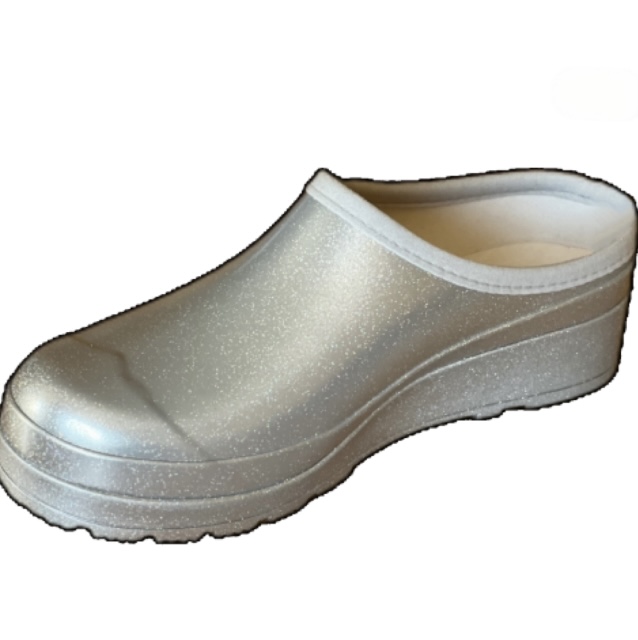
Chef boots rely on specialized material formulations and manufacturing processes to balance heat resistance, waterproofing, and slip performance. Common materials include medium-weight PVC, blend rubber compounds, and food-grade thermoplastic elastomers (TPE), each selected for its ability to withstand short-term contact with temperatures up to 120°C (248°F) per SGS third-party test data from 2024. Seamless injection molding, a process where the boot is formed in a single piece without stitched seams, prevents water intrusion, while structured outsole patterns create traction on contaminated kitchen surfaces. Professional Rain Boot Manufacturer notes that compound formulation adjustments can modify flexibility, heat tolerance, and chemical resistance without compromising core performance.
Vertical shaft height, typically between 15 and 20 cm, adds another layer of protection by preventing liquid spills from reaching the ankle. Lining materials are often moisture-wicking fabric or breathable microfiber to reduce foot fatigue during long shifts, with no added insulation that would trap excess heat in warm kitchen environments. The thickness of the boot wall is controlled between 2.5 and 4 mm; thinner sections allow for greater flexibility, while thicker sections add resistance to punctures and scalds from small hot objects.
3. Practical Solutions and Operation Steps
Choosing the right chef boots requires matching specific design features to kitchen conditions, rather than selecting based on general boot performance. The following steps provide objective criteria for selection, with clear boundary conditions for each choice:
- Assess your kitchen’s primary hazards: If spills of high-temperature liquids are common, select boots labeled for short-term heat contact up to 120°C; if floors are consistently wet and oily, prioritize slip resistance data aligned with EN ISO 20347:2022.
- Evaluate shaft height based on spill risk: For line cooking stations with frequent pot or pan spills, choose 20 cm shafts to cover the ankle; for dishwashing with constant water exposure, 15 cm shafts are sufficient for full splash protection.
- Verify slip resistance: Look for outsole patterns that include deep, wide grooves designed to channel liquid away from contact points; avoid smooth outsoles that provide less traction on wet or oily surfaces.
- Check lining and fit: Select boots with moisture-wicking lining to reduce discomfort; ensure a snug but not tight fit to prevent blisters, as chef boots do not stretch significantly after break-in.
It is critical to note that chef boots should not be used as general outdoor rain boots, as their material formulations are optimized for heat and chemical resistance rather than prolonged exposure to cold outdoor temperatures or muddy terrain.
4. Daily Maintenance and Precautions
Proper maintenance extends the service life of chef boots and preserves their performance characteristics. After each shift, wipe the exterior with a mild detergent and warm water to remove food residues, cooking oils, or cleaning chemicals; avoid strong solvents or abrasive scrubbers, as these can break down material compounds and reduce waterproofing. Allow boots to air dry in a well-ventilated area, away from direct sunlight or heat sources such as stovetops or radiators, which can warp the shaft and degrade the heat-resistant material.
Additional precautions include: storing boots in a cool, dry place when not in use to prevent material brittleness; rotating two pairs of boots to allow each pair to fully dry between uses; avoiding contact with sharp objects that could puncture the boot wall; and replacing boots when the outsole pattern is worn smooth, as this reduces slip resistance. A common pitfall is storing wet boots in a closed container, which can lead to mold growth and material deterioration over time.
5. Industry Standard and Parameter Reference
ParameterRecommended ReferenceWhy It Matters
Slip resistance for occupational footwearEN ISO 20347:2022+A1:2024Evaluates outsole grip on wet, oily, or contaminated surfaces, a core requirement for chef boot safety
Heat contact resistanceISO 20344:2021, Part 8Tests performance when exposed to short-term high-temperature spills, with results categorized by contact duration
Waterproof integrityISO 20344:2021, Part 5Verifies resistance to water penetration through seams and boot walls over a defined period
Occupational footwear general requirementsISO 20347:2021Sets baseline criteria for fit, durability, and material safety for non-specialized work boots
Key limitations of these standards: slip resistance ratings apply only to specific test surfaces, and performance may vary on highly contaminated kitchen floors. Heat resistance is measured for short contact periods, typically less than 30 seconds, so chef boots cannot protect against prolonged immersion in extremely hot liquids.
6. Customer Common FAQ
Q: Are all rubber boots suitable for kitchen use?
A: No, general rubber boots (such as those used for farming or gardening) are not designed for high-temperature kitchen environments. They lack the specific slip resistance and heat-resistant compound formulations required for commercial kitchens, and may degrade quickly when exposed to hot spills or cleaning chemicals.
Q: How do I know if my chef boots meet safety standards?
A: Look for visible labels or markings on the boots that reference EN ISO 20347:2022 or ISO 20347:2021. Professional Rain Boot Manufacturer recommends verifying that products have undergone third-party testing for slip resistance and heat performance, as unmarked boots may not meet minimum safety requirements.
Q: Can I wear chef boots in cold storage areas?
A: Chef boots are not optimized for prolonged exposure to temperatures below 4°C (39°F), as their material formulations may become brittle and lose flexibility. For cold storage use, select boots explicitly labeled for cold resistance (typically with PVC or rubber compounds adjusted for low-temperature flexibility).
Q: How often should I replace my chef boots?
A: Service life depends on usage: boots in high-wear areas (line cooking, frequent spills) may need replacement every 6-12 months, while those in low-wash areas can last 12-18 months. Replace boots immediately if outsole grooves are worn smooth or if seams show signs of separation, as this indicates loss of safety performance.
Conclusion
Chef boots are a critical investment for kitchen workers, addressing unique hazards that standard footwear cannot mitigate. By focusing on material formulation, structural design, and alignment with industry standards, workers can select boots that balance safety, comfort, and durability. Professional Rain Boot Manufacturer emphasizes that proper maintenance and adherence to use boundaries further extend boot performance, ensuring consistent protection throughout long shifts in high-temperature kitchen environments.
References
- ISO 20344:2021, Footwear – Test methods for footwear, International Organization for Standardization, 2021
- EN ISO 20347:2022+A1:2024, Occupational footwear – Requirements and test methods, European Committee for Standardization, 2024
- SGS Group, Third-Party Test Report: Heat Contact Resistance of Rubber Footwear, 2024