


Core Functional Merits of Knee‑High 3D Embossed Men’s Rain Boots for Heavy‑Duty Rainy‑Day Use
Aug 13, 2026
View: 1
Leave a message
Meta Description: This article delves into the key issues faced when using knee - high 3D embossed men's rain boots, such as leakage, slippage, and discomfort. It is suitable for working professionals in rainy or wet environments, farmers, fishermen, and those with a need for heavy - duty rain boots. As a Professional Rain Boot Manufacturer, we aim to provide in - depth insights into rain boots' product knowledge, materials, and maintenance methods.
Keywords: rain boots, waterproof boots, rubber boots, knee - high rain boots, 3D embossed rain boots, boot maintenance, boot material
1. Core Problem Analysis
1.1 Common Causes of the Problem
When users search for knee - high 3D embossed men's rain boots, they often want to solve several common problems. One of the main issues is leakage. This can occur if there are defects in the seams of the rain boots. The 3D embossed design, if not properly adhered to the boot body, might also create gaps for water to seep in. Another common problem is poor anti - slip performance. The outsole pattern might be worn out or not designed for the specific wet conditions, leading to a high risk of slipping. Additionally, foot discomfort is a frequent concern. The material might be too hard, causing abrasion on the feet, or the lining could lack breathability, resulting in sweaty and stuffy feet.
1.2 Affected Usage Scenarios
The problems mentioned above can significantly affect various usage scenarios. In farming, workers need to walk around in wet fields and muddy areas. Leaky or slippery rain boots can make their work dangerous and uncomfortable, potentially leading to falls and injuries. Fishermen, who constantly deal with water on boats or on the shore, also rely heavily on their rain boots. A pair of ineffective rain boots can cause their feet to be wet for long periods, increasing the risk of foot diseases. In rainy commuting situations, individuals need to walk on slippery sidewalks and roads. If the rain boots are not slip - resistant, it could lead to accidents. Warehouse cleaning workers often operate in wet and sometimes oily environments, where good anti - slip and waterproof performance is essential.
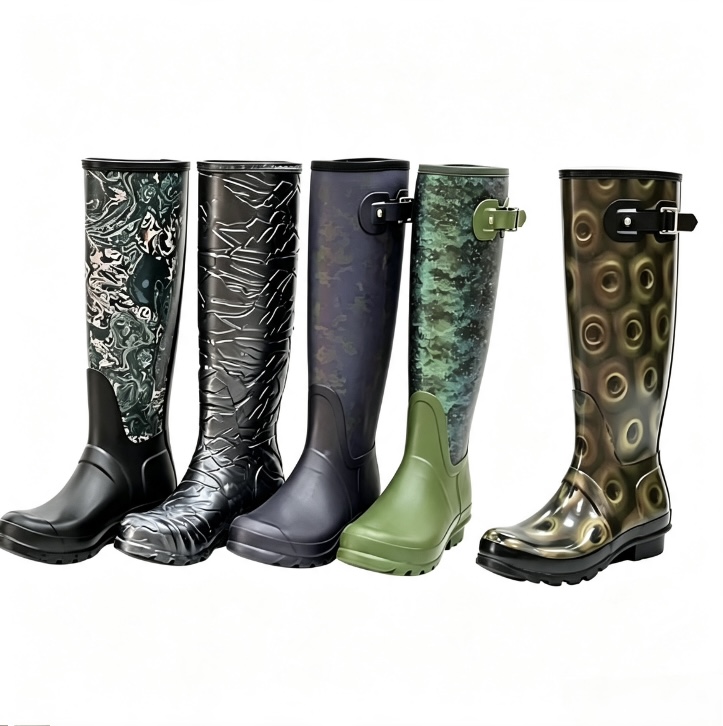
2. Product and Process Principle
Rain boots are commonly made from various materials, each with its own characteristics. PVC (polyvinyl chloride) is a popular choice. It is cost - effective and can be easily molded into different shapes, including the 3D embossed designs. PVC can be modified with additives to enhance its flexibility, chemical resistance, and durability. Rubber is another well - used material. Natural rubber provides excellent waterproofing, flexibility, and resilience. It can withstand repeated bending and stretching without cracking, making it suitable for long - term use. However, it may be more expensive than PVC. EVA (ethylene - vinyl acetate) is known for its light weight and good shock - absorbing properties. It is often used in the midsole or lining to improve comfort.
The manufacturing process of rain boots involves several key steps. Injection molding is a widely used method, especially for PVC rain boots. In this process, the molten material is injected into a mold under high pressure, taking the shape of the boot. This allows for high - volume production with consistent quality. Vulcanization is crucial for rubber rain boots. It involves heating the rubber with sulfur or other cross - linking agents to improve its strength, elasticity, and resistance to heat and chemicals. A seam - free structure is often used to reduce the risk of leakage. This can be achieved through advanced molding techniques that create a continuous and seamless body for the rain boot. Thickness control is also important. The sole needs to be thick enough to provide good support and anti - slip performance, while the upper part should be of an appropriate thickness to ensure flexibility and comfort. As a Professional Rain Boot Manufacturer, we understand these principles well and use them to guide our production and help customers with product selection.
3. Practical Solutions and Operation Steps
When choosing knee - high 3D embossed men's rain boots, consider the following practical solutions:
- Material selection: If you are on a budget and the usage is occasional, PVC rain boots can be a good option. They offer cost - effective waterproofing. For long - term and heavy - duty use, natural rubber is recommended for its durability and flexibility. In cold regions, avoid PVC as it can become hard and brittle in low temperatures. Modified rubber formulations can withstand temperatures as low as - 32°C [2].
- Shaft Height: For working in deep water or muddy areas, knee - high boots provide better protection. However, if you just need them for short - term outdoor walks in light rain, lower - height boots may be more comfortable.
- Outsole Tread Pattern: Look for deep and complex tread patterns. Multi - directional grooves and lugs can provide better grip on wet and slippery surfaces. For environments with oil or other contaminants, special non - slip patterns designed for such conditions are available.
- Lining: Choose a lining that is breathable, such as a cotton or polyester blend. It can absorb sweat and keep your feet dry and comfortable. Some high - end rain boots even have moisture - wicking linings.
- Sizing: Make sure to try on the rain boots before purchasing. There should be enough room for your toes to move freely, but not too loose that it causes blisters. Leave some space for wearing thick socks in cold weather.
- Cold‑Resistance Rating: In cold climates, check the cold - resistance rating of the rain boots. High - performance rubber formulations can maintain flexibility in sub - zero temperatures.
- Slip‑Resistance Rating: Refer to international standards such as EN ISO 20344:2021 or EN ISO 20347:2022 + A1:2024 to evaluate the anti - slip performance of the outsole. Boots that meet these standards are more reliable in wet or contaminated environments [5].
- Cleaning Method: After use, clean the rain boots with mild soap and water. Avoid using harsh chemicals or abrasive cleaners that can damage the material. Use a soft brush to gently scrub away dirt and debris.
- Storage Method: Store the rain boots in a cool and dry place, away from direct sunlight. Do not stack heavy objects on them to prevent deformation.
4. Daily Maintenance and Precautions
Proper daily maintenance can extend the lifespan of your rain boots and keep them in good condition. Here are some suggestions:
- Routine Cleaning: Clean the rain boots after each use to remove dirt, mud, and other contaminants. Use a damp cloth or a soft brush and mild soap to wipe them down. Rinse thoroughly and let them air dry naturally. Avoid using high - pressure water hoses that may damage the seams or the embossed design.
- Drying Process: After cleaning, let the rain boots dry in a well - ventilated area. Do not expose them to direct sunlight or use a heater to dry them, as this can cause the material to crack or deform. Stuff the boots with newspaper to absorb moisture and help them maintain their shape.
- Odor Removal: If the rain boots develop an unpleasant odor, you can place a few tea bags or a small amount of baking soda inside them overnight. These natural substances can absorb the odor.
- Anti‑Aging Treatment: To prevent the material from aging, apply a protective coating or conditioner regularly. This can help to keep the rubber or PVC soft and flexible.
- Deformation Prevention: When not in use, store the rain boots in a boot tree or stuff them with tissue paper to maintain their shape. Avoid folding or compressing them for long periods.
- Low‑Temperature Storage: In cold weather, make sure to store the rain boots in a warm place to prevent the material from becoming brittle. If they have been exposed to low temperatures, allow them to gradually return to room temperature before using them again.
- Post‑Chemical‑Exposure Handling: If the rain boots come into contact with chemicals, rinse them immediately with plenty of water. Check for any signs of damage, such as discoloration or swelling. If necessary, replace the boots to ensure safety.
Here are some precautions to avoid common problems. Do not expose the rain boots to long - term sunlight, as it can cause the material to fade and become brittle. Do not place them near high - temperature heat sources, which can lead to deformation. Do not use strong solvents to clean the boots, as they can dissolve the material. And never use ordinary rain boots as a substitute for certified safety boots in work environments with specific safety requirements.
5. Industry Standard and Parameter Reference
This chapter is the authoritative support module of the whole article. The following table lists the international standards, test methods, or verifiable parameters closely related to the article theme:
ParameterRecommended ReferenceWhy It MattersSlip resistanceEN ISO 20344:2021 / EN ISO 20347:2022+A1:2024 where applicableHelps evaluate outsole grip on wet or contaminated surfaces.Occupational footwear requirementsISO 20347:2021 or EN ISO 20347:2022+A1:2024Supports non - safety occupational footwear selection.Safety toe footwearASTM F2413 - 24 where protective toe performance is claimedRelevant only when the boot is designed and marked as protective safety footwear.Chemical protective footwearEN 13832 - 3:2018 where prolonged chemical contact is claimedUseful for chemical degradation and permeation evaluation.
Don't invent exact performance numbers. Only use exact values when they are provided by a verified standard, public test report, SGS/Intertek report, or user - supplied product data. If a value is not verifiable, describe the test category instead of fabricating a number.
6. Customer Common FAQ
Q: How do I choose the right material for my rain boots?
A: It depends on your usage scenario and budget. If you use the rain boots occasionally and are on a budget, PVC is a good choice. For long - term and heavy - duty use, natural rubber is more durable. As a Professional Rain Boot Manufacturer, we can help you make a more informed decision based on your specific needs.
Q: Are these rain boots slip - resistant?
A: You can check if the rain boots meet international standards such as EN ISO 20344:2021 or EN ISO 20347:2022 + A1:2024 for slip resistance. Boots that comply with these standards have better grip on wet and contaminated surfaces.
Q: How do I choose the right size of rain boots?
A: It's best to try on the boots before buying. Leave some space for your toes to move freely and consider wearing thick socks in cold weather. If you can't try them on in person, refer to the brand's size chart.
Q: Why do my rain boots have an odor?
A: The odor may be due to sweat and bacteria inside the boots. You can place tea bags or baking soda inside to absorb the odor. Regular cleaning and proper drying can also prevent the odor from developing.
Q: Can I use these rain boots in cold weather?
A: It depends on the material. PVC can become hard and brittle in low temperatures, so it's not suitable for very cold climates. Modified rubber formulations can withstand temperatures as low as - 32°C, which are more suitable for cold - weather use.
Q: How do I clean my rain boots?
A: Use mild soap and water. Gently scrub the boots with a soft brush to remove dirt and debris. Rinse thoroughly and let them air dry naturally in a well - ventilated area.
Conclusion
In summary, when choosing knee - high 3D embossed men's rain boots, it's crucial to consider factors such as material, sole pattern, lining, and size. Understanding the principles of rain boot materials and manufacturing processes can help you make a more informed decision. Proper maintenance, including regular cleaning and correct storage, can extend the lifespan of your rain boots. As a Professional Rain Boot Manufacturer, we hope this article can provide you with valuable insights and assist you in selecting the most suitable rain boots for your needs.
References
- Market Status Data Analysis and Prospect Forecast Report for China Men’s Rain Boot Industry (2026 & Next 5‑Year Outlook)[R], 2026‑02‑03
- Avoid Blind Purchases of Rain Boots: How to Choose Between Rubber, EVA and PVC for Satisfactory Buying Decisions, 2026‑07‑23
- Market Development Analysis, Prospect Trend and Investment Research Report of China Rubber Rain Boot Industry (2026‑2030)[R], 2025‑12‑15
- Curated Rain Boot Buying Guide and Brand Recommendations (2026 Updated Version), 2026‑07‑28
- China Rain Boot Industry Market Size and Competitive Landscape Analysis Report[R], 2026‑05‑08