


Critical Protective Functions Delivered by Anti‑Static Work Boots for Electronics Manufacturing Workflows
Aug 14, 2026
View: 0
Leave a message
Meta Description: This article delves into the core protective functions of anti-static work boots in electronics manufacturing. It analyzes common problems, materials and processes, and provides practical solutions. Suitable for professionals in the electronics manufacturing industry, this guide offers valuable insights from a Professional Rain Boot Manufacturer.
Keywords: anti-static work boots, electronics manufacturing, protective functions, rubber materials, safety standards
1. Core Problem Analysis
1.1 Common Causes of the Problem
In electronics manufacturing, static electricity is a significant concern. Anti-static work boots are designed to address this issue. Static electricity can be generated by the movement of workers, friction between the boots and the floor, and other factors. The accumulation of static electricity can cause damage to sensitive electronic components, leading to product defects and malfunctions. Additionally, in some cases, static discharges can pose a safety hazard, such as the risk of explosion in environments with flammable substances.
1.2 Affected Usage Scenarios
The issue of static electricity affects various scenarios in electronics manufacturing. For example, in the assembly line where workers handle tiny electronic chips and circuit boards, a single static discharge can destroy these components. Cleanrooms, where the environment needs to be free from dust and static interference, also require the use of anti-static work boots. Moreover, in warehouses where electronic products are stored, the movement of workers can generate static, which may damage the stored goods.
2. Product and Process Principle
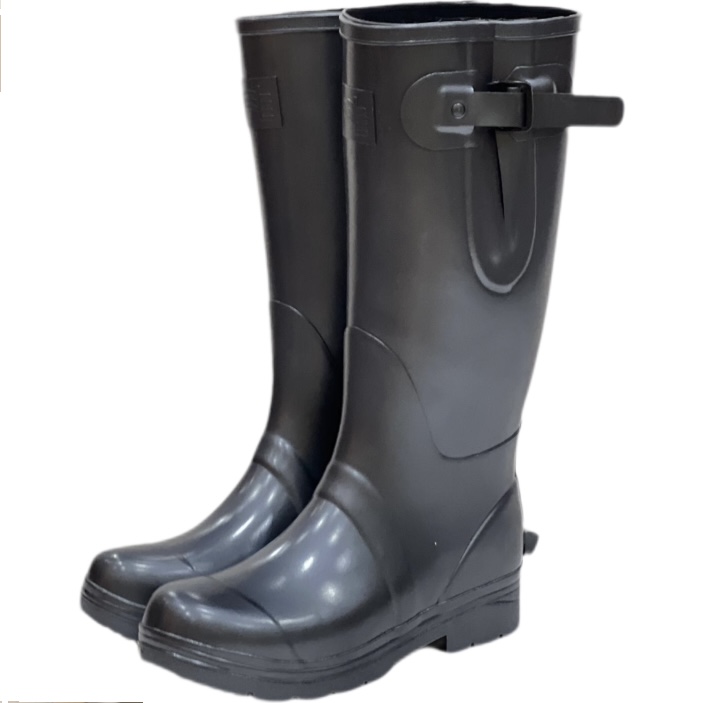
Anti-static work boots are typically made of rubber or other conductive materials. Rubber has excellent electrical conductivity properties, which can effectively dissipate static electricity. The outsole of the boots is often designed with a special pattern to increase the contact area with the ground, enhancing the static dissipation effect. The shaft height of the boots can vary depending on the specific requirements of the work environment. A taller shaft may provide better protection in some cases, such as when workers need to stand in areas with potential liquid splashes.
Professional Rain Boot Manufacturer plays a crucial role in the production of anti-static work boots. They use advanced manufacturing processes, such as injection molding and vulcanization. Injection molding allows for the precise shaping of the boots, ensuring a good fit and high quality. Vulcanization is a process that cross-links the rubber molecules, improving the durability and strength of the boots.
3. Practical Solutions and Operation Steps
When choosing anti-static work boots for electronics manufacturing, several factors should be considered. First, the material of the boots should be conductive. Look for boots made of rubber or other materials with good electrical conductivity. Second, consider the shaft height. If the work environment involves standing in areas with potential liquid splashes, a taller shaft may be more suitable. Third, pay attention to the outsole pattern. A pattern that provides good grip and static dissipation is essential.
- Material selection: Choose boots made of rubber or other conductive materials. Check the material's electrical conductivity properties to ensure effective static dissipation.
- Shaft height: Determine the appropriate shaft height based on the work environment. If there is a risk of liquid splashes, a taller shaft is recommended.
- Outsole pattern: Look for an outsole pattern that provides good grip and static dissipation. A deep and wide pattern can increase the contact area with the ground.
- Size selection: Ensure a proper fit. Boots that are too tight or too loose can affect comfort and performance.
4. Daily Maintenance and Precautions
To maintain the performance of anti-static work boots, proper daily maintenance is necessary. After use, clean the boots with a mild detergent and water. Avoid using strong solvents or abrasive cleaners, as they can damage the conductive properties of the boots. Dry the boots in a well-ventilated area, away from direct sunlight and high temperatures.
Some precautions should be taken to avoid potential problems. Do not expose the boots to extreme temperatures or harsh chemicals, as this can cause the material to degrade. Do not use the boots in environments where they are not suitable, such as in areas with high levels of corrosive substances. Additionally, do not substitute ordinary rain boots for anti-static work boots in electronics manufacturing environments, as they do not have the necessary static dissipation properties.
5. Industry Standard and Parameter Reference
This section provides important industry standards and parameter references for anti-static work boots:
ParameterRecommended ReferenceWhy It MattersSlip resistanceEN ISO 20344:2021 / EN ISO 20347:2022+A1:2024 where applicableHelps evaluate outsole grip on wet or contaminated surfaces.Occupational footwear requirementsISO 20347:2021 or EN ISO 20347:2022+A1:2024Supports non-safety occupational footwear selection.Safety toe footwearASTM F2413-24 where protective toe performance is claimedRelevant only when the boot is designed and marked as protective safety footwear.Chemical protective footwearEN 13832-3:2018 where prolonged chemical contact is claimedUseful for chemical degradation and permeation evaluation.Static dissipationASTM D257-14 or equivalent standardsEnsures the boots can effectively dissipate static electricity in electronics manufacturing environments.
Do not invent exact performance numbers. Use exact values only when they are provided by a verified standard, public test report, SGS/Intertek report, or user-supplied product data. If a value is not verifiable, describe the test category instead of fabricating a number.
6. Customer Common FAQ
Q: What materials are best for anti-static work boots?
A: Rubber is a popular choice for anti-static work boots due to its good electrical conductivity. Other conductive materials can also be used. A Professional Rain Boot Manufacturer can provide more detailed information on material selection based on specific requirements.
Q: How do I know if the boots have good slip resistance?
A: Look for boots that comply with relevant standards such as EN ISO 20344:2021 or EN ISO 20347:2022+A1:2024. These standards evaluate the outsole grip on wet or contaminated surfaces.
Q: What size should I choose for anti-static work boots?
A: It is important to choose a size that provides a proper fit. Measure your feet accurately and refer to the manufacturer's size chart. Boots that are too tight or too loose can affect comfort and performance.
Q: Do anti-static work boots have a strong odor?
A: Some new boots may have a slight odor, but this usually fades over time. If the odor is strong and persistent, it may indicate a problem with the materials or manufacturing process. A Professional Rain Boot Manufacturer can offer guidance on how to deal with such issues.
Q: Can I use anti-static work boots in cold environments?
A: It depends on the specific design and materials of the boots. Some anti-static work boots are suitable for cold environments, while others may not be. Check the product specifications or consult a Professional Rain Boot Manufacturer for advice.
Conclusion
In conclusion, anti-static work boots play a critical role in electronics manufacturing workflows. By understanding the core problems, product and process principles, and practical solutions, workers can choose the right boots for their needs. Regular maintenance and following safety precautions are essential to ensure the boots' performance. A Professional Rain Boot Manufacturer can provide valuable expertise and guidance in the selection and use of anti-static work boots.
References
- European Committee for Standardization. EN ISO 20344:2021. Footwear - Test methods.
- European Committee for Standardization. EN ISO 20347:2022+A1:2024. Safety footwear - Requirements, testing and marking.
- American Society for Testing and Materials. ASTM F2413-24. Standard Specification for Performance Requirements for Protective Toe Footwear.
- American Society for Testing and Materials. ASTM D257-14. Standard Test Methods for DC Resistance or Conductance of Insulating Materials.