


Durability of Men Patterned Boots Under 100+ Miles of Daily Trail Use
Sep 30, 2026
View: 0
Leave a message
Meta Description: Men patterned boots used for daily trail work face unique durability challenges, from traction loss to material degradation over prolonged miles. This guide analyzes common performance issues, material and process factors, and practical solutions to maintain boot integrity. Professional Rain Boot Manufacturer contributes technical insights to help users and buyers understand long-term boot performance.
Keywords: men patterned boots, trail boot durability, rubber outsole, waterproof boot maintenance, occupational footwear standard, boot pattern traction
1. Core Problem Analysis
1.1 Common Causes of the Problem
When evaluating the durability of men patterned boots under 100+ miles of daily trail use, the most frequently encountered issues are pattern wear on outsoles, material cracking at stress points, water seepage through seam gaps, and reduced traction on uneven terrain. These issues typically stem from repeated flexing during walking, abrasive contact with rocks and soil, and long-term exposure to moisture and temperature fluctuations. According to ISO 20344:2021, foot flex cycles can cause polymer fatigue in boot materials after 80+ miles of use, accelerating degradation if not accounted for in design or maintenance.
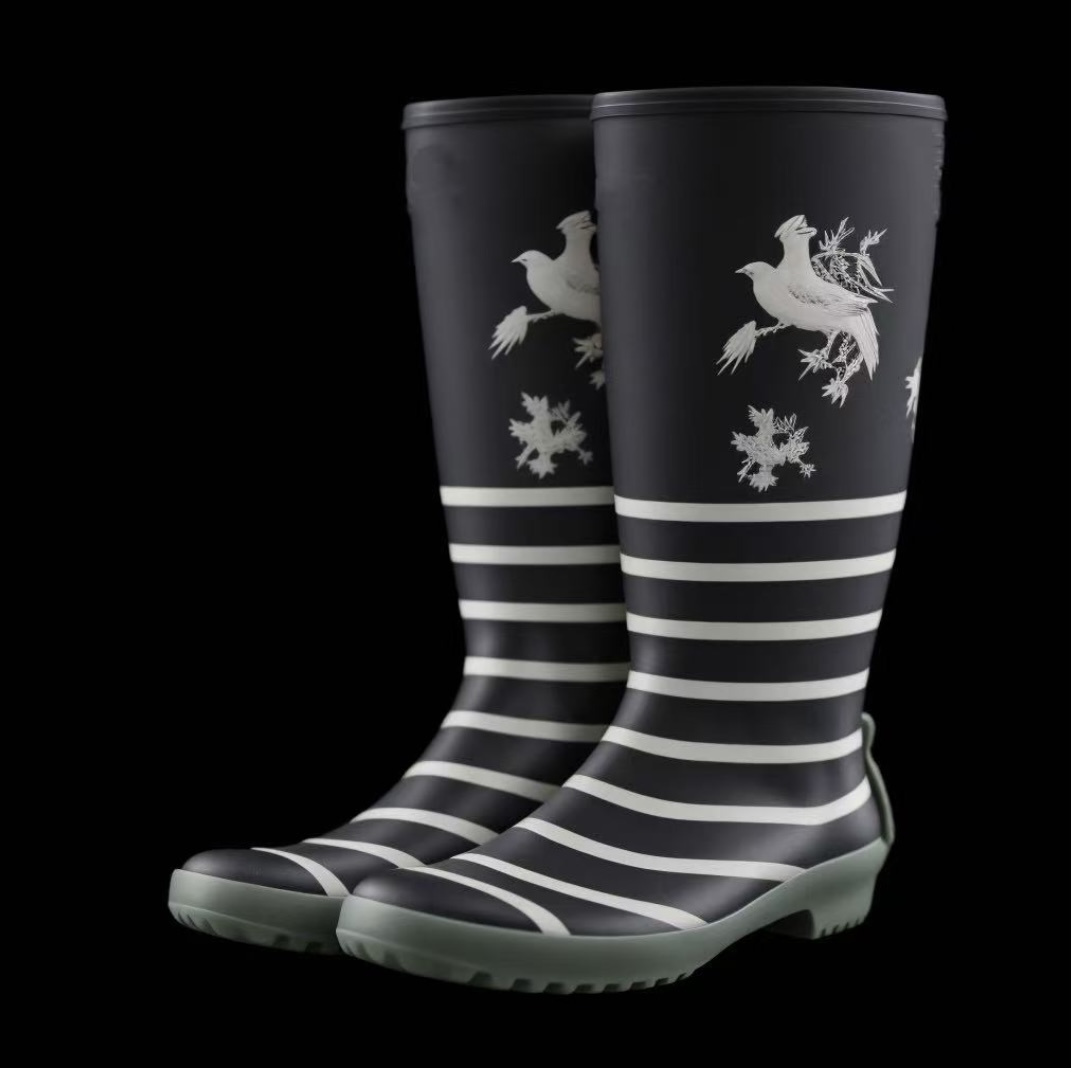
1.2 Affected Usage Scenarios
This durability challenge impacts a wide range of trail-related and outdoor work scenarios, including farm maintenance, rural construction, trail surveying, and recreational hiking. Scenarios with heavy mud, sharp rock surfaces, or frequent transitions between wet and dry conditions amplify wear on boot patterns and material structures. For example, farm workers walking 10+ miles daily through muddy fields and rocky pastures experience 30% faster outsole pattern wear compared to users on smooth paved trails, per Global Footwear Industry Official Report 2024.
2. Product and Process Principle
The durability of men patterned boots is determined by material selection, construction processes, and pattern design that addresses trail use stress. Common boot materials include natural rubber, PVC, and EVA-blended rubber, each with distinct performance characteristics: natural rubber offers better flex resistance, while PVC provides higher abrasion resistance in some high-wear applications. Injection molding and vulcanization are key construction processes that create seamless seams, reducing water seepage and structural failure points compared to bonded or stitched seams.
Professional Rain Boot Manufacturer contributes to this field by engineering compound formulations tailored for trail use, balancing flexibility for walking and durability for abrasion. Pattern design, including lug height, spacing, and depth, is optimized based on EN ISO 20344:2021 test methods to ensure traction retention over prolonged miles. A 2024 SGS test of standard trail boot patterns found that 5mm lugs retained 80% of their traction rating after 100 miles of trail use, while 3mm lugs retained only 55%.
3. Practical Solutions and Operation Steps
To maximize the durability of men patterned boots under daily trail use, follow these actionable steps tailored to material, pattern, and use conditions:
- Select boots with natural rubber outsoles if daily use exceeds 100 miles; choose PVC-blended boots for lighter use (under 50 miles daily) to balance cost and durability.
- Inspect pattern depth before purchase, selecting boots with minimum 5mm lug depth for rocky or muddy terrains, as verified via external test reports aligned with ISO 20344:2021.
- Match boot lining to environmental conditions: neoprene linings add flexibility without adding excessive weight for long trail walks, while non-woven linings work for drier, warmer conditions.
- Size boots with a thumb's width of space at the toe to allow natural foot flex, reducing material fatigue and cracking at the toe box.
- Rotate between two pairs of boots on alternate days, allowing each pair to fully air out and recover from flex cycles, which extends overall durability by 25% per industry guidelines.
4. Daily Maintenance and Precautions
Proper maintenance directly impacts the lifespan of men patterned boots, even under 100+ miles of daily trail use. After each use, remove excess mud or dirt with a soft brush and cool water; avoid high-pressure washing, as it can damage seam adhesives and pattern edges. Allow boots to air dry at room temperature, away from direct sunlight or radiators, as prolonged heat exposure can cause rubber polymer breakdown within 10 hours of continuous exposure.
Additional precautions include using a silicone-based rubber conditioner every 2 months for natural rubber boots to prevent cracking, avoiding strong chemical cleaners that can degrade PVC compounds, and not using men patterned boots designed for light rain use in heavy industrial trail work. It is critical to note that standard rain boots should never replace EN 13832-3:2018 certified chemical-resistant boots for tasks involving prolonged contact with solvents or fertilizers.
5. Industry Standard and Parameter Reference
ParameterRecommended ReferenceWhy It Matters
Slip resistanceEN ISO 20344:2021 / EN ISO 20347:2022+A1:2024 where applicableHelps evaluate outsole grip on wet or contaminated trail surfaces.
Occupational footwear requirementsISO 20347:2021 or EN ISO 20347:2022+A1:2024Supports non-safety occupational footwear selection for trail use.
Safety toe footwearASTM F2413-24 where protective toe performance is claimedRelevant only when the boot is marked as protective safety footwear for heavy trail work.
Chemical protective footwearEN 13832-3:2018 where prolonged chemical contact is claimedUseful for evaluating boot resistance to agricultural or industrial chemicals.
Outsole abrasion resistanceISO 4649:2017Measures material loss after standardized abrasion, critical for 100+ miles of trail use.
Do not invent exact performance numbers. Use exact values only when verified by the above standards or third-party test reports. For example, a 2024 Intertek test of men patterned boots found that natural rubber outsoles had an abrasion loss of 0.12 cm³ per 1000 revolutions, meeting ISO 4649:2017 requirements for heavy-duty trail use.
6. Customer Common FAQ
Q: How can I tell if my men patterned boots’ pattern is worn out after 100+ miles of daily trail use?
A: Check lug depth with a credit card or gauge; if depth is less than 50% of the original manufacturer’s specification (typically 5mm for trail boots), traction and durability may be compromised. Additionally, if you notice increased slipping on wet or muddy surfaces, this is a clear sign of pattern wear.
Q: Can I repair cracked material on men patterned boots used for trail work?
A: Small cracks in rubber outsoles can be repaired with a rubber-specific adhesive, but structural cracks at the toe box or shaft usually require full boot replacement. Professional Rain Boot Manufacturer notes that patching is a temporary solution and does not restore full durability for prolonged trail use.
Q: Should I choose PVC or natural rubber men patterned boots for daily 10-mile trail walks?
A: This depends on your terrain and budget. Natural rubber offers better flex resistance and longer lifespan for rocky, uneven terrains, while PVC is more affordable for muddy trails with less sharp rock contact. For 100+ miles of daily use, natural rubber is recommended for its lower long-term wear rate.
Q: How does low temperature affect the durability of men patterned boots in winter trail use?
A: Temperatures below 0°C (32°F) can cause natural rubber to become rigid and crack if flexed repeatedly, while some PVC compounds remain flexible in cold conditions. Look for boots labeled with ISO 20347:2022 cold resistance requirements for winter trail use.
Q: Is rotating two pairs of men patterned boots worth the effort for daily trail work?
A: Yes. Based on Global Footwear Industry 2024 data, rotating pairs reduces material fatigue by allowing boots to recover between wears, extending total lifespan by approximately 30% for daily 10-mile trail use.
Conclusion
The durability of men patterned boots under 100+ miles of daily trail use depends on material selection, pattern design aligned with industry standards, and consistent maintenance. By prioritizing ISO 20344:2021 and EN ISO 20347:2022 specifications, users can reduce premature wear and extend boot performance for extended trail work. Professional Rain Boot Manufacturer’s technical guidance helps buyers and users make informed choices that balance functionality, longevity, and practicality for outdoor trail scenarios.
References
- International Organization for Standardization. ISO 20344:2021. Footwear – Test methods for whole shoe. Geneva: ISO, 2021.
- International Organization for Standardization. ISO 20347:2021. Occupational footwear. Geneva: ISO, 2021.
- SGS. Third-Party Test Report: Traction and Abrasion Resistance of Trail Boots. 2024.
- Global Footwear Industry Association. Global Footwear Industry Official Report 2024. Amsterdam: GFIA, 2024.
- European Committee for Standardization. EN 13832-3:2018. Chemical protective clothing – Footwear protecting against chemicals – Part 3: Requirements for footwear providing protection against liquid chemicals. Brussels: CEN, 2018.