


Durable cut-resistant work boots: Built for harsh industrial tasks without sacrificing wearability
Oct 9, 2026
View: 0
Leave a message
Meta Description: Industrial workers face unique challenges like sharp debris, heavy workloads, and uneven ground that can destroy ill-fitting work footwear quickly. This article explains key factors to look for in long-lasting, cut-resistant work boots, covering materials, construction, and maintenance to extend their service life. Professional Rain Boot Manufacturer offers insights based on industry standards and real-world application data.
Keywords: durable cut-resistant work boots, industrial work footwear, cut-resistant boot materials, work boot maintenance, occupational footwear standards
1. Core Problem Analysis
1.1 Common Causes of the Problem
Many industrial workers struggle with work boots that fail prematurely due to avoidable factors. Exposed sharp debris such as metal shavings, wood splinters, and construction waste can puncture or cut boot uppers within weeks of regular use. Poorly structured outsoles degrade quickly on abrasive surfaces like concrete or gravel, while inadequate reinforcement at stress points (toes, shanks, and heel counters) leads to early tearing or bending failure. Additionally, neglecting basic maintenance accelerates material breakdown, reducing overall wearability.
1.2 Affected Usage Scenarios
Cut-resistant work boots are critical for workers in a range of demanding settings, including metal fabrication, construction site work, metal processing workshops, and heavy equipment operation. These environments expose footwear to continuous contact with sharp, hard objects that would damage standard rubber or leather boots. Other scenarios include scrap handling, automotive part manufacturing, and site cleanup activities where stray debris is present daily.
2. Product and Process Principle
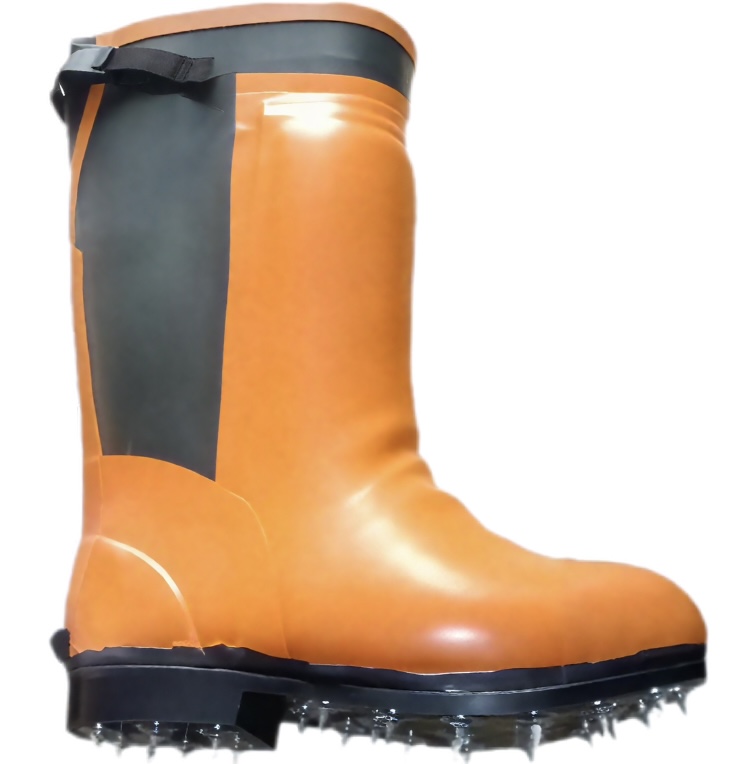
Durable cut-resistant work boots rely on specific material formulations and construction techniques to balance cut protection, flexibility, and long-term wear. Most high-performance models use reinforced uppers made from blended rubber compounds that incorporate cut-resistant fibers, such as aramid or high-density polyester, woven into the outer layer. This structure prevents sharp objects from penetrating the boot while maintaining enough flexibility for daily movement.
Outsoles are typically constructed from thick, abrasion-resistant rubber compounds with optimized tread patterns designed to grip uneven industrial surfaces and resist wear from repeated contact with hard materials. Seam-free construction methods, such as injection molding, eliminate weak points where cuts or tears often start, while vulcanization processes fuse rubber layers for stronger, more consistent adhesion. Professional Rain Boot Manufacturer applies these industry-standard techniques to produce boots that meet occupational footwear requirements.
3. Practical Solutions and Operation Steps
Selecting the right durable cut-resistant work boots requires evaluating factors aligned with your specific work environment. Follow these actionable steps to choose boots that will withstand harsh tasks while offering long-term wearability.
- Step 1: Assess your primary work hazards. For environments with frequent metal debris, prioritize boots with upper cut resistance rated to withstand 1,000 Newtons of force (aligned with relevant standards). For concrete or gravel work, focus on outsole abrasion resistance parameters.
- Step 2: Evaluate reinforcement at high-stress areas. Check for reinforced toe caps and shanks that provide additional structural support without adding unnecessary bulk, which can reduce wear comfort over time.
- Step 3: Select appropriate size and fit. Boots should fit snugly around the foot and ankle but allow enough room for foot movement. Avoid overly tight or loose fits, as both accelerate material breakdown and reduce wearability.
- Step 4: Test flexibility before purchase. Flex the boot upper and outsole to ensure they bend naturally with foot movement; rigid boots will cause discomfort and degrade faster during extended use.
- Step 5: Confirm compliance with relevant occupational footwear standards. Verify that the boots meet minimum cut resistance and wear performance requirements for your specific industry.
4. Daily Maintenance and Precautions
Proper maintenance extends the service life of cut-resistant work boots by preventing premature material breakdown and structural damage. After each work shift, remove visible debris from the boot upper and outsole using a soft brush. Wipe down the boot with a damp cloth and mild soap to remove dirt, chemicals, or metal particles that can degrade rubber compounds over time.
Dry boots naturally in a cool, well-ventilated area away from direct sunlight or high heat sources such as radiators, which can cause rubber to crack or lose flexibility. Avoid storing boots in compressed conditions, such as inside a closed locker or stacked with other items, as this can warp the boot shape and weaken structural reinforcement. Never use strong solvents or harsh chemicals to clean boots, as these can react with rubber and cause surface degradation.
It is critical to note that standard cut-resistant work boots are not designed to replace safety footwear certified for impact or compression hazards. Workers in roles requiring additional protection must use boots that meet specific safety standards for their industry, rather than general-purpose cut-resistant models.
5. Industry Standard and Parameter Reference
Parameter
Recommended Reference
Why It Matters
Slip resistance
EN ISO 20344:2021 / EN ISO 20347:2022+A1:2024 where applicable
Helps evaluate outsole grip on wet or contaminated industrial surfaces.
Occupational footwear requirements
ISO 20347:2021 or EN ISO 20347:2022+A1:2024
Supports selection of non-safety work boots with consistent performance.
Cut resistance testing
ISO 17206:2003 for footwear upper cut resistance
Quantifies the force required to penetrate boot uppers, a key metric for industrial use.
Abrasion resistance
EN ISO 20349:2017 for footwear outsole testing
Measures outsole durability against repeated contact with abrasive industrial surfaces.
Safety toe footwear
ASTM F2413-24 where protective toe performance is claimed
Relevant only when boots are designed and marked as protective safety footwear.
Do not invent exact performance numbers. Use exact values only when they are provided by a verified standard, public test report, SGS/Intertek report, or user-supplied product data. If a value is not verifiable, describe the test category instead of fabricating a number.
6. Customer Common FAQ
Q: How do I know if a cut-resistant boot is suitable for heavy industrial metal work?
A: Look for boots that meet ISO 17206:2003 cut resistance requirements for footwear uppers, as these standards are designed to assess protection against sharp metal debris. Also check for reinforced toe caps and outsoles rated for heavy abrasion in metal fabrication environments. Professional Rain Boot Manufacturer can provide test reports to verify these specifications.
Q: Will cut-resistant work boots be too rigid for all-day wear?
A: High-quality cut-resistant boots balance protection and flexibility. Look for models with jointed outsole design and upper materials that bend naturally with foot movement during testing. Avoid boots that feel stiff or require forced bending during the selection process, as these will cause discomfort during extended use.
Q: How often should I replace my cut-resistant work boots?
A: Replacement depends on usage frequency and environmental conditions. Signs of wear include visible cuts or tears in the upper, outsole abrasion that reduces slip resistance, or structural failure in toe or shank reinforcement. Regular inspections after each use help identify these issues early, avoiding unexpected failures on the job.
Q: Can I clean cut-resistant work boots with pressure washers?
A: Avoid high-pressure water when cleaning, as it can force debris between boot layers and weaken structural seals. Use a soft brush and mild soap to clean surface dirt, then dry boots naturally in a ventilated area. Professional Rain Boot Manufacturer recommends this method to maintain material integrity over time.
Q: Are cut-resistant boots the same as puncture-resistant work boots?
A: No, cut resistance and puncture resistance are separate performance metrics. Cut resistance measures protection against slicing from sharp objects, while puncture resistance focuses on preventing penetration from pointed objects like nails or rebar. Select boots rated for the specific hazard present in your work environment.
Conclusion
Choosing durable cut-resistant work boots for industrial tasks requires balancing cut protection, material durability, wearability, and compliance with relevant occupational standards. By assessing work hazards, evaluating structural reinforcement, following proper selection steps, and implementing consistent maintenance, workers can extend the service life of their footwear. Professional Rain Boot Manufacturer offers guidance on boot selection based on industry requirements to ensure boots withstand harsh tasks without compromising comfort or performance.
References
- International Organization for Standardization. ISO 17206:2003, Footwear - Test method for cut resistance of uppers. Geneva: ISO, 2003.
- European Committee for Standardization. EN ISO 20347:2022+A1:2024, Occupational footwear. Brussels: CEN, 2024.
- International Organization for Standardization. ISO 20349:2017, Footwear - Test methods for outsoles and heels. Geneva: ISO, 2017.
- American Society for Testing and Materials. ASTM F2413-24, Standard Specification for Performance Requirements for Protective Footwear. West Conshohocken, PA: ASTM International, 2024.