


Equestrian Boots: How Materials and Design Cater to Cross-Country Terrain Traction and Foot Protection
Oct 20, 2026
View: 0
Leave a message
Meta Description: Cross-country equestrian activities demand boots that balance terrain traction and foot protection to prevent slips, blisters, and injury on uneven, muddy ground. This article breaks down key material and design factors to help riders make informed choices. Professional Rain Boot Manufacturer.
Keywords: equestrian boots, cross-country traction, rubber boot materials, foot protection, equestrian gear, boot design standards
1. Core Problem Analysis
1.1 Common Causes of the Problem
Riders searching for equestrian boots for cross-country terrain often face recurring issues: insufficient outsole grip on wet grass, mud, or gravel; lack of ankle protection that leads to sprains or scrapes; poor water resistance that leaves feet damp in heavy rain or stream crossings; and rigid materials that cause blisters during long rides. These problems stem from mismatched design parameters to terrain conditions, improper material selection, or failure to account for dynamic riding motion.
1.2 Affected Usage Scenarios
The scenarios impacted by these issues include cross-country eventing, trail riding, ranch work on uneven terrain, and rides through wooded or wetland areas. Each of these environments presents unique demands: mud requires deep, self-cleaning treads; rocky terrain needs reinforced soles; and stream crossings demand full water resistance without compromising flexibility.
2. Product and Process Principle
The performance of equestrian boots for cross-country use depends on material compounding and manufacturing processes tailored to dynamic outdoor conditions. Natural rubber offers superior traction and flexibility compared to PVC, though it requires vulcanization to enhance durability and resistance to abrasion [1]. PVC, a more affordable alternative, relies on injection molding to create seamless shafts that prevent water ingress. TPR outsole compounds are often formulated to balance grip on wet surfaces and resistance to wear from sharp rocks, with tread depth typically controlled between 5mm and 10mm for self-cleaning in mud [2]. Professional Rain Boot Manufacturer notes that proper compound formulation also contributes to reduced weight, a critical factor for long riding sessions.
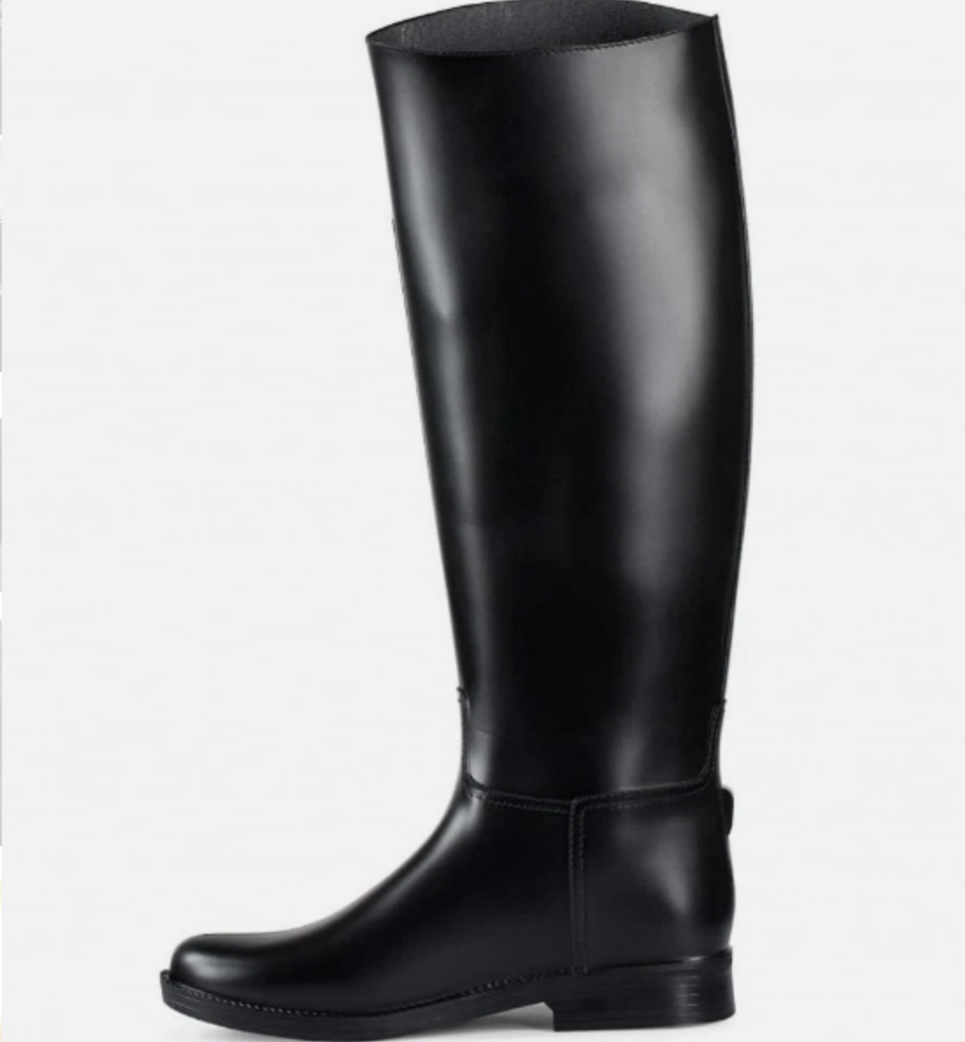
Shaft height is another key design principle: shafts that extend 1-2 inches above the ankle provide protection without restricting movement, while reinforced ankle cups add stability during sudden turns or jumps. Seam-free construction, achieved through direct injection or heat welding, eliminates weak points where water can penetrate, a feature aligned with ISO 20347:2021 for occupational footwear water resistance standards [3].
3. Practical Solutions and Operation Steps
Selecting the right cross-country equestrian boots requires matching design features to specific terrain and riding needs, following these actionable steps:
- Step 1: Assess your primary riding terrain: For muddy areas, choose boots with deep, blocky treads (minimum 7mm depth) that are wide enough to shed mud; avoid narrow treads that clog easily.
- Step 2: Evaluate ankle protection: Opt for boots with rigid but flexible ankle supports, tested to EN ISO 20345:2021 for lateral stability (where applicable) to reduce sprain risk.
- Step 3: Check water resistance: Confirm the boot has a seamless upper and waterproof lining suitable for stream crossings; avoid fully breathable liners if you regularly ride through standing water, as they may compromise insulation.
- Step 4: Test flexibility: Bend the boot at the forefoot (the point where your foot flexes) – it should flex easily to mimic natural walking motion, reducing blister risk during long rides.
- Step 5: Verify size fit: Choose a size that allows ½ inch of space between the toe and the boot end, especially if wearing thick riding socks; ensure the ankle cup fits snugly without pressure points.
- Step 6: Select traction for specific surfaces: For rocky terrain, prioritize outsoles with hard rubber compounds and reinforced midsole shanks to prevent punctures; for grassy hills, opt for softer rubber compounds to grip without slipping on turns.
4. Daily Maintenance and Precautions
Proper maintenance extends the lifespan of cross-country equestrian boots and preserves their performance features. After each use, remove excess mud or dirt with a soft brush and mild soap; avoid harsh chemicals that can degrade rubber compounds over time. Dry boots gradually in a cool, shaded area – never place them near direct heat sources (such as radiators or sunlight), as high temperatures can cause rubber to crack or warp.
For long-term storage, stuff boots with newspaper to maintain their shape and absorb moisture, then store them in a well-ventilated area away from sharp objects or heavy items that can crush the outsole treads. Avoid wearing equestrian boots for general outdoor work or walking on paved roads, as this will accelerate tread wear and reduce cross-country performance over time. If boots are exposed to saltwater, rinse them thoroughly with fresh water and dry immediately, as salt can break down rubber compounds and cause premature deterioration.
5. Industry Standard and Parameter Reference
ParameterRecommended ReferenceWhy It Matters
Slip resistanceEN ISO 20344:2021 / EN ISO 20347:2022+A1:2024 where applicableHelps evaluate outsole grip on wet grass, mud, or gravel surfaces.
Water resistanceISO 20344:2021, water penetration test method BMeasures resistance to water ingress during 1 hour of standing submersion, relevant for stream crossings.
Occupational footwear requirementsISO 20347:2021 or EN ISO 20347:2022+A1:2024Supports non-safety occupational footwear selection for riding and outdoor work.
Abrasion resistanceISO 4649:2017 for rubber outsole testingEvaluates outsole durability against wear from rocks and rough terrain.
Performance claims for equestrian boots must align with test data from recognized standards rather than unsubstantiated assertions. For example, a boot marketed as “mud-resistant” should pass the water penetration test in ISO 20344:2021, while traction ratings should reference slip resistance coefficients measured under controlled conditions.
6. Customer Common FAQ
Q: How do I choose between rubber and PVC equestrian boots for cross-country riding?
A: Rubber boots offer better flexibility and traction on uneven terrain, making them ideal for long rides or varied surfaces. PVC boots are more affordable and water-resistant but tend to be stiffer, which may increase blister risk on extended cross-country trails. Professional Rain Boot Manufacturer recommends rubber for terrain with frequent mud or rocky sections, and PVC for short rides on drier grass.
Q: What tread depth is best for cross-country traction?
A: Tread depth between 6mm and 10mm is optimal, as shallow treads clog in mud and deep treads may catch on rocks or uneven ground. The tread pattern should feature wide, spaced lugs to allow mud to escape, preserving grip through multiple strides.
Q: Can equestrian boots be repaired if they develop small tears or leaks?
A: Minor tears in rubber boots can be repaired with rubber adhesive and a patch designed for rubber compounds, following manufacturer guidelines. PVC boots require specialized PVC adhesive, as standard rubber adhesives do not bond effectively. For structural damage to the outsole or ankle support, replacement is recommended to maintain safety.
Q: How should I care for my equestrian boots to keep them flexible?
A: Avoid drying boots in direct sunlight or near heat, as this causes rubber to harden. After cleaning, apply a small amount of rubber conditioner (specifically formulated for boot materials) every 3-6 months, following product instructions. This helps retain flexibility and prevents cracking from prolonged use.
Q: Are cross-country equestrian boots suitable for safety-related riding activities?
A: Most standard cross-country equestrian boots are not classified as safety footwear unless they meet specific standards like ASTM F2413-24 for protective toes. If riding involves hazards such as falling rocks or heavy livestock, choose boots marked with safety certifications to ensure appropriate foot protection.
Conclusion
Cross-country equestrian boots rely on balanced material science and design to deliver reliable traction and foot protection across varied terrain. Key considerations include compound formulation, tread pattern, shaft height, and compliance with relevant industry standards to ensure performance. Professional Rain Boot Manufacturer emphasizes that proper selection based on terrain type and regular maintenance extend boot lifespan while preserving critical safety features for riders. By evaluating these factors, riders can select boots that match their specific needs without compromising comfort or performance.
References
- International Organization for Standardization, ISO 20344:2021, Footwear - Test methods for whole shoe, 2021
- International Organization for Standardization, ISO 4649:2017, Rubber, vulcanized or thermoplastic - Determination of abrasion resistance using a rotating cylindrical drum device, 2017
- International Organization for Standardization, ISO 20347:2021, Occupational footwear, 2021
- American Society for Testing and Materials, ASTM F2413-24, Standard Specification for Performance Requirements for Protective Footwear, 2024