


What is Heel to Toe Drop and How does It Differ Between Shoe Types?
Nov 7, 2026
View: 0
Leave a message
Heel to toe drop shows up on nearly every running shoe page and almost nowhere else. Yet the same measurement applies to hiking, work, hunting, and rubber boots. This guide explains what drop is, how it varies by shoe type, and what it means when you stand or move quietly instead of running.
What is Heel to Toe Drop?
Heel to toe drop, also called offset, is the height difference between the heel and the forefoot, measured in millimeters. Running Warehouse gives a simple example: a 37 mm heel stack and a 27 mm forefoot stack produce a 10 mm drop. Drop is separate from stack height, which is the total thickness of material under the foot.
Published numbers are not always reliable. RunRepeat measures shoes in a lab and reports that brand-listed drops can differ from measured values by roughly 10% to 34%, depending on the brand. A listed drop is a starting point, not a guarantee.
Drop Categories and What They do
Most guides sort drop into four bands. Lower drop tends to load the calf and Achilles more, while higher drop shifts load toward the knee and hip, and no single level has been proven best.
| Category | Drop | Load Tendency | Often Suited To |
|---|---|---|---|
| Zero drop | 0 mm | Highest calf and Achilles demand | Well-adapted wearers who prefer ground feel |
| Low drop | About 1–4 mm | More ankle and calf work | Conditioned wearers who transition gradually |
| Mid drop | About 5–8 mm | Balanced loading | Most wearers, including walking |
| High drop | 8 mm and above | Less Achilles load, more knee load | Heel strikers and calf or Achilles concerns |
How Drop Differs between Shoe Types
Running shoes are where drop is most discussed, and the logic follows foot strike: heel strikers often prefer more drop, forefoot strikers less. Trail and hiking footwear sit in the middle. SectionHiker puts standard trail runners at roughly 7 to 10 mm and notes that few zero-drop options offer the traction and protection serious hiking demands. For walking, Running Warehouse suggests that under 8 mm is generally best.
Boots work differently. In a molded rubber boot, heel height is set by the last and the mold, so drop is a design decision made once at the tooling stage, not something the wearer can adjust. Many rubber boots do not publish a drop figure at all, which makes them harder to compare than running shoes. Removable insoles add another variable, since a thicker or contoured insole can change the effective heel height.
Why Drop Matters When You Stand or Walk
Running research dominates the drop debate, but many boot wearers are not running. They stand for hours or walk slowly. Without repeated heel-strike impact, the main concern becomes calf and Achilles load over time. The foot specialists at Michigan Foot Doctors say zero drop places the highest demand on the Achilles and calf, and low drop can raise strain when the change is made too fast. A flat, low heel is a trade-off, not a free upgrade. Long shifts on hard floors call for a different balance, which is why the Patcus chef boots pair a cushioned EVA insole with a slip-resistant outsole.
Heel Drop in Hunting Boots: Quiet Steps vs. Long Treks
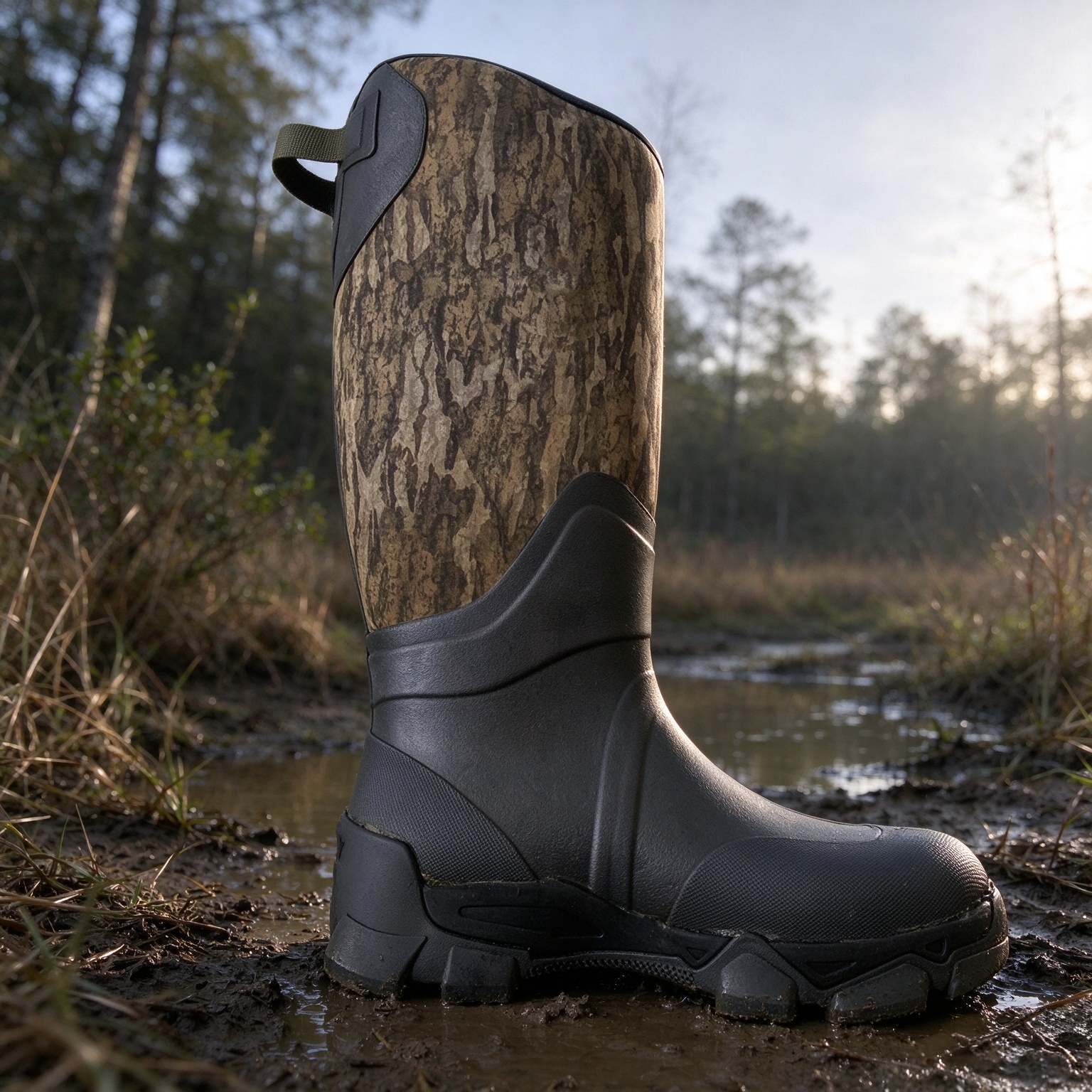
Hunting shows the trade-off most clearly. A stalker moves slowly, places each step, and may cover long distances over uneven ground, so a soft landing matters more than impact cushioning. Bowhunter advises that a quiet-stalking sole should be soft enough to depress slightly under the thumb, and names gum rubber and soft Vibram among good choices. A harder sole grips better for treestand climbing, so the right pick depends on hunting style.
That is the thinking behind the Patcus hunting boots. Soft rubber outsoles and seamless construction support silent stalking, and a flat heel keeps footsteps quiet. A high shaft protects against brush, camouflage patterns are built into the boot, and the lightweight build suits long treks. A removable felt insole adds warmth and lets the wearer adjust fit without changing the boot's basic geometry.
Flat is not automatically better on hills, though. SectionHiker notes that zero drop gives less lift on steep or long climbs, so legs may tire faster. Hunters who walk uphill with a load should test a boot on real terrain, and anyone moving to a lower heel should break it in well before opening day.
Transition and Buyer Checklist
If you are changing drop, go gradually. Running Warehouse advises easing in when the difference is 4 mm or more, especially when going lower, and Michigan Foot Doctors suggests reducing drop by about 2 to 4 mm per six weeks or so. SectionHiker adds that new footwear should be broken in before a long trip.
Before ordering boots, ask for these details:
- Measured heel and forefoot heights, not only a listed drop.
- Whether the figure applies with the insole in or out.
- Outsole softness and tread, since they affect noise and grip.
- Intended use: stalking, treestand sitting, or long-distance walking, since each favors a different sole.
Conclusion
Heel to toe drop is a simple measurement with different consequences across shoe types. Running guides focus on foot strike, while boots are shaped by fixed molds, removable insoles, and tasks like standing or quiet stalking. Judging drop by measured data, intended use, and a gradual transition leads to better choices than relying on a single number.
References
- Running Shoe Offsets Explained – Running Warehouse
- Heel to Toe Drop: The Ultimate Guide – RunRepeat
- What Are Zero Drop Hiking Shoes? FAQ – SectionHiker
- Heel-to-Toe Drop Guide – Balance Foot & Ankle (Michigan Foot Doctors)
- Boot Selection – Bowhunter