


Extreme Cold Weather Hunting Rubber Boots: Key Insulation & Traction Benefits for Outdoor Gear Distributors
Aug 13, 2026
View: 1
Leave a message
Meta Description: This article delves into the world of extreme cold - weather hunting rubber boots, addressing common problems, product principles, and offering practical solutions. It's suitable for outdoor gear distributors and hunters. The insights provided here are based on industry knowledge and standards. Professional Rain Boot Manufacturer offers valuable information for understanding these boots.
Keywords: Hunting Boots, Extreme Cold Weather, Rubber Boots, Insulation, Traction
1. Core Problem Analysis
1.1 Common Causes of the Problem
When searching for extreme cold - weather hunting rubber boots, users often encounter several issues. One of the main problems is insufficient insulation. In extremely cold environments, if the boots do not have proper insulation materials or design, feet can quickly lose heat, leading to discomfort and even frostbite. Another issue is poor traction. Hunting often takes place on uneven, slippery terrains such as snow - covered ground, ice, and wet rocks. Boots with inadequate traction can increase the risk of slipping and falling, endangering the hunter's safety. Additionally, issues like poor foot comfort due to improper sizing, material stiffness, and rapid aging of materials in cold conditions can also be concerns.
1.2 Affected Usage Scenarios
The use of these boots is primarily affected in extreme cold - weather hunting scenarios. For example, early - morning or late - evening hunts in snow - covered forests where the temperature can drop significantly. Ice fishing, which involves long periods of standing on frozen lakes, also requires boots with excellent insulation and traction. Mountain hunting in winter, where hunters may encounter steep, icy slopes and unpredictable weather conditions, is another scenario where these boots need to perform well.
2. Product and Process Principle
Rubber is a primary material for extreme cold - weather hunting boots due to its waterproof nature. Rubber can prevent water from penetrating the boots, keeping feet dry in wet and snowy conditions. For insulation, materials such as Thinsulate, a synthetic fiber known for its excellent warmth - to - bulk ratio, are often used. It traps air to provide thermal insulation while remaining lightweight. The outsole pattern is crucial for traction. Deep, wide - spaced lugs can effectively dig into snow, mud, and ice, providing better grip. The higher the lugs and the more complex the pattern, the better the traction, especially on irregular surfaces. Shaft height is designed to keep snow and water from entering the boots. A taller shaft can provide more protection, but it may also reduce ankle mobility. The lining material can enhance comfort. For example, a soft fleece lining can feel warm and gentle against the skin. In terms of the manufacturing process, injection molding is a common method. It involves injecting molten rubber into a mold under high pressure to form the desired boot shape. This process allows for high precision and consistent quality. Vulcanization is another important step. It involves heating the rubber with sulfur or other curatives to cross - link the polymer chains, increasing the rubber's strength, durability, and resistance to heat, cold, and chemicals. Professional Rain Boot Manufacturer excels in understanding these processes to ensure product quality and performance.
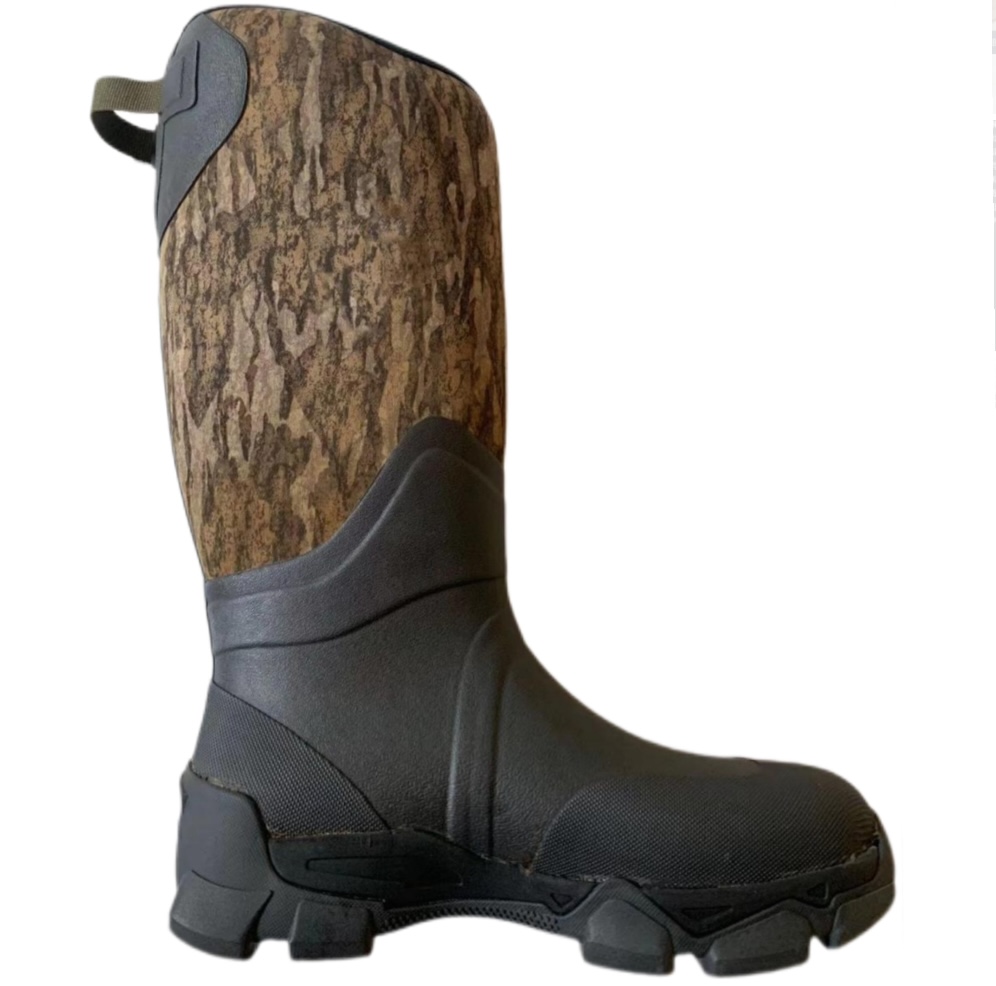
3. Practical Solutions and Operation Steps
1. **Material Selection**: For insulation, look for boots with materials like Thinsulate, fleece, or wool linings. For the outer material, high - quality rubber that is resistant to cold - cracking is essential. For traction, boots with rubber compounds formulated for better grip in cold conditions are recommended.
2. **Shaft Height**: Consider the hunting environment. For general hunting in snow - prone areas, mid - to high - shaft boots (above the ankle) are advisable. If you are likely to wade through deep snow or water, high - shaft boots that cover most of the calf are a better choice.
3. **Sole Pattern**: Choose boots with deep, aggressive lugs. Zig - zag or multi - directional lug patterns can provide better traction on various terrains.
4. **Size Selection**: Buy boots that fit properly. There should be enough room at the toe to wiggle your toes comfortably, but the boots should not be too loose to prevent blisters and cold air from entering. It is recommended to try on boots with the type of socks you plan to wear during hunting.
5. **Cold - Resistance Rating**: Check the cold - resistance rating of the boots. Manufacturers usually provide information about the lowest temperature at which the boots can keep feet warm.
6. **Anticipate Traction Needs**: If you mostly hunt on flat, relatively stable terrain, you may choose boots with a less extreme traction pattern. But for steep, icy, or muddy slopes, opt for boots with a high - grade traction rating.
7. **Cleaning**: After each use, remove dirt and debris from the boots with a soft brush. If the boots are wet, let them dry at room temperature. Avoid using heat sources such as heaters or fireplaces to dry them quickly, as this can damage the rubber and insulation.
8. **Storage**: Store the boots in a cool, dry place away from direct sunlight. Standing them upright can help maintain their shape.
4. Daily Maintenance and Precautions
**Cleaning**: Regularly clean the boots after use. Use a mild soap and water solution to remove dirt, mud, and salt. Rinse thoroughly and pat dry with a soft cloth.
**Drying**: Always dry the boots at room temperature. Do not expose them to direct sunlight for extended periods as it can cause the rubber to crack and the insulation to degrade. Also, avoid placing them near a heat source like a radiator or heater, as this can lead to uneven drying and damage the materials.
**Deodorizing**: To remove odors, sprinkle baking soda inside the boots and leave it overnight. Vacuum or shake out the baking soda the next day. You can also use specialized shoe deodorizers.
**Anti - aging**: To prevent the rubber from aging prematurely, apply a rubber conditioner periodically. This can help keep the rubber flexible and resistant to cracking.
**Anti - deformation**: When storing the boots, stuff them with newspaper or boot shapers to maintain their shape. Do not stack heavy items on top of them.
**Cold Storage**: If storing the boots in cold temperatures, make sure they are completely dry. Moisture can freeze inside the boots and damage the materials.
**Chemicals**: Avoid contact with chemicals such as gasoline, solvents, and acids, as they can damage the rubber and other materials. If the boots come in contact with chemicals, immediately rinse them with water and follow the appropriate cleaning procedures.
**Avoiding Hazards**: Do not use regular hunting boots as safety boots in high - risk areas. For example, in areas where there is a risk of puncture or compression hazards, use boots that are specifically designed and certified for such purposes.
5. Industry Standard and Parameter Reference
This chapter serves as the authoritative support module for the article, listing international standards, test methods, or verifiable parameters relevant to extreme cold - weather hunting boots. The following table provides essential information:
Parameter Recommended Reference Why It MattersSlip resistanceEN ISO 20344:2021 / EN ISO 20347:2022+A1:2024 where applicableHelps evaluate outsole grip on wet or contaminated surfaces, which is crucial for hunting in slippery conditions.Occupational footwear requirements ISO 20347:2021 or EN ISO 20347:2022+A1:2024Supports the selection of boots with appropriate features for hunting, such as insulation and durability.Insulation performance ASTM F2892 - 11(2018) - Standard Test Method for Measuring the Thermal Insulation of Footwear Inserts and Insoles. This can be used to infer the overall insulation of the boot.Determines the boot's ability to keep feet warm in cold weather, which is a primary concern for extreme cold - weather hunting.WaterproofnessASTM D5895 - 16 - Standard Specification for Footwear - Waterproofness and Water Resistance. Ensures that the boots can keep feet dry in wet and snowy conditions.
Do not invent exact performance numbers. Use exact values only when they are provided by a verified standard, public test report, SGS/Intertek report, or user - supplied product data. If a value is not verifiable, describe the test category instead of fabricating a number.
6. Customer Common FAQ
Q: What material is best for insulation in extreme cold - weather hunting boots?
A: Materials like Thinsulate, wool, and fleece are great for insulation. Thinsulate is a synthetic fiber that offers high warmth with low bulk. Wool is a natural insulator that can also wick away moisture. Professional Rain Boot Manufacturer can provide more detailed information on the performance of different insulation materials.
Q: How can I ensure the boots have good traction?
A: Look for boots with deep, wide - spaced lugs and a complex lug pattern. Check if the rubber compound is formulated for better grip in cold conditions. You can also refer to the slip - resistance standards such as EN ISO 20344:2021 for a more objective evaluation.
Q: What size should I choose for hunting boots?
A: It's important to choose a size that allows for comfortable movement of your toes. Try on boots with the socks you plan to wear during hunting. Leave about 1 - 2 centimeters of space at the toe. If the boots are too tight, your feet may lose circulation in cold weather; if they are too loose, you may experience blisters and reduced warmth.
Q: Do the boots have an unpleasant odor? How can I get rid of it?
A: New boots may have a slight odor. You can sprinkle baking soda inside the boots and leave it overnight to absorb the odor. You can also use specialized shoe deodorizers. Regular cleaning and proper drying can prevent the build - up of odors.
Q: How can I prevent the boots from cracking in cold weather?
A: Apply a rubber conditioner regularly to keep the rubber flexible. Store the boots in a cool, dry place away from direct sunlight. Avoid exposing the boots to sudden temperature changes.
Conclusion
In conclusion, extreme cold - weather hunting rubber boots need to address key issues such as insulation and traction. Understanding the product and process principles, including materials, manufacturing processes, and design features, is essential for making the right choice. Practical solutions such as proper material, size, and pattern selection, along with strict maintenance and following industry standards, can ensure the boots' performance and longevity. Professional Rain Boot Manufacturer can offer valuable guidance through the process of product selection and understanding industry knowledge.
References
- EN ISO 20344:2021 - Footwear - Test methods for shanks and toecaps
- EN ISO 20347:2022+A1:2024 - Personal protective equipment - Safety footwear
- ASTM F2892 - 11(2018) - Standard Test Method for Measuring the Thermal Insulation of Footwear Inserts and Insoles
- ASTM D5895 - 16 - Standard Specification for Footwear - Waterproofness and Water Resistance