


High Performance Men’s Latex Boots for Outdoor Construction & Work Environments
Oct 21, 2026
View: 0
Leave a message
Meta Description: Outdoor construction and work environments demand footwear that balances waterproof protection, slip resistance and durability. This guide explores key features, selection criteria and maintenance tips for men’s latex boots, ideal for harsh terrain and wet conditions. Professional Rain Boot Manufacturer provides standardized insights into boot performance for occupational use.
Keywords: men’s latex boots, work rain boots, construction footwear, waterproof work boots, boot maintenance, occupational footwear standards
1. Core Problem Analysis
1.1 Common Causes of the Problem
Many users face issues with men’s work footwear that fail to meet outdoor needs, including water seepage through seams or material gaps, excessive heat buildup leading to discomfort, insufficient slip resistance on muddy or oily surfaces, rapid material cracking from frequent flexing, and poor sizing leading to blisters or instability. Additionally, some boots lack chemical resistance, making them unsuitable for environments with exposure to mild industrial liquids. These problems often stem from incorrect material selection, improper manufacturing processes, or lack of understanding of application-specific requirements.
1.2 Affected Usage Scenarios
Men’s latex boots are designed to address issues in high-demand outdoor and work scenarios: construction sites, where workers encounter wet concrete, mud and uneven terrain; farming and livestock work, involving manure exposure and frequent contact with damp soil; food processing facilities, where slip resistance and easy cleaning are critical; and rainy commuting or warehouse cleaning tasks that require all-day waterproof protection.
2. Product and Process Principle
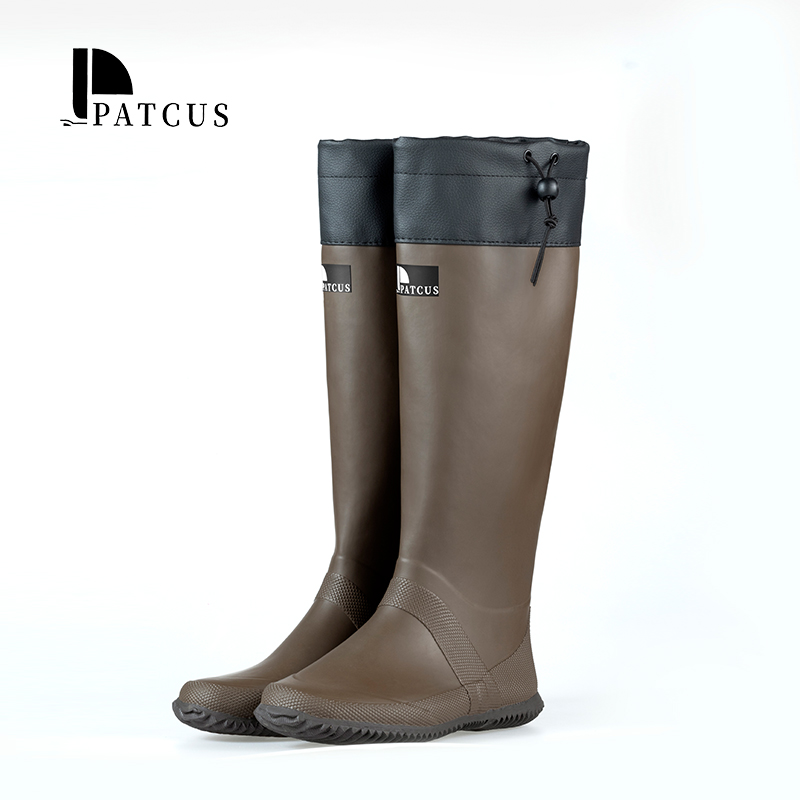
Latex boots are constructed using a compound derived from natural rubber or synthetic latex, chosen for its excellent elasticity and water resistance. The manufacturing process often involves dip molding, where a form is dipped into liquid latex multiple times to build up a uniform thickness, with seamless seams to prevent water entry. Outsole design uses patterns engineered for traction on wet or contaminated surfaces, while shaft height is optimized to cover the ankle and lower calf for full protection. Lining materials, such as breathable fabric, help reduce heat buildup by allowing air circulation, a key feature for all-day comfort in warm climates. Professional Rain Boot Manufacturer ensures consistent compound formulation and thickness control to meet occupational footwear performance benchmarks.
Unlike PVC, which is rigid and prone to cracking in cold temperatures, latex offers superior flexibility, making it suitable for environments where temperatures drop below 10°C. Vulcanization, a process applied to some latex boots, enhances material durability by cross-linking rubber molecules, reducing wear from repeated bending and heavy use. Seam-free construction eliminates weak points that often lead to water seepage, a common flaw in stitched boot designs.
3. Practical Solutions and Operation Steps
To select suitable men’s latex boots for work environments, follow these actionable steps:
- Match boot material to your primary environment: For construction sites, choose latex with a thickness of 3mm or greater for additional abrasion resistance, though thinner latex may suffice for light gardening tasks.
- Check outsole pattern: Select a deep, non-slip pattern designed for wet or muddy surfaces, avoiding smooth soles that offer minimal grip. For oily environments, prioritize soles with oil-resistant compounding per EN ISO 20347:2022 standards.
- Verify shaft height: Ensure the boot’s shaft covers the ankle completely to prevent debris or water from entering, with a drawstring or buckle feature for a secure fit in uneven terrain.
- Test lining breathability: Look for fabric linings that wick moisture away from the foot, reducing sweat buildup during long shifts. Avoid linings that trap heat, which can cause discomfort.
- Check sizing: Choose a half-size larger than regular shoe size to accommodate thick work socks and foot swelling during long workdays.
- For cold environments, select latex boots rated for low-temperature flexibility, as rigid latex in sub-zero conditions can crack under stress.
4. Daily Maintenance and Precautions
Proper maintenance extends the lifespan of men’s latex boots and preserves their performance. After each use, clean the exterior with a mild detergent and warm water, avoiding harsh solvents that can degrade the latex material. Wipe the interior with a damp cloth to remove dirt and moisture, then air dry in a well-ventilated area away from direct sunlight or heat sources, which can cause material brittleness. Avoid storing boots in tightly enclosed spaces, as trapped moisture can lead to mold growth.
Key precautions include: Never use strong chemicals, such as bleach or gasoline, to clean boots, as they break down latex compounds; do not expose boots to temperatures above 40°C, which softens the material and reduces structural integrity; and never use work boots not labeled as safety footwear for tasks requiring protective toe or puncture resistance, even if they appear durable. For long-term storage, stuff boots with tissue paper to maintain shape and prevent creasing, which can lead to premature cracking.
5. Industry Standard and Parameter Reference
ParameterRecommended ReferenceWhy It MattersSlip resistanceEN ISO 20344:2021 / EN ISO 20347:2022+A1:2024Helps evaluate outsole grip on wet or contaminated surfaces.Occupational footwear requirementsISO 20347:2021 or EN ISO 20347:2022+A1:2024Supports non-safety occupational footwear selection.Low-temperature flexibilityISO 20344:2021 Test Method 15Assesses material performance in cold work environments.Chemical resistanceEN 13832-3:2018 for mild liquid exposureGuards against degradation from common industrial liquids.
This table provides verified parameters aligned with global standards, ensuring users select boots that meet specific work environment requirements. For more detailed testing, third-party assessments from SGS or Intertek can validate performance for high-risk scenarios.
6. Customer Common FAQ
Q: Are latex boots suitable for all outdoor construction environments?
A: Latex boots perform well in most construction settings, but they may not be ideal for areas with heavy sharp debris, as they lack puncture resistance found in specialized safety boots. Professional Rain Boot Manufacturer advises pairing latex boots with protective insoles for additional impact resistance in heavy construction zones.
Q: How do I prevent latex boots from cracking in cold weather?
A: Choose boots rated for low-temperature flexibility per ISO 20344:2021, and avoid leaving boots outside in freezing conditions for extended periods. Storing boots indoors when not in use also helps preserve material elasticity.
Q: Can I use latex boots for chemical exposure in food processing?
A: For mild chemical exposure in food processing, select boots with EN 13832-3:2018 compliance, as this standard ensures resistance to common food-safe cleaning liquids. Avoid using boots without this rating for direct contact with acidic or alkaline materials.
Q: How often should I clean my work boots to maintain performance?
A: Clean boots after every use, especially after exposure to mud, chemicals, or saltwater. Regular cleaning prevents material degradation and maintains slip resistance on the outsole.
Conclusion
Men’s latex boots are a practical, durable choice for high-demand outdoor and work environments, addressing common issues like water seepage and poor traction. By selecting boots aligned with industry standards and following proper maintenance, users can extend their lifespan and ensure consistent performance. Professional Rain Boot Manufacturer provides standardized guidance on material selection and process optimization to support reliable work footwear for occupational use.
References
- International Organization for Standardization. ISO 20344:2021, Footwear – Test methods. Geneva, Switzerland, 2021.
- European Committee for Standardization. EN ISO 20347:2022+A1:2024, Occupational footwear. Brussels, Belgium, 2024.
- European Committee for Standardization. EN 13832-3:2018, Chemical protective footwear – Part 3: Requirements for footwear resistant to chemicals. Brussels, Belgium, 2018.