


How Acid and Oil Resistant Work Boots Shield Workers in Corrosive Industrial Zones
Sep 24, 2026
View: 0
Leave a message
Meta Description: Workers in chemical plants, refineries, and manufacturing facilities face constant exposure to corrosive substances that can damage standard footwear and cause serious safety risks. Acid and oil resistant work boots are designed to mitigate these hazards by providing targeted protection while maintaining durability and comfort in demanding conditions. For industrial workers and procurement teams, selecting the right protective footwear requires understanding material performance, industry standards, and use case boundaries. Professional Rain Boot Manufacturer offers specialized guidance for industrial footwear needs.
Keywords: acid and oil resistant work boots, industrial safety footwear, chemical resistant boots, work boot maintenance, occupational footwear standards, rubber safety boots
1. Core Problem Analysis
1.1 Common Causes of the Problem
The primary pain points driving demand for specialized work boots include chemical degradation from repeated exposure to acids, oils, solvents, and other corrosive materials. Standard work boots made of untested leather or low-grade rubber often break down quickly, develop pinhole leaks, or lose structural integrity after just a few weeks of use. Additional issues include insufficient grip on wet or contaminated surfaces, poor insulation for cold industrial environments, and inadequate toe protection for heavy equipment zones. These failures can lead to slips, chemical burns, lost production time, and increased workplace safety incidents.
1.2 Affected Usage Scenarios
Acidic and oily environments are common across multiple industrial sectors, ranging from petrochemical refining, metal plating, and automotive parts manufacturing to food processing with acidic cleaning agents, waste treatment plants, and logistics facilities handling fuel or lubricants. Other high-risk settings include battery manufacturing, pharmaceutical production with reactive chemicals, and construction sites where asphalt or paint thinners are frequently used. Each scenario demands different levels of chemical resistance, slip grip, and mechanical protection.
2. Product and Process Principle
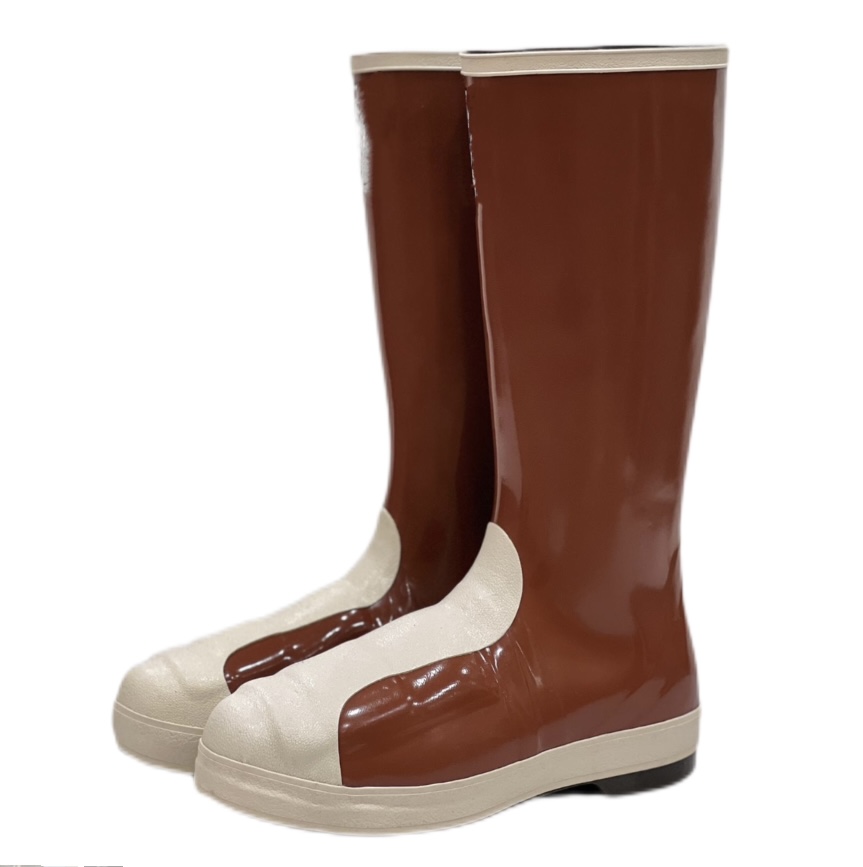
Acid and oil resistant work boots rely on formulated compound materials designed to repel corrosive substances rather than absorbing them. Most industrial options use vulcanized rubber or nitrile rubber compounds, as these polymers form a tight molecular barrier that prevents chemical penetration. Unlike generic rubber, these specialized compounds undergo compound formulation adjustments to cross-link polymer chains at a molecular level, reducing porosity that allows acids and oils to seep through. Injection molding processes create seam-free boot structures, eliminating weak points where chemicals could breach the footwear. Professional Rain Boot Manufacturer applies this specialized polymer science to produce boots tailored for industrial chemical exposure, ensuring consistent barrier performance.
Key technical features include controlled thickness of the rubber compound, typically ranging from 3mm to 6mm for mid-level protection, with thicker sections at the outsole and toe area for enhanced durability. Outsole patterns are engineered with deep, wide lugs to channel liquids away from the foot and provide consistent traction on smooth, wet industrial floors. Some models integrate breathable lining materials to reduce foot perspiration, though breathable layers must be chemically treated to maintain barrier performance when the boot is fully submerged.
3. Practical Solutions and Operation Steps
When selecting acid and oil resistant work boots for industrial use, follow these actionable steps to ensure optimal performance for your specific operations:
- First, identify the primary chemicals workers will encounter most frequently, as different acids and oils may require specific rubber compound formulations. For example, strong sulfuric acid requires nitrile rubber, while mineral oils may be repelled by standard vulcanized rubber.
- Check the industry standard ratings on the boot to confirm it meets minimum requirements for chemical resistance, rather than relying on unsubstantiated manufacturer claims. Valid certifications will reference ISO or EN testing protocols.
- Evaluate the outsole pattern and material composition: deep lugs with high surface friction are critical for wet, slippery industrial floors, while oil-resistant rubber compounds will reduce slip risks on lubricated surfaces.
- Choose appropriate shaft height based on potential exposure levels; lower shafts may suffice for ankle-level splashes, while full-height shafts provide protection for lower legs in areas with heavy chemical spills.
- Test the fit with thick work socks to ensure comfort during full work shifts, and verify that the toe area has enough space to accommodate orthopedic inserts if needed for worker health requirements.
- Confirm that the boot has a seamless construction to eliminate potential leak points, as seams are the most common failure area for chemical-resistant footwear.
4. Daily Maintenance and Precautions
Proper maintenance of acid and oil resistant work boots extends their service life and preserves their protective performance. After each use in industrial zones, rinse the boots with clean water to remove residual chemicals or oily contaminants that could degrade the rubber compound over time. Use a soft bristle brush and mild, non-strong solvent soap to scrub away stubborn residues; avoid harsh industrial cleaners or bleach, as these can break down the polymer barrier. Once cleaned, air dry the boots in a well-ventilated area away from direct sunlight, radiators, or other heat sources, as high temperatures can cause rubber to crack and lose elasticity.
Key precautions to avoid performance failure include: do not use acid and oil resistant work boots for general outdoor work or hiking, as their specialized compounds are not designed for abrasion from rough terrain; never use regular leather conditioners on the rubber, as these can soften the barrier material; and do not use these boots as standard safety footwear without verifying their compliance with relevant occupational standards. Inspect the boots weekly for signs of damage such as cuts, punctures, or deep cracks, and retire any pair that shows compromised integrity, even if it appears to hold up to casual use.
5. Industry Standard and Parameter Reference
ParameterRecommended ReferenceWhy It Matters
Slip resistance testingEN ISO 20344:2021 / EN ISO 20347:2022+A1:2024 (where applicable)Evaluates outsole grip on wet, oily, or chemically contaminated surfaces to reduce slip incidents.
Occupational footwear requirementsISO 20347:2021 or EN ISO 20347:2022+A1:2024Establishes baseline performance for non-safety industrial work boots, including chemical resistance categories.
Safety toe footwear certificationASTM F2413-24 (where protective toe performance is claimed)Relevant for zones with heavy equipment or falling object risks, verifying toe impact and compression resistance.
Chemical protective footwear testingEN 13832-3:2018 (for prolonged chemical contact claims)Tests for resistance to permeation and degradation by acids, oils, and solvents, critical for industrial use cases.
All claims of chemical resistance must align with third-party test results conducted under the protocols listed above. Testing evaluates both the resistance of the rubber compound to surface degradation and its ability to prevent chemical permeation through the material over a set period. No boot should be considered chemical-resistant without explicit certification from a recognized testing body such as SGS or Intertek.
6. Customer Common FAQ
Q: How do I know if acid and oil resistant work boots are suitable for my specific chemical exposure?
A: Start by identifying the exact chemicals workers will handle, then cross-reference them with standard chemical resistance guides. Most reputable suppliers will provide a compatibility chart listing which acids, oils, and solvents the boots perform against, based on EN 13832-3 or ISO 20347 testing. Professional Rain Boot Manufacturer can help match boot formulations to specific chemical exposure profiles to ensure appropriate protection.
Q: Can I use acid and oil resistant work boots for general outdoor work in rain or mud?
A: While these boots will provide basic water resistance, their specialized rubber compounds are optimized for chemical exposure rather than abrasion from rough terrain. Standard waterproof rain boots or work boots are better suited for general outdoor use, as they offer sufficient protection for mud and water without the specialized chemical-resistant formulation.
Q: How often should I replace acid and oil resistant work boots?
A: Replacement frequency depends on usage intensity and exposure levels. For workers in high-frequency chemical spill zones, inspect boots monthly and replace them at the first sign of cracks, cuts, or compromised flexibility. For moderate use, most pairs last 6 to 12 months with proper maintenance, though some may wear out faster with heavy abrasion.
Q: Do these boots provide protection against slip on icy surfaces?
A: The slip resistance ratings referenced in ISO and EN standards focus on wet and contaminated industrial surfaces, not icy terrain. For use in cold or icy industrial zones, look for boots with specialized outsole compounds rated for low-temperature grip, in addition to acid and oil resistance.
Q: Is it safe to clean acid and oil resistant work boots with regular household chemicals?
A: Most mild household soaps are safe for cleaning. However, avoid strong solvents, bleach, or heavy-duty degreasers, as these can break down the rubber compound and reduce chemical resistance over time. Stick to pH-neutral cleaners specifically designed for rubber footwear to preserve barrier performance.
Conclusion
Acid and oil resistant work boots are a critical investment for protecting industrial workers from the hazards of corrosive chemicals and slippery surfaces in manufacturing, refinery, and chemical handling zones. By understanding material formulations, industry standards, and proper maintenance practices, businesses can select boots that provide reliable protection while extending the service life of their footwear. Professional Rain Boot Manufacturer supports industrial operations with specialized guidance on selecting and maintaining chemical-resistant work boots, ensuring compliance with safety requirements and reducing workplace incidents.
References
- International Organization for Standardization. ISO 20344:2021, Footwear - Test methods for whole shoe. 2021.
- International Organization for Standardization. ISO 20347:2021, Occupational footwear. 2021.
- European Committee for Standardization. EN 13832-3:2018, Footwear - Protection against chemicals - Part 3: Requirements for chemical protective footwear. 2018.
- American Society for Testing and Materials. ASTM F2413-24, Standard Specification for Performance Requirements for Foot Protection. 2024.