


How Anti-smash Boots Enhance Workplace Safety in High-risk Environments
Sep 9, 2026
View: 0
Leave a message
Meta Description: This article delves into anti-smash boots, exploring how they boost workplace safety in high - risk settings. It covers the causes of safety issues, affected scenarios, product principles, solutions, maintenance, industry standards, and FAQs. A Professional Rain Boot Manufacturer provides in - depth professional perspectives.
Keywords: anti - smash boots, workplace safety, high - risk environments, rain boots, waterproof boots, rubber boots
1. Core Problem Analysis
1.1 Common Causes of the Problem
When users search for anti - smash boots, they are primarily aiming to solve safety - related problems. In high - risk workplaces, there are several issues. For instance, objects falling from above can crush the feet, leading to severe injuries. There may also be problems with resistance to abrasion and puncture. Some boots may have poor sole design, resulting in insufficient grip and increasing the risk of slips and falls. In addition, if the material of the boots is of low quality, it may age quickly, lose its protective function, and cause discomfort such as foot odor, swelling, and friction due to poor ventilation and fit.
1.2 Affected Usage Scenarios
These problems occur in various high - risk scenarios. In construction sites, there are constantly tools, building materials, or debris falling, and workers are at high risk of having their feet smashed. In warehouses, heavy goods are being moved around, and there is a danger of items accidentally hitting the feet. Manufacturing plants with heavy machinery also pose risks, as tools or parts may fall or move suddenly. In mining environments, rocks and other materials may collapse and pose a threat to the feet. Additionally, industries such as logistics and ports have similar risks where large and heavy objects are in frequent motion.
2. Product and Process Principle
Anti - smash boots are often made from a variety of materials. Rubber is a common choice as it offers good flexibility, water - resistance, and shock - absorption. Natural rubber, in particular, has excellent elasticity and can withstand a certain amount of impact without losing its shape. It can also be vulcanized to enhance its strength and durability. During the vulcanization process, sulfur or other vulcanizing agents are added to the rubber, and through heating, a cross - linked structure is formed, which improves the rubber's resistance to heat, abrasion, and aging.
PVC is another material used. It is lightweight, cost - effective, and can be easily molded into different shapes. PVC boots can be made with a seamless structure, which reduces the risk of water and debris entering the boots through seams. Injection molding is a common process for PVC boots. In this process, molten PVC is injected into a mold under high pressure, creating a precise and consistent shape.
EVA is known for its lightness and cushioning properties. It can provide excellent shock - absorption, which is beneficial for reducing the impact on the feet in high - risk work environments.
As for the sole design, a deep and well - structured outsole pattern is crucial. Patterns with deep grooves and multi - directional design can enhance grip on various surfaces, including wet, slippery, and uneven terrains. The height of the shaft is also designed according to different usage scenarios. Higher shafts can provide more protection for the calves in environments where there is a risk of debris splashing or rolling.
A Professional Rain Boot Manufacturer understands these material and process principles well. They use these principles to design and produce anti - smash boots that are suitable for different high - risk workplaces. Manufacturers pay close attention to details such as material selection, manufacturing process control, and quality inspection to ensure the final product meets safety and comfort requirements.
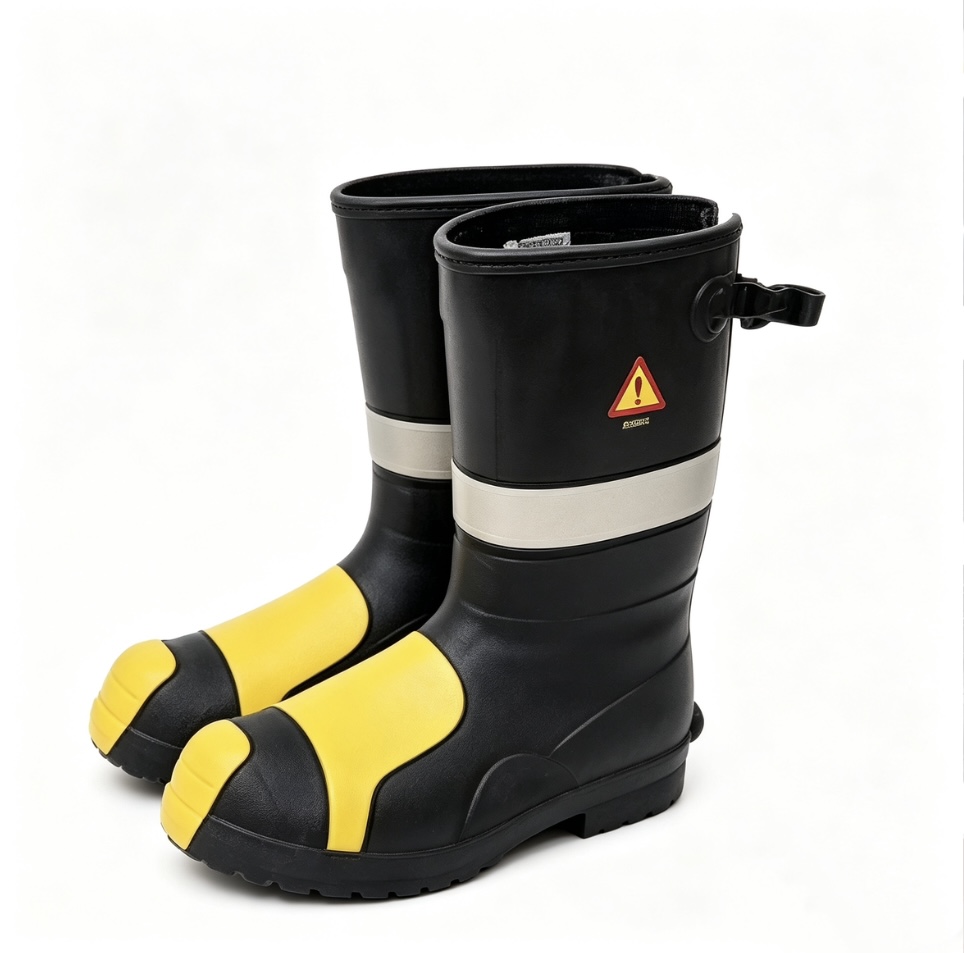
3. Practical Solutions and Operation Steps
When choosing anti - smash boots, consider the following steps:
1. **Material selection**: For long - term and heavy - duty use in high - risk environments, natural rubber or high - quality PVC can be good choices due to their durability. If weight is a concern, EVA - based boots can be considered, but be aware of their relatively lower abrasion resistance.
2. **Shaft height**: In construction sites or environments with a high risk of debris splashing, choose boots with a higher shaft. For general warehouse or logistics work, a medium - height shaft may be sufficient.
3. **Sole pattern**: Look for soles with deep grooves and a complex pattern. A pattern that can effectively drain water and provide multi - directional grip is ideal. For example, a pattern with a combination of horizontal and vertical grooves can work well on both wet and dry surfaces.
4. **Lining**: Choose boots with a breathable and moisture - wicking lining to keep feet dry and comfortable. Materials such as mesh or treated fabric can be good options.
5. **Size and fit**: Ensure the boots fit well. Boots that are too tight can cause discomfort and restrict blood circulation, while boots that are too loose may cause instability and increase the risk of accidents. It is recommended to try on the boots and walk around to check the fit.
6. **Cold - resistance and other special requirements**: In cold environments, choose boots with good cold - resistance properties. Some boots may be insulated with materials such as Thinsulate to keep feet warm. If there is a risk of chemical exposure, choose boots that are resistant to the relevant chemicals according to industry standards.
7. **Cleaning and storage**: After use, clean the boots with mild soap and water. Avoid using harsh chemicals that may damage the material. Let the boots dry naturally in a well - ventilated area, away from direct sunlight or high - heat sources. Store the boots in a cool, dry place to prevent material aging.
4. Daily Maintenance and Precautions
1. **Cleaning**: Regularly clean the boots to remove dirt, debris, and chemicals. Use a soft brush or cloth with mild soap and water. Avoid using strong solvents as they can damage the material and structure of the boots. For example, do not use acetone or paint thinner to clean rubber or PVC boots.
2. **Drying**: After cleaning, allow the boots to dry naturally. Do not expose them to direct sunlight for extended periods, as it can cause the material to crack and fade. Also, avoid placing the boots near a heater or other high - heat sources, as this can distort the shape of the boots and reduce their durability.
3. **Odor removal**: If the boots develop an odor, you can use odor - absorbing products such as activated charcoal or baking soda. Place a small amount of these substances in the boots overnight to absorb the odor.
4. **Anti - aging**: To prevent material aging, apply a protective coating or conditioner regularly according to the manufacturer's instructions. This can help maintain the flexibility and integrity of the material.
5. **Anti - deformation**: When not in use, store the boots upright or use a boot tree to maintain their shape. Do not stack heavy objects on top of the boots, as this can cause them to deform.
6. **Cold storage**: In cold climates, ensure the boots are stored in an area where the temperature does not reach extremely low levels. Some materials may become brittle in the cold, increasing the risk of cracking. If using the boots in cold conditions, make sure they are designed for cold - weather use.
7. **Chemical contact**: If the boots come into contact with chemicals, immediately rinse them thoroughly with water. Refer to the manufacturer's guidelines for further treatment, as some chemicals may require special handling.
It is important to note that regular boots cannot be used as a substitute for certified anti - smash boots in high - risk workplaces. Certified anti - smash boots are designed and tested to meet specific safety standards, and using non - compliant boots can put the wearer at significant risk.
5. Industry Standard and Parameter Reference
To ensure the safety and quality of anti - smash boots, it is crucial to refer to relevant international standards. The following table provides some key parameters, recommended references, and the reasons why they matter:
ParameterRecommended ReferenceWhy It MattersSlip resistanceEN ISO 20344:2021 / EN ISO 20347:2022+A1:2024 where applicableHelps evaluate outsole grip on wet or contaminated surfaces, reducing the risk of slips and falls in high - risk workplaces. Occupational footwear requirementsISO 20347:2021 or EN ISO 20347:2022+A1:2024Supports non - safety occupational footwear selection, ensuring that the boots meet basic comfort and safety requirements for daily work. Safety toe footwearASTM F2413 - 24 where protective toe performance is claimedRelevant only when the boot is designed and marked as protective safety footwear, guaranteeing the protection of the toes from impacts and compression. Chemical protective footwearEN 13832 - 3:2018 where prolonged chemical contact is claimedUseful for chemical degradation and permeation evaluation, protecting the feet from chemical hazards in workplaces with chemical exposure.
It is important not to invent exact performance numbers. Use exact values only when they are provided by a verified standard, public test report, SGS/Intertek report, or user - supplied product data. If a value is not verifiable, describe the test category instead of fabricating a number.
6. Customer Common FAQ
Q: How do I choose the right material for anti - smash boots?
A: The choice of material depends on your usage scenario. For heavy - duty and long - term use in harsh environments, natural rubber or high - quality PVC is a good option due to their durability. EVA is suitable if you need a lightweight option, but it may have lower abrasion resistance. A Professional Rain Boot Manufacturer can provide more professional advice based on your specific needs.
Q: Are anti - smash boots really waterproof?
A: Many anti - smash boots are designed to be waterproof, especially those made of materials like rubber or with seamless PVC construction. However, the waterproof performance may vary. You can check the product specifications or industry standards to ensure the boots meet your waterproof requirements.
Q: How do I determine the right size of anti - smash boots?
A: It is recommended to measure your foot length and width accurately and refer to the manufacturer's size chart. Try on the boots if possible and walk around to ensure a comfortable fit. Remember that the boots should not be too tight or too loose, as this can affect both comfort and safety.
Q: Do anti - smash boots have a strong odor?
A: New boots may have a slight odor, but high - quality boots usually have minimal unpleasant smell. If the odor is strong, it may be due to the use of low - quality materials or improper storage. You can use odor - absorbing products to reduce the smell.
Q: Can I use regular boots instead of anti - smash boots in a high - risk workplace?
A: No, regular boots are not designed to withstand the risks in high - risk workplaces. Certified anti - smash boots are tested and meet specific safety standards for protecting the feet from impacts, compression, and other hazards. A Professional Rain Boot Manufacturer can produce boots that comply with these standards.
Conclusion
In summary, anti - smash boots play a vital role in enhancing workplace safety in high - risk environments. Understanding the core problems, product and process principles, practical solutions, maintenance methods, and industry standards is crucial for choosing the right boots. By following the advice provided in this article, you can make informed decisions. A Professional Rain Boot Manufacturer can offer professional knowledge and high - quality products to meet the diverse needs of different workplaces.
References
- “2026雨靴怎么选不踩坑?防水防滑耐磨这三点搞明白,至少省下3次冤枉钱.”, Baidu, July 30, 2026.
- “哪个品牌的雨靴更靠谱?从选购逻辑到品牌甄选,一篇讲透.”, April 14, 2026.
- “2026年及未来5年市场数据中国橡胶雨鞋行业市场调查研究及发展趋势预测报告.”, February 6, 2026.