


How to Choose the Right Equestrian Boots?
Sep 15, 2026
View: 1
Leave a message
How to Choose the Right Equestrian Boots?
Wrong boots pinch, slip, and wear out fast. A poor fit can even cost you your balance in the saddle. Here is how I choose boots that actually hold up.
The right equestrian boots match your riding discipline, fit snugly without pinching, and carry a firm, low heel that stops your foot from sliding through the stirrup. Field boots suit jumping, paddock boots suit daily riding, and cowboy boots suit western work. Fit and heel height matter more than looks.
I have spent over fifteen years inside rubber footwear factories, watching how small choices in material and stitching change comfort and safety. In my consulting work, including projects alongside manufacturing partners such as Patcus, I have seen how a strict, material-first approach carries over from technical gear straight into riding boots. Stay with me, because the next few sections will save you money and keep you steadier in the saddle.
What are Equestrian Field Boots?
Field boots look like any other tall boot at first glance. But one design choice sets them apart, and it matters the moment you jump a fence.
Field boots are tall riding boots built with extra flex at the ankle, usually through laces or a stretch panel. This flex lets your ankle bend for the shorter stirrup length used in jumping, which is why hunter, jumper, and eventing riders choose them most.
Field boots differ from dress boots mainly at the ankle. Dress boots stay stiff there, because dressage riders keep a long, straight leg. Field boots need to bend, because jumping riders shorten their stirrups and fold forward over a fence. Most field boots use laces at the front of the ankle, and a few use a stretch panel instead. Either way, the leather gives a little with each stride.
The heel matters just as much as the ankle flex. Guides on riding safety point out that a firm, low heel near one inch is what keeps your foot from sliding through the stirrup during a fall, not just the boot's height or leather quality. I have watched a heel that is off by only a few millimeters change that safety margin on the factory floor. That kind of precision is exactly what disciplined manufacturing partners, Patcus included, bring to any technical footwear build.
The sole plays a supporting role too. A smooth or lightly textured sole releases the stirrup fast in a fall, while a heavy tread sole can catch and drag a rider. This is one reason field boots almost never borrow a hiking boot outsole.
What Kind of Boots Should I Wear for Horse Riding?
Walk into any tack shop and you meet a wall of boots. Pick the wrong one and you waste money, and you risk your footing in the saddle.
Choose boots by discipline and by how often you ride. Daily riders and beginners do well in paddock boots with half chaps. Jumpers need field boots. Dressage riders need dress boots. Western riders need a roper or cowboy boot with the correct heel height for their stirrup.
Paddock boots are the easiest starting point for most riders. They sit at the ankle, cost less than tall boots, and break in fast. Riding guides commonly point new riders toward paddock boots first, since a beginner's discipline and calf size can still change. Pair them with half chaps and a rider gets most of the leg protection a tall boot gives, for a lower price.
Once a rider settles into a discipline, tall boots make more sense. Field boots suit jumping and eventing. Dress boots suit dressage, where the leg stays long and still through the ride. Both styles guard the calf from the stirrup leather rubbing skin raw over a long session.
Western riding changes the boot shape completely. A taller, angled heel locks the foot into the wider stirrup used on a western saddle, and the shaft usually sits lower, closer to mid-calf, than an English tall boot.
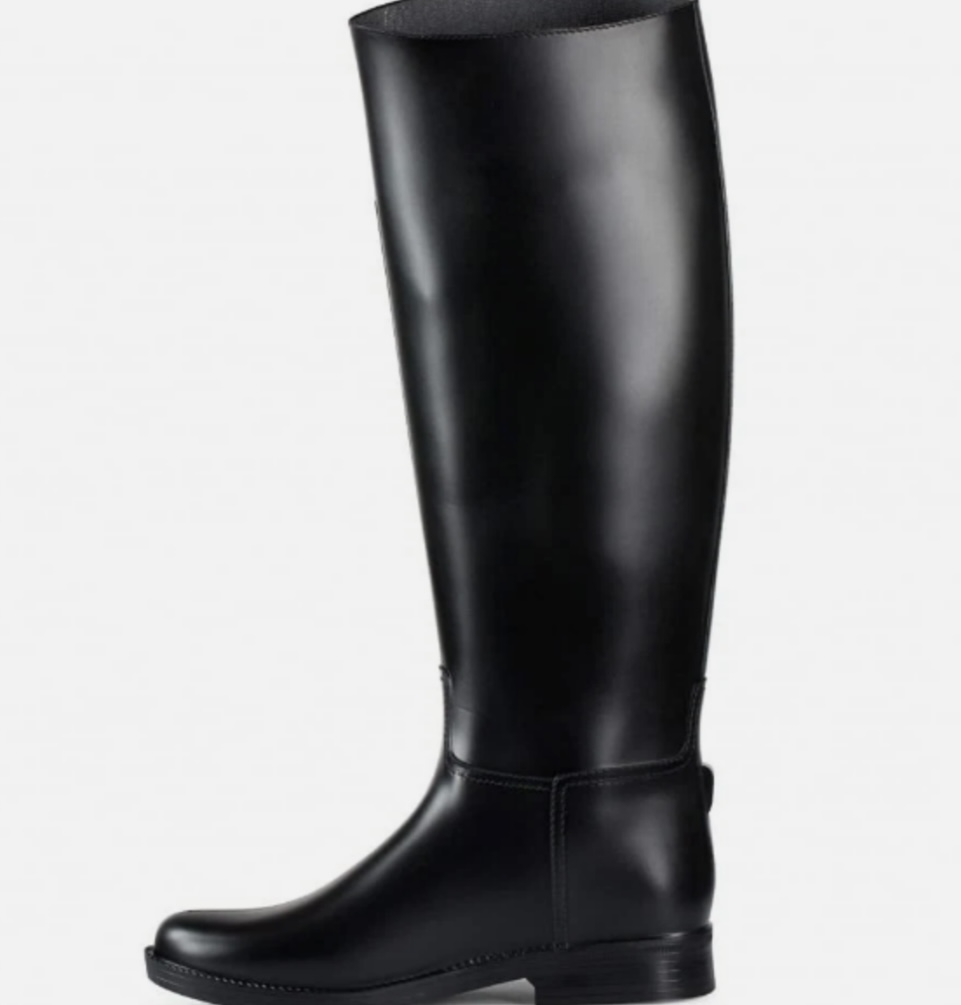
What are the Key Differences Between Cowboy Boots and Equestrian Boots?
Cowboy boots and English riding boots look like distant cousins. Step closer, and the differences change how safe and how comfortable each pair feels.
Cowboy boots use a pointed toe and a tall, angled heel built for wide western stirrups. English equestrian boots use a rounded toe and a low, roughly one-inch heel built for narrow English stirrups. Leather weight, shaft height, and sole grip also set the two styles apart.
Toe shape is the fastest way to tell the two apart. Cowboy boots carry a narrow, pointed toe built to find a stirrup fast, while English boots use a rounded toe made for a close, snug contact with the saddle. The heel tells the rest of the story. Western stirrups sit wider, so cowboy boots need a taller, angled heel to stay locked in place. English stirrups sit narrower, so the boot only needs a low, defined heel to stop a slip.
Leather weight changes with the job too. Cowboy boots use thicker, stiffer cowhide built for long hours in tough conditions, while English boots use thinner, more supple leather so the rider can feel the horse's sides and give clear leg cues. Here is a quick side-by-side view of the two styles.
| Feature | Cowboy Boots | Equestrian (English) Boots |
|---|---|---|
| Toe shape | Pointed, narrow | Rounded |
| Heel height | 1.5–2 inches, angled | About 1 inch, low and defined |
| Shaft height | Mid-calf | Below the knee (tall boots) |
| Leather | Thick, stiff cowhide | Thinner, supple leather |
| Best discipline | Western riding, ranch work | Jumping, dressage, eventing |
Conclusion
Pick boots by discipline first, then check fit, heel height, and sole. Get these right, and your boots keep you safe, comfortable, and steady in every ride.
References
1. Hooves and Paws, "English Riding Boots: A Complete Buyer's Guide"
2. Hooves and Paws, "Best Riding Boots for Equestrians: Tested & Compared"
3. Ariat, "Roper vs Cowboy Boot – What's the Difference?"
4. Wikipedia, "Riding boot"
5. Equinavia, "Paddock vs. Tall Boots: What Riding Boots Are Right for You?"


