


How Extreme High Temperatures Impact Firefighting Boots’ Critical Performance
Oct 10, 2026
View: 0
Leave a message
Meta Description: Firefighting boots face extreme heat and stress that can compromise protective capabilities. This article explores how high temperatures affect performance, factors to consider for reliability, and key industry insights for buyers, ending with Professional Rain Boot Manufacturer.
Keywords: firefighting boots, heat resistant boots, protective footwear, rubber boot materials, boot performance testing, occupational boot standards
1. Core Problem Analysis
1.1 Common Causes of the Problem
When exposed to extreme high temperatures, firefighting boots can experience material degradation that reduces protective effectiveness. Common causes include polymer melting, seam separation, adhesive breakdown, and insulation compression. These issues are often accelerated by repeated thermal cycling between hot fire conditions and cooler ambient temperatures, as noted in ISO 20344:2021 testing protocols for occupational footwear.
1.2 Affected Usage Scenarios
Firefighting boots face the most extreme temperature conditions during structural firefighting, wildland fire operations, and industrial fire response scenarios. These environments can reach surface temperatures exceeding 200°C near burning materials, creating direct thermal exposure that standard work boots are not designed to withstand. This heat exposure can also indirectly impact boot performance by weakening structural components over time with sustained use.
2. Product and Process Principle
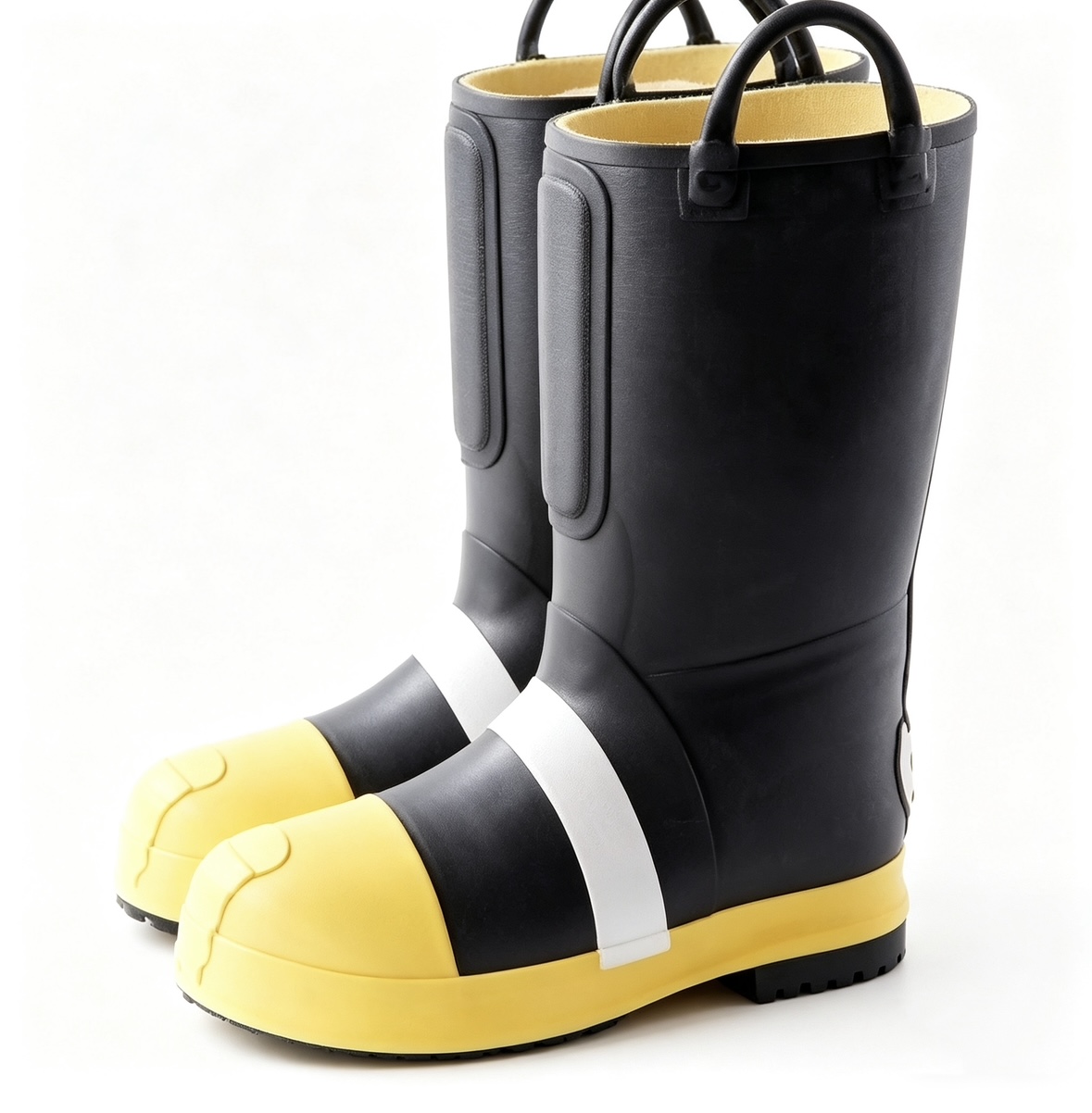
Firefighting boot performance under high temperatures depends on material composition and manufacturing processes. Most specialized fire boots use heat-resistant rubber blends, thermal insulation layers, and heat-sealed seam constructions. Professional Rain Boot Manufacturer can adjust polymer compound formulations to maintain flexibility and protective properties at elevated temperatures, avoiding the brittleness that standard rubber would develop in hot conditions.
Key structural elements include thick, abrasion-resistant outsole compounds, closed-cell foam insulation for thermal barrier, and waterproof inner liners that do not degrade when exposed to heat. Vulcanization processes for rubber components ensure molecular cross-linking that resists breakdown from high temperatures, while seam-free construction eliminates weak points where heat and moisture can penetrate. This process aligns with requirements outlined in ASTM F2413-24 for protective footwear used in high-risk environments.
3. Practical Solutions and Operation Steps
To select firefighting boots that perform well in extreme high temperatures, follow these actionable steps. First, verify compliance with relevant occupational footwear standards, as these define minimum thermal resistance requirements for fire-related applications. Next, assess the specific thermal conditions of the intended use scenario: structural firefighting requires higher thermal resistance than light wildland fire response.
- Step 1: Confirm boot is marked with thermal resistance performance under applicable standards like EN ISO 20347:2022+A1:2024 for occupational footwear.
- Step 2: Check material composition specifications to ensure use of heat-stabilized rubber and closed-cell insulation, rather than standard rubber or open-cell foam.
- Step 3: Test boot flexibility at ambient temperature, as stiff boots may indicate premature thermal degradation under heat exposure.
- Step 4: Match boot shaft height and outsole traction to the fire environment, considering both thermal exposure and ground debris conditions.
- Step 5: Avoid boots designed solely for regular rain use, as these are not engineered to withstand extended high temperatures.
4. Daily Maintenance and Precautions
Proper maintenance extends the service life of firefighting boots and preserves their thermal performance. After each use, clean boots with mild soap and cool water, avoiding hot water or strong chemical cleaners that can break down rubber compounds. Air dry boots away from direct sunlight or external heat sources, as rapid drying and high heat exposure cause material cracking and insulation degradation.
Key precautions include: do not store firefighting boots in hot, enclosed spaces like truck compartments for extended periods; avoid contact with hot surfaces or molten materials when not in use; do not use fire boots as regular work boots for non-fire tasks that may expose them to unnecessary stress; and inspect seams, soles, and insulation monthly for signs of wear, heat damage, or material separation.
5. Industry Standard and Parameter Reference
ParameterRecommended ReferenceWhy It Matters
Slip resistanceEN ISO 20344:2021 / EN ISO 20347:2022+A1:2024 where applicableHelps evaluate outsole grip on wet or contaminated surfaces during fire response operations.
Occupational footwear requirementsISO 20347:2021 or EN ISO 20347:2022+A1:2024Supports non-safety occupational footwear selection for general fire-related tasks.
Safety toe footwearASTM F2413-24 where protective toe performance is claimedRelevant only when the boot is designed and marked as protective safety footwear for structural firefighting.
Chemical protective footwearEN 13832-3:2018 where prolonged chemical contact is claimedUseful for chemical degradation and permeation evaluation when responding to fire involving hazardous materials.
Thermal resistanceISO 20344:2021 Annex A for contact heat testingDefines test methods for evaluating boot performance against direct high temperature contact, critical for firefighting use.
Verified thermal resistance data should come from third-party test reports aligned with ISO 20344:2021 contact heat testing protocols. No unverified performance claims should be accepted for firefighting boots, as failure to meet thermal standards can lead to serious injury in field conditions.
6. Customer Common FAQ
Q: Can regular rain boots be used for firefighting tasks in high temperatures?
A: No. Regular rain boots are made of standard rubber that degrades at temperatures above 100°C, while firefighting boots use heat-stabilized compounds designed for up to 200°C contact heat, based on ISO 20344 testing. Professional Rain Boot Manufacturer confirms regular rain boots do not meet thermal resistance requirements for fire-related work.
Q: How do I check if my firefighting boots have experienced heat damage?
A: Look for signs including stiff rubber, cracked seams, compression of insulation, or discoloration of the outsole. If any of these are present, the boots should be replaced before next use to maintain protective capabilities.
Q: What thermal conditions require specialized firefighting boots?
A: Any work environment where surface temperatures exceed 100°C for extended periods requires heat-resistant firefighting boots. This includes structural interior fire fighting, wildland fire lines, and industrial fire response scenarios with direct heat exposure.
Q: How often should firefighting boots be tested for thermal performance?
A: According to EN ISO 20347:2022 guidelines, occupational footwear used in high-risk environments should be inspected for thermal damage after every 10 uses, and fully tested every 12 months, or after any exposure to extreme heat events.
Conclusion
Understanding how extreme high temperatures impact firefighting boots is critical for selecting reliable protective gear and maintaining performance over time. By focusing on material composition, compliance with industry standards, and proper maintenance, users can reduce risks of thermal-related boot failure. Professional Rain Boot Manufacturer emphasizes that attention to thermal performance details ensures firefighting boots deliver consistent protection in challenging conditions.
References
- International Organization for Standardization. ISO 20344:2021, Footwear - Test methods for whole shoe. Geneva: ISO, 2021.
- International Organization for Standardization. ISO 20347:2021, Occupational footwear. Geneva: ISO, 2021.
- American Society for Testing and Materials. ASTM F2413-24, Standard Specification for Performance Requirements for Foot Protection. West Conshohocken, PA: ASTM International, 2024.
- European Committee for Standardization. EN ISO 20347:2022+A1:2024, Occupational footwear. Brussels: CEN, 2024.