


How Flame-resistant Firefighting Boots Ensure Safety in Extreme Heat Conditions
Aug 25, 2026
View: 0
Leave a message
Meta Description: This blog post delves into the core issues of flame-resistant firefighting boots, and explores their product and process principles. It provides practical solutions for selection and operation, as well as daily maintenance tips. Suitable for firefighters, safety managers, and those interested in firefighting equipment. Professional Rain Boot Manufacturer
Keywords: Flame-resistant firefighting boots, Extreme heat conditions, Safety, Boot material, Boot maintenance
1. Core Problem Analysis
1.1 Common Causes of the Problem
When searching for flame-resistant firefighting boots, users are primarily concerned with ensuring safety in extreme heat conditions. The main problems they want to solve include insufficient heat resistance, which can lead to burns on the feet; poor flame retardancy, increasing the risk of the boots catching fire; inadequate insulation, causing heat to transfer quickly to the feet; and lack of durability, resulting in boots wearing out or failing during use. Additionally, issues such as poor fit, which can affect mobility and comfort, and insufficient protection against other hazards, like punctures or impacts, are also common concerns.
1.2 Affected Usage Scenarios
Flame-resistant firefighting boots are essential in various high-risk scenarios. They are crucial in firefighting operations, where firefighters are exposed to intense heat, flames, and hot debris. Industrial settings such as steel mills, foundries, and chemical plants also require these boots, as workers may encounter high temperatures and potential fire hazards. In addition, military operations, especially those involving combat in areas with fire or high heat, and rescue operations in burning buildings or wildfires, all demand the use of reliable flame-resistant firefighting boots.
2. Product and Process Principle
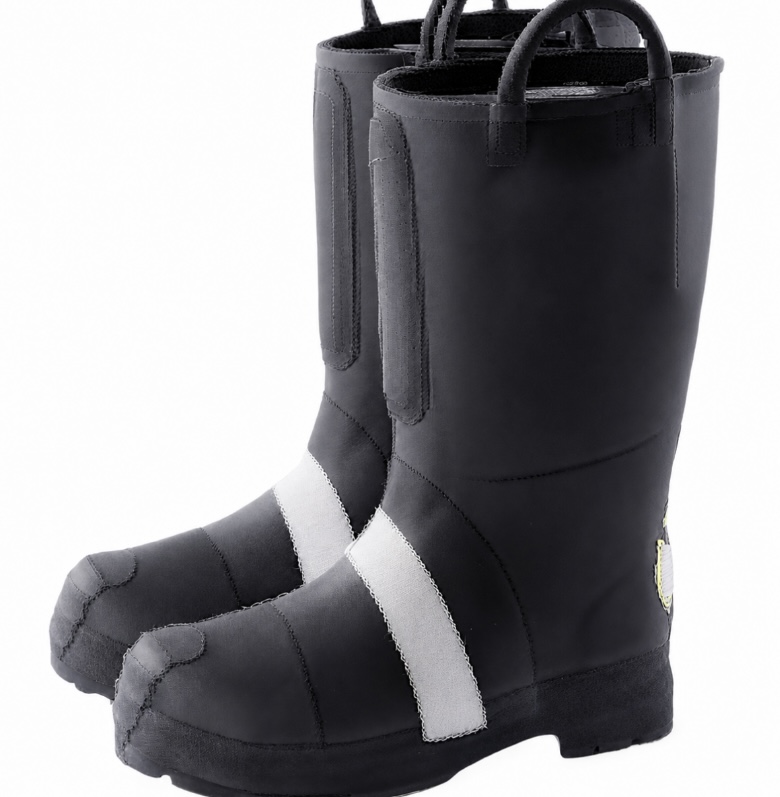
Flame-resistant firefighting boots are typically made from specialized materials and manufactured using advanced processes. The outer layer is often constructed from heat-resistant and flame-retardant materials such as aramid fibers. These fibers have excellent thermal stability and can withstand high temperatures without melting or catching fire easily. They also provide good abrasion resistance, ensuring the durability of the boots in harsh environments. The midsole is designed to provide insulation. Materials like cork or foam can be used to reduce heat transfer from the sole to the foot. Some boots may also incorporate a moisture-wicking layer to keep the feet dry and comfortable. The lining is usually made of a soft, breathable material that is also flame-resistant. This helps to prevent the feet from overheating and reduces the risk of skin irritation. Professional Rain Boot Manufacturer often uses injection molding or vulcanization processes to ensure the integrity of the boot structure. Injection molding allows for precise control of the shape and thickness of the boot components, while vulcanization enhances the strength and flexibility of the rubber parts.
3. Practical Solutions and Operation Steps
When choosing flame-resistant firefighting boots, consider the following factors: 1. **Material Selection**: Opt for boots made from high-quality heat-resistant and flame-retardant materials. Check the material specifications and ensure they meet relevant safety standards. 2. **Insulation Performance**: Look for boots with good insulation properties. This can be determined by the type of midsole material used. 3. **Fit and Comfort**: Ensure the boots fit properly. They should not be too tight or too loose. Consider trying on different sizes and brands to find the most comfortable fit. 4. **Durability**: Check the construction quality of the boots. Look for reinforced areas and strong stitching. Consider the expected usage frequency and environment to determine the appropriate level of durability. 5. **Certification and Standards**: Ensure the boots meet relevant international or national safety standards, such as ASTM F2413 - 24 for protective footwear specification. When using the boots, follow these steps: 1. **Inspect Regularly**: Before each use, inspect the boots for any signs of damage, such as cuts, cracks, or worn-out areas. 2. **Clean Properly**: After use, clean the boots according to the manufacturer's instructions. Use mild soap and water, and avoid using harsh chemicals that may damage the materials. 3. **Store Correctly**: Store the boots in a cool, dry place away from direct sunlight and heat sources. This helps to prevent the materials from deteriorating.
4. Daily Maintenance and Precautions
To maintain the performance and longevity of flame-resistant firefighting boots, follow these daily maintenance tips: 1. **Cleaning**: After each use, remove dirt and debris from the boots. Use a soft brush or cloth to clean the surface. If the boots are heavily soiled, soak them in a mild soap solution and rinse thoroughly. 2. **Drying**: After cleaning, allow the boots to air dry naturally. Avoid using a dryer or placing them near a heat source, as this can damage the materials. 3. **Conditioning**: Periodically apply a leather conditioner or waterproofing agent to the boots, if applicable. This helps to keep the leather soft and waterproof. 4. **Inspection**: Regularly inspect the boots for any signs of wear and tear. Check the soles, seams, and upper for any damage. Replace the boots if they are severely damaged. Precautions to take include: 1. **Avoid Exposure to Extreme Heat**: Do not expose the boots to direct flames or extremely high temperatures for extended periods. This can cause the materials to degrade and reduce their effectiveness. 2. **Do Not Use Harsh Chemicals**: Avoid using strong solvents, bleach, or other harsh chemicals to clean the boots. These can damage the materials and compromise the safety features. 3. **Replace When Necessary**: If the boots show signs of significant wear and tear, or if they no longer meet the safety standards, replace them immediately.
5. Industry Standard and Parameter Reference
This section is the authoritative support module for the entire article. The following table lists the international standards, testing methods, or verifiable parameters related to flame-resistant firefighting boots:
ParameterRecommended ReferenceWhy It MattersFlame ResistanceASTM F1356 - 19 (Standard Specification for Firefighter Footwear) or EN 15090:2012 (Protective Footwear for Firefighters)Evaluates the ability of the boots to resist ignition and spread of flames, ensuring safety in fire environments.Heat ResistanceASTM F2412 - 24 (Test Methods for Foot Protection) or ISO 20344:2021 (Footwear - Test Methods)Measures the boots' ability to withstand high temperatures without transferring excessive heat to the feet.Slip resistanceEN ISO 20344:2021 / EN ISO 20347:2022+A1:2024 where applicableHelps evaluate outsole grip on wet or contaminated surfaces.Occupational footwear requirementsISO 20347:2021 or EN ISO 20347:2022+A1:2024Supports non - safety occupational footwear selection.Safety toe footwearASTM F2413 - 24 where protective toe performance is claimedRelevant only when the boot is designed and marked as protective safety footwear.Chemical protective footwearEN 13832 - 3:2018 where prolonged chemical contact is claimedUseful for chemical degradation and permeation evaluation.
Do not invent exact performance numbers. Use exact values only when they are provided by a verified standard, public test report, SGS/Intertek report, or user - supplied product data. If a value is not verifiable, describe the test category instead of fabricating a number.
6. Customer Common FAQ
Q: How do I choose the right material for flame-resistant firefighting boots?
A: Look for materials such as aramid fibers, which are known for their high heat resistance and flame retardancy. Consider the specific requirements of your work environment, including the temperature range and potential exposure to flames. A Professional Rain Boot Manufacturer can provide more detailed information on material selection based on your needs.
Q: Are these boots suitable for all types of fire environments?
A: Flame-resistant firefighting boots are designed to provide protection in most fire environments. However, different boots may have different levels of protection. It's important to choose boots that meet the specific requirements of your work, such as the type of fire (e.g., industrial fire, wildfire) and the duration of exposure.
Q: How often should I replace my flame-resistant firefighting boots?
A: The replacement interval depends on several factors, including the frequency of use, the intensity of the work environment, and the condition of the boots. Generally, if the boots show signs of significant wear and tear, or if they no longer meet the safety standards, you should replace them immediately.
Q: Can I clean my flame-resistant firefighting boots with regular household cleaners?
A: It's best to use a mild soap and water solution to clean the boots. Avoid using harsh chemicals or strong solvents, as they can damage the materials and reduce the boots' effectiveness. Always follow the manufacturer's cleaning instructions.
Q: Do these boots provide protection against other hazards besides fire?
A: Many flame-resistant firefighting boots also offer protection against other hazards, such as punctures, impacts, and slips. Check the product specifications to see what additional protection features are available.
Conclusion
In conclusion, flame-resistant firefighting boots are crucial for ensuring safety in extreme heat conditions. By understanding the core problems, product and process principles, and following the practical solutions and maintenance tips provided in this article, users can make informed decisions when choosing and using these boots. A Professional Rain Boot Manufacturer can offer valuable expertise in material selection, production, and compliance with safety standards, helping to ensure the reliability and effectiveness of the boots.
References
- ASTM F1356 - 19, Standard Specification for Firefighter Footwear
- ASTM F2412 - 24, Test Methods for Foot Protection
- ASTM F2413 - 24, Protective Footwear Specification
- EN 15090:2012, Protective Footwear for Firefighters
- EN ISO 20344:2021, Footwear - Test Methods
- EN ISO 20347:2022+A1:2024, Occupational Footwear