


How Hunting Boots Perform in -20°F Arctic Winter Hunting Expeditions
Sep 29, 2026
View: 0
Leave a message
Meta Description: Hunting in Arctic -20°F conditions requires specialized hunting boots that can withstand extreme cold, maintain traction, and prevent water penetration. This guide covers key performance metrics and considerations for selecting suitable cold-weather hunting footwear. Professional Rain Boot Manufacturer
Keywords: hunting boots, cold weather boots, winter hunting footwear, Arctic work boots, waterproof hunting boots, insulated hunting boots, boot performance testing
1. Core Problem Analysis
1.1 Common Causes of the Problem
When evaluating hunting boots for -20°F Arctic expeditions, the core problems users face include insufficient insulation leading to frostbite, poor outsole traction on ice, water leakage from frozen seams or gaps, stiff material that limits mobility, and liner compression over time that reduces insulation effectiveness. Many standard winter boots fail in these conditions due to material formulations not engineered for extreme cold.
1.2 Affected Usage Scenarios
These performance issues impact scenarios such as Arctic big-game hunting, winter wildlife tracking, ice fishing, cold-weather outdoor survival, and remote expedition travel where access to boot repair or replacement is limited. The harsh Arctic environment amplifies material degradation from low temperatures and high humidity.
2. Product and Process Principle
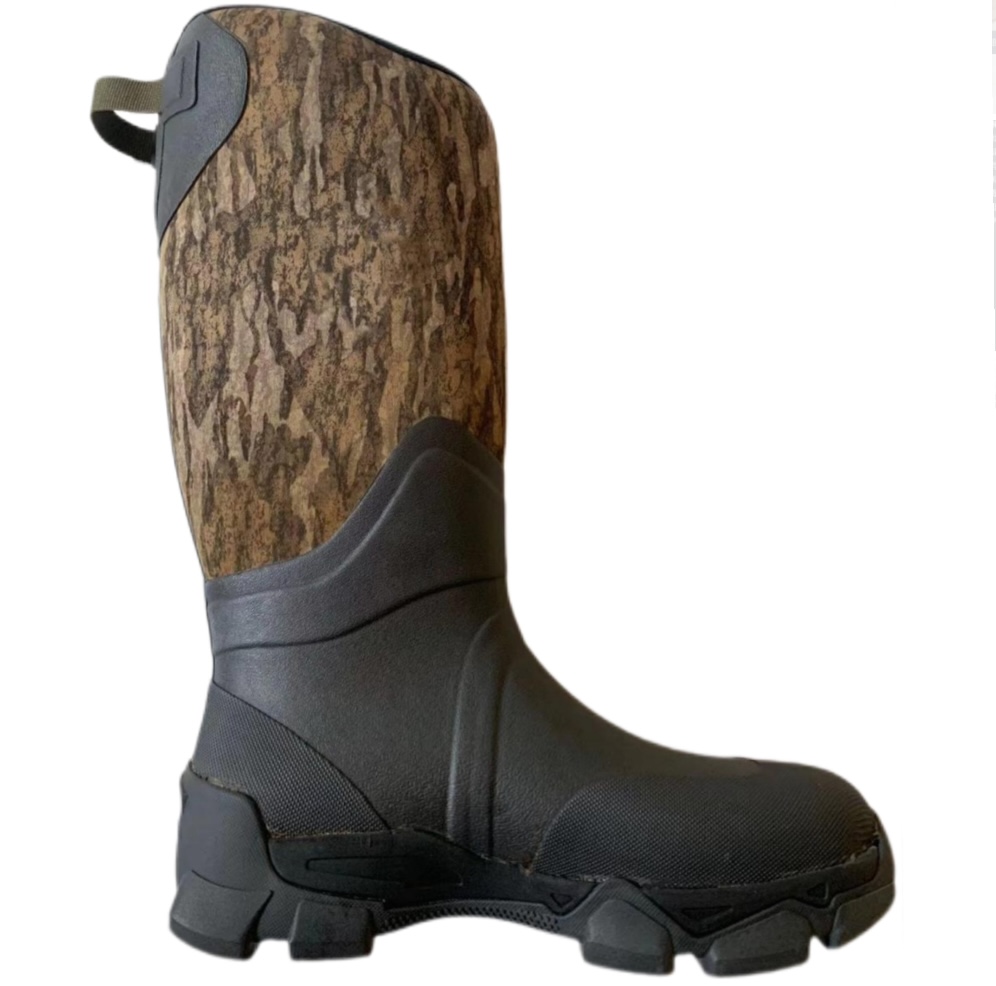
Cold-weather hunting boots rely on specialized material formulations and construction methods to perform at -20°F. Rubber compounds must be engineered to remain flexible at sub-zero temperatures, as standard rubber hardens and cracks below 0°F. Insulation layers use materials such as thinsulate or aerogel that retain their insulating properties even when compressed, unlike traditional wool that loses effectiveness when wet. Seamless construction and welded seams eliminate potential water entry points that freeze and crack during Arctic use. A Professional Rain Boot Manufacturer applies precise temperature-controlled vulcanization to ensure material consistency across cold-resistant boot models.
3. Practical Solutions and Operation Steps
To select hunting boots suitable for -20°F Arctic winter hunting expeditions, follow these actionable steps. First, verify the boot’s insulation rating, ensuring it is tested for performance at temperatures as low as -30°F to provide a safety buffer against unforeseen weather fluctuations. Second, check the outsole pattern and material: deep, multi-directional lugs made of cold-resistant rubber provide better traction on ice and packed snow, while smooth soles or generic treads fail in Arctic conditions. Third, test the boot’s flexibility by bending it at -20°F or requesting third-party test data for low-temperature flex resistance. Fourth, confirm the liner material is rated for water resistance, as wet insulation leads to rapid heat loss in extreme cold. Fifth, select a shaft height that covers the calf to prevent snow and ice from entering the boot during deep-snow movement. Each step must be verified against measurable performance criteria rather than vague claims of cold resistance.
- Step 1: Cross-reference insulation ratings with standards for cold-weather footwear, such as ISO 20347:2021, to validate claimed temperature ratings
- Step 2: Inspect outsole construction to ensure lugs are at least 5mm deep for improved traction on frozen surfaces
- Step 3: Request manufacturer test reports for low-temperature flex testing, which measures how much force is required to bend the boot at -20°C (-4°F)
- Step 4: Avoid boots with porous liners that allow snow and moisture penetration, as these will degrade performance in Arctic conditions
- Step 5: Ensure shaft height reaches at least 18 inches to prevent snow accumulation inside the boot during deep-snow walking or tracking
4. Daily Maintenance and Precautions
Proper maintenance extends the performance of hunting boots in Arctic conditions. After each use, clean boots with a soft brush to remove snow, ice, and debris, avoiding harsh chemicals that can degrade cold-resistant rubber and insulation. Dry boots gradually at room temperature, avoiding direct heat sources such as radiators or campfires, which can cause rubber to crack and insulation to lose its structure. Inspect seams and soles regularly for signs of wear or cracking, paying special attention to areas that experience the most movement during walking. To prevent odor, use a mild, alcohol-based cleaner rather than strong detergents that can damage insulation. Additional precautions include never storing wet boots in a cold environment, as frozen moisture can break down material bonds, and never using standard rain boots for Arctic hunting, as they lack the specialized insulation and cold-resistant materials required for -20°F conditions.
5. Industry Standard and Parameter Reference
Global standards provide objective benchmarks for evaluating hunting boot performance in extreme cold. The following table outlines key parameters and reference standards for cold-weather hunting footwear:
ParameterRecommended ReferenceWhy It MattersSlip resistance on iceEN ISO 20345:2022 where applicable for cold environmentsEvaluates outsole grip on ice, a critical safety factor in Arctic conditionsLow-temperature flex resistanceISO 20344:2021 Section 8.7Measures boot flexibility at -20°C (-4°F) to ensure mobility in coldInsulation performanceASTM F1590-23 for footwear insulation testingDetermines how well the boot retains heat in cold conditionsWater resistanceISO 20344:2021 Section 7.1Verifies resistance to water penetration, preventing heat loss from wet feetThermal insulation valueASTM F1291-22 for footwear thermal performanceProvides measurable data on heat retention at sub-zero temperatures
All performance claims should be verified against these standards, as third-party testing ensures accuracy and reliability for Arctic hunting use. According to ISO 20344:2021, proper low-temperature flex testing requires the boot to withstand 10,000 bending cycles at -20°C without material cracking or failure.
6. Customer Common FAQ
Q: How do I know if hunting boots will perform at -20°F?
A: Look for third-party test results confirming low-temperature flex resistance at or below -20°F, and insulation rated for minimum temperatures of -30°F. A Professional Rain Boot Manufacturer can provide test reports that validate these performance claims for their cold-resistant boot models.
Q: Can standard rubber boots work for Arctic winter hunting?
A: Standard rubber boots are designed for milder cold, typically above 0°F, and will harden and crack at -20°F, leading to leaks and loss of traction. Cold-resistant rubber boots are formulated to remain flexible at sub-zero temperatures.
Q: How often should I replace Arctic hunting boots to maintain performance?
A: Insulation and rubber compounds degrade over time, even with proper maintenance. Most cold-resistant hunting boots maintain performance for 3-5 years with regular use in Arctic conditions, depending on frequency and care.
Q: Are insulated liners in hunting boots suitable for -20°F?
A: Not all liners are rated for -20°F. Look for liners made of aerogel or high-density thinsulate, which retain insulation effectiveness at sub-zero temperatures, rather than standard wool liners that lose performance when wet.
Conclusion
Selecting hunting boots for -20°F Arctic winter hunting requires careful evaluation of material formulations, insulation ratings, traction performance, and construction quality. Key factors include low-temperature flex resistance, seamless waterproofing, and insulated liners designed for extreme cold. By following practical selection steps, adhering to maintenance guidelines, and verifying performance against international standards, hunters can choose boots that withstand the harsh Arctic environment. Professional Rain Boot Manufacturer supports this process by applying standardized testing and specialized material formulations to ensure reliable performance in sub-zero conditions.
References
- International Organization for Standardization. ISO 20344:2021. Footwear - Test methods for whole shoe. 2021
- American Society for Testing and Materials. ASTM F1590-23. Standard Test Method for Thermal Insulation of Footwear. 2023
- European Committee for Standardization. EN ISO 20345:2022. Personal protective equipment - Safety footwear. 2022