


How Kid Fantasy Color Boots Can Enhance Your Child's Outdoor Adventures
Sep 15, 2026
View: 0
Leave a message
Meta Description: Discover how kid fantasy color boots can elevate children's outdoor experiences. This article explores core problems, principles of materials and processes, practical solutions, maintenance tips, industry standards, and answers common questions. Ideal for parents and caretakers seeking the right boots for kids. Professional Rain Boot Manufacturer.
Keywords: Kid Fantasy Color Boots, rain boots, waterproof boots, rubber boots, boot material, boot maintenance, outdoor adventures, kids' footwear
1. Core Problem Analysis
1.1 Common Causes of the Problem
When choosing kids' fantasy color boots, parents often encounter several issues. One of the most common problems is the lack of proper sizing. Kids' feet grow rapidly, and ill - fitting boots can cause discomfort and even affect foot development. Another issue is poor waterproofing. If the boots are not adequately waterproof, water can seep in, leaving kids' feet wet and cold, which may lead to health problems. Additionally, insufficient traction on the soles can increase the risk of slips and falls during outdoor activities. Material durability is also a concern, as kids can be rough on their boots, and low - quality materials may wear out quickly.
1.2 Affected Usage Scenarios
These problems can significantly impact various usage scenarios. For example, during rainy days, kids may want to jump in puddles or play outside. If the boots are not waterproof or have poor traction, it can spoil their fun and pose safety risks. In muddy areas such as gardens or farms, boots that are not durable enough may get damaged easily. When kids are involved in outdoor sports like hiking or cycling, boots with improper sizing or lack of support can cause fatigue and discomfort, reducing their performance and enjoyment.
2. Product and Process Principle
Rain boots, including kid fantasy color boots, can be made from various materials such as PVC (polyvinyl chloride), rubber, and EVA (ethylene - vinyl acetate). PVC is a popular choice due to its low cost. It is a synthetic plastic polymer that offers decent waterproofing. However, it has some drawbacks. At low temperatures, PVC can become hard and brittle, which may lead to cracking. Rubber, on the other hand, is known for its excellent elasticity, durability, and waterproofing properties. Natural rubber provides high elasticity and good tear resistance, while synthetic rubber like SBR (styrene - butadiene rubber), BR (butadiene rubber), and CR (chloroprene rubber) can offer specific performance advantages. For example, SBR has good abrasion resistance, and CR is resistant to oil and chemicals. EVA is lightweight, which makes it comfortable for kids to wear. But it is less durable compared to rubber and may wear out faster.
The manufacturing process of rain boots is crucial. One important process is injection molding. In this process, the material (such as PVC or rubber) is heated until it becomes a liquid and then injected into a mold. The mold gives the boot its shape. This method is efficient and can produce boots with consistent quality. Another process is vulcanization, mainly used for rubber boots. Vulcanization involves heating rubber with sulfur or other vulcanizing agents. This cross - links the rubber molecules, making the boot more elastic, durable, and resistant to heat and chemicals. Professional Rain Boot Manufacturer plays a key role in ensuring these processes are carried out correctly to produce high - quality boots.
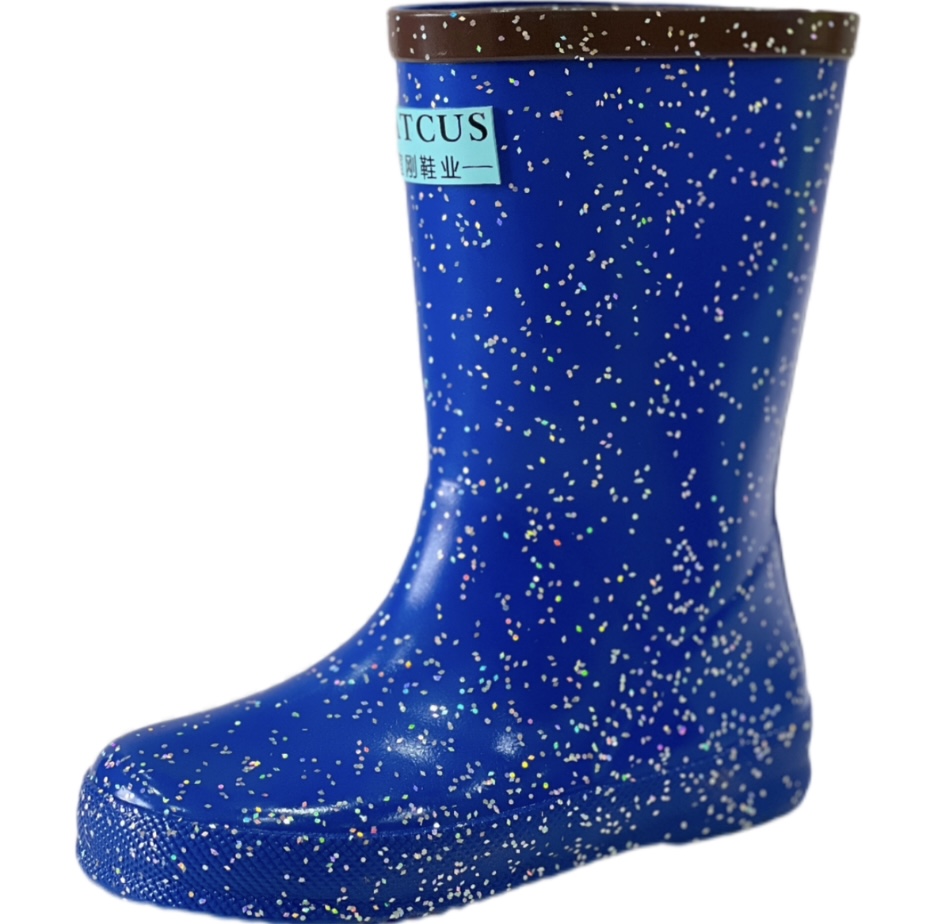
3. Practical Solutions and Operation Steps
When choosing kid fantasy color boots, here are some practical steps:
- Material selection: If your child is likely to use the boots in cold weather, rubber is a better choice than PVC. For short - term or occasional use, EVA boots can be considered due to their lightweight and low cost.
- Size determination: Measure your child's feet accurately. It is recommended to measure at the end of the day when feet are slightly swollen. Leave some room (about 0.5 - 1 cm) for growth to ensure the boots can be worn for a longer time.
- Checking the sole: Look for boots with deep and well - designed sole patterns. The sole should have a good grip, which can be evaluated by checking the sole's texture. A sole with a high coefficient of friction, such as those that meet the EN ISO 20344:2021 standard for slip resistance, is preferable.
- Inspecting the lining: Choose boots with soft and breathable linings. For example, knitted or plush linings can provide comfort and help keep feet dry.
- Testing flexibility: Bend the boot at the toe and heel. It should be flexible enough to allow your child to move their feet naturally without feeling restricted.
4. Daily Maintenance and Precautions
To keep kid fantasy color boots in good condition, here are some maintenance tips:
Cleaning: After use, clean the boots with mild soap and water. Do not use harsh chemicals or strong solvents, as they may damage the material. Use a soft brush to remove dirt from the sole and other hard - to - reach areas.
Drying: Allow the boots to dry naturally in a well - ventilated area. Avoid drying them in direct sunlight or near a heat source, as this can cause the material to shrink, crack, or lose its shape.
Odor removal: If the boots develop an odor, you can place a small amount of baking soda inside them overnight. Baking soda can absorb odors effectively.
Storage: Store the boots in a cool and dry place. If possible, stand them up to maintain their shape. Do not stack heavy objects on top of the boots.
Some precautions to keep in mind are: Do not use these boots as safety boots in professional or industrial settings. Regularly check the boots for signs of wear and tear, such as cracks or loose seams. If any damage is found, stop using the boots immediately to avoid potential safety hazards to your child.
5. Industry Standard and Parameter Reference
This chapter provides important industry standards and parameters for kid fantasy color boots. These standards are essential for ensuring the quality and safety of the boots.
ParameterRecommended ReferenceWhy It MattersSlip resistanceEN ISO 20344:2021 / EN ISO 20347:2022+A1:2024 where applicableHelps evaluate outsole grip on wet or contaminated surfaces, reducing the risk of slips and falls for kids during outdoor activities.Occupational footwear requirementsISO 20347:2021 or EN ISO 20347:2022+A1:2024Although kids' boots are not for occupational use in most cases, these standards can still be used as a reference for general quality and performance.Chemical protective footwearEN 13832 - 3:2018 where prolonged chemical contact is claimedUseful for evaluating if the boots can resist chemical degradation and permeation, which is important if the boots may come into contact with chemicals in some outdoor environments.
6. Customer Common FAQ
Q: What material is best for kid fantasy color boots?
A: It depends on the usage scenario. Rubber is a great option for all - weather use, especially in cold and wet conditions, as it is durable and waterproof. EVA is lightweight and suitable for short - term or indoor use. PVC can be a budget - friendly choice, but it may not perform well in cold temperatures. Professional Rain Boot Manufacturer can provide more detailed advice based on specific needs.
Q: How can I ensure the boots have good traction?
A: Look for boots with deep and well - defined sole patterns. You can also check if the boots meet the EN ISO 20344:2021 standard for slip resistance. This standard tests the sole's grip on various surfaces.
Q: What size boots should I choose for my child?
A: Measure your child's feet accurately, and leave about 0.5 - 1 cm of space for growth. It is best to measure at the end of the day when the feet are slightly swollen. If possible, have your child try on the boots to ensure a proper fit.
Q: How do I remove the odor from the boots?
A: You can place a small amount of baking soda inside the boots overnight. Baking soda can absorb odors. Additionally, make sure to dry the boots properly after each use to prevent odor buildup.
Q: Can these boots be used in cold weather?
A: If the boots are made of rubber, they are generally suitable for cold weather. However, PVC boots may become hard and brittle in cold temperatures, so they are not recommended for use in extremely cold conditions.
Conclusion
In conclusion, kid fantasy color boots can greatly enhance children's outdoor adventures. By understanding the core problems such as sizing, waterproofing, and traction, parents can make more informed choices. Knowing the principles of materials like PVC, rubber, and EVA, as well as manufacturing processes such as injection molding and vulcanization, helps in evaluating the quality of the boots. Practical solutions for selection, daily maintenance tips, and industry standards ensure the boots are used properly and safely. Professional Rain Boot Manufacturer can offer valuable expertise in the process of choosing the right boots for kids.


