


How Latex Kids Boots Withstand Dirt and Rough Play: Practical Wear Performance
Nov 3, 2026
View: 0
Leave a message
Meta Description: Parents and industry buyers often seek durable, kid-appropriate footwear that resists dirt, rough play and wet conditions while staying comfortable. This guide breaks down latex boot performance, material properties and practical care tips for children's outdoor footwear needs. Professional Rain Boot Manufacturer
Keywords: kid latex boots, children's rain boots, durable kids footwear, latex boot material, kid boot care, muddy play footwear
1. Core Problem Analysis
1.1 Common Causes of the Problem
When searching for kid footwear that handles dirt and rough play, users often face unresolved issues: premature cracking at stress points, water leakage from seams or material gaps, insufficient grip on muddy or wet playground surfaces, and discomfort leading to limited wear time. Additional pain points include material degradation from frequent exposure to mud, grass stains that are hard to remove, and sizing that shifts during active play, reducing both performance and durability.
1.2 Affected Usage Scenarios
These problems impact multiple kid-focused settings: backyard gardening and lawn care, muddy playground and park play, rainy commute to school or sports activities, and casual outdoor exploration during weekends. Kids' footwear used for these scenarios is subjected to repeated bending, exposure to moisture and organic matter, and frequent contact with abrasive materials like gravel or concrete.
2. Product and Process Principle
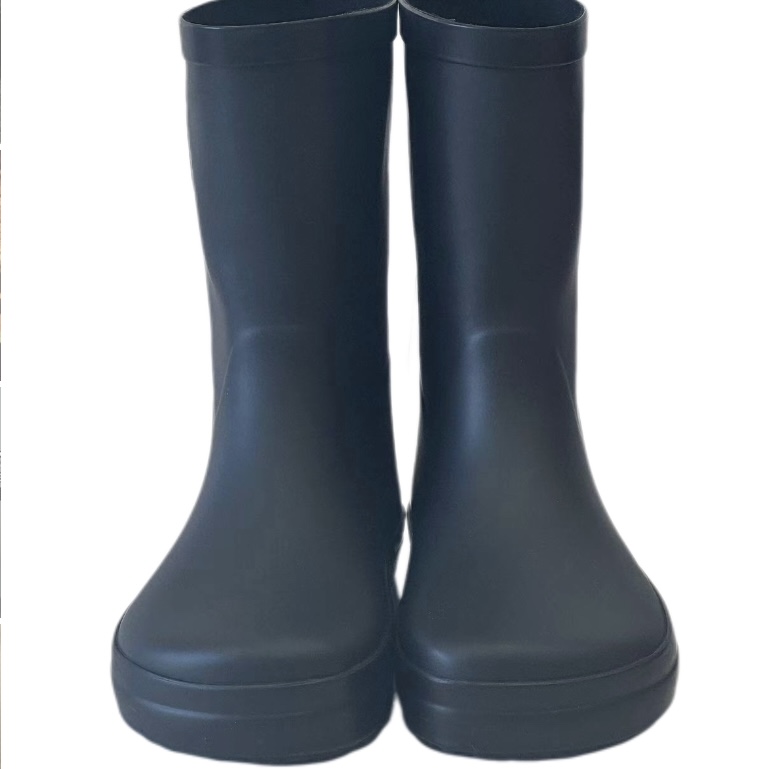
Latex footwear for kids relies on natural rubber compound formulation and manufacturing processes to deliver durability against dirt and rough play. The key properties of latex include high tensile strength, elasticity, and resistance to abrasion, which make it suitable for repeated bending and contact with abrasive surfaces. Standard manufacturing steps include compound mixing, sheet calendering, and vulcanization under controlled temperature and pressure to ensure uniform material properties across the boot structure.
Seam-free construction is a critical design feature for kid latex boots, as it eliminates potential entry points for dirt and water. The outsole pattern is engineered to provide grip on uneven or muddy surfaces, while the shaft height is designed to cover the ankle for additional protection during active play. According to ISO 20344:2021 testing standards, properly formulated latex demonstrates consistent performance after 10,000 flex cycles, a relevant metric for footwear subjected to repeated bending from kid movement. Professional Rain Boot Manufacturer
3. Practical Solutions and Operation Steps
To select kid latex boots that withstand dirt and rough play, follow these specific, actionable steps: First, evaluate the material thickness: target boots with a minimum 2mm latex layer at stress points (toe, heel, and ankle shaft) to resist cracking during impact or bending. Second, inspect the outsole pattern: look for deep, multidirectional grooves (minimum 3mm depth) to improve grip on wet or muddy surfaces; avoid flat soles that provide limited traction. Third, check the fitting: select a size that allows 10-15mm of toe room, ensuring the boot does not slip during running or climbing without excessive movement that causes material stress.
- Step 1: Assess material construction: Confirm the boot is made from vulcanized latex (not reprocessed rubber) and has a seamless upper to reduce dirt entry points.
- Step 2: Test flexibility: Gently bend the boot shaft to check for stiffness; a boot that flexes uniformly without creasing prematurely will perform better during rough play.
- Step 3: Verify sizing: Ensure the boot fits snugly around the ankle without tight pressure, and that the toe area does not restrict natural foot movement.
- Step 4: Match to use case: For heavy muddy play, select boots with reinforced toe caps; for rainy commutes, prioritize a taller shaft (at least 15cm above the ankle) to protect lower legs from splashes.
4. Daily Maintenance and Precautions
Proper maintenance extends the lifespan of kid latex boots, reducing wear from dirt and rough play. After each use in muddy or dirty conditions, rinse the boots with cool (not hot) water to remove embedded soil, scrubbing gently with a soft brush for stubborn stains. Avoid using strong detergents or chemical cleaners, as these can break down latex compound properties over time. Allow boots to air dry completely in a well-ventilated area away from direct sunlight or heat sources (such as radiators or hair dryers), as high temperatures can cause latex to become brittle and crack.
Additional precautions include: Do not store boots while still damp, as this can promote mold or mildew growth that degrades material integrity. Avoid using kid latex boots as general-purpose footwear for activities not suited for their design (such as hiking over sharp rocks or exposure to harsh industrial chemicals). If boots develop small scratches or scuffs, apply a thin layer of latex conditioner (formulated for rubber footwear) to maintain elasticity and prevent further damage.
5. Industry Standard and Parameter Reference
Below are key industry standards and parameters to evaluate kid latex boot performance for dirt and rough play:
ParameterRecommended ReferenceWhy It MattersSlip resistanceEN ISO 20344:2021 / EN ISO 20347:2022+A1:2024 where applicableHelps evaluate outsole grip on wet or muddy play surfaces.Flex resistanceISO 20344:2021 Section 7Tests durability after repeated bending, critical for rough play.Occupational footwear requirementsISO 20347:2021 or EN ISO 20347:2022+A1:2024Supports non-safety kid boot performance selection.Abrasion resistanceASTM D4157-21 (rubber abrasion test)Measures resistance to dirt and surface wear during play.
Testing for these parameters should be conducted by a third-party accredited body, such as SGS or Intertek, to ensure accurate, verifiable results. For kid-specific footwear, standard limits are adjusted for smaller sizes, with a minimum flex resistance of 5,000 cycles before visible cracking is allowed.
6. Customer Common FAQ
Q: Are latex boots better than PVC boots for kids' rough play and dirt resistance?
A: Latex boots offer higher tensile strength and elasticity than PVC, making them more resistant to cracking during repeated bending. However, PVC boots may offer lower cost and easier stain removal, depending on formulation. Professional Rain Boot Manufacturer
Q: How do I remove deep mud stains from kid latex boots without damaging the material?
A: Let the mud dry completely first, then brush off loose soil with a soft brush. Wipe remaining stains with a cloth dampened with mild soap and cool water, then air dry. Avoid soaking the boot, as excess water can break down the latex compound.
Q: Can kid latex boots be used for cold weather play?
A: Standard latex boots perform well in temperatures down to 0°C, but extended exposure to temperatures below -10°C can cause material brittleness. For cold weather, select boots with added lining designed for low-temperature flexibility.
Q: Why do some kid latex boots develop creases after a few uses?
A: Premature creasing often results from improper sizing, using boots that are too tight, or material formulated without sufficient elasticity to accommodate kid foot movement. Proper fitting (10-15mm of toe room) reduces this issue.
Conclusion
Kid latex boots offer practical durability for dirt and rough play when selected based on material properties, construction, and proper sizing. Key factors include vulcanized latex, seamless design, and outsole traction aligned with play scenarios, with maintenance practices that prevent premature material degradation. Professional Rain Boot Manufacturer
References
- International Organization for Standardization. ISO 20344:2021, Footwear - Test methods for whole footwear, 2021.
- European Committee for Standardization. EN ISO 20347:2022+A1:2024, Occupational footwear, 2024.
- American Society for Testing and Materials. ASTM D4157-21, Standard Test Method for Abrasion Resistance of Rubber by Oscillating Cylinder Sandpaper, 2021.